Trade union federation COSATU is calling for an urgent investigation into the circumstances of the tragic bus crash that took place on the N1 near Touwsrivier this morning.
The accident claimed the lives of 16 people and left several others injured.
Federation spokesperson Malvern de Bruyn says they extend their sincere condolences to the families….
The Constitutional Court ruled that the sale of the Tafelberg site by the Western Cape government was unlawful and unconstitutional because of inadequate public participation.
Activists march at the Sea Point Methodist Church following the Constitutional Court’s judgment on the Tafelberg school sale matter. Picture: Mihle George/EWN
The Congress of South African Trade Unions (COSATU) in the Western Cape said that “heads must roll” and those responsible for the sale of the Tafelberg site must be held accountable.
The call comes after Thursday’s Constitutional Court ruling that the sale of the Tafelberg site by the Western Cape government was unlawful and unconstitutional due to inadequate public participation.
COSATU said the ruling is a victory for the right to adequate housing, which it said should have been built on the site.
The Constitutional Court found the Western Cape government wanting when it came to meaningful public participation in the decision to sell a former school in Cape Town’s seaside suburb of Sea Point, declaring the decision unconstitutional.
COSATU labelled the ruling a “monumental victory” for the fundamental right to adequate housing, which the federation has advocated for.
Provincial secretary Malvern de Bruyn said the judgment rejects the view that treats public land as mere commercial assets.
He said action must be taken against those responsible for the sale.
“COSATU Western Cape is, therefore, calling for full accountability. Heads must roll. The officials and political office bearers who pushed this unlawful sale against all legal advice and public sentiment must face consequences.”
The City of Cape Town’s Carl Pophaim, Mayoral Committee Member for Human Settlements, said much has happened over the last eight years.
“The city is also supporting various province-led affordable housing projects in central Cape Town totalling thousands of units, including at 353 on Main [the Tafelberg site]”.
He said the city also faced a major funding crisis during the period.
‘GAME-CHANGING’ AFFORDABLE HOUSING PLAN
The City of Cape Town said it looks forward to the opportunity to update the Constitutional Court on its plans for affordable housing.
Pophaim said while the city was not involved in the sale, it is addressing the issue of affordable housing.
He said the metro is also supporting various province-led affordable housing projects in central Cape Town, including the Tafelberg site.
“While others have debated the principles of spatial justice, Cape Town has delivered it. We look forward to the opportunity update the court on our game-changing programme on affordable housing and the progress we have made.”
The Commission for Employment Equity annual report shows Africans, who account for 81% of the economically active population, remain underrepresented in top and senior management across much of the economy.
Concept of leadership, business, manager, meeting. Image: 123rf.com
White employees still dominate senior positions in South Africa, despite making up less than 8% of the economically active population.
That’s according to the 25th Commission for Employment Equity annual report for 2024/25, released by the Department of Employment and Labour.
The report shows Africans, who account for 81% of the economically active population, remain underrepresented in top and senior management across much of the economy.
Women and persons with disabilities also continue to face barriers to advancement.
Employment and Labour Minister Nomakhosazana Meth said progress has been made since employment equity legislation was introduced, but the country still has a long way to go.
The findings come as amendments to the Employment Equity Act take effect this year. It gives the government power to set sector-specific targets and require compliance certificates from companies seeking State contracts.
Dina Pule’s appointment as the new Social Development minister has been criticised by Cosatu. (None)
Story audio is generated using AI
Cosatu has joined the growing chorus of outrage over the appointment of Dina Pule as social development minister.
Pule was sworn in yesterday along with other new ministers and deputy ministers after a cabinet reshuffle by President Cyril Ramaphosa on Tuesday night.
The changes saw the appointment of Willem Aucamp as minister of agriculture and David Maynier as minister of forestry, fisheries and the environment. Ramaphosa also appointed John Steenhuisen as deputy minister of trade, industry & competition, Alexandra Abrahams as deputy minister of electricity and energy, Jack Bloom as deputy minister of water and sanitation, and Yusuf Cassim as deputy minister of higher education.
Pule was fired as minister of communications in July 2013 for maladministration and improper conduct.
On Wednesday, Cosatu spokesperson Matthew Parks said the trade union federation was extremely worried about Pule’s appointment given the dark cloud under which she was previously removed as a minister.
“People appointed to cabinet need to be of the highest integrity. Ms Pule was previously found badly wanting in scathing reports by the public protector and parliament’s ethics committee. This appointment provides an unnecessary and unhelpful distraction to the government’s efforts to clean itself after the devastating decade of state capture and corruption, and to rebuild society’s trust,” Parks said.
Cosatu added that it was concerning that the critical department of forestry, fisheries and the environment was having its third minister in two years.
“We dare not return to a former president’s (Jacob Zuma’s) tenure, where ministers’ average lifespans of less than 12 months barely enabled a budget to be drafted, let alone enabled an impact to be made on service delivery,” Parks said.
The Ahmed Kathrada Foundation expressed alarm over Pule’s appointment, saying it “threatens to undermine SA’s fragile democratic institutions, public ethics and the rule of law”.
“SA cannot build a capable, ethical and developmental state by recycling individuals whose public records are severely tarnished by corruption, nepotism and dishonesty,” said the foundation’s spokesperson, Anele Gcwabe.
During Pule’s tenure, a parliamentary ethics committee found that she had deliberately concealed her relationship with businessman Phosane Mngqibisa.
According to the findings, Mngqibisa improperly benefited by about R6m from a 2012 ICT Indaba contract through Pule’s influence. The department of communications also funded his overseas trips to destinations including Mexico City, Prague and Paris, with travel documents reportedly listing him as Pule’s spouse.
Former public protector Thuli Madonsela concluded that Pule had acted unlawfully and unethically. After an inquiry in which witnesses were allegedly bullied and officials were found to have colluded in forging documents, Pule was publicly reprimanded by then National Assembly speaker Max Sisulu.
Pule received parliament’s maximum penalty at the time, including a fine equivalent to 30 days’ salary and a 15-day suspension from the National Assembly. She later offered a qualified apology, saying: “If I made a mistake I am sorry, I apologise.”
Council for Medical Schemes raised concerns about reducing the contribution.
Members of the Government Employees Medical Scheme (GEMS) will continue paying contributions based on a 9.5% average increase after the Council for Medical Schemes (CMS) kept the previously approved adjustment in place, despite the scheme’s bid to reduce it to 7.5%.
Dr Stan Moloabi, Principal Officer of GEMS, said the proposal to reduce the contribution adjustment was to support its members during a period of continued financial pressure
The medical scheme noted that the proposal reflected the its ongoing efforts to enhance affordability while maintaining comprehensive healthcare benefits and safeguarding its long-term sustainability.
GEMS notes the rejection
“The proposal to reduce the contribution adjustment was informed by the scheme’s commitment to easing the financial burden on members wherever possible,” said Moloabi on Tuesday.
“We recognise the cost-of-living pressures many of our members continue to face, and affordability remains a key consideration in every decision we make. While the outcome is a decline of the proposal submitted by GEMS, we have to respect the assessment of the regulator and address the concerns raised.
“GEMS respects the regulatory process and appreciates the engagements we have had with the CMS throughout the review process.
9.5% contribution increase for GEMS members
Following the rejection of the proposal, the scheme will maintain the previously approved weighted average contribution adjustment of 9.5%, which has been effective since 1 February 2026.
“The scheme is currently finalising the necessary implementation arrangements to ensure members are informed and supported throughout the process,” said GEMS.
“Schemes seeking to moderate contribution increases are generally those that have already attained and maintained solvency levels in excess of the prescribed minimum,” reads a letter to GEMS from CMS registrar Musa Gumede, as reported by Business Day.
“In this instance (GEMS) solvency remains below the statutory threshold, and the proposed reduction is therefore not considered prudent.”
Medical Schemes Act
The Medical Schemes Act requires schemes to maintain a solvency ratio of at least 25%. A scheme’s ratio, which is the ratio of its cumulated funds to its annualised contribution income, is considered a key measure of its financial stability.
GEMS’ plan to cut its contribution increase to 7.5% in July, which would result in a net deficit for the year and see its solvency ratio drop to 21%, said Gumede. The scheme had not demonstrated a credible path for restoring solvency.
“The recovery to 25% occurs only by 2030, or earlier only if higher future contribution increases of between 9.2% and 9.8% are achieved or substantial savings of R2.7 billion are achieved,” he added in the letter.
Concerns raised for reducing contribution
Gumede first raised concerns about reducing contributions in June. But now he has rejected the proposal, citing the scheme’s plan to cut costs to offset the drop in contribution income as risky, as they are not guaranteed to deliver the required savings.
“The registrar is not satisfied that the savings are sufficiently certain, realised or enforceable to support the reduced contribution level.”
He further noted that GEMS’ actuary had stated it was unable to support the proposed reduction to 7.5%.
“The scheme has not demonstrated that the proposed contributions are actuarially adequate, as required in our letter of June 11.”
Read more: Increasing medical aid scheme costs in 2026 mean more pain for South Africans
The highest-paid employee is not an executive nor a member of the Saltzman family.
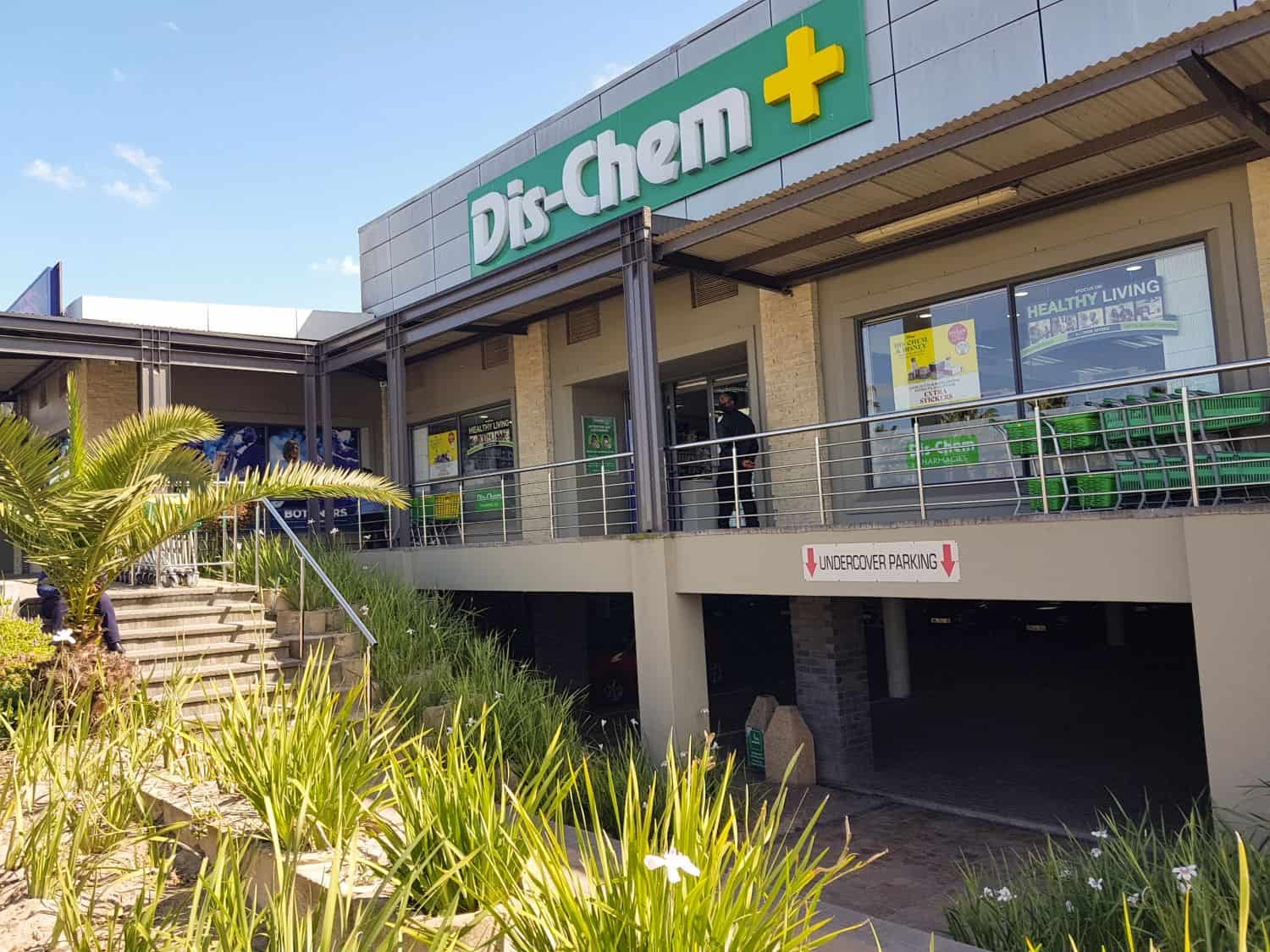
Dis-Chem, South Africa’s second-largest retail pharmacy chain, has disclosed a shocking pay gap between its non-executive employees.
While it is not unheard of for a CEO to earn much more than ordinary employees, it is somewhat surprising for a non-executive member to earn more than the CEO, or even the founder.
Well… it has happened at Dis-Chem. The group disclosed in its remuneration report for the 2026 financial year that its highest-paid employee received R29 million during the period, while its lowest-paid employee received R60 000.
Pay gap at Dis-Chem
Revealing pay gaps within Johannesburg Stock Exchange (JSE) listed companies is in line with the amendment to the Companies Act of 2008, which requires publicly listed and state-owned companies to disclose how much they pay their lowest- and highest-paid employees.
Dis-Chem told The Citizen that the highest-paid employee is not an executive member but works within one of the group’s subsidiaries.
Read more
City of Tshwane squeezed to pay salaries – DA
“This individual is not an executive member, but an employee within one of our subsidiaries who received a profit share as part of their gross remuneration.”
Subsidiaries under the group include Dis-Chem Life, CJ Distribution, and Dis-Chem Health. The retailer did not specify which subsidiary the individual works for.
Dis-Chem CEO receives lower pay
The retailer also did not disclose how much of the R29 million comes from profit sharing and how much the individual actually earns.
The second highest-paid employee is group CEO Rui Morais with a single-figure remuneration of R18.55 million – lower than the R18.58 million he received in the previous year. Dis-Chem said this is due to the retailer’s HEPS performance and its failure to meet its target.
However, Morais’ awarded remuneration is R23.59 million, including long-term incentives (not included in the single-figure remuneration). The awarded remuneration figure includes an R5 million share scheme for the financial year 2026 that will vest over three years.
Simply put, the shares will become theirs gradually over the next three years, as long as they meet the conditions of the share scheme, such as remaining with the company or meeting performance targets.
Saltzman’s payday
The remuneration report includes the amounts paid to two members of the Saltzman family. Founder Ivan Saltzman is listed as one of the executive directors.
He received single-figure remuneration of R22 million, up from the R18 million he received the previous year.
His son, Saul, received single-figure remuneration of R8.6 million, an increase from the R8.4 million he received in the previous financial year.
Pay levels in the group
The remuneration report shows that the median remuneration earned within the group is R144 000 per year, and the average is R276 000.
“Dis-Chem has committed that employees who work for the full year will not earn lower than R60k for the year, and this is the case, with our lowest employees earning a total gross remuneration of R60 000,” reads the report.
“In addition, those who are wage earners are on an hourly minimum wage of R33.96.”