by Dev_SACCAWU | Labour Market News
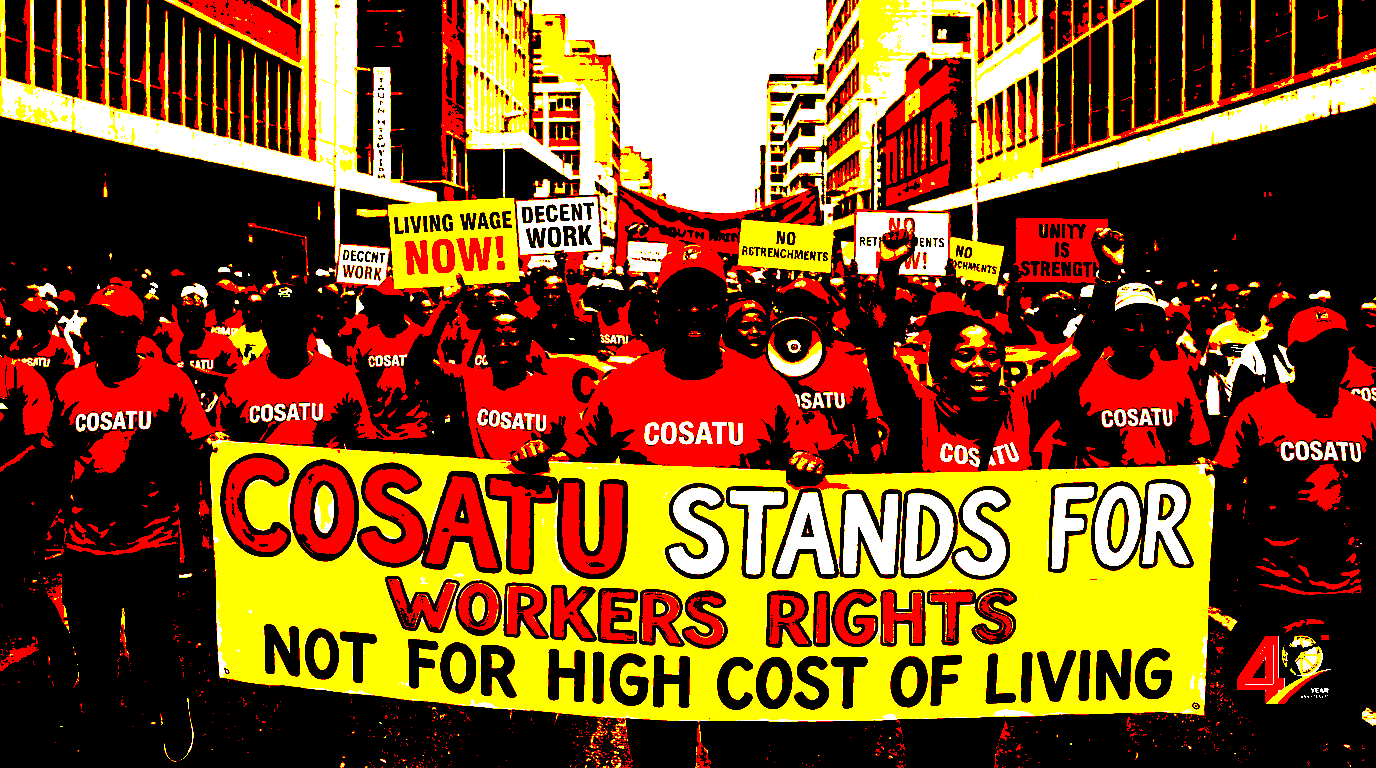
The South African Democratic Teachers’ Union (SADTU) stands in solidarity with its fellow affiliate in the Congress of South African Trade Unions (COSATU), the South African Municipal Workers’ Union (SAMWU) as it embarks on its National Day of Action on Thursday, 09 July 2026.
On this day, SAMWU members will march to the office of National Treasury in Pretoria to hand over memorandum directed to the Treasury, Department of Cooperative, Governance and Traditional Affairs (CoGTA), South African Local Government Association (SALGA) and the Department of Water and Sanitation. The action seeks to defend workers’ rights, collective bargaining, and quality public services.
Across the country, solidarity pickets will be held at provincial Treasury offices and municipal offices in support of the national march. Municipal workers remain at the forefront of local government service delivery. They are entrusted with ensuring that communities receive essential services despite increasingly difficult working conditions. However, many municipalities continue to fail workers by not honouring signed collective agreements, delaying salary payments and third-party deductions, undermining organisational rights.
The deteriorating state of local government infrastructure, coupled with corruption, outsourcing, excessive use of consultants and privatisation have contributed significantly to the collapse of service delivery and the worsening conditions of municipal workers. The result is that workers are often denied their salaries, benefits, and the necessary tools to perform their duties effectively, while communities continue to suffer from poor service delivery and unreliable access to water and other essential services.
SADTU fully supports SAMWU’s demands for, among others:
• An end to outsourcing and tenderisation.
• An end to the wasteful expenditure of billions of rand on consultants.
• Respect for collective agreement and the collective bargaining process.
• Payment of workers’ salaries and benefits on time.
• Implement agreed wage increases and stop delays in wage curve negotiations.
As a trade union committed to defending workers’ rights, SADTU joins SAMWU in calling on the National Treasury, municipalities, and water boards to fulfil their obligations to workers and communities alike.
The struggles of municipal workers are the struggles of all workers. An injury to one is an injury to all.
Issued by SADTU
CONTACT: General Secretary, Dr Mugwena Maluleke: 082 783 2968
Deputy General Secretary, Nkosana Dolopi: 082 709 5651
Media Officer, Nomusa Cembi: 082 719 5157
Source: https://cosatu.org.za/sadtu-supports-samwus-national-day-of-action/
by Dev_SACCAWU | Labour Market News
The Police and Prisons Civil Rights Union (POPCRU) extends its full solidarity and support to the South African Municipal Workers’ Union (SAMWU) as it embarks on its National Day of Action on 09 July 2026 in Tshwane.
POPCRU views this action as an important expression of working-class resistance against the continued deterioration of municipalities, the undermining of workers’ rights, poor governance, corruption, outsourcing, austerity, and the systematic weakening of public services.
Municipal workers are at the coalface of service delivery. They are responsible for water, sanitation, refuse removal, electricity support services, roads, parks, cemeteries, community facilities and many other basic services that sustain the daily lives of working-class communities. When municipalities collapse, it is municipal workers who are blamed first, even when the real causes are political instability, poor planning, corruption, underfunding, outsourcing and the looting of public resources.
POPCRU therefore supports SAMWU’s call for urgent intervention in the state of local government. The crisis in municipalities is not only a municipal workers’ issue; it is a national working-class issue. Communities cannot receive quality services when workers are underpaid, under-resourced, victimised, casualised or forced to work under unsafe and unstable conditions.
As workers within the Criminal Justice Cluster, POPCRU members understand the consequences of a failing state at local level. Poor street lighting, broken roads, water shortages, unmanaged waste, unsafe public spaces and collapsing community infrastructure all contribute to social instability, crime, poor health and deepening community frustration. These conditions also place additional pressure on police officers, correctional officials, traffic officers and other public servants who are expected to respond to problems created by systemic governance failures.
POPCRU further believes that the defence of municipal workers is inseparable from the defence of public services. The working class cannot allow municipalities to be reduced into playgrounds for tender networks, private profiteers and factional interests. Local government must be rebuilt as a sphere of democratic accountability, public service delivery, decent work, ethical leadership and community participation.
We therefore call on government to listen to SAMWU’s demands with seriousness and urgency. Workers cannot be expected to carry the burden of municipal collapse while those responsible for mismanagement and corruption remain unaccountable.
POPCRU calls for:
• The protection of municipal workers’ rights and conditions of service.
• An end to outsourcing, casualisation and the privatisation of basic municipal services.
• Urgent intervention in dysfunctional municipalities.
• Proper funding of local government to enable effective service delivery.
• Accountability for corruption, maladministration and political interference.
• Safe working conditions for municipal workers.
• The filling of critical vacancies across municipalities.
• The strengthening of collective bargaining and respect for organised labour.
POPCRU stands with SAMWU because the struggles of municipal workers are connected to the struggles of all public servants and working-class communities. An injury to municipal workers is an injury to the entire working class.
We call on all progressive forces, communities and workers to support SAMWU’s National Day of Action and to defend the principle that public services must serve the people, not private profit.
Issued by POPCRU
For more information contact Richard Mamabolo on 066 135 4349
Source: https://cosatu.org.za/popcru-supports-samwus-national-day-of-action/
by Dev_SACCAWU | Labour Market News
The Government Employees Medical Scheme (GEMS) has been slammed by unions for its failure to obtain regulatory approval to reduce member contributions. They have also questioned whether it had made a strong enough case to the Council for Medical Schemes (CMS) for the reduction, reports Business Day.
The average contribution increase for this year, initially pegged at 9.8%, was cut slightly to 9.5% in April, after union pressure, but last week the regulator rejected its request to lower the contribution increase still further, to 7.5% in July.
The CMS said this decrease was not in the best interest of GEMS members as it jeopardised the scheme’s long-term financial stability.
“We suspect that GEMS hasn’t put up a strong enough case to the CMS because in … everything else that they do, they are proving very mediocre. The only place where they’re not mediocre is in how much they spend (on) themselves,” said Cosatu spokesperson Zanele Sabela.
Cosatu has long highlighted what it considers excessive expenditure on board fees and principal officer remuneration.
The federation was also concerned about the scheme’s failure to rein in fraud and its decision to establish its head office in the costly Pretoria suburb of Menlyn, she said.
The Public Servants Association (PSA), the third biggest public sector union, called for full disclosure of the documents GEMS submitted to the CMS motivating for the 7.5% contribution increase.
“They must provide us with proof of what they submitted so we can satisfy ourselves that there was an effort made to reduce the subscription to 7.5%,” said PSA GM Reuben Maleka.
“Do they realise that it means members will have to cancel (membership) because it’s unaffordable?” he said.
Source: https://www.medicalbrief.co.za/gems-under-fire-from-unions-for-not-getting-green-light-for-lower-premiums/
by Dev_SACCAWU | Labour Market News
Construction mafia; urban planning; UIF crisis; AI and investment; Fifa governance
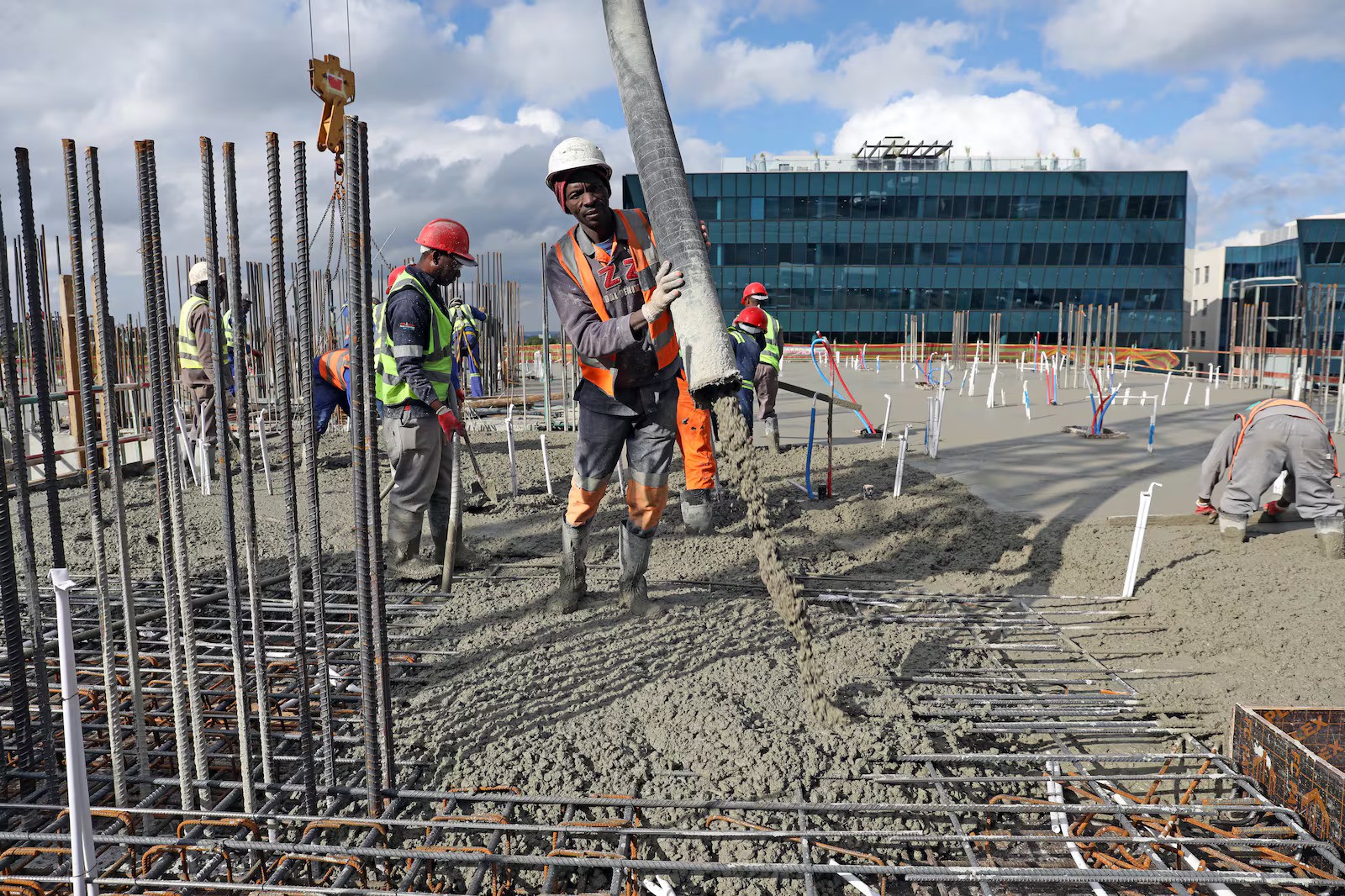
The government says it is making progress against construction-site extortion, but a reader argues that policy reforms are also needed to address the problem. Picture: (Picture: THAPELO MOREBUDI)
End policies that feed construction extortion
Public works & infrastructure minister Dean Macpherson is right that there can be no negotiation with extortionists (‘There can be no negotiation with extortionists’: Govt makes progress against construction mafia, July 7). But enforcement alone will not solve the construction mafia problem if the government continues to preserve the regulatory and procurement environment that made these rackets possible.
The construction mafia did not invent the language of “local participation”, “community benefit” and “30% allocation” out of thin air. These demands grew in the shadow of state policy. Once a government teaches people that a politically defined group is entitled to a portion of a contract, it should not be surprised when criminal organisations arrive at construction sites demanding precisely that.
This does not excuse extortion. Criminals who invade sites, threaten workers, damage property or demand payment must be arrested and prosecuted. But South Africa must also stop creating legal and administrative grey zones in which criminals can disguise coercion as transformation.
Public procurement should be simple: the state must buy the best service at the best price from firms capable of doing the work. Subcontracting should be a commercial decision based on competence, cost, delivery and voluntary agreement, not a political entitlement enforced through intimidation.
If communities are to benefit from infrastructure, they benefit first and foremost by receiving the infrastructure: roads, water systems, schools, clinics, housing and reliable services. They do not benefit when projects are delayed, inflated, abandoned or captured by violent middlemen.
The solution is therefore not another layer of “social facilitation” that risks giving activists, forums or local power brokers a new veto over lawful projects. The solution is to remove the procurement rules and practices that create an expectation of compulsory local allocation, protect contractors from coercion and restore competitive tendering based on price, quality, and delivery.
The construction mafia must be defeated in court. But it must also be deprived of the policy myths it uses to justify its crimes.
Nicholas Woode-Smith
Cape Town
Constitutional Court got Sea Point right
Michael Morris’ article, “A city’s soul is a sum of hard choices” (July 6), is a strangely ideological piece that ignores the crucial role of governments in building functional cities — from laying down the infrastructure backbone to co-ordinating the investment decisions of individual developers and landowners.
Urban economists understand full well that without the guiding hand of the state, cities will turn out chaotic and dysfunctional. The same argument applies to the fragmented, sprawling and inefficient character of South African cities inherited from the past due to deeply misguided apartheid spatial planning.
Deliberate government action is vital to correct these grave mistakes by enabling a denser, more connected and integrated urban form ― for economic as well as social reasons. The Constitutional Court judgment on the Sea Point site deserves credit for recognising the importance of this agenda.
Ivan Turok
Via email
Business is finally taking on the UIF crisis
Your article, “Why Busa has given up on the defective unemployment fund” (July 3), refers.
At last the business community has shown its teeth. I have been tackling this issue in my capacity as the labour spokesperson for the DA for more than 12 years. I have raised the issue of the broken UIF daily through the press, radio and television. I have challenged the past three ministers of employment & labour, and I have often wondered why the trade union movement and the organised business community have been silent.
I understand that the business community has raised this issue at Nedlac over the past three years, and at last Cosatu has spoken up on behalf of its members.
The funds in the UIF are vast, and the government under the ANC has used these funds recklessly over at least the past decade. The portfolio committee of employment & labour in parliament has also expressed its disdain despite the ANC closing ranks and insisting that all is going well.
It is disconcerting to hear from the auditor-general year after year about the complete failure of the fund. Now with Cosatu raising its voice and it being in an alliance with the ANC, we expect at least some movement.
Michael Bagraim
DA labour spokesperson
AI will reward countries that attract investment
Your article, “AI set to make South Africa’s inequality worse” (July 7), refers.
The Starlink issue perfectly illustrates the article’s central argument. AI will reward countries that attract technology, investment and skills. If the implementation of BEE discourages companies such as Starlink from investing in South Africa, we should ask whether our policies are achieving their intended purpose or unintentionally making us less competitive in an increasingly AI-driven world.
Frederik Kellerman
Via Business Day online
Why be surprised by Fifa’s latest controversy?
Your editorial, “Infantino’s Trump ties put Fifa’s independence and credibility at risk” (July 7), refers.
Fifa’s corruption is well documented. The corruption under the Trump administration is well reported.
President Donald Trump’s Fifa peace prize was followed by the department of justice dropping the remaining FifaGate bribery charges.
Why is everyone surprised by the lifting of a red card ban?
Johann te Water Naude
Via Business Day online
Business Day
Source: https://www.businessday.co.za/opinion/2026-07-09-letters-to-the-editor/
by Dev_SACCAWU | Labour Market News
President Cyril Ramaphosa has promised to step in and help fix the Unemployment Insurance Fund (UIF), as millions of South African workers wait months — and sometimes years — for money they are owed.
The move follows a decision by Business Unity South Africa (Busa) to pull its representatives out of the UIF board and related structures at the National Economic Development and Labour Council (Nedlac). Busa says it is acting after six years of trying, without success, to get the fund to reform.
The Presidency says Ramaphosa has met with organised labour to discuss the crisis at the UIF and the Compensation Fund, which covers workers injured or made ill on the job.
The UIF paid out R18 billion to 3.1 million people in the 2024/25 financial year. But the fund has been hit by a troubled switch to a new online claims system, a growing backlog of claims, and years of governance problems.
What went wrong
The UIF began moving away from its old uFiling system in April 2025, switching claimants over to a new platform called UIF Online. By April 2026, the new system had processed and paid out more than 4.5 million claims — up from around 3.5 million processed the year before under the old system. Even so, many workers say they are still waiting far too long for pay-outs, and the fund has faced a growing backlog of unresolved claims.
The fund’s former commissioner, Teboho Maruping, was dismissed at the end of February this year after earning close to R2.5 million while on suspension since September 2024. His suspension was linked to a R5 billion contract the UIF signed with Thuja Capital, which the Pretoria High Court later set aside for breaching the Public Finance Management Act.
The Auditor-General has repeatedly given the UIF a qualified audit opinion in recent years, pointing to weak internal controls and problems verifying claims — including payments made through the Covid-19 Temporary Employer/Employee Relief Scheme (TERS).
The UIF board itself has also come under fire. It has no real decision-making power of its own — it can only advise the Minister — and meetings have often been called or rescheduled at short notice, making it hard for members to prepare. This has repeatedly stopped the board from reaching a quorum.
Stakeholders run out of patience
In June, South Africa’s major labour federations — Cosatu, Saftu, Fedusa and Nactu — jointly called on Ramaphosa to step in over the UIF’s failures. Two weeks later, Busa announced it was withdrawing from UIF structures, saying the move was needed to protect its representatives’ reputations and to send a clear message that the situation could not continue.
Busa has called on Employment and Labour Minister Nomakhosazana Meth to place the UIF under administration, with an independent administrator brought in to stabilise operations, clear the claims backlog and fix governance problems. It has also called for a forensic investigation into the fund’s spending, saying it is concerned that money is being redirected to programmes that mainly benefit people who don’t contribute to the fund, while contributors face delays and exclusion.
ALSO READ: Councillor and ‘mastermind’ targeted as SIU raids R161m UIF fraud syndicate
Management under strain
With Maruping gone, the UIF has been operating under acting leadership while facing mounting operational pressure. In December 2025, the Special Investigating Unit — acting under a presidential proclamation issued in 2021 — carried out search-and-seizure operations in KwaZulu-Natal and Gauteng, targeting officials suspected of helping to process fraudulent claims and of diverting around R161 million from the TERS scheme.
Despite the turmoil, the fund remains financially sound. It reported a surplus of R23 billion for the 2024/25 financial year.
What happens next
While Ramaphosa’s involvement signals that government now recognises the scale of the crisis, the Department of Employment and Labour says no formal request to place the UIF under administration has yet reached the President’s desk. The UIF itself has urged stakeholders to keep engaging with it, arguing that withdrawing from governance structures won’t fix operational problems — such as employers submitting incorrect declarations.
But with millions of workers depending on UIF payouts for their basic survival, the pressure on government to act is only growing. The fund provides short-term relief to people who lose their jobs, or who cannot work because of illness, maternity, adoption or parental leave — making it a critical part of South Africa’s social safety net.
Source: https://novanews.co.za/ramaphosa-steps-in-as-uif-crisis-deepens-with-millions-of-workers-left-waiting/
by Dev_SACCAWU | Labour Market News
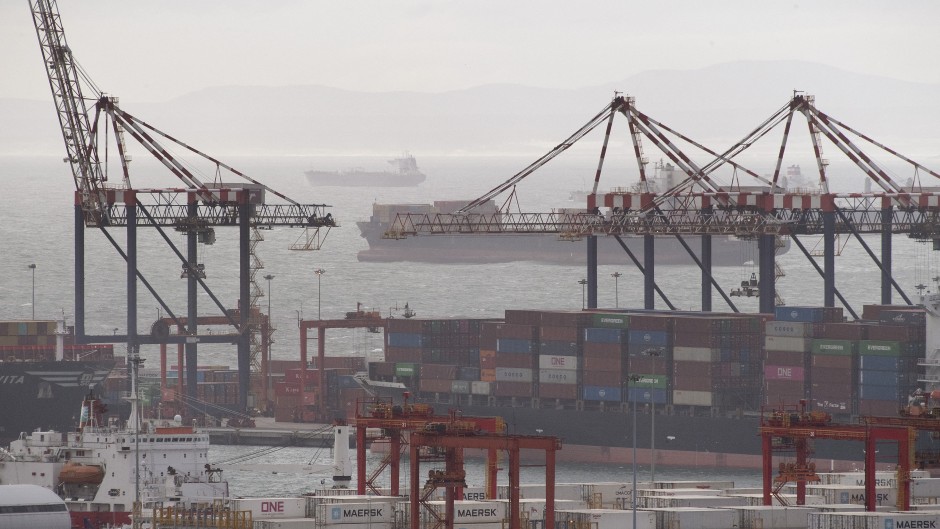
JOHANNESBURG – South Africa faces a fresh 12.5% US tariff over allegations it has failed to block imports made with forced labour.
However trade union federation Cosatu insists the country already has the laws to do so and blames poor enforcement, not missing legislation.
Cosatu says the country already has labour, anti-trafficking and customs legislation but admits enforcement has been lacking.
The trade union federation told US trade officials that authorities have the power to ban such goods although no companies appear to have been blocked under these measures.
The issue is being examined as part of US trade hearings this week.
Cosatu and Trade Union Solidarity have warned that any new tariff would unfairly hurt South African workers and exporters, particularly in the automotive, citrus and wine sectors.
Source: https://www.enca.com/business/cosatu-defends-sa-us-trade-probe
