
Construction mafia; urban planning; UIF crisis; AI and investment; Fifa governance
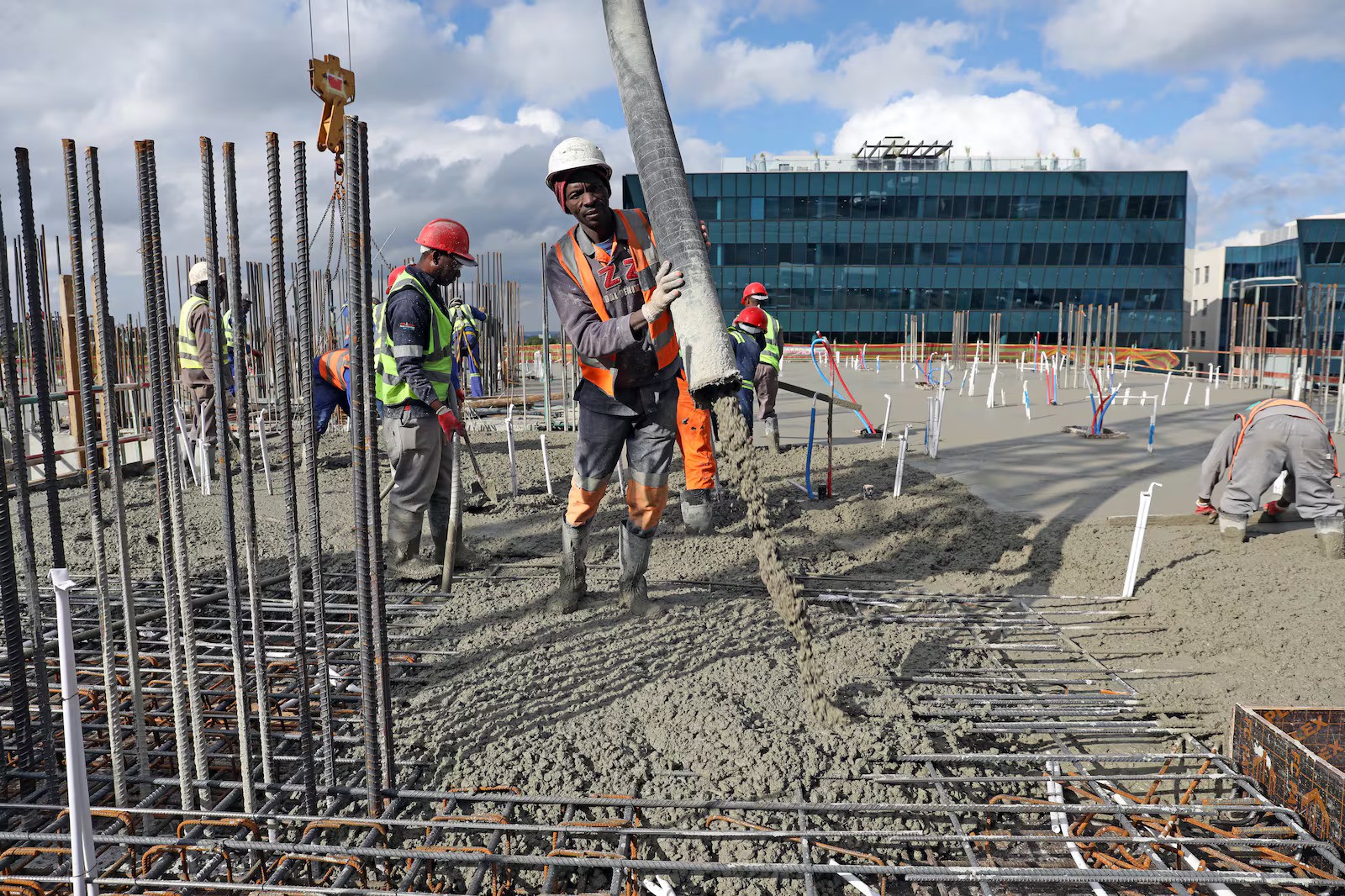
The government says it is making progress against construction-site extortion, but a reader argues that policy reforms are also needed to address the problem. Picture: (Picture: THAPELO MOREBUDI)
End policies that feed construction extortion
Public works & infrastructure minister Dean Macpherson is right that there can be no negotiation with extortionists (‘There can be no negotiation with extortionists’: Govt makes progress against construction mafia, July 7). But enforcement alone will not solve the construction mafia problem if the government continues to preserve the regulatory and procurement environment that made these rackets possible.
The construction mafia did not invent the language of “local participation”, “community benefit” and “30% allocation” out of thin air. These demands grew in the shadow of state policy. Once a government teaches people that a politically defined group is entitled to a portion of a contract, it should not be surprised when criminal organisations arrive at construction sites demanding precisely that.
This does not excuse extortion. Criminals who invade sites, threaten workers, damage property or demand payment must be arrested and prosecuted. But South Africa must also stop creating legal and administrative grey zones in which criminals can disguise coercion as transformation.
Public procurement should be simple: the state must buy the best service at the best price from firms capable of doing the work. Subcontracting should be a commercial decision based on competence, cost, delivery and voluntary agreement, not a political entitlement enforced through intimidation.
If communities are to benefit from infrastructure, they benefit first and foremost by receiving the infrastructure: roads, water systems, schools, clinics, housing and reliable services. They do not benefit when projects are delayed, inflated, abandoned or captured by violent middlemen.
The solution is therefore not another layer of “social facilitation” that risks giving activists, forums or local power brokers a new veto over lawful projects. The solution is to remove the procurement rules and practices that create an expectation of compulsory local allocation, protect contractors from coercion and restore competitive tendering based on price, quality, and delivery.
The construction mafia must be defeated in court. But it must also be deprived of the policy myths it uses to justify its crimes.
Nicholas Woode-Smith
Cape Town
Constitutional Court got Sea Point right
Michael Morris’ article, “A city’s soul is a sum of hard choices” (July 6), is a strangely ideological piece that ignores the crucial role of governments in building functional cities — from laying down the infrastructure backbone to co-ordinating the investment decisions of individual developers and landowners.
Urban economists understand full well that without the guiding hand of the state, cities will turn out chaotic and dysfunctional. The same argument applies to the fragmented, sprawling and inefficient character of South African cities inherited from the past due to deeply misguided apartheid spatial planning.
Deliberate government action is vital to correct these grave mistakes by enabling a denser, more connected and integrated urban form ― for economic as well as social reasons. The Constitutional Court judgment on the Sea Point site deserves credit for recognising the importance of this agenda.
Ivan Turok
Via email
Business is finally taking on the UIF crisis
Your article, “Why Busa has given up on the defective unemployment fund” (July 3), refers.
At last the business community has shown its teeth. I have been tackling this issue in my capacity as the labour spokesperson for the DA for more than 12 years. I have raised the issue of the broken UIF daily through the press, radio and television. I have challenged the past three ministers of employment & labour, and I have often wondered why the trade union movement and the organised business community have been silent.
I understand that the business community has raised this issue at Nedlac over the past three years, and at last Cosatu has spoken up on behalf of its members.
The funds in the UIF are vast, and the government under the ANC has used these funds recklessly over at least the past decade. The portfolio committee of employment & labour in parliament has also expressed its disdain despite the ANC closing ranks and insisting that all is going well.
It is disconcerting to hear from the auditor-general year after year about the complete failure of the fund. Now with Cosatu raising its voice and it being in an alliance with the ANC, we expect at least some movement.
Michael Bagraim
DA labour spokesperson
AI will reward countries that attract investment
Your article, “AI set to make South Africa’s inequality worse” (July 7), refers.
The Starlink issue perfectly illustrates the article’s central argument. AI will reward countries that attract technology, investment and skills. If the implementation of BEE discourages companies such as Starlink from investing in South Africa, we should ask whether our policies are achieving their intended purpose or unintentionally making us less competitive in an increasingly AI-driven world.
Frederik Kellerman
Via Business Day online
Why be surprised by Fifa’s latest controversy?
Your editorial, “Infantino’s Trump ties put Fifa’s independence and credibility at risk” (July 7), refers.
Fifa’s corruption is well documented. The corruption under the Trump administration is well reported.
President Donald Trump’s Fifa peace prize was followed by the department of justice dropping the remaining FifaGate bribery charges.
Why is everyone surprised by the lifting of a red card ban?
Johann te Water Naude
Via Business Day online
Business Day
Source: https://www.businessday.co.za/opinion/2026-07-09-letters-to-the-editor/