
COSATU to brief public on leadership elections amid Tripartite Alliance tensions

COSATU President , Zingiswa Losi
The federation is preparing for its 15th National Congress, set to take place next month in Johannesburg.
WATCH: COSATU President Zingiswa Losi says the federation will debate the election rift between it's alliance partners, ANC and SACP, at it's congress next month.
COSATU members have been seeking a mandate regarding which party to back. KJ pic.twitter.com/clMU4Edqhn
— EWN Reporter (@ewnreporter) August 29, 2026
Tension is rife in the Tripartite Alliance as the South African Communist Party (SACP) prepares to contest the November local government elections independently of the African National Congress (ANC).The impact of that split is now playing out within COSATU, with its affiliates seeking a mandate on which party to support.
Meanwhile, the federation is also preparing to elect its new national office bearers.
Zingiswa Losi was re-elected as president at the 2022 congress and has been serving for eight years.
Nominations for this year’s leadership elections are yet to be declared.
NEWS ANALYSIS | Labour raises concerns over exclusion from business-government growth pact
Organised labour wants a seat at the table as government and business deepen economic co-operation
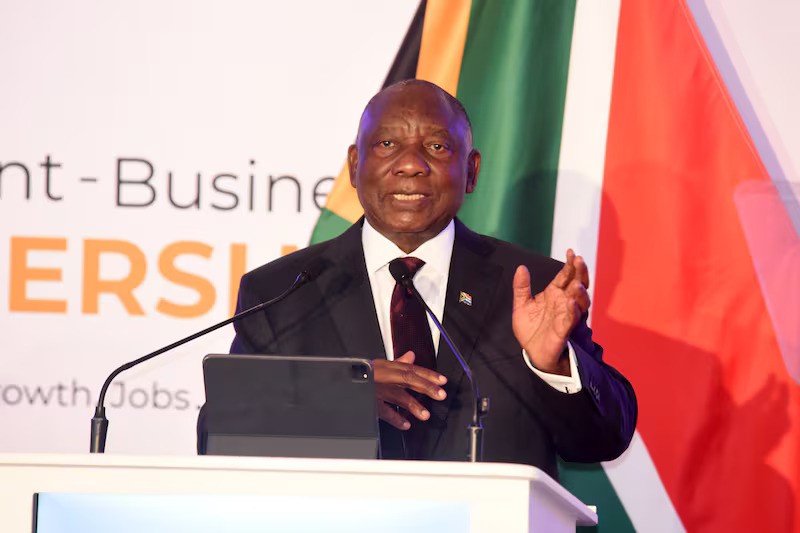
President Cyril Ramaphosa during the launch of phase 3 of the government-business partnership, an economic partnership aimed at driving reforms, boosting investment and creating jobs, at Summer Place in Johannesburg. Picture: (Freddy Mavunda)
While big business and government have rallied behind a partnership aimed at unlocking 3% economic growth, creating jobs and boosting investment confidence, organised labour has raised concerns about being excluded from the pact.
This follows President Cyril Ramaphosa’s recent launch of phase 3 of the business-government partnership, which he said marked the next chapter in the joint effort to accelerate inclusive economic growth, unlock investment, strengthen confidence and create jobs.
“Phase 3 is focused on urgently addressing the societal crisis of low growth and unemployment. It adds additional sectors to the partnership platform, with the goal of 3%+ growth and one-million additional jobs by 2030,” Ramaphosa said at the launch.
“The challenge is urgent. While growth has improved over the past two years, it remains too low to meaningfully expand employment; 8.5-million people are without work, and about 300,000 net new work-seekers enter the labour force every year. At below 3% growth, new entrants outpace job creation; above it, jobs compound. Phase 3 is designed to get South Africa decisively above that line.”
SA Federation of Trade Unions (Saftu) general secretary Zwelinzima Vavi said Saftu had no objection in principle to the government engaging business.
“Government must engage all sectors of society. Our objection arises when a bilateral relationship between government and corporate South Africa increasingly becomes an important centre for developing and implementing economic policy and structural reforms, while organised workers — who will experience the consequences most directly — are outside the room.”
He said Saftu supported genuine measures to end mass unemployment, rebuild infrastructure, restore reliable electricity and logistics systems, reindustrialise the economy and create millions of decent jobs. “But we must ask: growth for whom? Jobs of what quality? And on whose terms? The scale of the unemployment catastrophe makes the exclusion of organised labour even more indefensible.”
It was extraordinary that a programme whose central declared objective is “growth and jobs” can be developed through an institutional partnership between government and business without organised labour sitting at the table as an equal partner, Vavi said, describing the partnership as “Operation Vulindlela at its most advanced”.
The government launched Operation Vulindlela, a joint initiative between the Presidency and the Treasury, in October 2020 in a bid to accelerate structural reforms to drive rapid, inclusive economic growth, job creation and improved service delivery.
Vavi bemoaned the fact that “business enjoys direct institutional access to the president, ministers and senior government officials through this partnership, while organised labour has no equivalent position within it”.
“South Africa already has an established institution for social dialogue — Nedlac [National Economic Development and Labour Council] — precisely because economic and social policy should not be determined through privileged bilateral arrangements. Government, organised business, organised labour and the community constituency are supposed to engage each other as social partners,” he said.
“A government-business bilateral must therefore not gradually become an alternative economic decision-making centre that sidelines Nedlac, organised labour and working-class communities.”
Vavi said Saftu’s position was not that government must stop talking to business. “Our position is that business cannot enjoy privileged access to the state and a privileged role in shaping the country’s economic trajectory while organised workers are excluded. Nor can workers simply be invited afterwards to manage the social and employment consequences of decisions already taken elsewhere,” he said.
“South Africa needs genuine social dialogue and ultimately a genuine social compact — not a government-business compact presented as though it represents society as a whole.
“Any credible programme to reconstruct South Africa’s economy must therefore place organised labour, unemployed workers and working-class communities at the centre of determining our economic future — not invite them to comment after government and business have already decided what constitutes ‘reform’, ‘growth’ and ‘job creation’.”
The Federation of Unions of SA (Fedusa) acting general secretary Ashley Benjamin said the government-business relationship was welcomed, as it is in “the greater interest of millions of South Africans who are in need of employment and sustainable livelihoods”.
“However, we note that while organised labour is acknowledged as an important stakeholder, it is not formally included as a partner in the government-business partnership. Fedusa believes that organised labour should have a formal role in the governance, design, monitoring and implementation of the workstreams, particularly in mining, agriculture, tourism, infrastructure, energy and logistics,” Benjamin said.
“As organised labour, we have an important role to play as the collective voice of workers in advocating for fair wages, safe and decent working conditions, job security and inclusive economic policies. As new jobs are created, it is equally important to ensure that workers’ rights are protected and that working conditions are conducive to decent work.”
He said job creation must not come at the expense of workers’ rights or result in the creation of unsafe and unsustainable jobs.
“With youth unemployment remaining alarmingly high, Fedusa trusts that the partnership will deliver on its commitment to empowering young people, creating meaningful employment opportunities and ensuring that young South Africans are able to participate meaningfully in the economy. Fedusa reiterates its opposition to the privatisation of state assets, as they play an important role in economic development, industrialisation and job creation.”
Cosatu national spokesperson Zanele Sabela said the ANC-aligned labour federation had been asking why organised labour had been excluded from the partnership. “We have asked the same question many times. We warned them not to undermine Nedlac. They blue-ticked us. We need to work together to attain the 3% to 5% growth to slash unemployment,” Sabela said.
National Council of Trade Unions (Nactu) general secretary Narius Moloto said: “Nactu does not support this business-government exclusive partnership. That will be considered a conspiracy against workers. The economy that excludes organised labour cannot work. Even the apartheid government, towards its end, realised the inclusion of organised labour to make progress.”
Contacted for comment, Ramaphosa’s spokesperson Vincent Magwenya said: “There are regular consultations with labour, within Nedlac and during direct engagements. The partnership with business is project-specific and focused on resource mobilisation.”
Business Leadership South Africa CEO Busi Mavuso, who has rallied behind the partnership, said a government committed to reforms and creating a policy environment to support growth, coupled with a business partner committed to successful implementation, is likely “to lead to far greater levels of investment”.
“We are seeing how that leads to growth through the huge investments into new energy generation and new logistics infrastructure, including rolling stock and port capacity. Private investment of more than R360bn has flowed into new renewable energy projects. While still early, we have seen commitments of more than R20bn to new port and rail projects, from the Durban Container Terminal to new locomotives and waggons,” Mavuso said.
Ramaphosa has said by deepening these social partnerships and maintaining collective momentum, “we will convert confidence into investment, growth and jobs. And we will convert transformational reforms into shared prosperity for all.”
Phase 3 is built on three tiers, said Mavuso, explaining: “First, conclude the reforms required in the growth-enabling sectors, energy and transport and logistics. Second, focus on a few key sectors in which South Africa has a global competitive advantage, [which] have the potential to create many jobs, and which have underperformed relative to their potential, namely mining, agriculture, tourism and infrastructure.
“Third, focus on the confidence multipliers that are key to marshalling investment, namely crime and corruption, a more evidence-based ‘SA Inc’ narrative and the City of Johannesburg.”
The partnership that business and government had built is an example to the world of how social partners could work effectively together, Mavuso said.
“I am often frustrated at the pace of reform, but last week was a moment to step back and recognise how far we have come and how the opportunity ahead is real. Growth of more than 3% is the target we must all be held to. The jobs South Africa needs depend on us hitting it.”
South Africa’s unemployment rate rose to 33.6% in the second quarter of 2026 from 32.7% in the first quarter, the highest since the second quarter of 2022. Deputy President Paul Mashatile told the Nedlac annual summit three years ago that ideology seemed to be at the centre of the inability of social partners at the country’s policy formulation body to hammer out a social compact to address joblessness and low economic growth.
This was because the government, business, labour and community bloc at Nedlac all share different ideologies about the trajectory the country should take to tackle runaway unemployment, low economic growth, entrenched poverty, violent crime, systemic corruption and infrastructure development, among other socioeconomic ills.
Nedlac spokesperson Moipone Molete said: “The partnership was birthed through the economic reconstruction and recovery plan, which was crafted by Nedlac social partners and later endorsed by the president in parliament. The [recovery plan] was developed to restore, reform and transform our economy after the Covid-19 crisis.”
She noted that Nedlac regularly receives progress updates on the implementation of the interventions and provides inputs for these measures to achieve the intended objectives. “So, Nedlac is not left out in the process.”
South African teachers, nurses, and police officers cannot afford to live in the areas they work
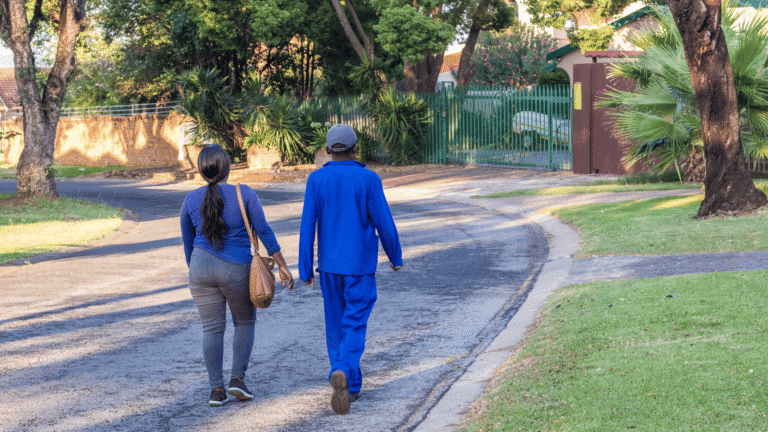
South Africa’s severe shortage of affordable housing is forcing many essential workers, such as teachers, nurses and police officers, to live far from the communities they serve.
Sentinel Homes managing director, Renier Kriek, said South Africa’s housing shortage remains one of the country’s most pressing challenges.
Speaking at the Sustainable Human Settlements Summit in February 2026, President Cyril Ramaphosa said that more than 5.5 million families remain on housing waiting lists across the country.
He noted that closing the housing gap would require between 2.5 million and 3 million additional homes, with the shortage particularly acute in the affordable housing, or gap market, segment.
“The housing shortage is particularly acute in the so-called ‘missing middle’, households that earn too much to qualify for government-subsidised housing but too little to afford homes available on the open market,” Kriek said.
In the Western Cape, industry experts estimate that virtually no new housing is being built below the R900,000 price point.
This leaves workers earning between R25,000 and R30,000 a month with few realistic options to buy a home close to where they work.
The affordability gap has become so pronounced that many essential workers can no longer afford to live in the very communities they serve.
As housing becomes increasingly unaffordable for ordinary working South Africans, the challenge extends well beyond the property market.
When ordinary working South Africans, like nurses, members of the police force, and teachers, cannot afford a decent home, that is not only a housing problem, Kriek said.
It is also an economic problem and a political crisis waiting to happen. The issue has also come into focus during the dispute over the Tafelberg site in Sea Point, Cape Town.
Municipalities are failing South Africans
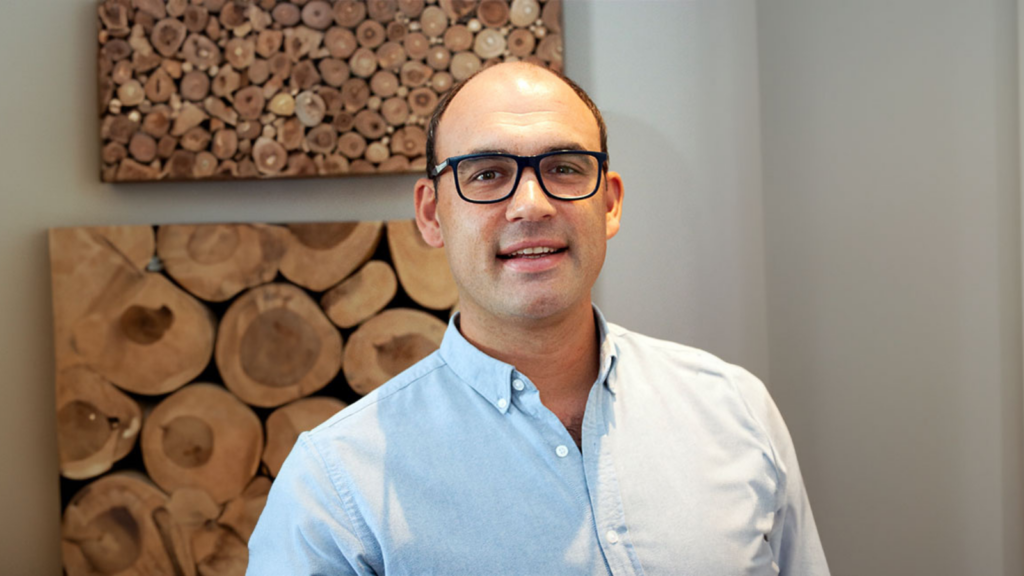
Sentinel Homes managing director Renier Kriek
The future use of the state-owned Tafelberg site has once again put a spotlight on the shortage of affordable housing in well-located urban areas.
The dispute between the city and housing activists became the subject of a much-publicised Constitutional Court decision.
This case compelled the city to consider its obligation to expand affordable housing availability when making decisions about its land.
The proceedings have reinforced a broader question facing South Africa’s cities – how to ensure that teachers, nurses, police officers and other essential workers can afford to live closer to the communities they serve.
Kriek pointed out that, too often, a lack of affordable housing pushes them further away from jobs and economic opportunities.
It becomes an economic issue, affecting labour mobility, productivity, household finances and ultimately the ability of cities to attract and retain the workforce they depend on.
Ultimately, this issue will weigh on the minds of South Africans when they head to the polls to elect local government in November.
Supply expansion in the housing market remains chronically low, below the rates of population growth and household formation.
This problem is exacerbated by semigration, which increases demand in some areas, particularly where supply is already tight.
Kriek said the time has come for South Africans to judge their elected municipal officials on the rate of housing supply expansion.
“If there is too little of something, the price goes up, and the only solution is to make more of the thing so that supply matches demand.”
“That is where our municipalities especially are failing us – the time from starting the planning process to people eventually moving in routinely takes more than a decade.”
Worse yet, Kriek noted that most of that time is taken by disjunct, tedious, and ever-expanding regulation and bureaucracy.
COSATU applauds SAMWU for triumphant agreements at two major municipalities [SOUND]
# Union federation COSATU says it commends the South African Municipal Workers’ Union for standing firm for workers in the Msunduzi Local Municipality in KwaZulu-Natal and Kannaland Local Municipality in the Western Cape. The union pushed back against exploitative practices of retaining personnel in contracts for years and the non-payment of outstanding overtime. COSATU’s spokesperson, Nonzuzo Dlamini, says the unethical behaviour of municipalities refusing to pay what is due to their staff should not be tolerated under any circumstances:
ENG DlaminiONMunicipalities
Why 62.8% of young South Africans cannot find work
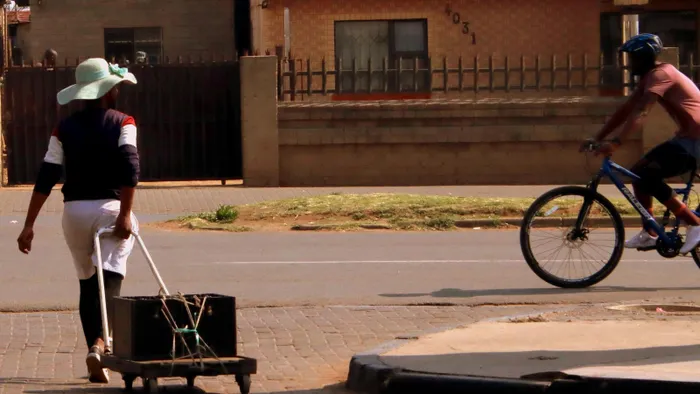
Stats SA reported that 36.4% of South Africans aged between 15 and 24 were not in employment, education or training.
Image: Nicola Mawson | IOL
South Africa’s youth unemployment crisis worsened in the second quarter of 2026, with nearly two in three young people unable to find work, as economists warned that the country’s jobs crisis is increasingly becoming a skills crisis.
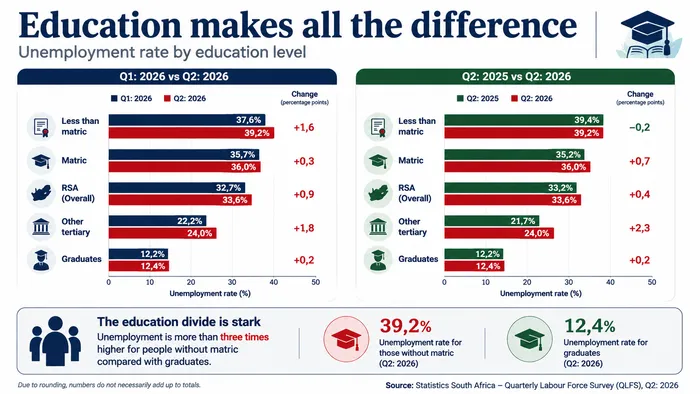
Statistics South Africa’s latest Quarterly Labour Force Survey (QLFS) showed the official unemployment rate rose to 33.6% in the second quarter, from 32.7% in the first three months of the year, as the number of unemployed people increased by 345,000 to 8.5 million. Employment declined by 16,000 over the quarter.
While the headline unemployment rate remains stubbornly high, the figures also highlight the growing premium attached to education. According to Investec economist Lara Hodes, youth unemployment is at a “critically elevated” 62.8%, up from 60.9% previously.
“The youth segment of the market remains the most disadvantaged when it comes to finding sustainable employment,” said Hodes.
Education is key
The QLFS also showed how education increasingly determines employment prospects. South Africans without a matric certificate faced an unemployment rate of 39.2%, while unemployment among graduates stood at just 12.4%.
Those with other tertiary qualifications also recorded unemployment rates well below the national average.
“Access to education remains essential, with the unemployment rate amongst those holding less than a matric certificate at an elevated 39.2%, while unemployment amongst graduates falls sharply to 12.4%,” said Hodes.
Hodes said South Africa had made meaningful progress in implementing reforms to support investment and economic growth, but further reform efforts were needed to generate sustained economic growth and meaningful job creation.
Constrained
PSG senior economist Johann Els said the latest figures pointed to a structural problem that had been decades in the making.
While around 900,000 jobs had been created over the past three-and-a-half years, he said employment growth continued to lag population growth, leaving more South Africans competing for too few opportunities.
“The prospects are improving but it’s not great because the labour market is significantly constrained,” Els said. “We haven’t got the skills we need. We’ve done basically nothing about the education system over the last 30 years to fix the skills deficit.”
Els said employers were increasingly reluctant to hire workers they regarded as unskilled, choosing instead to invest in machinery, equipment and technology.
The effect of education on employment prospects. Image: ChatGPT
Lagging peers
The challenge begins long before young people enter the labour market. The 2021 Progress in International Reading Literacy Study (PIRLS) found that South African Grade 4 learners achieved an average reading score of just 288, compared with the international centre point of 500.
This makes the country the lowest-performing participant. More than 80% of learners failed to reach even the study’s lowest international benchmark.
The 2023 Trends in International Mathematics and Science Study (TIMSS) painted a similar picture. While South Africa’s Grade 9 mathematics score improved from 389 in 2019 to 397 in 2023, it remained below the TIMSS low international benchmark of 400.
Science performance declined from 370 to 362, leaving South Africa among the lowest-performing education systems participating in the international assessment.
North-West University academic Dr Paul Iwuanyanwu says South Africa needs a complete science, technology, engineering and mathematics (STEM) ecosystem.
Overhaul
This, Iwuanyanwu said, would comprise of “stronger schools, better-trained teachers, capable artisans and technicians, properly funded researchers, modern infrastructure, and institutions able of converting knowledge into functioning public services”.
Iwuanyanwu added that “STEM education matters because South Africa cannot repair its infrastructure or grow its economy using skills it has failed to develop”.
The education challenge is also reflected in the number of young people disconnected from both learning and work.
Stats SA reported that 36.4% of South Africans aged between 15 and 24 were not in employment, education or training (NEET), limiting their opportunities to acquire the skills employers increasingly demand.
Suspended Khan loses bid to halt police disciplinary case
Labour court dismisses Popcru application, citing lack of jurisdiction or urgency

Major General Feroz Khan pictured in May. (ANTONIO MUCHAVE )
Suspended crime intelligence deputy head, Maj-Gen Feroz Khan, has lost a labour court application to stop the South African Police Service (SAPS) from taking disciplinary steps against him in his absence for allegedly bringing the police into disrepute.
The matter was heard in the labour court on August 25-26, with judge Connie Prinsloo this week striking the application off the roll “for lack of jurisdiction, alternatively for lack of urgency”.
The Police and Prisons Civil Rights Union (Popcru), which represented Khan, was ordered to pay the costs. Popcru is an affiliate of labour federation Cosatu and represents about 160,000 police, prison, and traffic officers countrywide.
Popcru spokesperson Richard Mamabolo said the union would comment later on Tuesday.
Khan was arrested in May with Gauteng Hawks boss Ebrahim Kadwa and Durban businessman Tariq Downes. The trio face charges including defeating or obstructing the course of justice and contraventions of the Precious Metals Act.
They were released on R20,000 bail by the Kempton Park magistrate’s court after making their first appearance in June. The trio is accused of unlawfully acquiring and possessing precious metals without the required licence.
Khan is a central figure in the Madlanga commission of inquiry into allegations of corruption and criminality in the police. Evidence presented thus far, including information obtained from forensic examination of electronic devices seized from Khan, has placed him at the centre of allegations involving corruption, illicit networks and the manipulation of SAPS procurement processes.
He is accused of leaking confidential police information and assisting associates in securing lucrative SAPS procurement contracts.
Khan was the target of an alleged assassination shortly before he was due to appear before the commission. He was hospitalised after allegedly being ambushed by gunmen in Houghton.
Khan was discharged in mid-July and has since been recuperating at an undisclosed location.
— Additional reporting by Mduduzi Nonyane