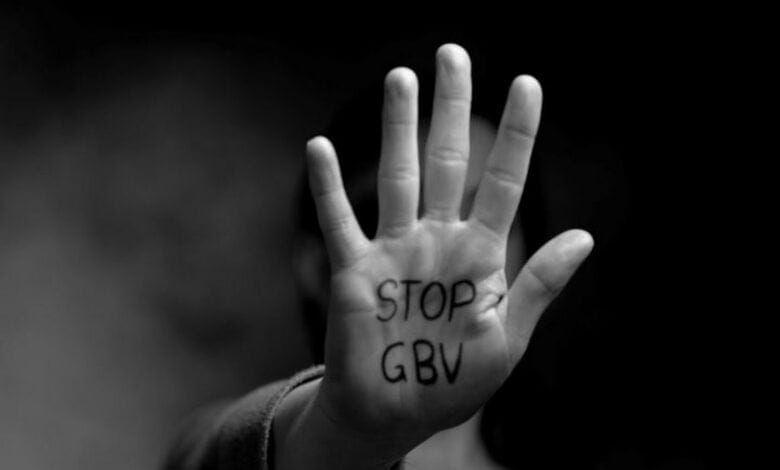
The Gauteng Department of Social Development is strengthening support for gender-based violence survivors by equipping social workers and frontline professionals with specialised trauma-informed care skills to provide compassionate, victim-centred support and promote long-term healing.
For GBV survivors, healing can continue long after the immediate crisis. The Gauteng Department of Social Development is strengthening support services by equipping frontline officials with specialised trauma-informed care skills.
The department recently hosted a Trauma-Informed Care Conference at the Springs Civic Centre in the Eastern Corridor, bringing together Social Workers and other professionals working under the Victim Empowerment Programme (VEP).
The initiative supports Pillar 4 of the National Strategic Plan on Gender-Based Violence and Femicide (GBVF) 2020–2030, which focuses on response, care, support and healing.
Director for the Victim Empowerment Programme and Social Crime Prevention, Khanyisile Mathebula, said the aim is to ensure survivors receive sensitive, appropriate and victim-centred services that support both immediate needs and long-term recovery.
“Through VEP, the Department works closely with key stakeholders across the criminal justice and health sectors,” she said, naming the Department of Justice and Constitutional Development, National Prosecuting Authority, police, Department of Community Safety and Department of Health.
Mathebula said departmental monitoring identified a need to further strengthen therapeutic and psychosocial services provided by social workers across the province.
“The training aims to equip Social Workers with practical knowledge and skills to provide effective counselling and trauma-informed interventions to victims and their families,” she said.
The conference covered understanding trauma, including trauma caused by domestic violence and sexual offences, how trauma manifests, and therapeutic approaches for individuals, couples and families.
Psychologist and occupational therapist Dr Marcia Zikhali also supported the conference, providing specialised expertise on the emotional, psychological and social impact of GBV.
The training further highlighted effective referral systems, safe and private environments for victims, and the importance of supporting Social Workers to reduce burnout and secondary trauma.
Zikhali stressed that victims and their families should be active participants in the healing process.
“Victim-centred services are essential in promoting healing, restoring dignity and empowering survivors to rebuild their lives,” she said.
The department said it remains committed to strengthening frontline services and partnerships to ensure GBV survivors receive compassionate, professional and effective support throughout their healing journey.
The Labour Relations Act, 1995 (LRA) provides every employee with the right not to be unfairly dismissed and not to be subjected to an unfair labour practice. Where artificial intelligence (AI) systems are used in HR-practices, for example, to generate performance ratings, identify employees for retrenchment, or make decisions about promotion, training, or dismissal, the interplay between algorithmic decision-making and the LRA’s protections becomes critical.
Melissa Cogger, Partner, Bowmans
AI-generated performance ratings and dismissals for poor performance
The Code of Good Practice: Dismissal (Code), read with applicable case law, has established requirements for a fair dismissal on the ground of poor performance. These include, among other things, a clear and objective performance standard; communication of the standard to the employee; a fair opportunity to meet the standard; and a fair process before dismissal.
Where an AI system generates a performance rating that leads to a poor performance process and ultimately to dismissal, a number of LRA-related concerns come into play.
The first relates to explicability. The employer must be able to explain to the employee how the performance rating was generated. If the employer cannot explain the algorithm’s methodology (the so-called ‘black box’ problem) it will be difficult to demonstrate that the standard is clear, objective and fair.
Second, there is the question of objectivity. An AI-generated performance rating is only as objective as the data on which it is trained and the criteria it applies. If the algorithm incorporates irrelevant or biased variables, or focuses only on quantifiable metrics, the resultant rating may not constitute a fair and objective measure of performance.
Soft skills such as interpersonal dynamics, leadership qualities, the ability to take on feedback, and collaboration with colleagues may be missed. Reliance on AI ratings accordingly risks providing a narrow and incomplete view of an employee’s overall contribution to the organisation.
Third, the employee’s opportunity to respond must be meaningful. An employee who is told that an algorithm has rated their performance as inadequate must be given an opportunity to challenge that rating. This requires, at minimum, that the employee understands what the algorithm measured and how it arrived at its conclusion.
Fourth, human oversight remains essential. A dismissal based solely on an AI-generated rating, without independent human assessment, is likely to be found procedurally and substantively unfair.
AI in retrenchment selection criteria
Section 189 of the LRA requires that, in retrenchment exercises, selection criteria must be agreed upon with consulting parties or, failing agreement, must be fair and objective.
AI systems might be used to identify what potential selection criteria should be proposed by the employer, or could apply any agreed or determined selection criteria by the employer to suggest which employees are selected for retrenchment.
Where an AI system is used to identify employees for retrenchment (for instance, by scoring employees on skills assessments, qualifications, or experience) the following risks arise:
the criteria applied by the algorithm may not be fair and objective (for example, where they incorporate biased variables that disadvantage employees on the basis of race, gender, age or disability);
the employer may be unable to explain to employees or the consulting parties how the algorithm selected particular employees for retrenchment; and
the algorithm may depart from agreed or conventional selection criteria (such as ‘Last in First Out’, known as LIFO) without a justifiable basis.
A retrenchment exercise that relies on opaque or unexplainable selection criteria driven by AI is vulnerable to challenge as procedurally and substantively unfair.
Promotion and training decisions driven by AI: unfair labour practices
Where AI systems are used to recommend employees for promotion or to identify employees for training and development opportunities, decisions that are arbitrary, irrational, or incapable of being explained and justified by the employer, may constitute unfair labour practices under section 186(2) of the LRA (as well as give rise to unfair discrimination claims).
The following examples illustrate how AI-driven results could give rise to such disputes:
An AI system recommends younger employees for upskilling programmes on the basis that they have a longer projected tenure with the organisation and therefore represent a better ‘return on investment’. Older employees who are excluded from these programmes may have a claim on the basis that the AI system’s recommendation constitutes unfair conduct relating to the provision of training or benefits, in addition to a separate claim of unfair discrimination on the basis of age.
An employee passed over for promotion could argue that the AI-driven decision constitutes unfair conduct, particularly where the algorithm’s criteria indirectly discriminated against them or failed to account for legitimate absences such as maternity leave, family responsibility leave or periods of ill health, which can similarly give rise to unfair discrimination claims on the basis of sex, gender, family responsibility and disability status.
Over-reliance on algorithmic selection may inadvertently exclude employees with high potential who do not conform to established data patterns. As with performance ratings, the algorithm may focus on quantifiable metrics whilst overlooking qualitative factors, resulting in selections that do not account for the full value an employee contributes to the organisation.
AI-generated disciplinary outcomes
The emerging practice of disciplinary decision-makers using AI tools to assist in formulating findings, rulings, or sanction recommendations presents a distinct set of risks.
A particular danger is the phenomenon of AI ‘hallucinations’, where AI tools generate plausible-sounding but factually incorrect or fabricated information.
In the legal context, this may manifest as fictitious case law, invented or incorrectly cited statutory provisions, or purported legal principles that are outdated or have no basis in authority. Relying blindly on such material in a disciplinary context, without independent verification, may compromise the fairness and integrity of the process and render the outcome vulnerable to challenge.
The Labour Court’s recent decision in Molawa and Others v Matjhabeng Local Municipality and Another provides instructive guidance on these risks.
In that matter, the applicants sought to stay disciplinary proceedings pending the determination of a review application in which they challenged rulings made by the disciplinary chairperson. Central to their challenge was the allegation that the chairperson had relied on AI-generated authorities in support of his findings.
The court found that several of the authorities cited by the chairperson either did not exist or did not support the propositions advanced.
It had yet to be definitively established whether they were indeed generated by AI, but the court held that whether the citations were generated by an ‘assistant’ or self-generated by the Chairperson himself, the result is the same: there was prima facie evidence that the chairperson failed to apply his mind to the law.
The Court accordingly granted the interdict, finding that it would not be in the interests of justice to require the employees to subject themselves to a disciplinary enquiry chaired by an individual whose decision-making had been called into serious question.
Employers should accordingly exercise caution if they permit decision-makers to use AI tools in disciplinary proceedings, and should implement guardrails on when and how (if any) AI can be used in disciplinary proceedings.
Requirement for fair process and the inability to explain AI decisions
A thread that runs through all of the above scenarios is the requirement for procedural fairness. The LRA and Code require that employees be given reasons for adverse decisions, an opportunity to respond, and a fair process before a decision is taken.
Where the employer cannot explain the AI system’s reasoning, or where the decision is taken by the algorithm without meaningful human intervention, these procedural requirements cannot be met.
Employers must accordingly ensure that AI systems are used as decision-support tools, not as autonomous decision-makers, and that every material employment decision is subject to independent human review by a person who can articulate the reasons for the decision and respond to the employee’s representations.
To the extent that personal information is uploaded onto AI systems, employers must also have regard to their obligations under the Protection of Personal Information Act 4 of 2013.
The ultimate message for employers is clear: AI may inform, but humans must decide.
On Tuesday night, the municipality and the worker union reached a settlement, which brought the strike to an end.
The Msunduzi CBD amid the ongoing strike by the municipality’s workers. Picture: Thabiso Goba/EWN
Workers from the Msunduzi Municipality are back at work on Wednesday following a five-day labour strike that brought service delivery to a standstill in KwaZulu-Natal’s capital.
On Tuesday night, the municipality and the worker union reached a settlement, which brought the strike to an end.
Workers had taken to the streets to raise their grievances around overtime pay, standby allowances, grading and job descriptions.
The strike saw piles of rubbish strewn around the Msunduzi CBD, with waste also not being collected from residential areas.
The regional chairperson of the South African Municipal Workers Union (SAMWU), Brandon George, said, “Everybody has returned back to work today [Wednesday]. We’re just basically awaiting now an arbitration award from the bargaining council. An arbitration will be today [Wednesday]. But yes, we have managed to find each other and find common ground.”
South African public school teachers have seen their salaries increase significantly since 2019, but the increases have failed to keep pace with inflation, leaving many worse off in real terms.
For an entry-level teacher with a Relative Equivalent Qualification Value (REQV) 14 qualification, the gap amounts to R17,915 over the period, equivalent to roughly R2,559 a year.
The figures are contained in the salary adjustment data published by the Department of Basic Education, which sets out the salary notches applicable to teachers across the public education system.
Teacher salaries vary considerably depending on qualifications, experience and seniority. At the lower end of the scale, a teacher can earn around R169,707 a year, while salaries at the top end can reach about R1.33 million annually.
South Africa’s public education system employs approximately 411,200 teachers across 22,259 schools. A teacher’s basic salary is determined primarily by salary scales published in the Government Gazette.
Teachers enter the system at a particular notch based on their qualifications and experience, and can move up the scale through annual increments, provided they meet minimum performance requirements.
For example, a teacher with a matric certificate and four years of university education would typically enter the system at Notch 164. In 2026, this carries an annual salary of R366,051, or about R30,504 a month.
However, in 2019, the same minimum salary was R278,640, equivalent to approximately R23,220 a month. This represents a nominal increase of 31.4% over seven years. The problem is that inflation rose by 37.8% over the same period.
To have maintained the same purchasing power as the R278,640 salary in 2019, the teacher would need to be earning about R383,966 a year in 2026, or roughly R32,000 a month.
This leaves the current salary R17,915 below the inflation-adjusted level. Experience and promotion can substantially alter a teacher’s earnings.
Department heads, deputy principals and principals can earn considerably more than classroom teachers with similar qualifications, while experienced teachers generally progress through the salary notches over time.
Role
Min. salary 2019
Min. salary 2026
Inflation adj.
Diff.
Educator with REQV14
R278,640
R366,051
(+31.4%)
R383,966
(+37.8%)
-R17,915
(-R2,559 yoy)
Government salaries should be cut
Teachers also receive benefits that provide some financial support beyond their basic salaries.
These include an employer pension contribution of 13% of basic salary, a 13th cheque, and a medical aid subsidy for those who belong to the Government Employees Medical Scheme.
Teachers who own or rent homes can also qualify for a housing allowance of around R2,000 a month.
However, economist Dawie Roodt has argued that the central problem with South Africa’s public sector is not simply the amount being spent on salaries, but the value being delivered in return.
“State employees represent 3% of the South African population but account for 17% of the economy in salaries,” Roodt said at the Kragdag Conference.
He argued that South Africa needs more teachers and police officers, but said they should be paid differently and held to higher performance standards.
“However, they ought to be paid significantly less and required to deliver far better results than they currently do,” he said.
“So essentially, you ought to halve the salaries of all teachers, double the total number of teachers, and expect more from them.”
Roodt acknowledged that some teachers are “hopelessly underpaid and overworked”, but argued that this is not representative of the public service as a whole.
“Overall, teachers in South Africa are overpaid and underworked, and there are too few of them,” he said.
This likely refers to the top of the remuneration table, at which senior teachers, heads of departments, deputy principals, and principals get paid between R800,000 (R66,667pm) to R1.33 million (R11,833 pm).
“So, more money isn’t the issue. The real problem lies in the quality of output and, of course, better management.”
He also criticised the relationship between government spending on education and educational outcomes.
“If you plot this on a scatter graph, you see that our spending is very high, but our quality is very low,” he said.
“We spend a lot on education and other items, but the quality is poor. That is the real problem, not money.”
The full gazette with all salary notches can be read below.
Professor Lindiwe Zungu’s Journey of Leadership, Science and Service
From a Dusty Township in KwaZulu-Natal to Transforming Occupational Health in South Africa’s Mining Industry.
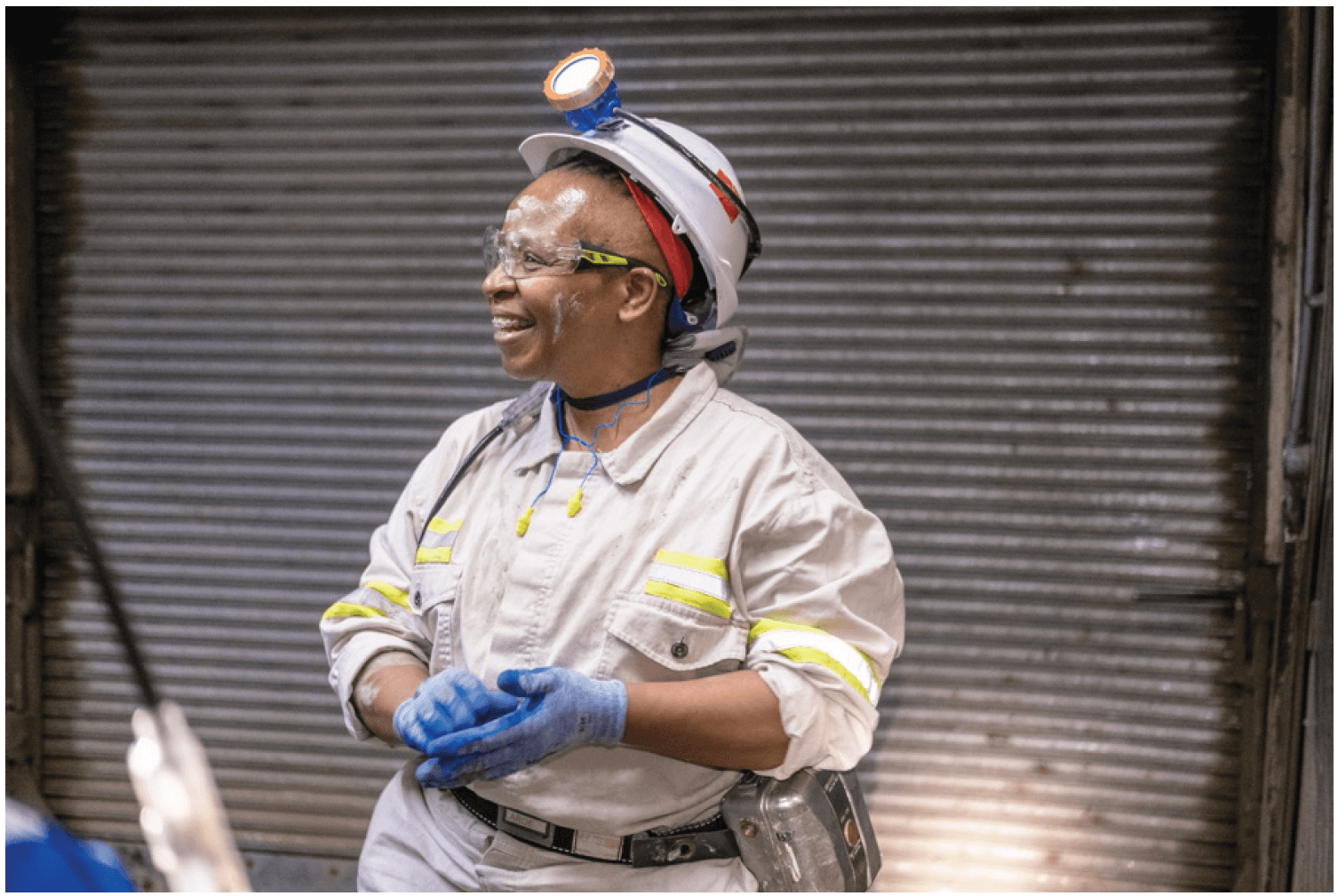
Every morning, thousands of mineworkers descend beneath the earth to power South Africa’s economy. Among them are women who are engineers, geologists, artisans, machine operators, health professionals and scientists and whose courage and resilience continue to redefine one of the country’s most demanding industries.Yet every shift underground is also a reminder that economic prosperity should never come at the expense of human health, safety, wellbeing and dignity.
For Professor Lindiwe Zungu, this simple but profound belief has guided a remarkable career spanning more than three decades. It is a journey that has taken her from a dusty township in KwaZulu-Natal to becoming one of South Africa’s foremost occupational health scientists, while positioning the University of Venda at the forefront of nationally recognised research that is transforming occupational health in the mining sector.
As South Africa commemorates Women’s Month under the national theme, “Building Resilient Economies for All,” Professor Zungu’s story reminds us that resilient economies are built not only through investment, technology and infrastructure, but through healthy workers, courageous women, scientific innovation and visionary leadership.
Her journey did not begin in a university lecture hall. It began with an unwavering desire to improve people’s lives. Unlike many academics whose careers have been shaped exclusively within higher education, Professor Zungu first built an extensive career as an occupational health practitioner and specialist, working across several high-risk industries, particularly the mining sector. Those years exposed her to the realities of workplaces where occupational diseases, hazardous exposures, workplace injuries, and psychosocial challenges directly affected the health and well-being of workers and their families.
It was here that she developed a philosophy that would define the rest of her career: “…Research must never exist simply to generate knowledge. Its highest purpose is to improve people’s lives…”. When Professor Zungu later transitioned into academia, she brought with her something invaluable, practical experience grounded in the realities of the workplace. Her research was therefore never driven by academic curiosity alone; it was driven by a commitment to solving real-world problems through evidence that could influence policy, transform practice and protect workers.
Her academic journey has been one of continuous growth and purposeful leadership. Rising through the ranks from Lecturer to Professor, she went on to serve in several senior leadership positions, including Executive Dean and Acting Chief Operating Officer (Academic) at one of South Africa’s largest universities. She later served as Editor-in-Chief of two accredited scientific journals, contributing significantly to strengthening research quality and scholarly publishing in South Africa.
Today, Professor Zungu leads two nationally significant research entities at the University of Venda: (1) the Occupational Health and Safety in Mining (OHSMIN) Research Institute and the newly established (2) South African Medical Research Council (SAMRC)–University of Venda–Mintek Digital Health and Artificial Intelligence for Occupational Health in the Mining Sector (DHAIOH) Extramural Research Unit.
For Professor Zungu, however, leadership has never been measured by the positions she has held.
It has always been measured by impact. Throughout her career, she has remained guided by a single question: How do we ensure that every worker returns home healthy, safe, and unharmed every day? That question continues to shape every research project she leads, every student she mentors and every partnership she builds.
It is also the question that continues to position the University of Venda as an emerging leader in occupational health research, innovation and human capital development; not only in South Africa, but across the African continent.
Research That Changes Lives
For Professor Zungu, research has never been measured by the number of publications produced or conferences attended. Its true value lies in whether it changes policy, improves practice and ultimately protects the lives of workers from hazardous work exposures.
This philosophy has shaped more than two decades of research leadership dedicated to improving occupational health and safety in South Africa’s mining industry, one of the country’s most strategically important economic sectors and one of its most hazardous working environments. Throughout her career, Professor Zungu has collaborated extensively with national organisations including the South African Medical Research Council (SAMRC), the Mine Health and Safety Council (MHSC), the National Research Foundation (NRF), the Mining Qualifications Authority (MQA) and the Minerals Council South Africa to generate evidence that informs policy, strengthens occupational health systems and promotes safer workplaces. Her work exemplifies how universities can partner with government, industry and science councils to produce research that addresses national priorities while improving people’s lives.
Among her most influential contributions has been her pioneering work focusing on the health, safety, and well-being of women in mining.
As increasing numbers of women entered South Africa’s mining industry, Professor Zungu recognised that occupational health systems, workplace infrastructure and even personal protective equipment had largely been designed around a historically male workforce. Through evidence-based research, she helped bring national attention to challenges that had received little recognition, including ill-fitting personal protective equipment, reproductive health concerns, workplace safety, psychosocial wellbeing and gender-responsive occupational health policies. One landmark study, SIM100904, fundamentally changed the national conversation on personal protective equipment for women in mining. The findings informed the development of South Africa’s Guideline for the Provision of Personal Protective Equipment for Women in Mining, representing a significant milestone in recognising that occupational health interventions must respond to the diverse needs of the modern workforce.
Building on this work, Professor Zungu later led another nationally significant research project, SIM130903, which examined Gender-Based Violence and Femicide (GBVF) within the South African mining industry. At a time when GBVF had become one of South Africa’s greatest societal challenges, her research generated evidence that informed the sector’s Guidance Note on the Prevention of Gender-Based Violence and Femicide in Mining, providing practical recommendations for creating workplaces that are safer, more respectful and more inclusive. Importantly, her contribution did not end with the publication of research findings.
Today, in partnership with the Mine Health and Safety Council, Professor Zungu continues to lead research supporting the implementation of this Guidance Note across the mining sector, demonstrating her longstanding belief that research should not end with publication but should continue until it improves policy, changes practice and transforms lives. These achievements reflect more than academic success. They demonstrate how rigorous research can contribute directly to healthier workplaces, stronger organisations and a more inclusive economy.
Professor Zungu believes the South African mining industry deserves recognition for taking decisive leadership in addressing issues affecting women in the workplace, particularly through evidence-informed approaches to occupational health, gender equity and GBVF. She hopes that the lessons emerging from the mining sector will inspire other industries, including higher education, to adopt similarly proactive approaches to creating environments where women are protected, respected, and empowered to lead.
For Professor Zungu, protecting the health, safety, and well-being of women in mining is not simply an occupational health priority. It is an economic imperative. When women work in environments where they are healthy, safe and supported, industries become more productive, organisations become more innovative and communities become more resilient.
In this way, occupational health becomes much more than disease prevention. It becomes a catalyst for inclusive economic growth, sustainable development and social justice.
In Professor Zungu’s words, the relationship is simple yet profound: “…Healthy workers build productive industries. Productive industries build resilient economies…”
Building the Future Through Science, Innovation and Strategic Partnerships
If Professor Zungu’s earlier research helped shape occupational health policy in South Africa, the next chapter of her journey is focused on something even more ambitious; reimagining the future of occupational health through digital innovation, artificial intelligence and scientific collaboration.
That vision became a reality with the establishment of the South African Medical Research Council (SAMRC)–University of Venda–Mintek Digital Health and Artificial Intelligence for Occupational Health in the Mining Sector (DHAIOH) Extramural Research Unit, officially launched by the South African Medical Research Council on 28 July 2026 in Cape Town.
The DHAIOH Extramural Research Unit is one of the newly established nationally recognised research units funded by the South African Medical Research Council under its highly competitive Extramural Unit Programme. It represents a significant national investment in research excellence, innovation and human capital development and has been awarded funding for up to fifteen years, implemented through three consecutive five-year funding cycles, subject to successful scientific and institutional performance reviews.
For the University of Venda, the establishment of this nationally recognised research platform is both a significant milestone and a vote of confidence in the University’s growing reputation for research excellence, innovation and societal impact.
For Professor Zungu, the establishment of the DHAIOH Unit represents far more than another research initiative.
It is an opportunity to fundamentally transform how occupational health is practised in South Africa through digital innovation, artificial intelligence and evidence-based research.
This shift from reactive healthcare to predictive and preventive occupational health has the potential to redefine worker protection in South Africa’s mining sector and position the country as a global leader in digital occupational health innovation.
Central to this vision is the strategic partnership between the University of Venda, the South African Medical Research Council and Mintek.
Each institution contributes unique strengths.
The University of Venda provides academic leadership, postgraduate education, multidisciplinary research and community-responsive scholarship.
The South African Medical Research Council provides national strategic direction, long-term investment in research excellence and a mandate to improve the health of all South Africans through innovation, scientific discovery and human capital development.
Mintek contributes internationally recognised expertise in mining technology, engineering, scientific infrastructure and technological innovation, creating opportunities for collaborative research that bridges academia and industry while accelerating the translation of research into practical solutions.
Together, these institutions are building far more than a research unit. They are creating a national research platform where science, technology and partnership converge to improve worker health, strengthen the mining sector and contribute to South Africa’s economic development.
Equally important is the Unit’s commitment to developing the next generation of African scientists. Through Master’s and Doctoral training, postdoctoral fellowships, multidisciplinary research programmes and strategic collaborations, the DHAIOH Extramural Research Unit is investing in the researchers who will lead occupational health, digital health and artificial intelligence across Africa for decades to come.
Professor Zungu believes that this investment in people may ultimately become the Unit’s greatest legacy.
Research changes policy.
Innovation changes practice.
But people change the future.
Every postgraduate student supervised.
Every young scientist mentored.
Every postdoctoral fellow supported.
Every collaborative partnership established
Each represents another step towards strengthening South Africa’s scientific capacity while ensuring that future occupational health leaders possess the skills needed to respond to increasingly complex workplace health challenges.
In many respects, the DHAIOH Extramural Research Unit embodies the aspirations of this year’s Women’s Month theme, “Building Resilient Economies for All.” Together, these create healthier workplaces, stronger institutions and more resilient economies. For Professor Zungu, this is where occupational health and economic development become inseparable. Protecting workers is not only a moral responsibility. It is a strategic investment in South Africa’s future. As she often reminds her students and colleagues: “Occupational health is not simply about preventing disease. It is about protecting human potential.”
Reflecting on her own journey, Professor Zungu is the first to acknowledge that no meaningful achievement is accomplished alone. Every chapter of her career has been shaped by remarkable women leaders who recognised her potential, challenged her to grow, shared their wisdom and, perhaps most importantly, believed in her long before many others did.
She often reflects on the timeless isiZulu wisdom: “Indlela ibuzwa kwabaphambili.” “The way forward is learned from those who have travelled the path before us.” Throughout her career, Professor Zungu has been privileged to learn from women whose leadership has left an indelible mark on South African higher education and on her own professional journey.
She pays heartfelt tribute to Professor Rosemary Moeketsi, former Executive Dean of the College of Human Sciences at the University of South Africa, whose visionary leadership demonstrated that academic excellence is best achieved through compassion, courage and unwavering commitment to people.
She also honours Professor Mamokgethi Phakeng, former Vice-Principal for Research, Innovation and Postgraduate Studies at the University of South Africa, whose fearless pursuit of research excellence and transformation inspired countless women academics to believe that there should be no limits to their aspirations.
At the University of Venda, Professor Zungu continues to draw inspiration from exceptional women leaders who have created an enabling environment for research excellence and institutional growth. She acknowledges Professor Tshilidzi Mulaudzi, Executive Dean of the Faculty of Health Sciences, for her steadfast leadership and unwavering support in establishing both the OHSMIN Research Institute and the SAMRC–UNIVEN–Mintek DHAIOH Extramural Research Unit within the Faculty. She equally recognises Professor Lindelani Mushaphi, Deputy Dean for Teaching and Learning, Professor Makondele Radzilani, Deputy Dean for Research and Postgraduate Studies, and Professor Ntsieni Mashau, Head of the Department of Public Health, whose collective leadership continues to strengthen teaching, research and postgraduate education within the Faculty of Health Sciences.
For Professor Zungu, these women represent something far greater than individual achievement. They represent a generation of leaders who understood that true leadership is measured not by personal success, but by the success of those they empower. They allowed another woman to stand on their shoulders until she could stand firmly on her own.
Today, Professor Zungu is committed to honouring the legacy of those who mentored her by nurturing the next generation of scientists through empowering women researchers and future leaders. She believes that investing in people through mentorship, human capital development and scientific excellence is essential to strengthening South Africa’s research capacity, advancing innovation and building resilient economies for all.
Because the true measure of leadership is not how high we rise ourselves, but how many others rise because we chose to lift them. As she often reminds her students: “Umuntu ngumuntu ngabantu.” “A person becomes a person through other people.” Those words continue to guide her philosophy of leadership, reminding her that every success is built upon the generosity, sacrifice and encouragement of those who came before us.
Women’s Month 2026 Dedication
This Women’s Month, Professor Lindiwe Zungu dedicates this recognition to every woman in South Africa’s mining industry, those who descend beneath the earth each day with courage, resilience and determination so that our nation may continue to grow and prosper.
You are not only breaking barriers; you are helping to build healthier workplaces, stronger communities and more resilient economies. May your courage continue to inspire the science, innovation and leadership that strive to ensure every woman returns home from work healthy, safe, respected and empowered.
“When we protect the health, dignity, and leadership of women, we do far more than transform workplaces; we strengthen families, advance science, build resilient institutions, and shape stronger nations. That is how resilient economies are built.” — Professor Lindiwe Zungu.
Issued by:
Department of Marketing, Branding and Communication
University of Venda
Tel: 082 868 2218 / 082 868 1811
Parliament, Wednesday, 26 August 2026– The Portfolio Committee on Higher Education and Training has heard that universities are not fully compliant with South Africa’s labour laws when employing foreign nationals.
The committee today met with the SIU, the Department of Employment and Labour (DEL), the Department of Home Affairs and the Department of Higher Education and Training on the issuance of study and work permits to foreign nationals and the measures in place to ensure compliance with relevant legislation
According to statistics presented by the DEL for the professionally qualified population at universities in 2025, African senior managers accounted for 41.9 per cent and whites at 25.3 per cent. Meanwhile, Indians accounted for 10 percent, coloureds at 6.9 percent, and foreign nationals for 16 percent.
The Chairperson of the committee, Mr Tebogo Letsie, said: “We believe in internationalisation but there must be compliance with the country’s labour laws such as the Employment Services Act and the Employment Equity Act.”
Mr Letsie stressed that the engagement was not an attack on foreign academics, but rather to strengthen the post-school education and training system while there is compliance with policies governing post-school education sector.
“We will follow the correct procedures and channels to request a special proclamation through the Speaker of the National Assembly to write to the President of the country to issue a special proclamation specifically looking at the appointment of foreign nationals during the last seven-year period”.
Mr Letsie recommended that the Department of Labour must enforce compliance with South Africa’s employment laws and prosecute where it finds non-compliance with labour laws any institution in the post-school education system
On student accommodation, Mr Letsie said the committee has always supported the inclusion of the National Student Financial Aid Scheme to play a role in the accreditation process. Mr Letsie said student accommodation has become a commodity and seen as a goldmine by certain unscrupulous people.
“Student accommodation is not only necessary, it is also an area in which universities play a significant role. The committee is aware that some universities claim payments for students placed in certain residences, including instances where the state pays for accommodation even when students are no longer staying there,” said Mr Letsie.
The committee also commended the Special Investigating Unit and the Public Protector for investigating allegations of maladministration, corruption and other wrongdoing at institutions within the Department of Higher Education and Training portfolio.
Lastly, Mr Letsie said there was a need for a deeper investigation into persistent problems concerning funding intended to assist students with accommodation and that the upcoming colloquium could help the sector find solutions.
ISSUED BY THE PARLIAMENTARY COMMUNICATION SERVICES ON BEHALF OF THE CHAIRPERSON OF THE PORTFOLIO COMMITTEE ON HIGHER EDUCATION AND TRAINING, MR TEBOGO LETSIE.