
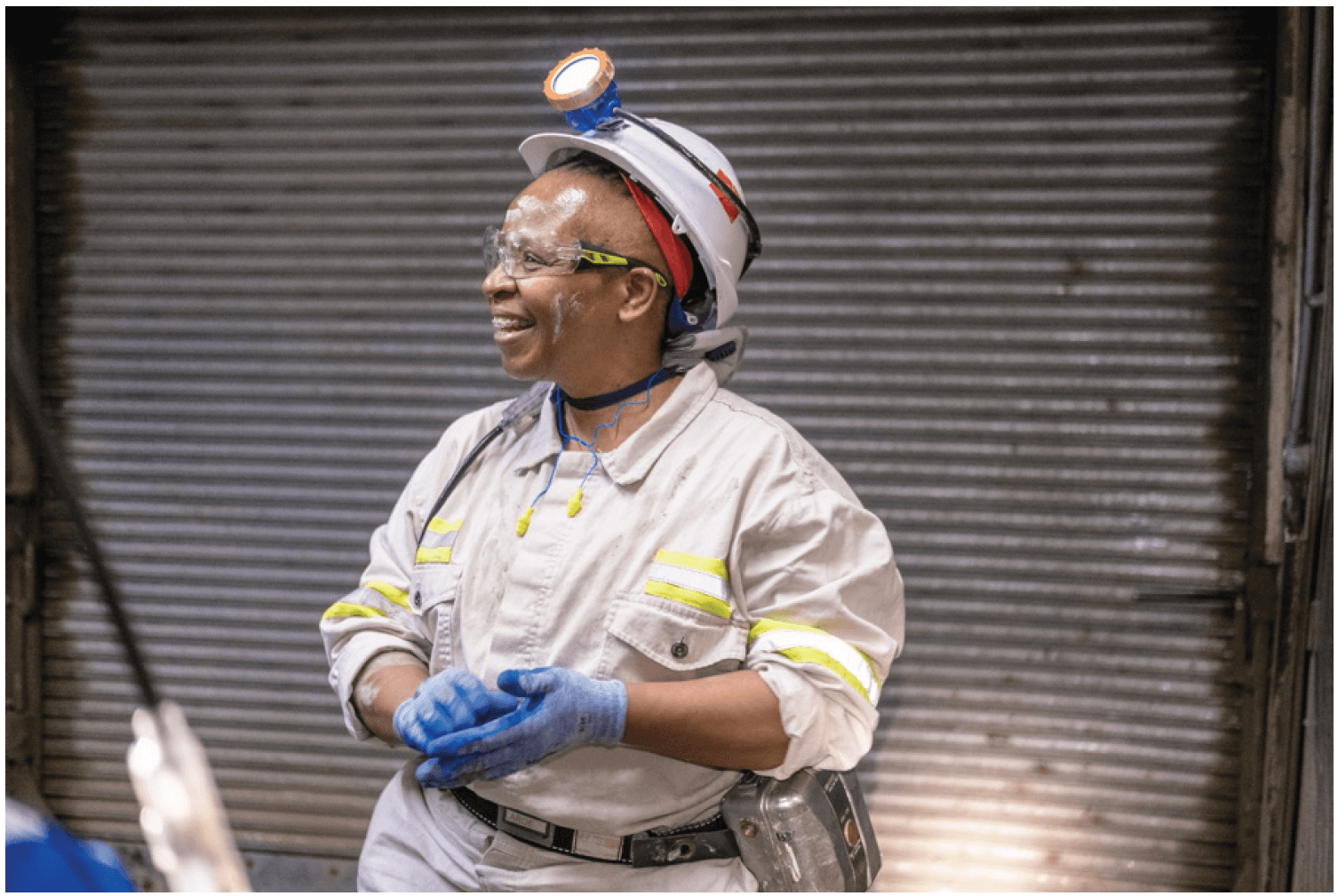
Professor Lindiwe Zungu’s Journey of Leadership, Science and Service
From a Dusty Township in KwaZulu-Natal to Transforming Occupational Health in South Africa’s Mining Industry.
Every morning, thousands of mineworkers descend beneath the earth to power South Africa’s economy. Among them are women who are engineers, geologists, artisans, machine operators, health professionals and scientists and whose courage and resilience continue to redefine one of the country’s most demanding industries.Yet every shift underground is also a reminder that economic prosperity should never come at the expense of human health, safety, wellbeing and dignity.
For Professor Lindiwe Zungu, this simple but profound belief has guided a remarkable career spanning more than three decades. It is a journey that has taken her from a dusty township in KwaZulu-Natal to becoming one of South Africa’s foremost occupational health scientists, while positioning the University of Venda at the forefront of nationally recognised research that is transforming occupational health in the mining sector.
As South Africa commemorates Women’s Month under the national theme, “Building Resilient Economies for All,” Professor Zungu’s story reminds us that resilient economies are built not only through investment, technology and infrastructure, but through healthy workers, courageous women, scientific innovation and visionary leadership.
Her journey did not begin in a university lecture hall. It began with an unwavering desire to improve people’s lives. Unlike many academics whose careers have been shaped exclusively within higher education, Professor Zungu first built an extensive career as an occupational health practitioner and specialist, working across several high-risk industries, particularly the mining sector. Those years exposed her to the realities of workplaces where occupational diseases, hazardous exposures, workplace injuries, and psychosocial challenges directly affected the health and well-being of workers and their families.
It was here that she developed a philosophy that would define the rest of her career:
“…Research must never exist simply to generate knowledge. Its highest purpose is to improve people’s lives…”. When Professor Zungu later transitioned into academia, she brought with her something invaluable, practical experience grounded in the realities of the workplace. Her research was therefore never driven by academic curiosity alone; it was driven by a commitment to solving real-world problems through evidence that could influence policy, transform practice and protect workers.
Her academic journey has been one of continuous growth and purposeful leadership. Rising through the ranks from Lecturer to Professor, she went on to serve in several senior leadership positions, including Executive Dean and Acting Chief Operating Officer (Academic) at one of South Africa’s largest universities. She later served as Editor-in-Chief of two accredited scientific journals, contributing significantly to strengthening research quality and scholarly publishing in South Africa.
Today, Professor Zungu leads two nationally significant research entities at the University of Venda: (1) the Occupational Health and Safety in Mining (OHSMIN) Research Institute and the newly established (2) South African Medical Research Council (SAMRC)–University of Venda–Mintek Digital Health and Artificial Intelligence for Occupational Health in the Mining Sector (DHAIOH) Extramural Research Unit.
For Professor Zungu, however, leadership has never been measured by the positions she has held.
It has always been measured by impact. Throughout her career, she has remained guided by a single question: How do we ensure that every worker returns home healthy, safe, and unharmed every day? That question continues to shape every research project she leads, every student she mentors and every partnership she builds.
It is also the question that continues to position the University of Venda as an emerging leader in occupational health research, innovation and human capital development; not only in South Africa, but across the African continent.
Research That Changes Lives
For Professor Zungu, research has never been measured by the number of publications produced or conferences attended. Its true value lies in whether it changes policy, improves practice and ultimately protects the lives of workers from hazardous work exposures.
This philosophy has shaped more than two decades of research leadership dedicated to improving occupational health and safety in South Africa’s mining industry, one of the country’s most strategically important economic sectors and one of its most hazardous working environments. Throughout her career, Professor Zungu has collaborated extensively with national organisations including the South African Medical Research Council (SAMRC), the Mine Health and Safety Council (MHSC), the National Research Foundation (NRF), the Mining Qualifications Authority (MQA) and the Minerals Council South Africa to generate evidence that informs policy, strengthens occupational health systems and promotes safer workplaces. Her work exemplifies how universities can partner with government, industry and science councils to produce research that addresses national priorities while improving people’s lives.
Among her most influential contributions has been her pioneering work focusing on the health, safety, and well-being of women in mining.
As increasing numbers of women entered South Africa’s mining industry, Professor Zungu recognised that occupational health systems, workplace infrastructure and even personal protective equipment had largely been designed around a historically male workforce. Through evidence-based research, she helped bring national attention to challenges that had received little recognition, including ill-fitting personal protective equipment, reproductive health concerns, workplace safety, psychosocial wellbeing and gender-responsive occupational health policies. One landmark study, SIM100904, fundamentally changed the national conversation on personal protective equipment for women in mining. The findings informed the development of South Africa’s Guideline for the Provision of Personal Protective Equipment for Women in Mining, representing a significant milestone in recognising that occupational health interventions must respond to the diverse needs of the modern workforce.
Building on this work, Professor Zungu later led another nationally significant research project, SIM130903, which examined Gender-Based Violence and Femicide (GBVF) within the South African mining industry. At a time when GBVF had become one of South Africa’s greatest societal challenges, her research generated evidence that informed the sector’s Guidance Note on the Prevention of Gender-Based Violence and Femicide in Mining, providing practical recommendations for creating workplaces that are safer, more respectful and more inclusive. Importantly, her contribution did not end with the publication of research findings.
Today, in partnership with the Mine Health and Safety Council, Professor Zungu continues to lead research supporting the implementation of this Guidance Note across the mining sector, demonstrating her longstanding belief that research should not end with publication but should continue until it improves policy, changes practice and transforms lives. These achievements reflect more than academic success. They demonstrate how rigorous research can contribute directly to healthier workplaces, stronger organisations and a more inclusive economy.
Professor Zungu believes the South African mining industry deserves recognition for taking decisive leadership in addressing issues affecting women in the workplace, particularly through evidence-informed approaches to occupational health, gender equity and GBVF. She hopes that the lessons emerging from the mining sector will inspire other industries, including higher education, to adopt similarly proactive approaches to creating environments where women are protected, respected, and empowered to lead.
For Professor Zungu, protecting the health, safety, and well-being of women in mining is not simply an occupational health priority. It is an economic imperative. When women work in environments where they are healthy, safe and supported, industries become more productive, organisations become more innovative and communities become more resilient.
In this way, occupational health becomes much more than disease prevention. It becomes a catalyst for inclusive economic growth, sustainable development and social justice.
In Professor Zungu’s words, the relationship is simple yet profound: “…Healthy workers build productive industries. Productive industries build resilient economies…”
Building the Future Through Science, Innovation and Strategic Partnerships
If Professor Zungu’s earlier research helped shape occupational health policy in South Africa, the next chapter of her journey is focused on something even more ambitious; reimagining the future of occupational health through digital innovation, artificial intelligence and scientific collaboration.
That vision became a reality with the establishment of the South African Medical Research Council (SAMRC)–University of Venda–Mintek Digital Health and Artificial Intelligence for Occupational Health in the Mining Sector (DHAIOH) Extramural Research Unit, officially launched by the South African Medical Research Council on 28 July 2026 in Cape Town.
The DHAIOH Extramural Research Unit is one of the newly established nationally recognised research units funded by the South African Medical Research Council under its highly competitive Extramural Unit Programme. It represents a significant national investment in research excellence, innovation and human capital development and has been awarded funding for up to fifteen years, implemented through three consecutive five-year funding cycles, subject to successful scientific and institutional performance reviews.
For the University of Venda, the establishment of this nationally recognised research platform is both a significant milestone and a vote of confidence in the University’s growing reputation for research excellence, innovation and societal impact.
For Professor Zungu, the establishment of the DHAIOH Unit represents far more than another research initiative.
It is an opportunity to fundamentally transform how occupational health is practised in South Africa through digital innovation, artificial intelligence and evidence-based research.
This shift from reactive healthcare to predictive and preventive occupational health has the potential to redefine worker protection in South Africa’s mining sector and position the country as a global leader in digital occupational health innovation.
Central to this vision is the strategic partnership between the University of Venda, the South African Medical Research Council and Mintek.
Each institution contributes unique strengths.
The University of Venda provides academic leadership, postgraduate education, multidisciplinary research and community-responsive scholarship.
The South African Medical Research Council provides national strategic direction, long-term investment in research excellence and a mandate to improve the health of all South Africans through innovation, scientific discovery and human capital development.
Mintek contributes internationally recognised expertise in mining technology, engineering, scientific infrastructure and technological innovation, creating opportunities for collaborative research that bridges academia and industry while accelerating the translation of research into practical solutions.

Together, these institutions are building far more than a research unit. They are creating a national research platform where science, technology and partnership converge to improve worker health, strengthen the mining sector and contribute to South Africa’s economic development.
Equally important is the Unit’s commitment to developing the next generation of African scientists. Through Master’s and Doctoral training, postdoctoral fellowships, multidisciplinary research programmes and strategic collaborations, the DHAIOH Extramural Research Unit is investing in the researchers who will lead occupational health, digital health and artificial intelligence across Africa for decades to come.

Professor Zungu believes that this investment in people may ultimately become the Unit’s greatest legacy.
- Research changes policy.
- Innovation changes practice.
- But people change the future.
- Every postgraduate student supervised.
- Every young scientist mentored.
- Every postdoctoral fellow supported.
- Every collaborative partnership established
Each represents another step towards strengthening South Africa’s scientific capacity while ensuring that future occupational health leaders possess the skills needed to respond to increasingly complex workplace health challenges.
In many respects, the DHAIOH Extramural Research Unit embodies the aspirations of this year’s Women’s Month theme, “Building Resilient Economies for All.” Together, these create healthier workplaces, stronger institutions and more resilient economies. For Professor Zungu, this is where occupational health and economic development become inseparable. Protecting workers is not only a moral responsibility. It is a strategic investment in South Africa’s future. As she often reminds her students and colleagues: “Occupational health is not simply about preventing disease. It is about protecting human potential.”

Reflecting on her own journey, Professor Zungu is the first to acknowledge that no meaningful achievement is accomplished alone. Every chapter of her career has been shaped by remarkable women leaders who recognised her potential, challenged her to grow, shared their wisdom and, perhaps most importantly, believed in her long before many others did.
She often reflects on the timeless isiZulu wisdom: “Indlela ibuzwa kwabaphambili.” “The way forward is learned from those who have travelled the path before us.” Throughout her career, Professor Zungu has been privileged to learn from women whose leadership has left an indelible mark on South African higher education and on her own professional journey.
She pays heartfelt tribute to Professor Rosemary Moeketsi, former Executive Dean of the College of Human Sciences at the University of South Africa, whose visionary leadership demonstrated that academic excellence is best achieved through compassion, courage and unwavering commitment to people.
She also honours Professor Mamokgethi Phakeng, former Vice-Principal for Research, Innovation and Postgraduate Studies at the University of South Africa, whose fearless pursuit of research excellence and transformation inspired countless women academics to believe that there should be no limits to their aspirations.
At the University of Venda, Professor Zungu continues to draw inspiration from exceptional women leaders who have created an enabling environment for research excellence and institutional growth. She acknowledges Professor Tshilidzi Mulaudzi, Executive Dean of the Faculty of Health Sciences, for her steadfast leadership and unwavering support in establishing both the OHSMIN Research Institute and the SAMRC–UNIVEN–Mintek DHAIOH Extramural Research Unit within the Faculty. She equally recognises Professor Lindelani Mushaphi, Deputy Dean for Teaching and Learning, Professor Makondele Radzilani, Deputy Dean for Research and Postgraduate Studies, and Professor Ntsieni Mashau, Head of the Department of Public Health, whose collective leadership continues to strengthen teaching, research and postgraduate education within the Faculty of Health Sciences.
For Professor Zungu, these women represent something far greater than individual achievement. They represent a generation of leaders who understood that true leadership is measured not by personal success, but by the success of those they empower. They allowed another woman to stand on their shoulders until she could stand firmly on her own.
Today, Professor Zungu is committed to honouring the legacy of those who mentored her by nurturing the next generation of scientists through empowering women researchers and future leaders. She believes that investing in people through mentorship, human capital development and scientific excellence is essential to strengthening South Africa’s research capacity, advancing innovation and building resilient economies for all.
Because the true measure of leadership is not how high we rise ourselves, but how many others rise because we chose to lift them. As she often reminds her students: “Umuntu ngumuntu ngabantu.” “A person becomes a person through other people.” Those words continue to guide her philosophy of leadership, reminding her that every success is built upon the generosity, sacrifice and encouragement of those who came before us.
Women’s Month 2026 Dedication
This Women’s Month, Professor Lindiwe Zungu dedicates this recognition to every woman in South Africa’s mining industry, those who descend beneath the earth each day with courage, resilience and determination so that our nation may continue to grow and prosper.
You are not only breaking barriers; you are helping to build healthier workplaces, stronger communities and more resilient economies. May your courage continue to inspire the science, innovation and leadership that strive to ensure every woman returns home from work healthy, safe, respected and empowered.

“When we protect the health, dignity, and leadership of women, we do far more than transform workplaces; we strengthen families, advance science, build resilient institutions, and shape stronger nations. That is how resilient economies are built.” — Professor Lindiwe Zungu.
Issued by:
Department of Marketing, Branding and Communication
University of Venda
Tel: 082 868 2218 / 082 868 1811
Source: https://www.univen.ac.za/news/building-resilient-economies-begins-with-healthy-workers/