Failure to resolve branch-level disputes could see some wards without candidates in elections
The ANC in the Eastern Cape is in a race against time to resolve branch-level disputes or risk contesting parts of the province without councillor candidates.
Only 10 days are left before the Electoral Commission’s (IEC) August 28 deadline, which requires all political parties and independent candidates to submit their lists before the 5pm cutoff.
The commission warned that there would be no room for late submissions.
With the IEC deadline looming, the party is under pressure to resolve a number of branch general meeting disputes.
At the weekend, an ANC provincial list conference at the East London ICC had to be abruptly halted after disgruntled branches from the Alfred Nzo and Chris Hani regions threatened legal action if the gathering went ahead while disputes remained unresolved.
The conference was to finalise and adopt the electoral candidate lists.
Those invited included all provincial list committee members and those serving in the regional interview and vetting panels, office bearers of all ANC regions in the province, delegates from the provincial ANC youth, women and veterans’ leagues, and those from alliance partners Cosatu and Sanco.
A senior ANC insider said on Monday that almost 180 branch general meeting disputes had been lodged and while admitting many of these had been resolved, about 50 remain outstanding.
The disputes were mainly from the Chris Hani, Alfred Nzo, OR Tambo, Dr WB Rubusana in Buffalo City Metro and Amathole regions, with those from the latter two the subject of legal challenges before the courts.
The ANC insider said in some of the resolved cases, branch general meetings had been reordered.
This meant that the process to select councillor candidates had to start afresh.
“The party is in a serious race against time to finalise its candidate list for these upcoming elections,” the insider said.
“We are at risk of not fielding candidates in some areas because of the ongoing disputes which are yet to be fully resolved.
“The process [of BGMs being reconvened] could further be delayed by those who will not be happy about such outcomes and who would appeal against those processes…
“It’s a worrying situation that gives us sleepless nights as the organisation.”
Another senior party member said while some of the regions had compiled their candidate lists, “such submission process faces serious delays, as we do not have a provincial structure to rubberstamp such lists”.
“This will lead to further delays in us submitting to the IEC.
“With the deadline looming, the entire province might be in danger of not submitting candidates if our internal disputes are not resolved soon.”
The ANC has been without an Eastern Cape leadership after the high court in Makhanda declared the establishment of the party’s provincial task team (PTT) unlawful and invalid.
The PTT was announced after the term of office of the provincial executive committee (PEC) ended.
The court had also barred those appointed to the task team from representing the provincial ANC in any meeting or conference, while all decisions the PTT had taken in the few weeks of its existence were declared null and void.
The party has since lost its leave to appeal the judgment in the high court in Makhanda. However, on Monday, the ANC filed their notice of motion to appeal the decision in the Supreme Court of Appeal.
ANC acting national spokesperson Nonceba Mhlauli said: “The ANC will announce the outcome of its candidate selection processes via the secretary-general [Fikile Mbalula] this week.
“We will do a comprehensive briefing on the process … Just to be clear, there is no province of the ANC that is at risk of missing any IEC deadline.
“As previously stated, we are engaged in the legal process on the matter of the PTT and shall await those processes.”
The briefing is scheduled to take place on Tuesday.
In correspondence to Mbalula, dated August 13, attorneys representing two disgruntled ANC members from the Alfred Nzo and Chris Hani regions threatened legal action if the list conference was hosted in the absence of the party’s PEC.
They argue that the June high court judgment nullifying the PTT meant the PEC was reinstated.
The attorneys, who could not be reached late on Monday, in correspondence said Mbalula did not have the requisite delegated authority and power to perform the functions of the PEC.
ANC veteran Mavuso Msimang on Monday cast doubt over the party’s election campaign in the province, as party disputes continued.
Speaking on the sidelines of the Rhodes University Samora Machel symposium in Makhanda, Msimang said the constant legal battles that the party was facing were “tearing the party apart”.
He said it was painful to see the party “in such a poor state of affairs”.
“It is very saddening that the ANC has no leadership structure in the province,” Msimang said.
“The Eastern Cape is one of the most important provinces for the ANC historically, and to have these kinds of factions taking place is a terrible statement.”
While Mavuso was optimistic that the party would do better in the upcoming elections, he said this was a high mountain to climb.
Despite Boxer being one of South Africa’s leading food retailers, many employees experience exploitation and unequal treatment, the union Saccawu says. Picture: (Supplied)
Story audio is generated using AI
The South African Commercial Catering and Allied Workers Union (Saccawu) has criticised JSE-listed retailer Boxer for what it described as the unfair treatment of its workforce.
Saccawu deputy general-secretary Jerrie Mmoneri called on the Pick n Pay group-owned retailer, which has a market capitalisation of about R33bn, to provide safe and reliable transport for employees required to work late-night and early-morning shifts, and to pay employees for overtime worked, among other demands.
Business Day reported in July that Boxer was on track to deliver its ambitious store expansion strategy, with the discount retailer opening 19 new stores during the first 20 weeks in the second half of its 2026 financial year.
The retailer, spun off from Pick n Pay in 2024, saw its turnover for the 20 weeks ended July 19 grow 7.2%, slowing from the 10.9% growth reported in the second half of its 2025 financial year. Boxer has grown by more than 15% since listing on the JSE, taking its market capitalisation to just more than R33bn, more than double the value of parent company Pick n Pay, which is now valued at R13bn.
“It is unacceptable that workers who play a vital role in the company’s success continue to be denied basic rights, fair working conditions and equal employment benefits,” Mmoneri said.
“We call on Boxer to provide reliable transport from the workplace directly to employees’ homes for all qualifying shifts. We are equally disturbed by reports that employees are instructed to clock out at the end of their scheduled shifts and then return to continue working without pay,” said Mmoneri.
“If proven, this practice amounts to unpaid labour and is a serious violation of workers’ rights and South African labour legislation. Every employee deserves to be paid for every hour worked.”
Mmoneri said for more than a decade flexitimers — part-time employees working flexible shifts, such as till packers and cashiers — “continue to be excluded from benefits enjoyed by permanent employees. While they receive funeral benefits, they are denied access to performance bonuses, provident fund membership and meaningful medical aid benefits”.
“This injustice has devastating long-term consequences. Many employees retire after decades of loyal service with no retirement savings, leaving them financially vulnerable. This stands in stark contrast to workers in comparable retailers who are able to retire with meaningful retirement benefits after years of service.”
Saccawu’s demands include the immediate provision of safe and reliable transport for employees working late-night and early-morning shifts, an end to all forms of unpaid work, and the extension of provident fund, medical aid and performance bonus benefits to flexitimers.
The Cosatu affiliate called on Boxer management to engage in what it said were “meaningful negotiations” to resolve the issues.
Boxer has been approached for comment, which will be added once received.
Marikana exposed the fault lines between labour, power and profit, leaving families to bear the deepest costs
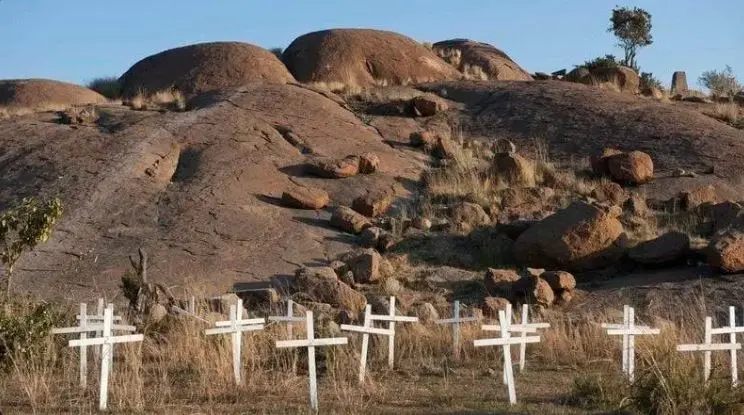
Fourteen years after the tragedy at Lonmin’s platinum mine in Marikana, the 16 August 2012 massacre remains a significant event in South Africa’s democratic history.
The state’s killing of 34 striking miners was more than just a failure in policing; it highlighted a serious crisis in the country’s political economy. Marikana revealed the weaknesses in South Africa’s post-1994 class compromise and underscored the fragility of its institutions.
State-corporate collusion and capital extraction
South Africa’s post-apartheid capitalist system relies on cheap black labour, historically supported by migrant labour systems.
At Marikana, Lonmin operated within this framework, prioritising profits and shareholder dividends over worker safety and fair wages. When miners organised an independent strike to demand a living wage, the state deployed the police service, not to mediate but to protect corporate interests and economic stability. The situation illustrates how the state functions as an arm of patriarchal-capitalist power, enforcing compliance through violence rather than democratic negotiation.
South Africa’s industrial relations were meant to balance capital growth with social fairness, aiming for shared prosperity in a growing economy. Marikana exposed this as a false promise. The political economy of the platinum belt depends on cheap, racialised migrant labour, low corporate tax contributions and aggressive profit-shifting by multinational companies. Firms like Lonmin amassed significant wealth while leaving workers in poor, informal settlements lacking basic sanitation and infrastructure.
It is essential to recognise that the R12 500 demand was not just a dispute over wages. It highlighted the organisation of migrant labour and the burden of sustaining workers that fell elsewhere.
Migrant labour systems depend on workers whose families remain in rural areas. These communities bear the domestic responsibilities needed to support workers’ lives away from the mine. The demand questioned whether the pay at the mine was enough to support the life it was meant to sustain.
The industrial relations system failed to address the inequalities because its focus shifted to maintaining stability for investors rather than redistributing economic power. Marikana demonstrated that capital and labour cannot negotiate shared prosperity peacefully while the economy remains rooted in colonial-era extraction.
The structure of South Africa’s labour relations, established under the Labour Relations Act, aimed to control class struggle through regulated collective bargaining. It relied on a supposed harmony among the state, organised businesses and formal labour.
However, Marikana indicated a serious decline in the system.
Crisis of representation and bureaucratic unionism
The rock drill operators’ strike began outside the usual bureaucratic collective bargaining channels. It disregarded a comfortable corporatism where major trade unions became disconnected from workers’ concerns. When miners demanded a
living wage of R12 500, they challenged not only Lonmin’s profits but also the legitimacy of a rigid bargaining system.
Their disconnection stemmed from a crisis of representation. The National Union of Mineworkers’ (NUM) position in Cosatu and the ANC-led Tripartite Alliance created tension between representing workers in conflict with capital, which the state protected and operating within a political alliance tied to the state. The rise of independent worker committees revealed a lack of meaningful representation. Also, the state’s use of deadly force indicated what could happen when institutional methods failed to suppress class resistance.
For nearly 20 years after 1994, South Africa celebrated the strength of labour because of its partnership with the governing ANC. Marikana violently shattered the belief, showing that the working class’s nominal power was constrained by its integration into state processes.
The traditional labour movement became ideologically divided, torn between loyalty to a liberation movement that became a governing party and the harsh realities of worker exploitation.
When workers took real action by organising outside established structures, they quickly found that state power was used to protect capital against labour struggles. Labour power proved conditional, permitted only within state-approved channels but met with violence when it threatened the status quo.
As the strike gained momentum beyond established bargaining structures, the miners were gradually depicted not as workers uniting for a labour issue but as a threat to public order and capital.
The night before the massacre, the then-minister of mineral resources, in discussing the situation with then Lonmin non-executive director Cyril Ramaphosa, asserted that it was “not a labour dispute but a criminal act”. The label had significant consequences.
Once the miners’ actions were framed as criminal rather than labour claims, their demands could be minimised by “concerns” over disorder. The shift meant that their form of organisation was not viewed through a lens of negotiation but through the need for containment. This led to one of the deadliest uses of force by the police since the Sharpeville massacre.
The aftermath: Widows and female dependants faced the immediate shock of the Marikana massacre, wrestling with bureaucratic hurdles for compensation while managing unpaid care work amid profound poverty. Photos: Paul Botes/File
The impact on widows and female dependants
South Africa’s capitalist-patriarchal system shifts the costs of industrial extraction onto women. While miners were the immediate targets of state-corporate violence, the structural shockwaves revealed the vulnerabilities faced by women as mothers, wives and primary caregivers. In a migrant labour economy, families are often separated, with women taking on all domestic and caregiving responsibilities in rural areas while men work in the mines.
When breadwinners were killed or imprisoned on 16 August 2012, the fragile division of labour crumbled. Widows suffered immediate financial loss, losing support and having to navigate patriarchal customs and bureaucratic obstacles to claim compensation or maintain their housing.
Additionally, the trauma of Marikana showed how public violence seeps into private life. Grieving women became the unseen bearers of grief, poverty and community instability, performing significant emotional and physical labour without adequate support from the state.
Viewing Marikana through a feminist lens reframes the massacre as not just a labour issue but as a violent expression of a system that exploits male labour while obscuring the
vital contributions and vulnerabilities of women.
Beyond the workplaces, the violence from Marikana affected families. This revealed how closely mining production connected to the maintenance of households and communities, which were often geographically distant from the mines. The massacre exposed the social relationships that mining depended on but that workplaces often ignored.
It also devastated rural households reliant on miners’ remittances, highlighting the deep economic vulnerabilities faced by the Marikana widows. Without income, the women encountered neglect from corporations and indifference from the state, struggling for basic reparations.
The massacre dismantled the economic and social security of families of miners, intensifying patriarchal power dynamics. In households centred on male migrant earnings, the loss or arrest of breadwinners triggered significant financial collapse.
Widows and female dependants faced the immediate shock, wrestling with bureaucratic hurdles for compensation while managing unpaid care work amid profound poverty.
Patriarchal structures in traditional communities and state systems often complicated women’s access to land, housing and financial support, exacerbating their marginalisation.
Moreover, the breakdown of the Tripartite Alliance, especially the collusion between the ruling party, capital and the NUM, showed how vulnerable democratic labour institutions can be.
Workers seeking representation outside established hierarchies faced brutal repression, signalling that institutional labour systems often prioritise control over dissent rather than protecting workers.
Marikana serves as a sharp critique of bureaucratic unionism, illustrating how institutional labour groups became disconnected from workers and overly influenced by state-capital partnerships.
To progress in today’s class struggle, labour must reflect on itself, dismantle top-down hierarchies, eliminate political favouritism and foster genuine grassroots solidarity.
Only by returning to worker-led organising can the working class reclaim its power, challenge modern capitalism’s structural imbalances and ensure that collective bargaining genuinely reflects workers’ interests rather than serving to uphold corporate and political authority.
Unfulfilled promise of democracy and national trauma
The psychological toll stretched beyond individual families, leaving lasting trauma in the wider community and South Africa as a whole. It underlined that for the black working class, the transition to democracy has left issues of personal safety and economic security unfulfilled.
Fourteen years later, Marikana stands as a stark reminder that without significant changes in
economic ownership and class power, the promise of liberation remains incomplete.
Ultimately, Marikana demonstrated that South Africa’s move towards democracy left its capitalist foundations intact. The massacre exposed how corporate-state collusion exploits human lives to sustain an unequal economy, shifting the burden of production onto the domestic and emotional labour of bereaved families.
We must continue to honour the tragic loss of the 34 miners at Marikana, stand with their families and advocate for justice, dignity and the fair advancement of workers’ rights without state violence or corporate oppression.
Sinazo Kunene is a master of arts graduate in anthropology in the department of sociology and anthropology at Nelson Mandela University. Lubabalo Cengani is a master of arts graduate in political studies in the department of history and politics at Nelson Mandela University
Basic Education Minister Siviwe Gwarube reveals a massive provincial breakdown of unfilled educator roles, prompting labor unions to demand immediate intervention from the National Treasury.
SOUTH AFRICA — Labor representatives are expressing severe frustration over the revelation that there are more than 27,000 vacant teaching posts across South Africa, a staggering figure that stands in stark contrast to the nation’s ongoing battle with high unemployment rates. The scale of the national teacher shortage was brought to light following a written parliamentary inquiry, exposing critical gaps in the education sector that unions warn are compromising student learning and overburdening current staff.
Provincial Breakdown of the Teacher Shortage
The alarming statistics were officially confirmed by Basic Education Minister Siviwe Gwarube in a formal written response to a question posed by the Patriotic Alliance. According to the minister, the data reflects the situation as of the end of June this year. She noted that while the landscape of public sector employment is fluid—with positions constantly being vacated and filled—the current snapshot highlights severe regional deficits.
The Eastern Cape currently bears the heaviest burden, topping the national list with over 5,000 unfilled teaching positions. KwaZulu-Natal follows closely in second place with 4,700 vacancies, while Gauteng ranks third with more than 3,900 open posts.
Labor Unions Demand Treasury Intervention
The disclosure has triggered a fierce backlash from labor organizations, including the Congress of South African Trade Unions (COSATU), which voiced deep concern over the government’s sluggish response to the crisis. Union representatives emphasized that the persistent teacher shortage has a profoundly negative impact on both educators and learners.
In a strongly worded statement, labor leaders demanded that the National Treasury and the Department of Basic Education stop hiding behind “oblivious behavior.” They argued that ignoring these shortages directly leads to overloaded teachers, unmanageable and inflated class sizes, and a compromised quality of education for students nationwide.
The Controversy Over Frozen Educational Posts
Adding fuel to the controversy, the ministerial reply also indicated that as of June 30, thousands of educator posts had been officially frozen. While Minister Gwarube clarified that it should not be interpreted that every single frozen post was deliberately withheld due to strict budget constraints, the revelation did little to quell union anxieties.
Another prominent labor federation highlighted specific alarm regarding 2,700 posts that remain entirely frozen. “What are the reasons for this?” a spokesperson asked, pointing out the absurdity of leaving positions unfilled—even on a temporary basis—while qualified educators remain jobless and classrooms overflow.
In response to the mounting pressure and questions surrounding financial limitations, the Department of Basic Education has outlined its next steps. Minister Gwarube stated that she will be instructing provincial education departments to submit verified, detailed information specifically regarding any vacancies that have been deliberately frozen as a direct result of budget constraints.
As the country grapples with the dual crises of unemployment and educational resource allocation, all eyes remain on the National Treasury and provincial departments to see how swiftly these critical vacancies will be addressed.
Fractured alliances, a resurgent MK, a compromised KZN lieutenant and an unresolved Phala Phala battle leave Ramaphosa facing his weakest election foundation yet
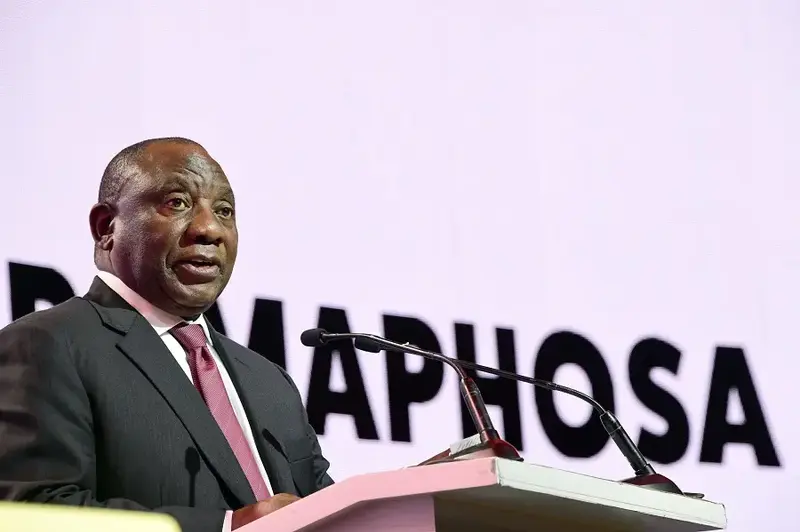
Cyril Ramaphosa enters the November 4 municipal elections weaker than at any point since he became ANC president.
The New Dawn is dead. The alliance is fractured, Jacob Zuma’s Umkhonto we Sizwe (MK) Party is advancing on ANC strongholds, his lieutenant in KwaZulu-Natal has been compromised by evidence before the Madlanga Commission, and his Phala Phala impeachment battle continues.
The election numbers are more damning. The ANC won 57.5% in 2019, down from 62.15% under Zuma in 2014, then fell to about 46% in the 2021 municipal elections – its first time below 50% nationally – before collapsing to 40.18% in 2024 and losing its parliamentary majority.
It has not recovered in a single election under Ramaphosa – though without his appeal, the results would have been worse.
November will be more than a contest over municipalities. It will be a referendum on Ramaphosa’s eight years as ANC president and his promise to rescue the party from corruption, division and decline.
A poor result will not remove him from the Union Buildings. But it could destroy his authority, accelerate the battle to succeed him and leave him serving out his term as a lame-duck president.
This could be Ramaphosa’s Waterloo.
When Ramaphosa took over from Zuma in 2018, he offered moral relief after a decade of state capture. The New Dawn, Thuma Mina and renewal persuaded voters that a respectable businessman with liberation credentials could clean up the state and restore the ANC.
Ramaphosa inherited a party in decline and promised to reverse it. Eight years later, the decline has accelerated.
His presidency has not achieved nothing. His administration backed the Zondo Commission, restored institutional credibility and introduced reforms in electricity, logistics and public administration. Load-shedding has eased, and the state is more stable than under Zuma.
But elections are not decided in government reports or investor conferences. They are decided by voters who cannot find work, businesses forced to provide their water and electricity, and township families surrounded by sewage, potholes, crime and uncollected rubbish.
ANC unable to win back public trust
The New Dawn promised ethical government and renewal. Instead, commissions produce reports while politically connected officials remain in office, and municipalities adopt rescue plans while taps run dry.
Ramaphosa may have repaired parts of the state, but he has failed to restore public trust in the party controlling it.
He enters this campaign without the political machinery that supported his predecessors.
The South African Communist Party (SACP) will contest the elections independently and has been excluded from ANC campaign structures and candidate lists. The ANC has warned SACP members not to campaign against its candidates.
Cosatu is trying to hold the alliance, but loyalties inside the labour federation are divided. Some remain committed to the ANC, some sympathise with the SACP, and others have simply disengaged.
The MK Party is not simply an opposition party. It is a rival ANC – built on Zuma, liberation history and resentment of Ramaphosa’s leadership – offering disillusioned supporters a way to punish the ANC without abandoning the political tradition with which they identify.
The party destroyed the ANC in KwaZulu-Natal. It is expanding into Mpumalanga, Gauteng, the Eastern Cape and Limpopo. Its elevation of Duduzane Zuma may aim to reach younger voters while preparing the movement for life beyond his father.
MK has not proved it can govern. Leadership changes, purges and dependence on the Zuma family raise questions about stability. But an angry voter does not need to believe MK will govern better – only that the ANC deserves punishment.
Mchunu is causing political damage
In KwaZulu-Natal, neither Ramaphosa nor ANC secretary-general Fikile Mbalula has matched Zuma’s emotional hold. Senzo Mchunu, who was supposed to be one of Ramaphosa’s strongest provincial lieutenants, has been compromised by allegations before the Madlanga Commission.
The commission has heard allegations of interference in policing, disbanding an investigative team and Mchunu’s relationships with controversial figures – and, this past week, that he violated protocol by sharing a confidential report.
Mchunu denies wrongdoing, and the commission has not made final findings. But the political damage is substantial. The ANC cannot deploy him across KwaZulu-Natal as the face of Ramaphosa’s clean-government project while a commission examines whether he undermined law enforcement.
Ramaphosa’s claim to ethical leadership is threatened by Phala Phala.
The public impeachment hearings over the foreign currency stolen from his farm remain suspended while the Western Cape High Court considers his bid to review and set aside the panel’s report. The Constitutional Court last week refused an opposition bid for direct access to overturn the order, though the committee can continue its work.
Ramaphosa has won time, not exoneration.
The president who promised accountability will be campaigning while trying to block the impeachment inquiry before his legal challenge is resolved.
The ANC’s response is to lean on Ramaphosa’s stature and the party’s liberation history.
Where have all the leaders gone?
But this is a municipal election. It should be fought by compelling local candidates with credible records of fixing towns and cities.
Where are the ANC’s celebrated mayors? Where are the municipal champions pointing to clean audits, reliable water, repaired roads and growing local economies?
The ANC has not made mayoral excellence the centre of its campaign, and in many municipalities it cannot campaign on a successful record. Candidate selection remains vulnerable to factional battles, and leaders are deployed to rescue unpopular local structures.
The party returns to its oldest argument: trust the ANC because it liberated you.
That appeal weakens with every election. Millions of young voters were born after apartheid. They respect liberation history but do not experience it as an answer to unemployment, unaffordable transport or a broken sewer outside the family home.
The ANC has not run out of policies. Its new manifesto will promise professional municipalities, better-qualified officials, ring-fenced revenue, infrastructure investment and action against corruption.
The ANC’s crisis is not a shortage of plans. It is the disappearance of reasons to believe the next plan will be implemented.
Ramaphosa arrived to save the ANC from Zuma. Eight years later, Zuma leads the movement taking its strongholds, the communists are campaigning separately, labour is divided, his KwaZulu-Natal lieutenant is compromised and his impeachment remains unresolved.
The New Dawn did not end in a dramatic sunset. It faded election by election.
November 4 will show whether Ramaphosa can arrest the decline – or whether this is the battlefield on which his authority inside the ANC disappears.