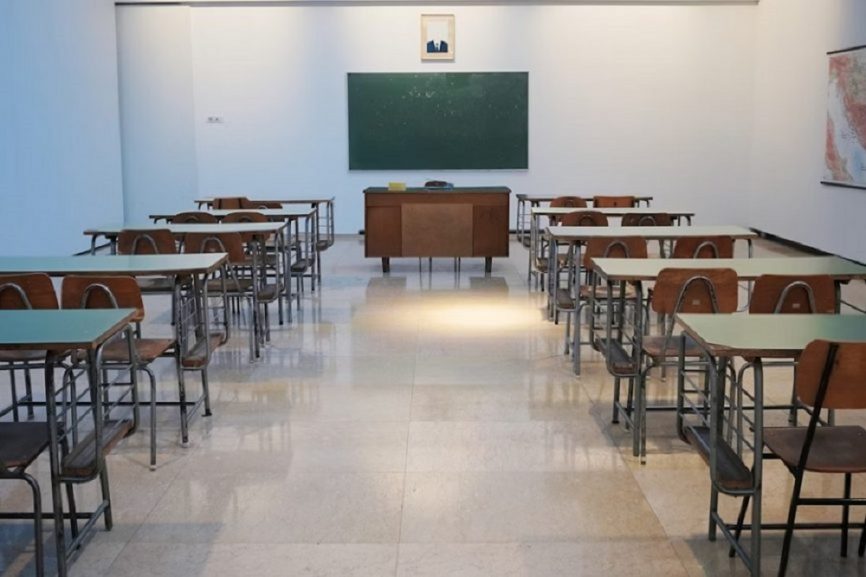
Desk and chairs seen in a classroom at a school. Image Credits: Unsplash
The Congress of South African Trade Unions (Cosatu) has expressed outrage at the more than 27 000 vacant teaching posts, while the country is battling high levels of unemployment.
This follows a written parliamentary reply from Basic Education Minister Siviwe Gwarube that more than 2 600 teaching posts have been frozen across the country as at 30 June this year. She, however, says this should not be interpreted as all were deliberately frozen due to budget constraints.
Gwarube indicated that the Eastern Cape tops the list with more than 5 000 vacancies, followed by KwaZulu-Natal with 4,700 and Gauteng with more than 3 900.
Cosatu has expressed concern, saying the government is not moving fast enough to address this challenge, as it poses a risk on the learning and teaching processes.
Cosatu’s Communication officer, Nonzuzo Dlamini says, “We emphatically request that both National Treasury and the Minister of Education refrain from hiding behind oblivious behavior to these shortages that overload current educators, inflate class sizes and compromise student learning.”
The National Professional Teachers’ Organisation of South Africa (NAPTOSA) says it is concerned by the number of frozen teaching posts in the Department of Basic Education. NAPTOSA’s executive director Basil Manuel says these figures are worrying. “We are more concerned about the fact that there are 2 700 posts that have been frozen and that worries us what are the reasons for this and of course because it means that if they are frozen people haven’t been appointed into these not even in a temporary nature.
X | SABC News | The Congress of South African Trade Unions (Cosatu) says the country’s unemployment rate is alarming. The labour federation was reacting to the latest Quarterly Labour Force Survey, which shows the official unemployment rate has risen to 33.6%. https://t.co/8BxxfqD0bfpic.twitter.com/DotbNqqXVJ
The Congress of South African Trade Unions (Cosatu) says the country’s unemployment rate is alarming. The labour federation was reacting to the latest Quarterly Labour Force Survey, which shows the official unemployment rate has risen to 33.6%. https://t.co/8BxxfqD0bfpic.twitter.com/DotbNqqXVJ
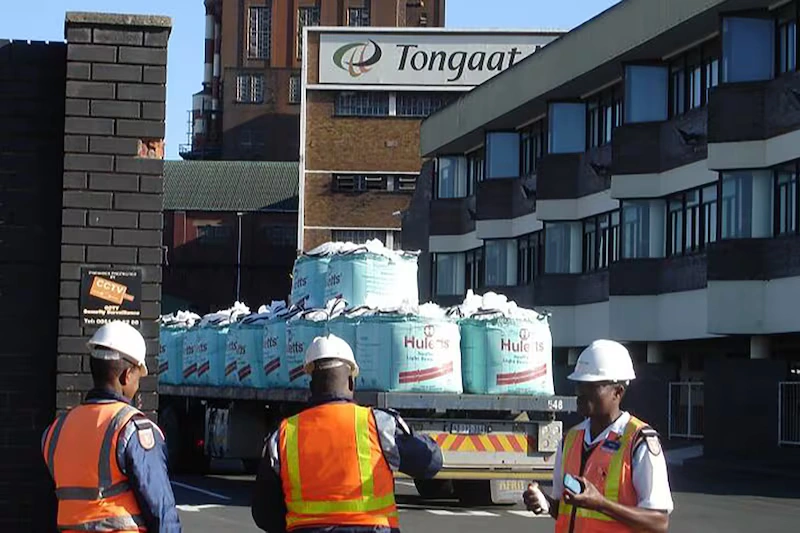
Workers downed tools around the country on Monday, demanding a 13% wage increase against the employers’ offer of 5.4%. Picture: (NCE MKHIZE)
Story audio is generated using AI
Disgruntled striking workers in South Africa’s beleaguered sugar industry say they are willing to return to the negotiating table provided employers table a meaningful offer of at least 7% with no conditions attached.
Workers downed tools around the country on Monday, demanding a 13% wage increase against the employers’ offer of 5.4%. The inflation rate is currently 5%. Workers are also demanding a R1,000 transport allowance and a R1,500 housing allowance.
The South African sugar industry, which generates about R24bn annually, employs 5,000 workers and contributes about 1% to GDP, is under severe strain due to cheap imports from Brazil, Thailand and India.
According to the SA Canegrowers organisation, 94,984 tonnes of sugar were imported between January and May compared with 55,213 tonnes over the same period in 2025. In 2022 only 1,491 tonnes of sugar were imported between January and May.
The sector, which supports about 1-million livelihoods in the country’s sugar-producing provinces, primarily KwaZulu-Natal and Mpumalanga, has blamed the introduction in 2018 of the health promotion levy, also known as the sugar tax, for worsening financial losses and job cuts in rural farming communities.
The Food and Allied Workers Union (Fawu), Association of Mineworkers and Construction Union and Uasa had been negotiating with employers since February before reaching a deadlock about a month ago.
Tongaat Hulett is the market leader and is currently under business rescue, so they can’t afford to be on strike. They are going to suffer more.
— Nkululeko Mthethwa, Fawu deputy president
Speaking on behalf of the unions, Nkululeko Mthethwa, deputy president of the largest union, Fawu, representing about 2,800 workers, said when the pay talks hit a snag, a commissioner from the Commission for Conciliation, Mediation and Arbitration tried to mediate.
“We then moved our position from 13% to 7% before settling at 6%. The employer moved from 5.4% to 6% but attached a condition that the sugar tariffs need to be reviewed. When we rejected the employers’ condition, as we felt that it fell under the International Trade Administration Commission (Itac), the employer reverted back to 5.4%. We followed suit and reverted back to 13%. We are willing to go back to the negotiating table and settle at 7%,” Mthethwa said.
The sector has long called for higher tariffs to protect local cane growers, who it says lose more than R7,500 per tonne of cheap imports. In January, Itac, which falls under the oversight of the department of trade, industry and competition, said it had launched a formal review to evaluate appropriate tariff protections after receiving two competing applications regarding the dollar-based reference price (DBRP) through which it manages the country’s variable sugar import tariff.
Itac said the South African Sugar Association (Sasa) had applied for an increase in the current DBRP to $905 (R14,674) per tonne from $680 (R11,024), citing the need to protect the local sugar industry and ensure its sustainability.
Subsequently the Beverage Association of South Africa applied for a reduction to $552 (R8,946)-$650 (R10,534), saying the current duty has an adverse impact on beverage producers, bottlers and consumers.
Mthethwa said 70% of the 5,000 workers in the industry were on strike at the 12 milling companies in Mpumalanga and KwaZulu-Natal, including:
“Tongaat Hulett is the market leader and is currently under business rescue, so they can’t afford to be on strike. They are going to suffer more,” he said.
Financially embattled sector giant Tongaat Hulett entered voluntary business rescue in October 2022 due to massive debt accumulation, severe liquidity shortages, and the fallout from major accounting scandals and alleged fraud by past management.
The industry found a measure of relief in June when Tongaat Hulett narrowly escaped liquidation after its business rescue practitioners, the Industrial Development Corporation and Vision Group reached an agreement to keep it afloat, potentially safeguarding more than 250,000 jobs in its operations and value chain.
Approached for comment, Sasa referred questions to the South African Sugar Millers’ Association (Sasma), an NPO trade organisation representing sugar milling and refining companies on issues pertaining to industry policy, sector guidelines, market strategies, and collective bargaining and disputes.
Comment from Sasma CEO Jenna Govender will be added once received.
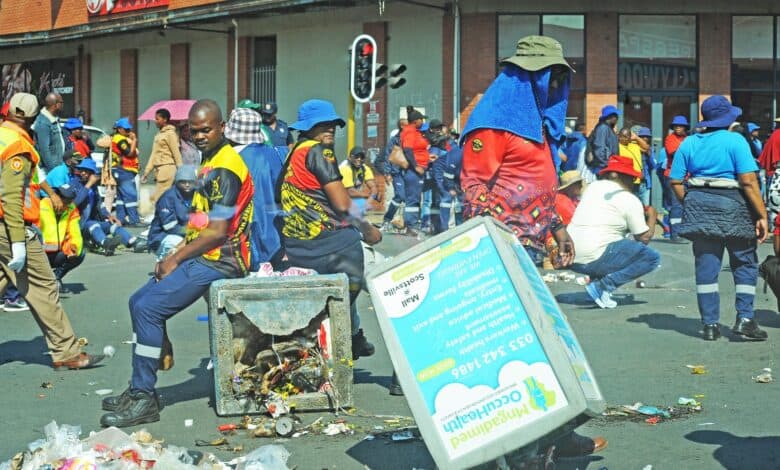
Protesting South African Municipal Workers Union (Samwu) members overturned rubbish bins and left a trail of waste through Pietermaritzburg’s city centre yesterday as they marched to City Hall to hand over a list of workplace grievances to Msunduzi Municipality. Photo: MOEKETSI MAMANE
The Samwu strike in Msunduzi will enter its second day on Wednesday, with the union maintaining pressure on the municipality to address outstanding workplace grievances.
The South African Municipal Workers Union (Samwu) had previously suspended its protected strike action in June, saying it was demonstrating restraint and goodwill to allow uninterrupted engagement between the employer and employee representatives.
However, the union returned to the streets on Tuesday, with members marching from Dales’ Park to the City Hall to deliver a memorandum outlining their demands.
The march left parts of the city centre strewn with rubbish after protesters overturned bins along the route and at the City Hall precinct.
While some workers chanted slogans and sang, others continued overturning bins as they waited for municipal officials.
Samwu local chairperson Brandon George said the union had not intended to disrupt municipal services but had been left with no alternative.
“Our citizens are suffering and not receiving adequate service delivery. We too, as staff members of Msunduzi, are having our own internal issues and therefore we would like to even welcome those that are in solidarity with us, even community members, to us so that we can achieve what we can to restore services to our communities,” George told The Witness on the sidelines of the march.
He said the union had repeatedly attempted to resolve its concerns with municipal management.
We don’t have a proper employment structure in place in this municipality. We have no proper job descriptions, and our members are not compensated when they work overtime. We have been trying for so long to have these issues resolved, but the management does not come to the party.
Central to the memorandum of demands the union intended to hand over to city management on Tuesday was a salary-grading dispute involving general assistants, whom Samwu wants moved from grade T3 to T7.
“The management must stop playing hide and seek, and the municipality must stop negotiating in bad faith.
“There must be a clear resolution, decision and unequivocal position from council for the complete implementation of the job evaluation process via an independent third party (Deloitte), ensuring a unified job description and clear progression path to Task Level 7 for general assistants.
“The 2023 structure and job description for the entire municipality must be completed,” reads the memorandum.
Samwu is also demanding clarity on the absorption of interns, contract workers and EPWP participants into vacant funded posts.
The union wants the council to adopt a resolution setting out clear implementation criteria and timeframes.
Another demand is the deactivation and suspension of biometric systems and cameras installed in municipal vehicles until the matter has been discussed at the local labour forum.
The union was unable to hand over its memorandum because city manager Felani Mndebele was not available to receive it.
Union local secretary Xolani Ntshangase confirmed that the strike would continue on Wednesday.
Msunduzi Municipality said essential services were continuing despite the strike, although residents should expect some delays.
“Teams are currently attending to service delivery matters, including waste collection and reported service faults,” the municipality said.
It acknowledged that litter and waste had accumulated in parts of the CBD and said arrangements were being made to clean the affected areas.
The municipality said it was also engaging organised labour in an effort to resolve the dispute.
“While the municipality respects employees’ right to raise workplace grievances through appropriate processes, service delivery to residents remains a priority,” the municpality said.
Cosatu has backed NUM’s legal challenge against Eskom’s restructuring, opposing privatisation and demanding protections for jobs and bargaining rights.
Trade union federation Cosatu has come out in support of the National Union of Mineworkers’ legal challenge against the Eskom restructuring task team’s phase one report.
The federation is opposing any move it believes is an attempt to privatise the electricity grid and is demanding guarantees that utility workers will not lose their jobs or bargaining rights.
Cosatu’s Zanele Sabela wants the government to first deal with Eskom’s financial problems, including more than R120 billion owed by municipalities.
“Phase two of the Eskom restructuring task team process must fully respect collective bargaining and the principles of a just transition. A just transition must, in turn, protect jobs, strengthen Eskom, promote localisation and industrial development, ensure reliable and affordable electricity, and safeguard public ownership,” Sabelo said.
Earlier in August, President Cyril Ramaphosa said the unbundling of Eskom is not about privatising the power utility, but about creating greater competition in the electricity sector.
The government’s unbundling plan involves splitting the state-owned power utility into three separate entities, each responsible for generation, transmission and distribution.
“We’re not privatising anything, particularly when it comes to the electricity sector. What we are doing is to restructure Eskom so that it becomes much more competitive, and we bring in other players. So, Eskom remains a state-owned enterprise,” Ramaphosa told the Steel and Engineering Industries Federation of Southern Africa.
The president said the government was moving towards a competitive electricity market in which multiple generators would compete to supply electricity.
“Meaning that we have now gone past just the efficient generation. We now must move to an era where there’s competition, which will help to bring down prices,” he added.
He also said this would help in dealing with Eskom’s huge debt.
File image: A nurse with medical equipment. Image Credits: Reuters
The National Education, Health and Allied Workers’ Union (Nehawu) in the Free State has pledged its solidarity to three healthcare worker professionals who were allegedly attacked while on duty three months ago.
A patient, Molahlehi Takadimane allegedly attacked two nurses and a cleaner during a night shift in May at the Thabong District hospital in Odendaalsrus.
The accused, who is alleged to be a mentally challenged patient, appeared briefly in the Odendaalsrus Magistrate’s Court, before the matter was postponed to 26 August for further investigation.
Nehawu National Treasurer Kgomotso Makhupola has urged the Department of Health to take the incident seriously and provide the three affected employees with psycho-social support.
“As a union we are doing all we can to ensure that we assist the members with everything. We are saying the department must take accountability. This member has used her own finances to make sure she can go from one place to the another to get medical care. Yet the incident happened during working hours. So, the department must take all costs that the member has incurred during the incident.”
RELATED VIDEO | YouTube | Case against patient who sexually assaulted nurse postponed to 26 August |