DENOSA Backs eSwatini Democracy Struggle, Stands With Workers
By Thabo Mosia
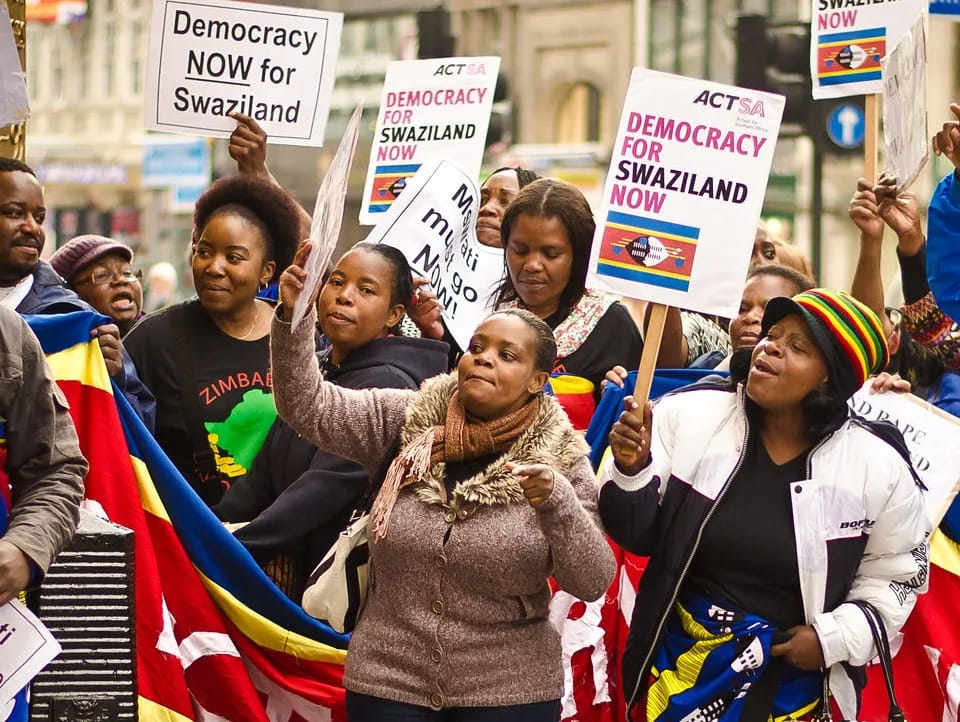
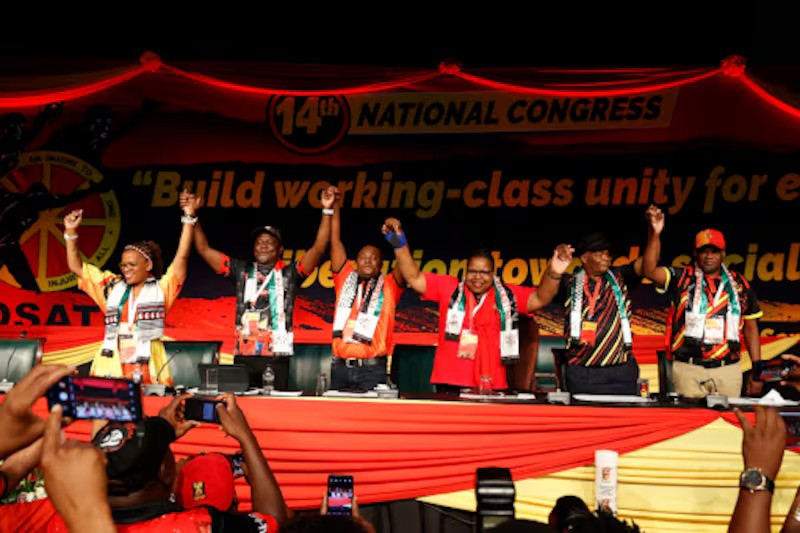
Pretoria – The Democratic Nursing Organisation of South Africa has joined Cosatu and other unions in backing the people of eSwatini, and will walk with the Global Week of Action march on Friday, 4 September 2026, from Madiba Park at the Union Buildings to the Swazi High Commission.
The statement, issued on Thursday, is written as a nurses’ union speaking to nurses’ work: the right to organise, to bargain and to raise problems at work without fear.
Why a South African nursing union is on this route
DENOSA says solidarity is not a favour to a neighbour. South African workers were helped by unions abroad during the fight against apartheid. That debt, the union says, now runs the other way.
“South African workers know the importance of international solidarity because our own struggle for democracy was strengthened by workers, unions and progressive organisations across the world. It is therefore our responsibility to stand with workers and communities elsewhere who continue to demand the right to organise, to speak freely, to participate in the political affairs of their country and to enjoy the fundamental rights and freedoms that should be guaranteed to all people.”
For health workers the link is practical. A clinic cannot bargain if the law treats a union meeting as a threat. Patients suffer when staff cannot speak about shortages or safety.
“As a trade union representing nurses and healthcare workers, DENOSA also understands that workers’ rights, democracy and quality public services are closely connected. Health workers need an environment in which they can organise freely, participate in collective bargaining and raise concerns about the conditions under which they work and provide care without fear or intimidation.”
What the march is walking toward
eSwatini remains Africa’s only absolute monarchy. Political parties have been banned since the 1973 King’s Decree. Pro-democracy protests in 2021 were met with force. Scores of people were killed. Lawyers, journalists and union leaders have faced the Suppression of Terrorism Act. The Trade Union Congress of eSwatini has reported banned gatherings, including a blocked May Day event in 2026. SADC called for political dialogue after 2021, then later took the country off its formal agenda. Emaswati unions still press cases at the International Labour Organization on freedom of association and collective bargaining.
Friday’s column will hand a memorandum at the High Commission in Arcadia. Similar Pretoria pickets have been held before. The demand has not changed: a government chosen by voters, and space for unions to exist in the open.
DENOSA called on SADC, the African Union and the international trade union movement to keep backing democracy, human rights and workers’ rights in eSwatini.
“The struggles of workers do not end at national borders. When workers anywhere are denied their rights and freedoms, the broader labour movement has a responsibility to speak out and stand with them.”
“An injury to one is an injury to all.”
What solidarity can and cannot do
A march in Pretoria does not write a new constitution in Mbabane. It keeps the file open in a week when eSwatini’s own public servants are still fighting salary-review appeals and unions at home face permits that vanish at the last hour.
Nurses on the South African side of the border already treat Emaswati patients in public hospitals. The union’s argument is that the same worker who clocks in at a ward should not have to watch a colleague across the frontier lose the right to a union card. That is the line from Madiba Park to the High Commission on Friday.
Central News Special Edition | Issue 157: Download the Latest Print and E-Edition | Two More Emfuleni Employees Arrested, Taking Total In Electricity Probe To Seven In Alleged Electricity Fraud Scheme
Central News also offers Sponsored Editorial Content, Podcasts , Radio / Social Media Simulcast, Video Production , Live Streaming Services, Press Conferences, and Paid Interviews (Video/Audio) etc.
We guarantee exceptional exposure, reach, and engagement, with an excellent return on investment.
Advertisement:
To place your advert on our platforms (Print Newspaper or Digital Platforms) : Please email : sales@centralnews.co.za
2 September 2026 – The South African Democratic Teachers’ Union (SADTU) in the North West said it is deeply concerned about the reported incident at Batlhaping Secondary School in Taung involving a learner allegedly directing insulting and disrespectful language towards an educator. SADTU said it is seriously disturbed by the escalating levels of learner indiscipline and the growing incidents of verbal abuse, threats, intimidation and physical attacks against educators in schools.
SADTU provincial secretary, George Themba said they cannot accept a situation where educators report for duty every day uncertain about whether they will be safe in the classroom. Themba said educators cannot be expected to perform their professional responsibilities effectively while being subjected to threats, insults, intimidation or violence.
“The safety and dignity of educators must be treated as a fundamental condition for quality education. We are particularly concerned that incidents of serious learner misconduct are sometimes allowed to continue without decisive intervention.
“Where an educator is assaulted or threatened, there must be an immediate and appropriate response. Violence against educators must never be normalised or treated as merely a disciplinary matter,” he said.
Themba further said where criminal conduct has occurred, the relevant law- enforcement agencies must be involved. He added that SADTU therefore calls on the North West Department of Education and the North West MEC for Education, Dr Desbo Mohono to urgently strengthen measures aimed at protecting educators and restoring discipline in schools.
“We demand stronger implementation of school safety and learner-discipline policies, with clear consequences for serious misconduct. Immediate intervention in cases involving threats, intimidation or physical attacks against educators.
“Proper support for principals and School Governing Bodies (SGBs) to manage serious disciplinary cases. Improved collaboration between schools, parents, the Department of Education, South African Police Services (SAPS) and other relevant stakeholders,” said Themba.
He said appropriate psychosocial and professional support for educators who experience violence or trauma in the workplace. Themba said the monitoring of schools where serious disciplinary and safety challenges have been identified.
“Greater accountability for parents and guardians who fail to support reasonable disciplinary measures or who themselves threaten and intimidate educators. A comprehensive review of measures aimed at preventing weapons, drugs and other dangerous substances from entering school premises.
“We emphasise that SADTU does not advocate for the violation of learners’ rights. Learners have rights, but rights come with responsibilities. The protection of learners cannot be interpreted in a manner that leaves educators exposed to abuse, intimidation or violence,” he said.
Themba said a balanced approach must protect everyone in the school community. He said parents also have a critical role to play.
“Schools cannot carry the responsibility for discipline alone. Parents and guardians must reinforce respect, responsibility and acceptable behaviour among learners.
“Equally, educators must continue to uphold professional standards and exercise their authority responsibly. The crisis of learner indiscipline must also be understood within the broader challenges facing education, including overcrowding, social problems, substance abuse, inadequate psychosocial services and pressure on educators,” said Themba.
He said these challenges require a whole-of-society response, rather than placing the entire burden on teachers. Themba said SADTU North West remains committed to defending the rights and interests of educators, while championing a public education system that is safe, disciplined and conducive to effective teaching and learning.
“Teaching cannot be an attractive and respected profession when educators are expected to work in unsafe environments. An attack on an educator is not only an attack on an individual—it is an attack on the teaching profession and the right of every learner to quality education.
“SADTU calls upon the Department of Education to act decisively, urgently and consistently. The time has come to move beyond statements of concern towards concrete interventions that restore discipline, protect educators and reclaim schools as safe spaces for teaching and learning,” he said.
Cosatu’s upcoming national congress may ignite crucial talks on worker ownership and pension transparency; the writer encourages workers to demand transparency about how their money is invested by the PIC. File picture: (Thulani Mbele)
Story audio is generated using AI
The forthcoming Cosatu national congress could provide an important platform for beginning a serious conversation about worker ownership, pension governance and the accountability of the institutions managing workers’ capital.
The most troubling feature of the current Public Investment Corporation (PIC) controversy may not be the resignations, the disputes between board members and the shareholder minister, or even the competing interpretations of the PIC’s governance framework.
It is how little the workers whose money is being managed appear to feature in the public debate. The PIC manages almost R4-trillion in assets. Behind those numbers are millions of workers and beneficiaries whose retirement security depends on the prudent management of their accumulated savings.
Yet much of the discussion about the PIC is conducted as though it were an internal dispute between politicians, lawyers, board members, executives and businesspeople. Workers are treated as spectators. They should not be.
The PIC’s money is not simply another pool of state money. It represents the accumulated wealth of workers and the future retirement security of millions of South Africans.
That should make the governance of the PIC a matter of intense worker interest. Unfortunately, worker activism around pension assets remains relatively weak compared with Canada, Australia and Denmark.
Workers are understandably preoccupied with wages, employment, working conditions and the immediate pressures of daily life. Pension investments can appear distant and technical. Questions about asset allocation, unlisted investments, investment mandates, board appointments and governance structures can seem like matters best left to professionals.
That is a mistake. A pension fund is deferred wages. The money being invested today represents income that workers have earned but have agreed to receive later in life. Decisions about that money therefore deserve the same level of attention that workers give to their wages and working conditions.
The PIC should be understood in precisely these terms. The recent controversy demonstrates why. Much of the debate has focused on personalities: who the whistleblower report was directed to, who resigned, who was suspended, who supported whom, who had authority to make a particular decision and whether the proper governance procedures were followed.
Those questions are important, but they are not the whole story. The bigger question is: who has influence over workers’ capital? The PIC inevitably attracts powerful interests.
Businesses want capital. Investment managers want mandates. Some businesspeople work with and have relationships with executives and politicians within and outside the state. The shareholder has legitimate oversight responsibilities. Board members and executives exercise substantial institutional power, which is often co-opted by external actors.
Wherever there is a large concentration of capital, there is also a risk of undue influence. The answer cannot be to remove the PIC from the market. The institution must invest. It must engage businesses, investment managers and other market participants.
The answer is to ensure that those relationships do not become mechanisms through which investment decisions are captured. This is where workers have a vital role.
Workers should demand transparency about how their money is invested. They should ask how boards are appointed and held accountable. They should insist that investment decisions are made according to clearly defined criteria. They should demand that conflicts of interest are disclosed and managed. They should expect whistleblower allegations to be taken seriously and investigated fairly.
And they should refuse to be divided and a shareholder to decide who their representative should be. They should ask their representatives in organised labour a simple question: What are you doing to protect our pension capital?
The labour movement has historically understood the importance of collective organisation in the workplace. The same principle should apply to workers’ capital.
A worker who negotiates collectively for better wages but pays little attention to the management of their pension savings is protecting only part of their economic future.
Over a working lifetime, pension contributions can accumulate into substantial amounts. The investment returns on those contributions can determine whether a worker retires with financial security or financial vulnerability.
That makes pension governance an economic struggle. The labour movement should therefore begin treating pension assets as part of its broader programme of worker empowerment.
This does not mean that unions should dictate individual investment decisions. Nor does it mean that investment professionals should be replaced by mere political representatives.
It means that workers must demand accountable institutions and informed representation.
The institutional independence at the PIC matters so much. The board must be able to exercise its responsibilities without undue political or commercial pressure. Management must be accountable for investment decisions. The shareholder must exercise legitimate oversight without turning oversight into operational interference.
And workers must be able to hold all of them accountable. The Mpati commission provided important lessons about the need to strengthen the governance of the PIC and address the concentration of power and potential conflicts within the institution.
Those lessons should not be treated as another report to be filed away. They should become part of a broader conversation about who controls workers’ capital. The recent whistleblower controversy provides another lesson.
Some have argued that whistleblower allegations should have been ignored because the PIC is systemically important and because the allegations may have emerged in the context of commercial disputes between Acapulco and Harith in which the PIC CEO is alleged to have been conflicted.
But the PIC’s systemic importance is precisely why credible allegations must be assessed. Ignoring allegations can create the perception that an institution is unwilling to confront wrongdoing or is protecting powerful interests. That can damage institutional credibility and investor confidence.
The appropriate question is not whether allegations should be believed automatically. They should not. Nor should allegations be dismissed automatically because of who raised them.
The question is whether they deserve to be investigated through a fair, independent and properly governed process. Workers should demand nothing less.
There is also an important lesson in the disputes surrounding senior appointments at the PIC. Appointments are not merely administrative matters when they determine who controls the allocation of enormous pools of capital.
The debate over the chief investment officer (CIO) function was therefore about more than individual candidates. The restructuring of the CIO function was intended to address concerns about the concentration of investment authority and to align the institution with principles emerging from the Mpati commission.
The broader principle is that the allocation of investment power must be structured to reduce the possibility of undue influence.
That is a workers’ issue. If workers are serious about protecting their retirement savings, they must become more active participants in the institutions that manage those savings.
This is where organised labour has an opportunity.
The labour movement should not see the PIC merely as another institution of the state. It should see it for what it is: an institution managing the accumulated wealth and future retirement security of millions of workers.
Worker activism around pension assets should therefore become a permanent feature of South Africa’s labour politics. Workers should know where their money is invested.
They should understand who makes the investment decisions. They should know how those decision-makers are appointed and held accountable. They should demand transparency when things go wrong.
The ultimate safeguard of workers’ money cannot be institutional design alone. It must also be worker power.
JOHANNESBURG – COSATU is calling for government to bring back fuel levy relief as soaring prices put households under even more pressure.
Petrol has jumped by over R1 a litre while diesel is up by more than R3.
The federation’s Zanele Sabela said previous fuel levy relief helped protect both workers and the economy.
“For COSATU, what had happened earlier this year with the fuel price relief, where governments suspended a portion of the fuel levy was actually the way to go, because it not only protected the working class and the poor, but it also protected the economy.
“And so, this is what we’re calling for once again, as we see prices continuing to increase. And so that is what we have seen, because we all know that once the price of fuel goes up, it tends to have a trickle-down effect and actually impacts on all other prices.
“This is what we’re calling for. We’re calling for that relief to come through again, because people are just not coping. I mean, people who earn the lowest, they spend up to 40% of their salaries on transport to go and to come back from work. And so obviously, when you look at that, that is not sustainable. “
The National Minimum Wage Commission will soon determine next year’s mandatory wage levels. The exercise rests on a persuasive but perverse moral claim.
Written submissions to the National Minimum Wage Commission on the minimum wage level for 2027 closed on 4 September, after a mere 30 days having been afforded for comment.
The Free Market Foundation urged the Commission to recommend no increase at all, saying minimum wages are “instruments of exclusion that consign millions of South Africans, particularly the young and low-skilled, to enforced idleness”.
The Foundation for Rights of Expression and Equality (Free SA) said much the same, saying a hike “risks shutting even more unemployed and inexperienced South Africans out of the formal labour market”.
They are right. And yet they will be ignored.
The Commission will recommend inflation plus a dollop of cream. The Minister will gazette it. The rate will rise from R30.23 an hour on 1 March, as it has every year since 2019.
Meanwhile official unemployment reached 33.6% in the second quarter, with 8.5 million people out of work. The broader definition of unemployment gives a rate of 46.3%. Among those aged 15 to 24, the unemployment rate is 62.8%.
The moral case for a minimum wage is that some wages are so low that paying them constitutes exploitation, and a decent society does not permit exploitation. It appeals to vague, subjective notions like “decent wage”, or “living wage”.
This moral case intuitively feels right, but it is wrong. It is assumed to be common cause by socialists, but it shouldn’t be. If we’re ever going to make progress against unemployment, it needs to be answered.
The case for minimum wages
Here’s the reasoning. Someone with no savings and no alternative is not really free to refuse an offer of employment, at any wage. Where employers are few and workers many, the employer determines the pay, and the worker takes it. A wage floor corrects that, cheaply, and it reaches people whom unions never will: domestic workers, farm workers – those least able to bargain for themselves.
That is not a stupid argument. But it rests on a false premise, and on a hidden assumption.
The false premise is that not having a choice is not a matter of greedy capitalist exploitation. It is a function of life: “In the sweat of thy face shalt thou eat bread.”
The hidden assumption is that the alternative to a low wage is a higher wage. For millions of South Africans, the alternative to a low wage is no wage. A minimum wage might lift a few people from R20 an hour to R30, but for many R20-earners, it simply destroys their job and offers nothing in its place.
When a person judges that work at R25 an hour beats no work at all, and an employer agrees, the state steps between them and forbids it – for their own good, against their own stated preference.
Every time a person or a company considers hiring someone to do a job of work, the very first question is, “How much will that cost?”
An unsatisfactory answer means a job is not created, and that non-event is never recorded in the economic statistics of the country.
A minimum wage is not protection from exploitation. It is a prohibition on the poor making their own bargains.
Wages are prices
The confusion arises because we discuss wages as though they occupy a special moral category. They do not. A wage is the price of labour, and it behaves like every other price. It is no different from the price of a loaf of bread made by a baker. Paying little for bread that is freely offered at a low price isn’t exploitation. It is how the baker stays competitive, and keeps making a living.
Prices are not rewards for effort or virtue or time. They are signals matching what people want to what others can supply.
Fix a price below the market-clearing level and you get a shortage: rent control produces housing waiting lists; price caps for medicines or fresh produce cause stock-outs and empty shelves.
A minimum wage is a price floor on labour. A price floor produces a surplus of the thing priced, and a surplus of labour is called unemployment. That is not an ideological claim. It is what the words mean. It is basic economics.
An inconvenient pedigree
South Africa’s original minimum wage law was not devised by people who loved the poor. It was devised by people who wanted to price black workers out of jobs.
The Industrial Conciliation Act of 1924 excluded pass-bearing black workers from participating in industrial council wage agreements, while extending those agreements to their wages anyway.
The Wage Act of 1925 created a Wage Board to set minimum rates, described as a “civilised” wage. Today’s equivalent would be “living wage”.
Officially, the law prohibited discrimination on racial grounds, which sounds admirable, until you realise that it prohibited black workers from undercutting the “civilised” wages paid to white workers – relieving them of a rare competitive advantage. Achieving racial exclusion through race-neutral law was a stroke of genius.
Sectors where cheap black labour was required, such as agriculture, mining and domestic service, were simply exempted from the minimum wage law. (Sound familiar? The Extended Public Works Programme is exempted from minimum wage law today.)
William Hutt, then professor of economics at UCT (and not quite as liberal as he might seem, having advocated a weighted franchise to entrench white rule), set all this out in The Economics of the Colour Bar in 1964.
The instrument of a minimum wage has changed hands. Whether intended or not, it has not changed in its effect.
The insiders
The union movement’s role in the liberation struggle was real and honourable. Fosatu built shop-floor power from 1979; Cosatu, launched in December 1985, mounted the stayaways that helped make the country ungovernable. Nobody disputes the crucial role unions played in enabling organised struggle against apartheid, and ultimately, achieving South Africa’s liberation.
But in 1990 Cosatu became the labour wing of the Tripartite Alliance, and – like the South African Communist Party – has co-governed ever since without once contesting an election. It holds a permanent seat at Nedlac, whence almost all labour legislation issues.
Union membership is about 3.8 million out of a working-age population of 42 million, and the public sector now accounts for about half of Cosatu’s affiliate membership.
So, a bloc representing under a tenth of working-age South Africans holds a veto over the terms on which everyone else may seek work – and it uses it. When Treasury proposed a youth wage subsidy in 2012, Cosatu opposed it and counter-protested a Democratic Alliance-led march in support of it.
Unions represent their members. That is their job, and their right. The difficulty is that their members are the employed, whose interests diverge sharply from those of the unemployed.
Every rand added to the cost of hiring benefits the insider and bars the outsider.
An artificially high-wage floor is especially detrimental to young job-seekers, with nothing of note on their CVs. For 18-year-olds, a low-wage job is the first rung on the ladder. In South Africa, the first few rungs are missing, and yet the solons at the Department of Labour are puzzled why youth unemployment is sky-high.
What the numbers show
The Department of Employment and Labour’s own research says that South Africa’s minimum wage as a function of the median wage, known as the Kaitz ratio, increased by 10% between 2019 and 2024. The mid-2024 ratio of nearly 80% of the median wage places South Africa in the top fifth of 63 countries surveyed.
We have a rich-world wage floor and developing-world productivity.
The Development Policy Research Unit, which does the Commission’s own modelling, found the minimum wage cost roughly 227,800 jobs in 2024 alone, and between 322,000 and 543,000 since 2019.
The law is also widely ignored. The Department concedes that 40% of employers don’t comply. In the critically stressed textile town of Newcastle, 92% of factories hold no bargaining council certificate, because the council’s rate exceeds what they can pay and still win orders. Those who get raided simply shut up shop, and the clothing orders go to countries with cheaper labour.
Nicoli Nattrass and Jeremy Seekings documented the mechanism: a union and its city-based employer allies raised wages in low-wage regions, and the work went to Lesotho and China.
Small firms are told the exemption process protects them. It is a fig leaf: relief of at most 10%, for at most twelve months, conditional upon a comprehensive profitability, liquidity and solvency audit. It might cost more to comply than they’ll save. For a firm that cannot afford the minimum wage in the first place, that’s no remedy at all.
Government does not believe its own law anyway. It pays Expanded Public Works Programme workers R16.62 an hour, 55% of the minimum it enforces on everyone else. There is no shortage of applicants. Clearly a lot of workers think that a non-decent, non-living wage is better than no wage at all.
How wages actually rise
Post-war Japan exported cheap textiles, tin toys and plastic gadgets made by badly paid workers. When I grew up, “Japanese” was the by-word for cheap, low-quality junk.
But wages climbed as productivity climbed and Japan increasingly catered to the high-quality end of the market. The work of making cheap junk at low wages moved to Korea and Taiwan, where the pattern repeated.
The pattern repeated. China followed. Hourly manufacturing wages trebled to $3.60 between 2005 and 2016, overtaking Brazil and Mexico and rivalling Portugal and Greece. China is now shedding low-end manufacturing because its workers cost too much. It has crossed what economists call the Lewis turning point, the point at which the over-supply of cheap rural labour is fully absorbed, wages rise, and future growth is challenged by labour shortages.
In none of these cases did a commission gazette the wage increases. Wages rose because employers competed for workers who had grown scarce and productive.
Demand raised wages. Legislation followed, and took the credit. Legislating higher wages first puts the cart before the horse, and means the demand for labour will never arrive.
South Africa tried the reverse. We legislated the wages of a rich country and waited for the productivity and labour demand to turn up. We’re still waiting. It isn’t hard to follow the logical cause-and-effect chain.
What to do
If we want things to change, we must stop doing the same stupid things over and over again. Simply raising minimum wages – and deliberately raising them faster than inflation – will not make South Africa rich. It will not make its workers productive. It will not create demand for employment.
It hasn’t done so for 30 years, and it won’t do so next year, either.
So, here’s what we should do. Abolish the national minimum wage. Entirely. Ditch the sectoral wage determinations.
Repeal section 32 of the Labour Relations Act, which lets the Minister extend a bargaining council agreement to firms that never sat at the table – a provision the Free Market Foundation challenged and lost in 2016, and which is no more defensible now.
Leave unions wholly free to organise, bargain and strike, and to win whatever terms they can – but let their agreements bind only the firms that signed them.
Freedom of association means little if it excludes the freedom not to associate. Contract law means little if one can be bound by contracts to which one never consented.
Wages would then be set how every other price is set: in a negotiation between the parties to the transaction. Some would be low. And that’s okay. In a developing, growing economy, a low wage is a rung, not a ceiling.
The choice facing South Africa’s unemployed is not between a low wage and a decent one. It is between a low wage and nothing at all.
We have spent thirty years assuring them that nothing is the more dignified option, and that lower unemployment is just around the corner. It is time to admit that this is a lie, and that our policy must change if we want to see change in society.
[Image: Newcastle-textiles.webp]
[Caption: A clothing factory floor. Ninety-two percent of Newcastle’s clothing factories hold no bargaining council compliance certificate. (Photo: Joseph Bracken for GroundUp.)]
The views of the writer are not necessarily the views of the Daily Friend or the IRR.
If you like what you have just read,supportthe Daily Friend