by Dev_SACCAWU | Labour Market News

Cosatu expresses deep concerns over allegations of corruption and mismanagement at the Public Investment Corporation, urging for transparency and accountability to protect workers’ pensions.
Image: IOL / File
The Congress of South African Trade Unions (Cosatu), workers and pensioners have been deeply concerned by recent allegations of corruption, state capture, political interference and questionable investments surrounding the Public Investment Corporation (PIC).
Workers paid a heavy price over the years for state capture and corruption with many losing their jobs, others robbed of their pensions and other third-party payments, public and municipal services run into the ground, and investment needed for growth shifted elsewhere.
Whilst President Cyril Ramaphosa’s administrations have made substantial progress dismantling the state capture and corruption networks that have done so much damage to the nation, we dare not be complacent nor ignore the reality, that the PIC like many other state institutions continues to battle this cancer. During the dark decade of state capture, the PIC was a prime target for these criminals to feast upon.
It is important to appreciate that despite the recent negative headlines clouding the PIC, that under the past two Boards, important progress was made tackling corruption and enhancing transparency.
Despite our concerns about some of the PIC’s investments, we commend the doubling of its asset base from R1.8 trillion in 2020 to over R3.6 trillion, a feat few other investment funds, public and private, have achieved.
It is equally critical to reassure millions of workers whose pensions and insurance funds are invested through the PIC, that their benefits are safe as these are defined benefits schemes and thus protected from stock market fluctuations and even corruption. This does not mean that we will turn a blind eye to corruption or normalise the abnormal.
PIC officials, politicians, businesspersons, tenderpreneurs and their families are warned that these monies belong to workers and pensioners.
They are Government Employees’ Pension, Unemployment Insurance and Compensation of Occupational Injuries and Diseases’ Funds. They are not a private slush fund.
The PIC’s core mandate is to ensure that public servants can retire in comfort and dignity and that workers on maternity, parental or adoption leave, or who have lost their jobs or been injured, affected by disease or even died at work, are assisted in their moment of need.
The PIC’s secondary mandate, more so given that it is the largest investment fund in the nation and continent, is to invest its funds in a manner that not only secures workers and pensioners’ needs, but also stimulates inclusive economic growth, creates decent jobs, invests in critical economic infrastructure; supports SMMEs, emerging entrepreneurs and measures to empower the historically disadvantaged, plus sustainable development.
As we seek to boost economic growth from the paltry 1% it has been stuck at for than a decade and tackle our debilitating 43.7% unemployment rate, the PIC needs to be focused on these core national objectives and not be distracted by corruption and state capture.
Cosatu intervened during the decade of state capture to protect the PIC and with the support of the African National Congress at Parliament overhauled what was then a shockingly weak PIC Act that literally provided Ministers for Finance and the PIC Chief Executive Officer a blank cheque for the board’s appointment, its investment decisions and whether or not to disclose these to the public.
As a result of Cosatu’s efforts and the support of Parliament, the PIC Act now sets clear criteria for the appointment of Board members including for workers to select three representatives through the Public Service Coordinating Bargaining Council. These were key to ensuring that people with capacity and integrity are appointed and that workers have a say in how their funds are spent.
The Act now provides a progressive developmental investment mandate to the PIC to constrain the dodgy investments that were a mark of many investments during the state capture era.
The PIC is now required to publicly disclose its full portfolio, listed and unlisted investments. This is key to institutionalising transparency, the most powerful weapon against state capture and corruption. It is worrying that the PIC has not fully adhered to this key provision of the PIC Act. The new Board needs to ensure this legal requirement is fully complied with.
With the resignation of the Board, it is urgent that Treasury, with the approval of Cabinet move swiftly to call for public nominations for the new Board and put in place a collective of persons with integrity, capacity and authority.
If the PIC is to be safeguarded from corruption, then the new Board must ensure that current investigations into the Acapulco deal and the suspended CEO be allowed to continue. Sweeping allegations of serious wrongdoing under the carpet cannot be allowed.
President Ramaphosa needs to authorise the SIU investigation into this particular deal and in fact all PIC investments with the support of the Auditor-General and the Hawks. Lifestyle audits should be conducted for all persons involved with PIC investments. These will be key to assuring workers and pensioners that the cancer of corruption will be dealt with.
Protections need to be put in place for the whistleblowers who have taken great risks to their careers and lives to report alleged corruption and state capture.
It is also important that the Board be given the necessary support by government and protected from political and any other interference.
We have witnessed politicians and other commentators flagging various legislative reforms needed to ensure the PIC is marked by good governance and clean administration. These are important.
However, politicians would do well to remember that the PIC is the custodian of workers’ deferred wages and just as Cosatu was intrinsically involved in the drafting and passing of the 2019 Amendment Act, so will the Federation insist upon participating in the drafting of any further amendments.
These amendments must build upon the 2019 reforms. Cosatu will not agree to any weakening of the PIC’s necessary checks and balances.
Cosatu and workers must and will continue to be vigilant over the PIC to ensure that workers’ monies are used to benefit workers and are protected from looting.
Zingiswa Losi is the president of Cosatu.
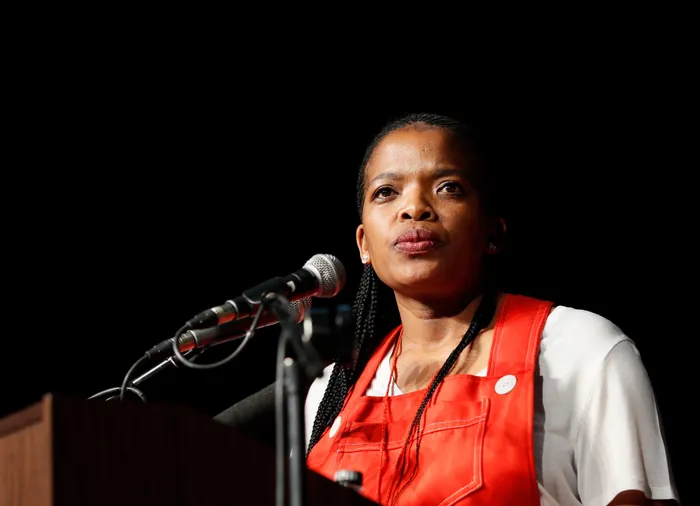
Zingiswa Losi is the president of Cosatu.
Image: Independent Newspapers
Source: https://iol.co.za/business-report/economy/2026-07-27-protecting-workers-pensions-cosatus-call-for-transparency-at-the-pic/
by Dev_SACCAWU | Labour Market News
According to trade unions, the retailer is considering reducing working hours and cutting some benefits, such as the 13th cheque.
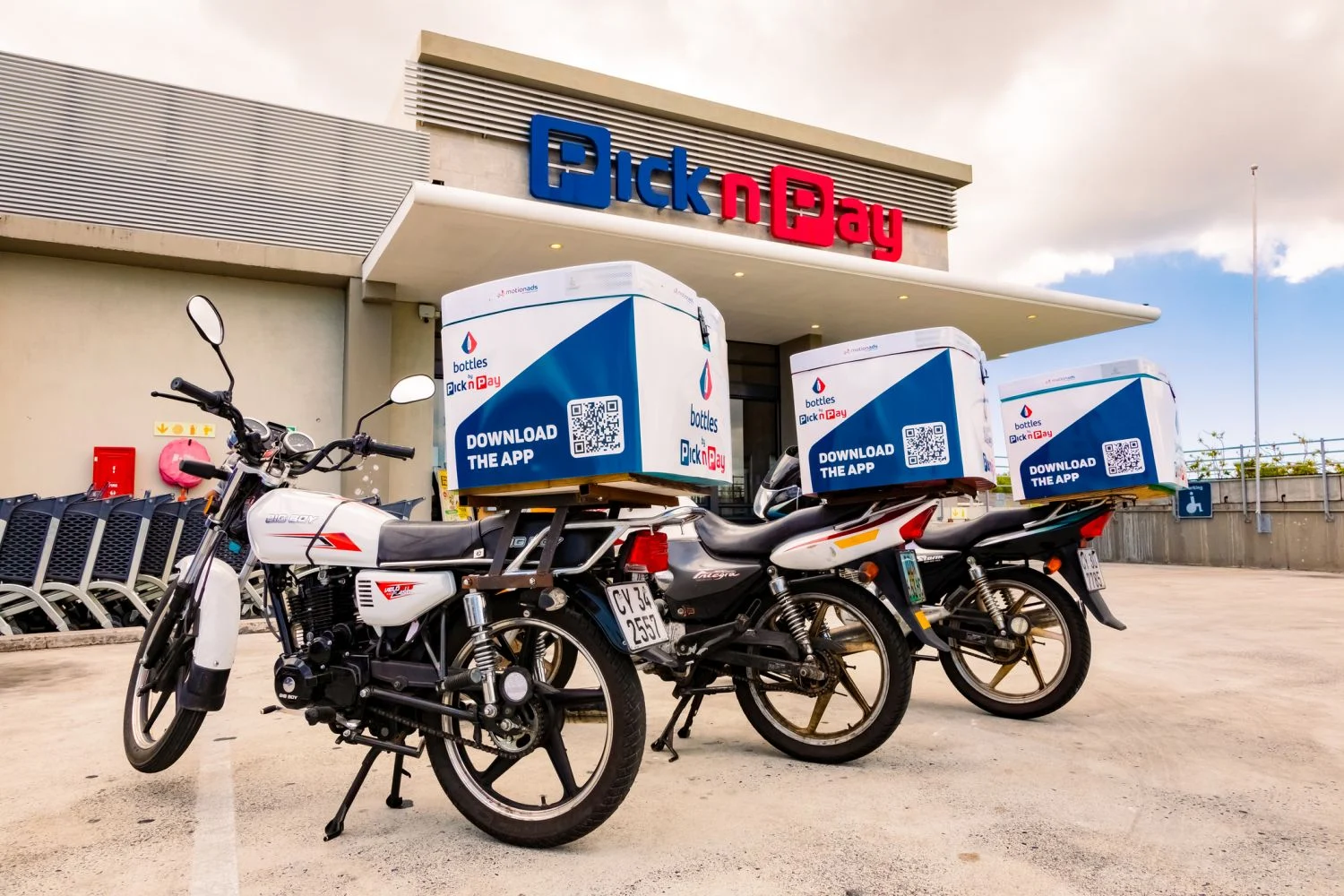
Retrenchments are not completely off the table. Picture: iStock
Pick n Pay has reiterated that its aim with the S189 consultation process is not to retrench employees, but a “direct response to operating losses incurred”.
This follows after the Labour Court reserved its judgment on Wednesday in the application by the South African Commercial, Catering and Allied Workers Union (Saccawu) to halt the retailer from proceeding with the S189 consultation process.
A S189 consultation process begins when the employer issues a written notice inviting the affected employees (or their union representatives) to consult. The notice must disclose the reasons for the proposed retrenchment, alternatives to dismissal, and the number of employees affected, among others.
Is Pick n Pay looking at cutting jobs?
The retailer told The Citizen it remains “confident in our legal position and have entered the S189 consultation process as a business imperative, in direct response to operating losses incurred”.
“Our aim remains not to lose jobs.
“We are committed to the formal CCMA facilitation process which continues through July, with our ultimate goal to secure a much more competitive and appropriate store labour model that allows for our company to grow, prosper and create job opportunities over the long-term.”
Pick n Pay previously said it is entering the S189 consultation process with the aim of returning to profitability by restructuring staff’s salary packages and working conditions. It is understood that the retailer is looking to reduce salaries and other benefits.
Saccawu attempts to stop Pick n Pay
The Labour Court heard the application brought by Saccawu on Wednesday. This is as the union believes the consultation process will see the retrenchment of at least 22 000 workers.
Spokesperson for the Congress of South African Trade Unions (Cosatu), Zanele Sabela, said the application is necessary as the unions will not allow Pick n Pay to “use the threat of retrenchment to force workers to accept inferior conditions of employment.”
“From the start, Saccawu made it clear that it would not allow the retailer to roll back workers’ conditions of employment won over decades of collective bargaining.
“The union remains steadfast in defending workers against attempts to erode guaranteed working hours, take away their 13th cheque, do away with Sunday premiums, withdraw transport for late-shift workers, and cancel longstanding collective agreements.”
Minister’s intervention
Employment and Labour Minister Nomakhosazana Meth previously met with Pick n Pay executives and Cosatu to explore alternatives to retrenchments and avoid job cuts.
The union thought that after this engagement the S189 consultation process would be halted. However, that was not the case.
Cosatu said, despite the minister’s intervention, the retailer “insists on continuing with the retrenchments that will devastate the livelihoods of thousands of workers and their families.”
Pick n Pay confirmed the meeting to The Citizen, but added: “engagements continue“.
Retailer freezes management salaries
Saccawu previously accused Pick n Pay of sacrificing workers to save the business, rather than cutting the fat paycheques executives receive.
However, CEO Sean Summers said the retailer had already cut management’s salaries as part of its turnaround strategy. He was commenting on the retailer’s financial performance for the 52 weeks ended 1 March 2026.
“To be abundantly clear, we have already taken action on our management and support office staff costs, with a salary freeze, alongside the implementation of a future-fit structure that has seen a significant reduction in headcount.
“The bulk of our labour cost is incurred in stores and operations, and it is now time to deal with this remaining major cost block.”
He assured the S189 consultation process is about ensuring the business’s long-term viability and protecting future employment, and not reducing the workforce.
by Dev_SACCAWU | Labour Market News

FILE | A man walks past a branch of African Bank in Cape Town.
Image Credits : Reuters
The Congress of South African Trade Unions (COSATU) says it will oppose African Bank’s proposed retrenchments, warning that South Africa cannot afford to lose more jobs.
This after the bank announced that it has begun formal consultations with finance union, South African Society of Bank Officials (SASBO).
It says the consultations are over a restructuring process that could see the closure of 90 branches and the cutting of 1 200 jobs.
The bank its aim is to cut costs and improve operational efficiency.
The labour federation’s national spokesperson, Zanele Sabela says, “I mean we all know our unemployment rate is sitting at 43.7% currently. We just can’t lose any jobs and so as COSATU, we will do our utmost to support our affiliates, SASBO to make sure that those jobs are saved. On average, one job supports about seven people and so when you look at that, you see how devastating it will be to lose those 1 200 jobs and therefore, we cannot do that. We will not allow that happen.”
PODCAST | COSATU opposes African Bank retrenchment plans:
Source: https://www.sabcnews.com/sabcnews/cosatu-to-oppose-african-banks-proposed-retrenchments/
by Dev_SACCAWU | Labour Market News

Cosatu has slammed employers who fail to pay over workers’ pension fund contributions, putting about 590 000 workers’ lives at risk. (Supplied)
Union federation warns against workers falling into poverty retirement
THE Congress of South African Trade Unions (Cosatu) has slammed employers who fail to pay over workers’ pension fund contributions, saying the growing crisis puts about 590 000 workers’ retirement savings at risk.
According to the latest Financial Sector Conduct Authority report, the number of employers, who have defaulted on pension fund contributions, has climbed to 16 556 by the end of February 2026, up from 15 521 recorded in September 2025.
The total amount owed has also ballooned by R1,04 billion to R8,33 billion, with late payment interest now making up 43,5% of the total arrears.
Cosatu said despite recoveries of R1,01 billion since the FSCA first started reporting on the matter in June 2022, the outstanding amount remains unacceptably high.
ALSO READ: Jumpers mass shooting suspects abandon bail in Joburg court
“The total arrears are still far too high and risk plunging more than half-a-million workers into poverty retirement.
“More than an injustice, this is a crime against workers whose sweat of the brow is toyed with by these unscrupulous employers,” said the union federation.
Cosatu expressed particular concern over municipalities, saying they deducted R1,7 billion from workers’ salaries but failed to transfer the money to pension funds.
The federation said municipal workers have also been forced to endure unpaid salaries for months while their pension contributions remain in arrears.
“When pension fund contributions are in arrears, workers’ death and disability benefits become void with devastating consequences for the workers and their families,” it said.
The federation reminded employers that failure to pay pension fund contributions is a violation of Section 13A of the Pension Funds Act, which requires contributions to be paid within seven days after month-end.
Those not complying are breaking the law and if prosecuted, will be liable for a fine and can even be jailed. They are thieves, plain and simple
— Cosatu
While welcoming measures by National Treasury and labour inspectors to improve compliance, Cosatu said stronger action is needed.
“This crisis will, however, not end until delinquent employers are charged and prosecuted for the theft, fraud and corruption that this mass looting is.
“Cosatu will engage unions of affected workers to begin laying charges with the police,” said the federation.
It added that it will intensify efforts to report defaulting employers and ensure all outstanding pension contributions, including interest, are recovered.
Source: https://www.snl24.com/news/cosatu-fumes-as-pension-fund-debt-puts-workers-at-risk-20260717/