COSATU said it has noted with ‘extreme dismay’ the appointment of the council by President Cyril Ramaphosa, after receiving recommendations from Parliament.
COSATU’s Parliamentary coordinator Matthew Parks. Picture: X/Radio702
The Congress of South African Trade Unions (COSATU) said it will be calling on the Presidency and Parliament to intervene after no labour representatives were appointed to the National Council on Gender-Based Violence and Femicide (GBVF).COSATU said it has noted with “extreme dismay” the appointment of the council by President Cyril Ramaphosa, after receiving recommendations from Parliament.
However, COSATU said the appointments have failed to include key sectors like representatives from labour and business.
The president announced the appointment of the National Council on Friday and named academic Dr Ramalepe Mathibe as the chairperson.
The council comprises seven members, including academics, a gender activist, a clinical psychologist and a social worker.
COSATU parliamentary coordinator Matthew Parks said this is despite the act establishing the council specifically stipulating that representatives from business and labour should be included in the council, and “this was not done”.Parks said GBVF “is not a mere academic discussion”.
He said it is the lived experience of women in everyday life, including women who are victims of abuse and intimidation in the workplace.
Parks said they will be engaging with the Presidency and the presiding officers of Parliament to allow the State to ignore its own legislation and “legally binding provisions”.
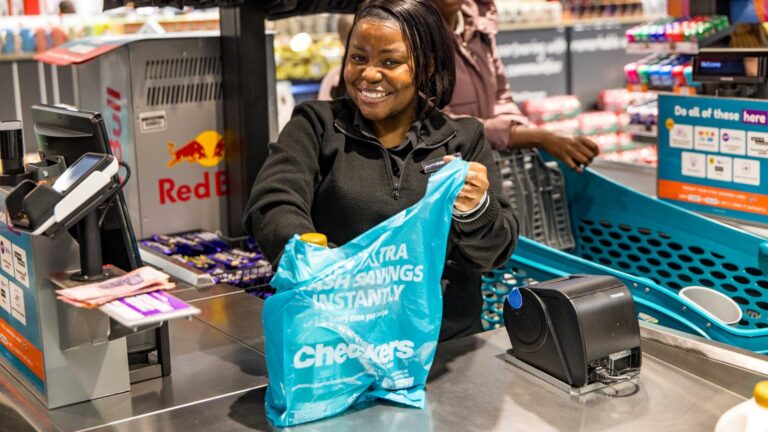
The Shoprite Group has opened a new Checkers Hyper at Irene Village Mall in Centurion, taking on established Woolworths and Pick n Pay stores.
This new Checkers Hyper has 5,369 square meters of floor space, promising a world-class experience to clients.
It offers a wide selection of fresh food, groceries, general merchandise and speciality offerings, supported by a range of in-store services.
The hypermarket has a dedicated meat market, a hot-and-cold food deli, a bakery, and a fresh fruit and vegetables section.
Customers can also enjoy speciality food offerings from well-known brands, including Sushi, Krispy Kreme, Kauai, and Tandoori Chicken.
The new Checkers Hyper also offers a coffee shop, milkshake bar, hamburger bar, smoothie bar and chocolate fountain.
Additional in-store services and features include a refrigerated flower cart and a money market counter.
“Customers want more choice, fresh food and convenience, and that’s what we’ve delivered at Checkers Hyper Irene Village,” said Checkers COO Willem Hunlun.
“This store showcases the best of what Checkers has to offer, bringing together quality, innovation and specialist offerings in one destination.”
Shoprite Group has also launched UNIQ Clothing by Checkers and Petshop Science at Irene Village Mall as part of the new Checkers Hyper.
These two stores complement the hypermarket by offering clothing and pet products in dedicated retail settings.
Together, the new stores in Irene created 115 employment opportunities in the area, including 102 positions at Checkers Hyper.
What is interesting about the new Checkers Hyper is that it will compete head-on against established Woolworths and Pick n Pay stores in Irene Village Mall.
Shoprite is confident that its superior range at the new Checkers Hyper will be enough to lure customers away from its competitors.
Aggressive rollout targets for Checkers
The new Checkers Hyper Irene Village forms part of the Shoprite Group’s aggressive expansion strategy, which saw it surpass its store rollout target.
Shoprite’s 2025 Annual Integrated Report provided details about its rollout strategy for the Checkers brand.
This rollout included core supermarket formats, fresh store revamps, digital e-commerce expansion, and adjacent specialist retail chains.
The Checkers supermarket chain reached 350 stores in South Africa, comprising 310 Checkers supermarkets and 40 Checkers Hypers.
During the 2025 financial year, Shoprite opened 29 new Checkers supermarkets and 3 Checkers Hypermarkets.
On-demand delivery service Checkers Sixty60 expanded to 694 locations across South Africa, a net addition of 155 locations in the 2025 financial year.
Shoprite said that it had identified significant scope for further expansion of the Checkers store footprint.
It added that it continued to leverage the Checkers store network and platform infrastructure to roll out adjacent retail brands.
These adjacent retail brands include Petshop Science, UNIQ clothing by Checkers, Checkers Outdoor, and Checkers Little Me.
At Checkers Hyper Irene Village, Shoprite used the additional space to add Petshop Science and UNIQ clothing from Checkers.
This makes sense given the demographic it serves at Irene Village Mall, with people spending thousands on their pets.
Cosatu, through its Gauteng Chairperson Amos Monyela, has voiced strong support for the recently launched Gauteng Human Resource Development Council (GHRDC).
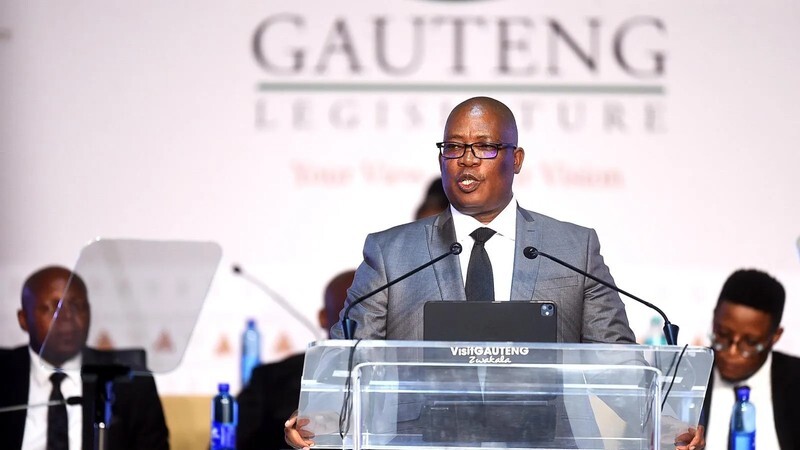
Gauteng Premier Panyaza Lesufi unveiled this initiative on Tuesday at the University of South Africa (Unisa), aiming to equip workers with the necessary skills for a rapidly advancing job market.
Welcoming the initiative, Monyela emphasised that the GHRDC will play a crucial role in facilitating continuous upskilling and reskilling initiatives, especially as artificial intelligence and emerging technologies reshape the workforce landscape.
Monyela added that this new programme will ensure workers remain prepared to deliver quality services and support Gauteng’s economic growth.
“The economy of Gauteng is improving, and has been improving consistently. Therefore, you are likely to upskill young workers regularly to ensure that young people are at par with the skills that are required.”
Gauteng Premier Panyaza Lesufi, alongside Deputy Minister Dr Nomusa Dube-Ncube, arriving at Unisa for the launch of the Human Resource Development Council (HRDC) on Tuesday.
Lesufi, accompanied by Deputy Minister of Higher Education and Training, Dr Nomusa Dube-Ncube, reiterated the transformative potential of the GHRDC, describing it as a blueprint for developing a skilled workforce that meets the province’s economic needs.
He further articulated a vision of a future where young people contribute meaningfully to the economy, dreaming of innovations such as a speed train connecting Gauteng to Limpopo, operated by young women from local townships, and tech-enabled classrooms for modern education.
“I dream about a speed train that moves from here to Limpopo in 67 minutes, and that train is driven by a young lady from Mamelodi or Tembisa. I dream about a school where every learner has a tablet, the teacher has a laptop, and a classroom has a smart board,” he stated.
Reflecting on the council’s objectives, Lesufi stressed that investing in people and developing the right skill sets are essential for unlocking economic growth, creating jobs, and improving the overall quality of life for Gauteng residents.
From AI-powered healthcare systems to modernised transportation and advanced crime-fighting technologies, the GHRDC aims to ensure that education and skills development are closely aligned with the province’s evolving economy.
The event also saw the appointment of community activist Vuyo Sibiya to the council.
Sibiya asserted his commitment to ensuring that young people, particularly those in the townships, have access to skills development and employment opportunities.
“I am an activist. In fact, this opportunity is going to be a good opportunity for young people. I will make sure that we continue to share the opportunities with young people and ensure that young people benefit from these opportunities as we have been doing,” he stated.
The South African Municipal Workers’ Union (SAMWU) notes the announcement by National Treasury that it will finally release the equitable share allocations due to affected municipalities by 31 July 2026. While SAMWU welcomes this decision, we cannot simply move on as though nothing happened. The decision to withhold these allocations in the first place was reckless, ill-conceived and devoid of any appreciation of the realities confronting municipalities, workers and communities.
There was simply no logic in taking municipalities that were already experiencing severe financial difficulties, withholding an important source of their revenue and then expecting their financial position and service delivery capacity to somehow improve. From the moment National Treasury announced the withholding, SAMWU warned that the decision would have serious consequences. We warned that workers would not be paid, third-party deductions would not be honoured and public services would be placed at risk.
National Treasury nevertheless assured the country that the withholding would have no impact on service delivery. The experience of the past few weeks has demonstrated how dangerously misplaced that confidence was.
Municipal workers across several provinces have either not received their July salaries, received them late or faced uncertainty about when they would be paid. In some municipalities, workers were already owed salaries from June. This happened at precisely the time when municipal workers were also supposed to receive their salary increases together with their July salaries.
These workers had rendered their services. They continued collecting refuse, maintaining water and sanitation infrastructure, repairing roads, maintaining electricity networks and ensuring that municipalities continued functioning. Yet when payday came, many were left with nothing.
The consequences were not theoretical. Debit orders bounced. Workers could not meet their bond and rental payments. Families struggled to buy food. Parents had to worry about transporting their children to school. Workers faced penalties and the possibility of damage to their credit records because of a decision over which they had absolutely no control.
National Treasury must therefore not expect applause for extinguishing a fire that should never have been started in the first place. The release of the equitable share is welcomed because it will bring desperately needed relief to municipalities and workers, but it cannot erase the hardship unnecessarily inflicted on thousands of municipal workers and their families.
SAMWU maintains that the initial decision was an unacceptable form of collective punishment. Municipal workers did not adopt unfunded budgets. They did not authorise irregular, fruitless and wasteful expenditure. They did not fail to implement consequence management against municipal managers and senior officials. Yet, when National Treasury decided to impose consequences on municipalities, it was ordinary workers and communities who were made to pay.
This approach was neither developmental nor sustainable. If National Treasury was genuinely concerned about the financial health and governance of municipalities, there were other mechanisms available to government. Treasury could and should have worked with the Department of Cooperative Governance and Traditional Affairs, provincial governments and municipalities on targeted interventions, including the constitutional mechanisms available under section 139 of the Constitution.
Municipalities have been allowed to linger in financial distress for far too long. Government cannot stand by while municipalities deteriorate year after year and then suddenly resort to drastic measures that threaten salaries and public services.Intervention must happen before municipalities reach the point of collapse.
SAMWU also agrees with the sentiments expressed by the Minister of Cooperative Governance and Traditional Affairs that government departments and institutions that owe municipalities must be compelled to settle what they owe. Government cannot demand financial discipline from municipalities while its own departments fail to pay municipal accounts.
If municipalities are expected to pay Eskom, water boards, workers, pension funds, medical schemes, service providers and other creditors on time, then national and provincial government departments must equally pay municipalities what they owe, and they must do so on time.
There cannot be one standard of financial discipline for municipalities and another for other spheres of government. The financial crisis in local government requires an honest assessment of the entire municipal funding model. It cannot be reduced to punishment whenever municipalities fail. National government must confront the chronic underfunding of local government, poor revenue collection, government debt owed to municipalities, corruption, financial mismanagement and the failure to intervene early in municipalities that are clearly in distress.
As SAMWU, our interest remains straightforward. We want municipalities that are financially sustainable. We want municipalities that can pay workers their salaries and salary increases in full and on time. We want municipalities that pay pension funds, medical aid schemes, bargaining councils and all other third parties without using workers’ deductions to finance municipal operations.
Most importantly, we want municipalities that have the financial and human capacity to deliver quality services to residents. Accountability and service delivery should never be presented as competing objectives. Those responsible for financial misconduct must be held personally accountable, but workers and communities should never be collateral damage in the process.
We therefore call on National Treasury to ensure that the announced equitable share allocations are released to all municipalities by 31 July 2026 without further delay. Municipalities receiving these funds must, as an immediate priority, settle all outstanding workers’ salaries, implement the salary increases due to workers and pay all outstanding third-party contributions.
The events of this month must never be repeated and National Treasury must learn from the consequences of its decision and abandon interventions that seek to restore municipalities to financial health by first pushing them closer to financial collapse. Workers must never again be made to pay for failures they did not create.
Issued by SAMWU Secretariat
Dumisane Magagula
General Secretary
(076 580 4029)
Or
Sam Lekhuleni
Deputy General Secretary
(082 526 6639)
Or
Papikie Mohale
National Media Officer
076 795 8670
The Congress of South African Trade Unions (COSATU) and its affiliate, the South African Transport and Allied Workers Union (SATAWU), unequivocally reject the proposed retrenchments at Great North Transport (GNT).
We view the proposed retrenchment as a devastating blow to workers, their families and the people of Limpopo who rely on GNT as their public transport service.
GNT issued a Section 189 notice attributing the proposed job cuts to declining revenues, a reduced operational fleet, increasing labour costs and organisational restructuring. While the bus operator insists that no final decision has been made and that consultations will take place, COSATU and SATAWU are aggrieved that workers are once again being asked to pay the price for years of mismanagement, poor governance, and failure by the Limpopo Provincial Government via the Limpopo Economic Development Agency to provide proper oversight on the state-owned bus company.
Workers did not create the financial crisis faced by Great North Transport. They therefore should not be sacrificed as a solution to problems created by management failure and inadequate oversight.
Thousands of workers, learners, students and the elderly across Limpopo rely on GNT for their commute. Retrenchments will not only send hundreds of workers to the unemployment line in a province where the rate of unemployment is already higher than the national rate at 47% but will also impact public transport services that communities depend on daily.
COSATU will provide SATAWU with every support so it can vigorously protect every job in the consultation process and ensure that every possible alternative to retrenchment is explored. COSATU and SATAWU will oppose any attempt to use Section 189 to cut jobs without genuinely exploring all alternatives.
COSATU calls on the Limpopo Provincial Government, as the shareholder, not to stand by while workers bear the consequences of management and oversight failures. Government has a responsibility to protect decent work and ensure that state-owned entities fulfil their developmental mandate.
At a time when millions of South Africans are battling an unemployment rate of 43.7%, a stagnant economy and ever-rising cost of living, retrenching workers cannot be the solution. Saving jobs, rebuilding public transport and restoring confidence in Great North Transport must be the priority.
COSATU and SATAWU stand firmly with GNT workers and will use every resource available to fight job losses and defend the livelihoods of working-class families.