Cosatu has presented a crucial submission to the USTR, highlighting the urgent issue of forced labour and its implications for workers in South Africa and beyond. This article explores the challenges and strides made in combating this modern-day slavery. Image: File.
The Congress of South African Trade Unions (Cosatu) presented its submission on the burning and often neglected issue of forced labour to the United States’ Trade Representative (USTR) this past week.
Whilst we differ sharply with the USTR’s approach to this existential matter for millions of workers, it is an issue of great importance for the working class, particularly in the developing world, including South Africa.
Ending slavery and forced labour were among the rallying calls for the formation of trade unions across the world from industrialised to developing nations.
As society has evolved slavery was criminalised and labour rights improved, however we still witness frequent abuses, including forced labour and more recently we have seen a growth in human trafficking linked to these. South Africa despite its advances and progressive labour laws has not been immune from these horrors.
Drafting Cosatu’s submission on the progress we have made as a nation since the advent of democracy in 1994 under successive African National Congress led administrations was a moment of great pride.
We can be proud that our progressive Constitution, labour and other laws deal firmly with slavery, forced labour and human trafficking. In no small part these are products of decades of workers’ struggles, particularly led by Cosatu.
Whilst we have made great strides tackling the scourge of forced labour and trafficking, we must be honest and acknowledge our real gaps, particularly with regards to enforcement and holding transgressors accountable, and to keep pace with often very sophisticated global human trafficking syndicates.
21 million persons across the world are estimated to be in some form of forced labour with alarming numbers for child labour. For those affected, labour rights and protections are a faint hope, in particular for women trafficked for sexual exploitation.
We have seen a deeply worrying increase in South Africans trafficked abroad under the pretense of lucrative jobs into forced labour and crime syndicates as far away as Myanmar.
One of the points raised by the USTR is that forced labour threatens the competitiveness of US companies.
It equally challenges the very survival of South African companies who correctly embrace compliance with our labour and other laws.
Slavery, forced labour and human trafficking are some of the worst abominations facing humanity, something that should never be tolerated. The challenge facing South Africa as Vladimir Lenin challenged, is what is to be done?
First is the tightening of our legislation to protect workers, in particular our trade and customs laws to empower the Minister for Trade, Industry and Competition to impose bans and tariffs on companies and imports from businesses involved in any form of forced labour.
Second is to invest further in the capacity of the Department of Employment and Labour, in particular its inspectors to ensure all workplaces, particularly in high-risk sectors, comply with our laws at all times.
Over the past year we have seen a welcome increase in the number of workplace inspections and the prosecution and conviction of offending employers, including substantial prison sentences for some Chinese employers involved in forced labour.
The South African Revenue Service has done well to improve tax compliance, however customs enforcement remains one of its major challenges and weaknesses. Further investments in its capacity through filling frontline vacancies, strengthening IT systems and deploying scanning machines are key to tackling fraud and illegal imports.
Similar resourcing is desperately needed for the Border Management Authority, hamstrung by a devastating 75% vacancy rate and the South African National Defence Force which are tasked with securing over 72 points of entry, 5244 kms of land borders and 2798 kms of coastlines.
There is a need for a common international approach to this burning matter. A piecemeal approach will not be sufficient. One nation cracking down on it will often simply see such practices displaced to less equipped countries.
There is a need for the International Labour Organisation (ILO) to lead this struggle by establishing a global database of workplaces and countries found to be guilty of such forced labour activities.
This is key to avoid this progressive cause being exploited for narrow domestic protectionist calls or being weaponised to victimise countries for geo-political grudges.
It is important that the ILO craft a common global stance on forced prison labour and exports linked to this practise. Whilst South Africa has correctly criminalised this practise, many leading industrial countries, including some of our largest trading partners, have not and in fact actively use such forced prison labour.
Strengthening legislation, improving capacity to enforce them and cracking down on workplaces and imports involved in forced labour will send a clear message to such employers that this behaviour will not be tolerated.
Whilst we are proud of how far we have come as a country, we are pained as Cosatu that so many workers, and in particular women and children, are subjected to the crimes of forced labour in South Africa and across the world.
It is incumbent upon us as Cosatu to provide meaningful and practical solidarity for workers less fortunate than us, in particular in countries such as Myanmar and Sudan where such abuses are tragically all too frequent, or even in sweatshops closer to home in Lesotho.
Cosatu will soon be holding its national congress, the workers’ parliament. Tackling this scourge of modern-day slavery will be one of the issues to be fleshed out.
It will be key that we emerge from congress with a bold and decisive campaign for Cosatu to lead this struggle at our workplaces with inspection raids, in strengthening our legislation through Nedlac and Parliament, in cracking down on imports built through forced labour and by leading negotiations in our international forums, in particular the ILO.
Solidarity is about giving hope to the most downtrodden and exploited, be it in South Africa or elsewhere. Workers should not be expected to tolerate such abhorrent crimes in this day and age. Cosatu is determined to ensure that such violations become a thing of the past.
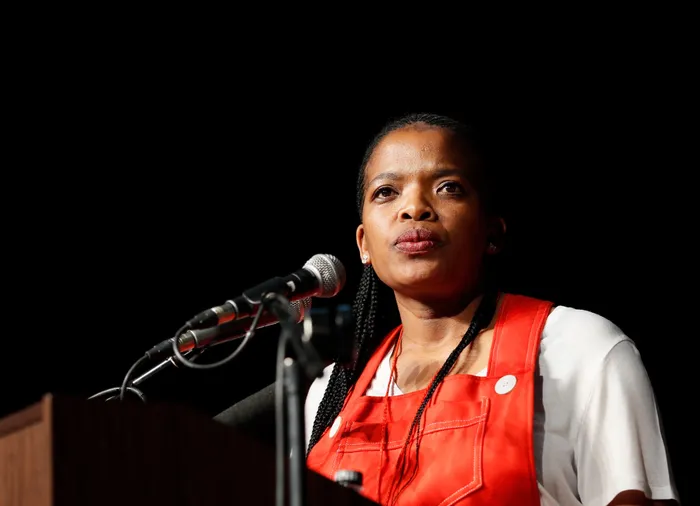
Zingiswa Losi is the president of Cosatu.
Zingiswa Losi is the president of Cosatu. Image: Independent Newspapers
South African labour unions have sounded the alarm over an R8.3bn unpaid pension crisis affecting 590,000 workers. Image: File
Labour unions are sounding the alarm over the growing number of companies that are failing to pay over pension contributions to pension funds, leaving workers destitute at the end of their working lives.
The Public Servants Association (PSA) has revealed that more than R8 billion in pension contributions have not been paid over to pension funds by employers, despite those being deducted from employees.
Labour unions stated that workers have very little recourse when they discover that the company has not been paying over their pension.
Economists say this is a major concern and could be damaging to workers’ lives after retirement, pointing out that many workers cannot retire comfortably as it is, even if they receive their full pension.
In a statement, the PSA said it is shocked and outraged following reports that thousands of employers across South Africa have failed to pay over employees’ pension contributions, with arrear contributions amounting to an alarming R8.3 billion.
“The PSA regards this as a gross betrayal of workers’ trust and a direct attack on the financial security and dignity of employees who work with the legitimate expectation that deductions from their salaries will be paid over to their respective pension funds. Instead, many workers face uncertainty regarding their retirement savings because of the unlawful and unethical conduct of employers.
“This situation is nothing short of a national disgrace. Pension contributions are not optional payments; they are deferred earnings belonging to employees. Any employer who deducts these contributions but fails to pay them over is effectively depriving workers of hard-earned retirement savings.
“The PSA is extremely concerned that many employees only become aware of these outstanding contributions when they resign, retire, or lodge benefit claims, by which time the financial prejudice may already be substantial,” said the union.
The PSA said such conduct undermines confidence in South Africa’s retirement system and places countless families at risk of financial hardship. “The PSA calls on President Cyril Ramaphosa and the government to take decisive and immediate action against employers who fail to comply with their legal obligations.
“The current situation cannot be allowed to continue unchecked. The PSA specifically calls for the imposition of severe financial penalties on employers who fail to pay pension contributions, criminal prosecution of employers who unlawfully withhold or misappropriate employees’ pension contributions, strengthened enforcement and regular compliance inspections by the relevant regulatory authorities, publication of names of defaulting employers to promote transparency and accountability, and urgent measures to ensure that all outstanding pension contributions, together with applicable interest, are recovered and paid into affected employees’ retirement funds without delay,” it stated.
It added that workers should not be forced to pay the price for employers who disregard the law and exploit employees’ trust. “The PSA will continue to advocate for stronger protection of workers’ retirement benefits and will support every effort to ensure that employers who violate their legal obligations are held fully accountable. Retirement savings represent the future security of millions of South Africans and must never be treated as a source of cash flow for irresponsible employers.”
Edwin Mkhize of Cosatu in KwaZulu-Natal said the matter was serious and there are very limited options as recourse for workers.
“Such recourse, which includes opening a criminal case against a particular company, can take a very long time.
“This is a matter of corruption and should be treated as such. We have found many conmen that are doing this; it’s not just small companies; there are big companies doing this and even municipalities,” said Mkhize.
He said part of the solution being explored by Cosatu is to have workers’ interests represented on the board of trustees for these pension funds in order to catch the problem before it snowballs. “We cannot be reactive; we need to be proactive in addressing the issue.”
He added that Cosatu has done a lot of work in addressing the problem, including engaging with the authorities to name and shame the companies that are in breach.
Economist Dawie Roodt described this as a serious problem. “Quite often, people are not really concerned about this (pension contributions) because they trust their employers to do the payment, and people just don’t check them.
“My advice to people is that they make sure that the money is paid over because when it comes to retirement and the money is not there, you have serious issues because the majority of South Africans cannot retire independently as it is, and unfortunately, some of the biggest culprits here are state-owned enterprises and especially the municipalities,” he said.
For more stories from The Mercury, click the link THE MERCURY
Western Cape Minister of Infrastructure, Tertuis Simmers
GARDEN ROUTE NEWS – The proposed transfer of Roads Department employees from district municipalities to the Western Cape Government has entered a new phase, but not without opposition from organised labour.
The South African Municipal Workers’ Union (Samwu) has formally rejected the Department of Infrastructure’s proposed Section 197(6) consultation process, arguing that key decisions have already been made before unions were consulted.
In a letter addressed to the head of department, Adv Chantal Smith, on 1 July, Samwu said the process could not be regarded as meaningful consultation if the employees had already been identified, additional support staff selected and the transfer agreements were nearing completion, before the labour engagements had begun.
The union questioned: “What exactly is left for the unions to negotiate?” saying organised labour could not simply endorse decisions that had already been taken.
Samwu has called on the department to immediately suspend its implementation of the proposed transfers until what it describes as a lawful and meaningful consultation process has been completed. The union warned that it would pursue legal remedies should the transfer proceed before the consultations are finalised.
No final decisions
The union’s response follows the Western Cape Government seeking to reassure employees that no final decisions have been made regarding the transfer of Roads Department staff under the Provincial Roads Delivery Model.
In a statement and video by the Western Cape Minister of Infrastructure, Tertuis Simmers, the department maintains that the process is being conducted in terms of Section 197(6) of the Labour Relations Act, which requires consultation with recognised trade unions before any agreement affecting employees can be concluded.
According to Simmers, discussions with recognised unions, including Samwu and Imatu, will begin once the employer transfer agreements have been finalised. Officials say the aim is to provide certainty, stability and continuity for affected employees while ensuring uninterrupted road services.
Conflicting information
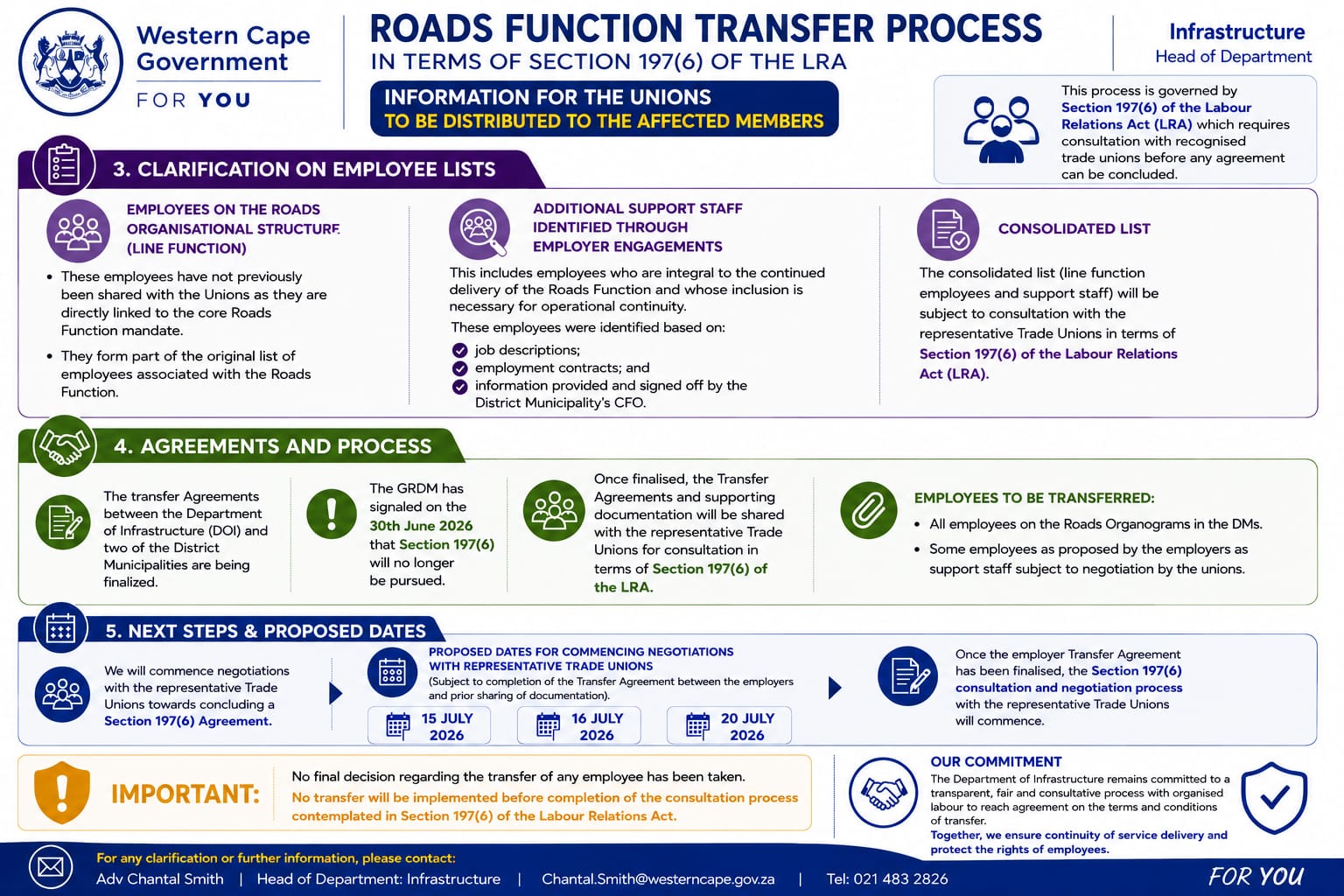
Simmers has also urged employees to ignore rumours following what he described as conflicting information circulating about the process. It released an infographic explaining that no employee will be transferred before the Section 197(6) consultation process has been completed.
The proposed transfer includes employees on the roads department’s organisational structures within district municipalities, as well as certain support staff identified by employers as essential for operational continuity.
While the transfer agreements with two district municipalities are still being finalised, the Garden Route District Municipality indicated on 30 June that it will no longer pursue the Section 197(6) process.
Consultations with representative trade unions are provisionally scheduled for 15, 16 and 20 July, and the outcome is likely to determine the next steps in the transfer process.
Infographics by the Department of Infrastructure.
‘We bring you the latest Garden Route, Hessequa, Karoo news’
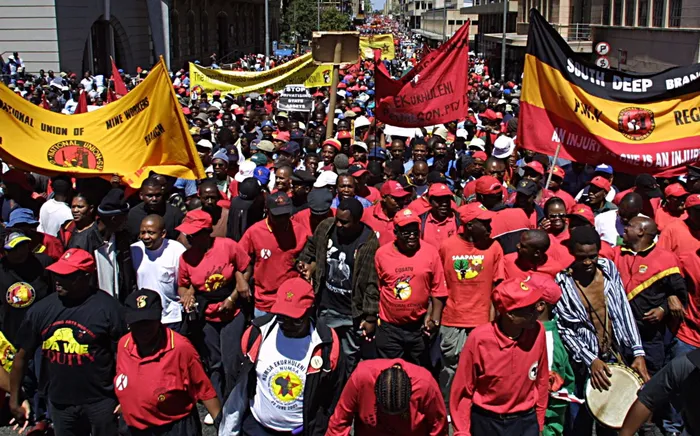
FILE PHOTO| Scores of municipal workers, affiliated with SAMWU, protest outside the Johannesburg High Court. PHOTO: X/IOL
The South African Municipal Workers’ Union (SAMWU) is set to embark on a nationwide day of action on Thursday, with municipal workers expected to march to the National Treasury in Tshwane to highlight what it describes as a deepening crisis in local government and the water sector.
In a statement by the union’s secretariat, the march will begin at the Old Putco Depot in Marabastad, Tshwane, before proceeding to the National Treasury offices, with the recipients of its memorandum including the departments of Cooperative Governance and Traditional Affairs (COGTA) and Water and Sanitation, as well as the South African Local Government Association (SALGA).
“This march is a call to defend workers, defend collective bargaining, defend public services and rebuild local government and the water sector in the interests of communities. Workers have waited long enough and as resolved by our 13th National Congress, we will organise; we will mobilise and, we will fight!” the union said.
SAMWU said that municipalities and water boards have been weakened by chronic underfunding, deteriorating infrastructure, corruption, outsourcing, overreliance on consultants, privatisation, and failures to pay workers’ salaries and benefits on time.
According to the union, these challenges have undermined service delivery while placing increasing pressure on frontline municipal workers.
“Workers are not the cause of this crisis. Workers are the backbone of service delivery. They are the ones who keep water flowing, waste collected, roads maintained, electricity services running and communities served, often without proper tools of trade, safe working conditions or the respect they deserve,” the union said.
SAMWU is calling for the review of the Local Government Equitable Share formula, and for the local government share of nationally raised revenue to be increased to at least 15%.
The union also intends demanding what it described as an end to National Treasury’s interference in collective bargaining processes, the implementation of the City of Johannesburg’s Placement Framework Agreement, the conclusion of the Wage Curve Agreement, and stronger protection for workers, shop stewards and whistleblowers.
SAMWU said it will renew its opposition to outsourcing and the extensive use of private consultants by municipalities, arguing that money continues to be spent on consultants while essential services deteriorate and workers lack adequate equipment and benefits.
In addition to its demands directed at National Treasury and COGTA, the union is calling on water boards to honour existing collective agreements and on the water and sanitation department to intervene where it alleges workers are being victimised by management.
The union said it expected an answer to their demands, within 14 days.
On Tuesday, SAMWU accused SALGA’s Gauteng branch of attempting to intimidate and discourage municipal workers from participating in Thursday’s national day of action, saying the provincial circular sought to undermine legitimate worker mobilisation, while claiming SALGA’s national leadership had not authorised or sanctioned it.
“The reckless communication is nothing more than an attempt to intimidate workers, suppress legitimate worker mobilisation and shield National Treasury from growing public opposition to its destructive austerity agenda,” the union said.
The union said instead of opposing National Treasury’s withholding of equitable share allocations to municipalities, which it says threatens salaries, pensions, service delivery and municipal finances, SALGA had chosen to target workers.
Meanwhile, the South African Democratic Teachers’ Union (SADTU) has thrown its support behind SAMWU’s march, saying it stands in solidarity with municipal workers in their campaign to defend workers’ rights, collective bargaining and quality public services.
SADTU said deteriorating municipal infrastructure, corruption, outsourcing, privatisation and the excessive use of consultants had contributed to worsening working conditions and declining service delivery, while many workers continued to face delayed salaries and unpaid benefits.
The teacher’s union backed SAMWU’s demands for an end to outsourcing and wasteful consultant spending, the implementation of collective agreements and wage increases, and the timely payment of workers’ salaries and benefits.
The Police and Prisons Civil Rights Union (POPCRU) has also declared its support for SAMWU, describing the national march as a stand against the deterioration of municipalities, corruption, outsourcing, austerity and the erosion of workers’ rights and public services.
POPCRU called on the government to urgently address the crisis in local government through better funding, accountability for corruption, stronger collective bargaining, improved working conditions and an end to the outsourcing and privatisation of basic municipal services.
It is expected that across the country, solidarity pickets will be held at provincial Treasury offices and municipal offices in support of the national march.
The South African Communist Party (SACP) has also thrown its full support behind the SAMWU National Day of Action in Tshwane, saying the march is a stand against austerity measures and the worsening conditions facing municipal workers.
In a statement, the SACP accused the National Treasury of withholding critical funding from municipalities to force local governments to implement austerity measures and surrender constitutionally protected administrative powers.
“These actions are aimed at institutionalising austerity and liberalising the local state. These policies are part and parcel of implementation of the Vulindlela programme of government rooted in austerity and a thoroughgoing neoliberal agenda,” the party said.
The SACP said it welcomed municipal workers taking a stand to defend the local government sector from what it described as a hostile takeover by private sector and bourgeois economic interests.
“It is encouraging for the SACP when workers in the local government sector take up these struggles so as to defend the local state from a hostile takeover by the private sector and bourgeois economic interests. This push back by local government employees is not only workers defending their jobs but, much more than that, is the working class reclaiming their position as drivers of public policy and public services.”
The party said its solidarity with SAMWU was rooted in the belief that organised workers could drive meaningful social and political change.
“The solidarity of the SACP with SAMWU emanates from the understanding that when the working class acts consciously, collectively and deliberately, it can change the world.”
The SACP also backed the union’s opposition to the victimisation and dismissal of members and shop stewards, as well as its criticism of what it described as National Treasury’s interference in municipal governance.
“As the SACP, we stand with SAMWU in the fight against victimisation and unfair dismissals of members and shop-stewards. We also support the union in standing against the National Treasury’s interference in municipal governance. This interference violates the Constitution and the laws governing municipal affairs.”
The party further endorsed SAMWU’s campaign against the outsourcing and tenderisation of municipal services, warning that the growing crisis of unpaid salaries threatened the viability of municipalities.
“We also stand with SAMWU in opposing the tenderisation and outsourcing of municipal services. The crisis of non-payment of salaries in local government threatens to collapse our municipalities and an appropriate response is not the asphyxiation of municipalities as the National Treasury intends.”
The SACP said corruption had contributed significantly to the crisis facing municipalities and pledged to join the National Day of Action.
“We support SAMWU in their fight against corruption in the local government sphere. It is corruption that has caused the legitimacy crisis in local government and thereby weakened the local state.”
The party said its members would participate in the march and called on all SACP activists to join the demonstration and show solidarity with municipal workers.
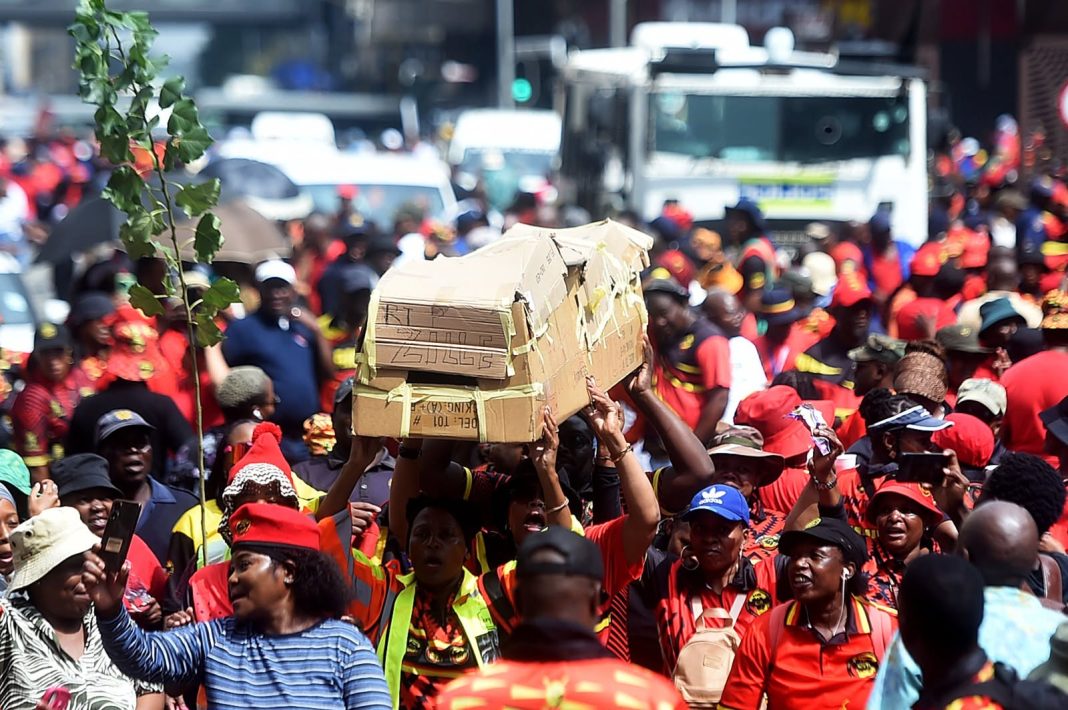
PRETORIA – Hundreds of the South African Municipal Workers’ Union (Samwu) members are expected to march in Pretoria.
They are calling for urgent action to protect workers’ rights, strengthen collective bargaining and safeguard public services.
The union says chronic underfunding, ageing infrastructure, corruption and delayed salaries have weakened municipalities and water boards.
Samwu argues that these challenges have eroded service delivery and increased the burden on municipal workers who remain on the frontline of serving communities.