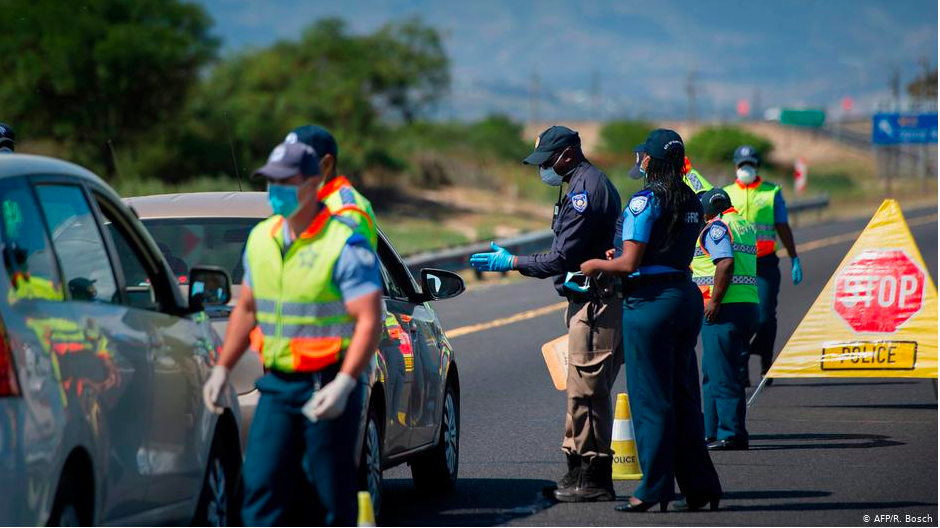
SAPS Roadblock Rights

It’s hard to describe that sinking feeling when you encounter the flashing blue lights, yellow signs and orange bollards. Here’s what you can and cannot do at a police checkpoint.

We’ve all experienced that slight dip in the stomach when rounding a bend to see a sea of neon vests, traffic cones, and flashing blue lights. Roadblocks are an essential reality of driving on South African roads, designed to keep motorists safe, catch unroadworthy vehicles, and deter criminal activity. However, a combination of intimidating roadside tactics and general public confusion often leaves drivers unsure of where they stand.

Related: What are my rights if I get stopped at a roadblock?

With the nationwide administrative rollout of the AARTO (Administrative Adjudication of Road Traffic Offences) system, keeping tabs on your legal protections is more critical than ever. To help you navigate your next encounter calmly and safely, here is a definitive AutoTrader guide to what law enforcement can—and strictly cannot—do at a South African roadblock.

How to Pay Your Traffic Fines Online in South Africa
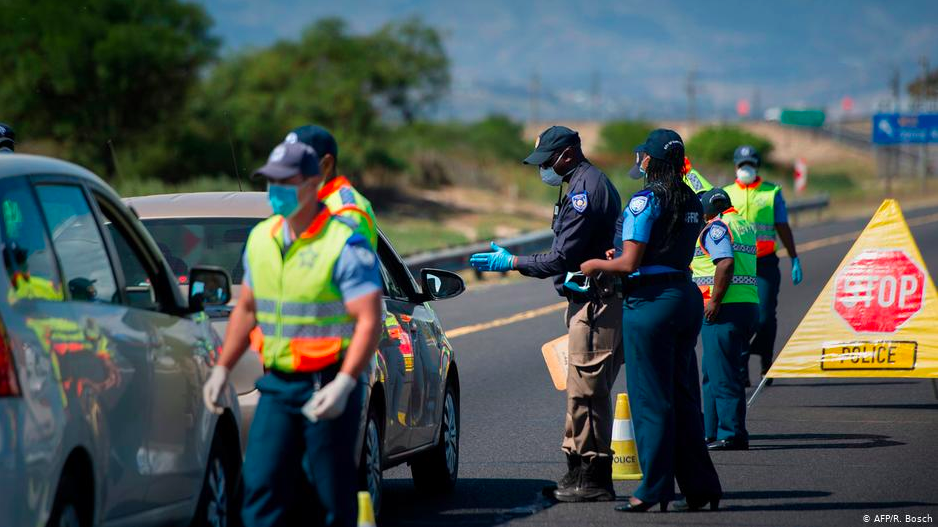
Metro Roadblock

1. The Big Distinction: Roadblocks vs. Roadside Checks

Not every flashing blue light carries the same legal weight. South African law separates police operations into two distinct categories, and your privacy rights change depending on which one you encounter:

  • Authorised Roadblocks (Section 13(8) of the SAPS Act): These are large-scale, structured operations. They require written authorisation signed in advance by a National or Provincial Police Commissioner. At these checkpoints, the law authorises officers to search your person and vehicle without a warrant.

  • Informal Roadside Checks (Section 3I of the National Road Traffic Act): These are casual setup variations in which a couple of Metro Police or traffic officers pull vehicles over at random on an off-ramp or suburban street. Here, officers’ powers are much narrower.

Cape Town Metro Roadblock

2. What Law Enforcement is Strictly Allowed to Do

When you are signalled to stop by a uniformed officer, you are legally required to do so immediately. Fleeing or ignoring the signal is a serious criminal offence. Once stopped, officers are fully within their rights to execute the following procedures:

Demand Your Driver’s License and Identity

Under the National Road Traffic Act, you must carry your physical driver’s license (or an acceptable temporary layout) on your person or in the vehicle. You are obligated to present it upon request, alongside your vehicle’s license disc. You must also state your name and address if asked to confirm your identity.

Inspect Vehicle Fitness

An officer can inspect your tyres, lights, wipers, and license disc. If they have reasonable grounds to suspect your car is severely unroadworthy, they can issue a notice to discontinue its use or, in extreme cases, have it impounded.

Conduct Breathalyser Tests

You cannot legally refuse a breath alcohol screening. Under Section 65 of the National Road Traffic Act, refusing a breathalyser or a subsequent blood test is an arrestable offence.

Execute Active Warrants of Arrest

If a computer check at the roadside reveals that you have an active, court-issued Warrant of Arrest registered against your name (for instance, a contempt of court warrant for ignoring a previous traffic summons), officers have the legal authority to arrest you on the spot.

Johannesburg Metro Roadblock

3. What Law Enforcement is Strictly Forbidden from Doing

While officers hold significant power, the Constitution and the Criminal Procedure Act draw a hard line against roadside bullying and unlawful coercion.

Demand Cash or On-the-Spot Fine Payments

This is perhaps the most common point of roadside friction. No traffic officer or SAPS member can force you to pay a traffic fine at the side of the road.

Even if the police have a mobile payment bus or a digital point-of-sale machine stationed at the roadblock, your participation is 100% voluntary. You always maintain the right to contest the infringement through regular administrative or legal channels.

Red Flag: If an officer demands cash, suggests driving to a nearby ATM, or hints at an informal “soft drink” payment to let you go, they are soliciting a bribe. Offering or paying for it makes you equally guilty of a criminal offence.

Unlawful Searches at “Roadside Checks”

As mentioned earlier, unless it is a formally approved Section 13(8) roadblock, officers cannot search your vehicle or your person without your explicit consent, unless they have clear, objective “reasonable grounds” or “probable cause” (such as smelling cannabis or seeing open alcohol containers on the seats). They also cannot search through your personal smartphone without a specific warrant.

Detain or Threaten You Over Unpaid Fines Alone

An outstanding traffic fine is an administrative notice—it is not a warrant of arrest. An officer cannot legally hold you, take your car keys, or block you from driving away simply because you have unpaid fines on the system. They may only detain you if they can physically produce a valid warrant issued by a magistrate.

Vital Protections

If you find yourself pulled over, the golden rule is to remain exceptionally calm, polite, and cooperative. Keep your hands visible on the steering wheel. However, protecting your peace doesn’t mean yielding your legal rights:

  • Ask for ID: You have the legal right to demand to see an officer’s Appointment Certificate (their official police ID card). If they refuse or cannot produce it, their subsequent actions may be deemed unlawful. At a formal roadblock, you can also politely ask to see the written authorisation for the command.

  • You Can Record the Encounter: It is entirely legal to take photos or record video/audio of your interaction with law enforcement, provided you do not physically obstruct them from doing their jobs. Officers are strictly forbidden from confiscating your phone, damaging your camera, or forcing you to delete footage.

  • Same-Sex Searches: If a physical body search is legally initiated, you have the right to demand that it be conducted by an officer of the same gender.

Should you feel that an official is overstepping the boundaries of the law, do not engage in a heated roadside argument. Keep your composure, write down the officer’s name, badge number, and the registration plate of their patrol vehicle, and report the misconduct later to the SAPS Anti-Corruption Hotline (082 820 6467) or the Independent Police Investigative Directorate (IPID).

Critical South African fund’s systems are collapsing

UIF-counter

Business leaders and labour unions have raised the alarm over the state of the Unemployment Insurance Fund’s (UIF’s) systems, which they say are collapsing.

Speaking to 702, the Congress of South African Trade Unions (COSATU) Parliamentary coordinator, Matthew Parks, cited IT problems, widespread fraud, and a lack of transparency as factors in its demise.

“The difficulty is that the fund is failing to fulfil its mandate to workers. It’s a systemic failure. When employees register a worker, they struggle with the IT systems,” Parks said.

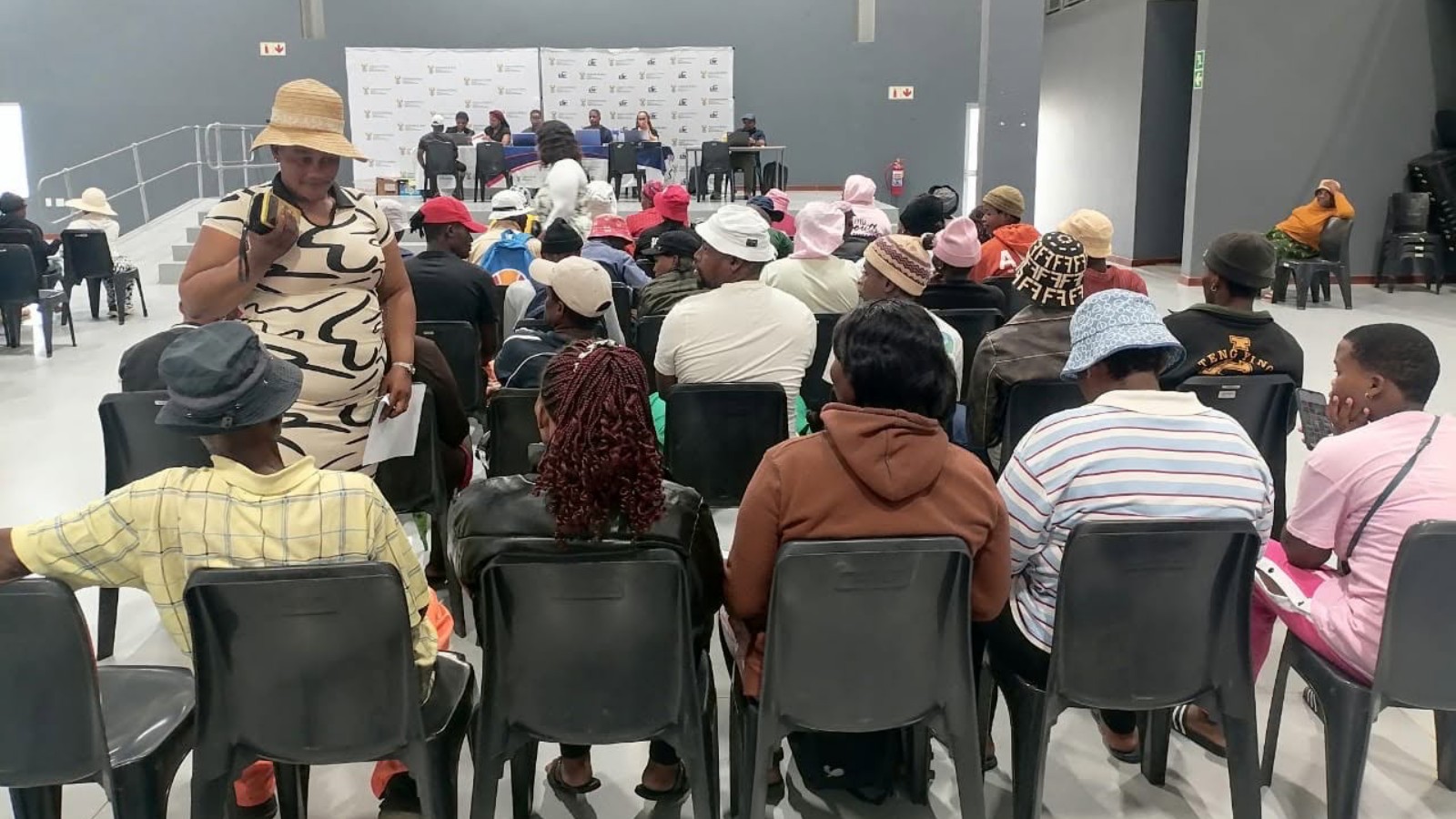
“When workers try to apply, they also struggle. They go to labour centres across the country and find queues stretching into the hundreds of people.”

He added that some workers might have to wait three or four days to be assisted because the UIF’s IT systems frequently go offline, adding that they may wait months or even years to receive UIF benefits.

Parks added that inefficient systems and a lack of transparency enable corruption to thrive, alleging that criminals submit fraudulent claims as both workers and employers and take the money.

“The UIF also invests in labour activation programmes. Often those schemes themselves are riddled with tenderpreneurship with collusion with inside interests,” he said.

He added that many workers trying to register to claim benefits are frustrated by the UIF’s lack of transparency.

“They go and claim the benefits and find out that there’s no money there for them despite having contributed for years,” Parks said.

“So if the systems are efficient and transparent like a pension fund system, workers could go and check online and say: Yes, John has paid my monthly contribution this month. I’m safe.”

He explained that, as a result, many workers fall through the cracks and give up on claiming benefits because they can’t afford to sit in a queue for days in the hope of getting lucky.

uFiling goes offline for over a month in 2024

The Department of Labour’s uFiling platform went offline for more than a month in mid-2024, preventing users from accessing the system to declare and pay UIF contributions.

The fund acknowledged the issues in a statement, saying the platform was down due to a Pretoria High Court interim interdict that prevented a service provider from signing a new contract to support it.

“The court issued an interim interdict preventing, with immediate effect, the new service provider from rendering services for the UIF online portal,” Labour Minister Nomakhosazana Meth said.

“As a result, the UIF online platforms that are currently disrupted include uFiling, Unstructured Supplementary Service Data (USSD), Virtual Office, as well as the UIF Covid-19 TERS systems.”

UIF communications director Trevor Hattingh explained that the previous service provider was problematic. Its contract with the provider ended on 18 August 2024.

He said the UIF had sought the services of a new contractor rather than renewing its contract with the previous provider.

“The former service provider is alleging in their court papers, among other things, that without their services, we would not be able to pay South Africans,” Hattingh said.

By mid-September 2024, several sources told MyBroadband that the platform had been inaccessible since at least 23 August 2024, with a notice saying that it was offline for planned maintenance.

“uFiling has been down for months — quite bizarre — everything back to being manual, and payments have to also be manual,” one source said.

“Everything needs to be done by email — a monthly U19, and at the moment, they are auditing small businesses who don’t have the time to ‘go into the nearest labour office to access services.’”

They added that the notice indicating the site was offline for planned maintenance was loading some time after the platform went down.

“In my view, this is an inadequate explanation for a major disruption of a government online service that serves thousands of stakeholders, depending on UIF funding,” they said.

Another source said the outage affected all UIF services, noting that its servers could not be reached and that no explanation was provided.

On 17 October 2024, UIF announced that all its online services had been fully restored and were operational.


Source: https://mybroadband.co.za/news/government/657607-critical-south-african-funds-systems-are-collapsing.html

Worker Retirement Funds at Risk: 69 Municipalities Face Treasury Freeze Over R1.7 Billion Pension Default

Finance Minister Enoch Godongwana announces corrective measures amid warnings from COSATU and legal experts of systemic theft and catastrophic breaches of trust affecting thousands of local government employees.

Gauteng news: Worker Retirement Funds at Risk: 69 Municipalities Face Treasury Freeze Over R1.7 Billion Pension Default. AI-generated image for illustrative and fair representation purposes only.

PRETORIA — Finance Minister Enoch Godongwana has revealed that 69 struggling municipalities have failed to remit roughly R1.7 billion in worker pension contributions, prompting National Treasury to temporarily freeze R13.5 billion in equitable share transfers. While financial regulators have condemned the widespread non-payment as systemic theft, some local governments have defended the withholdings as an emergency measure to keep basic services afloat.

The crisis has drawn sharp criticism from labor representatives and legal experts, who warn that the misappropriation of retirement funds is leaving municipal workers dangerously exposed as they approach retirement.

A Criminal Escalation of Worker Exploitation

Matthew Parks, parliamentary coordinator for COSATU, condemned the practice as an unjustifiable criminal offense. He emphasized that municipalities are in crisis due to corruption, mismanagement, and the deployment of incompetent leadership, not because of workers’ pension funds.

According to Parks, the issue has tripled over the past three years. Approximately three years ago, around 5,000 employees across the country—particularly in the municipal, security, and cleaning sectors—were affected by late or non-existent pension payments. This number rose to roughly 7,000 last year and has now nearly doubled again to over 15,000.

Parks warned that the failure to remit funds creates a compounding crisis. Because many of these schemes are not defined-contribution models like the Government Employees Pension Fund, the lack of accumulated interest leaves workers severely shortchanged. Furthermore, municipalities defaulting on pensions are frequently defaulting on medical aids, leaving workers unable to access hospital treatment, as well as owing taxes to the South African Revenue Service (SARS).

While Parks acknowledged National Treasury’s frustration and noted that 42 of the 69 targeted municipalities have reportedly instituted corrective actions, he stressed that withholding equitable shares must be paired with decisive consequence management. He cited extreme examples of systemic collapse, including a municipality in the Northern Cape that once went 12 months without paying its workers, and Amahlathi in the Eastern Cape, which reportedly paid employees with retail vouchers for six months.

Catastrophic Breach of Trust and Legal Frameworks

From a legal standpoint, labour and mediation lawyer Patrick Deale described the situation as a catastrophic failure of trust. Employers act as custodians of money deducted from employees’ paychecks, and failing to remit those funds breaches multiple legal frameworks, including the Pension Funds Act, the Financial Sector Conduct Authority (FSCA) regulations, and the Basic Conditions of Employment Act.

Deale noted that the issue extends beyond local government. Across both public and private sectors, more than R8.8 billion in total remains unremitted by delinquent employers who essentially use these funds to finance their own operations.

When addressing legal recourses for aggrieved employees, Deale outlined several avenues for accountability:

  • Information Disclosure: Employees or their unions can demand retirement fund statements. If an employer fails to provide them within 30 days, the matter can be referred to the Pensions Adjudicator.
  • Civil Proceedings: Workers can institute civil action to recover the money, securing warrants of execution to attach and sell company or municipal assets.
  • Criminal and Personal Liability: Accounting officers and delegated managers can be reported to the police for theft and prosecuted. Under corporate governance rules, directors can be declared delinquent, fined, or even face jail time.

Crucially, Deale highlighted that employers cannot escape the financial consequences of their delays. Unremitted funds accumulate compound interest at the legal interest rate (approximately 10.5%), plus an additional 2% penalty, compounding the ultimate debt owed to the pension funds.

Systemic Intervention and the Justice Bottleneck

Despite roughly 600 criminal cases having been launched by retirement funds with the South African Police Service (SAPS), and at least one referred to the National Prosecuting Authority (NPA), progress remains sluggish. Deale explained that the criminal justice system is heavily overloaded. Each case requires meticulous financial examination, document production, and employee list analysis, making rapid prosecution unrealistic without significant resource allocation.

To stop the rot preemptively, Deale suggested building proof-of-payment conditions directly into collective bargaining agreements, requiring employers to report monthly or quarterly to unions. Employees also hold the right to demand information disclosure under the Labour Relations Act, reducing blind faith in employer compliance.

Ultimately, both Parks and Deale agree that treating the symptom is not enough. Parks called for a holistic package of interventions, including the enlistment of the Auditor-General, the Special Investigating Unit (SIU), and the Hawks to tackle corruption. He also urged political parties to remove corrupt councillors and replace unqualified municipal managers, while questioning whether some municipalities are simply too small and lack the rates base to be sustainable, necessitating a national discussion on municipal integration and funding models.

Until consequence management becomes a reality—with arrests, asset attachments, and strict oversight—labor advocates warn that the looting of worker pensions will remain a ticking time bomb for South Africa’s local government sector.


Source: https://southafricatoday.net/south-africa-news/gauteng/worker-retirement-funds-at-risk-69-municipalities-face-treasury-freeze-over-r1-7-billion-pension-default/

Life on the Pavement: Refugee Families Endure Harsh Conditions Outside Durban Home Affairs Office

Sleeping on the pavement: The heartbreaking scenes unfolding on Che Guevara Road.

Sleeping on the pavement: The heartbreaking scenes unfolding on Che Guevara Road. Image: XOLILE MTEMBU


While children played and darted along the pavement outside the Home Affairs office on Che Guevara Road on Thursday, the difficult reality facing the refugee families living there remained impossible to ignore.

A walkthrough conducted by the Siyafana Sonke Action Campaign highlighted the conditions under which displaced men, women and children are currently living.

The Siyafana Sonke Action Campaign is a coalition of more than 160 civil society organisations established to oppose xenophobia, Afrophobia and anti-migrant violence across South Africa.

Ahead of the visit, campaign representative Yeshelen Govender described the challenges confronting those sheltering outside the Home Affairs office.

“There are women, very young children and men there and some have chronic illnesses for which they are [allegedly] not receiving any support from the state. It is purely civil societies that have been responsible for humanitarian aid.”

The makeshift camp stretches along the pavement beneath a patchwork of tarpaulins tied to fences and poles, offering only limited protection from the winter rain and wind.

Blankets, mattresses and thin foam sponges were spread across the ground, marking out cramped sleeping spaces for families who had spent weeks outdoors.

Plastic bags filled with clothing and personal belongings were stacked beside them, while pots, water containers and donated food supplies lay neatly arranged nearby.

Despite efforts to keep the area orderly, the camp bore the unmistakable signs of prolonged displacement, with people trying to create a semblance of home from whatever they had managed to carry with them.


Source: https://dailynews.co.za/news/2026-07-19-life-on-the-pavement-refugee-families-endure-harsh-conditions-outside-durban-home-affairs-office/

R120m listing payday for 181 Boxer managers, execs

The retailer provided no details on how these senior employees will be remunerated. Image: Supplied


Pool of senior talent to receive more than 1.5m shares in the group.

A total of 181 executive directors and managers of Boxer are due for a payday in November related to its listing on the JSE.

This is under a once-off ‘admission award’ granted as part of the retailer’s long-term incentive plan to “support leadership retention and stability through the transition to a listed environment and the early years as a listed company”.

Read:
Bonanza Boxer listing in big year for JSE
Boxer boosts dividend as discount model drives growth
PnP sells down R4.7bn in Boxer to shore up turnaround

In its 2026 annual report, the group confirms that the first tranche, being 40% of the award, will vest.

To achieve this for these ‘admission awards’, Boxer needed to attain certain performance conditions that compare its performance in the 2024 financial year (prior to listing) versus FY2026. The following 60% will vest next year.

With the November award, this pool of senior talent from the business will receive 1.511 million shares in the group (subject to their continued employment).

At a current share price of around R79/R80, this award has a total value in excess of R120 million, presuming the share price holds until November.

Conditions

For both this tranche and the next (which is due on 30 November 2027), it has to deliver growth of adjusted trading profit (after leases) –  or so-called ‘Atpal’ – of at least CPI a year (average) across the measurement period.

The threshold, which is 40% vesting, is to simply hit this measure.

Achieving a compound annual growth rate (CAGR) of that plus 2% equals 70% vesting, while a CAGR of CPI + 3% equals the “stretch” target which is full vesting.

There is a gatekeeper condition being that the return on invested capital (ROIC) has to best the weighted average cost of capital (WACC) over two years. This was easily surpassed.

It exceeded these hurdles very, very comfortably on listing.

On the gatekeeper condition, Boxer achieved a ROIC of 25.75% versus (on the same basis) a WACC of 12.21%.

Then, on the other measure (profits) it set a two-year annual compound growth rate of 18.15% versus 3.1% of CPI.

Read:
Stronger Boxer boosting Pick n Pay
Concerns over Pick n Pay Boxer sale

The retailer provided no details on how these 181 (or fewer) senior employees will be remunerated.

The next hurdle, in November 2027, requires the same (basic) performance conditions as earlier (which might be considered as ‘different’ given the circumstances). It is unclear why the awards would be on the same terms as earlier.

Top two

Under this first tranche, CEO Marek Masojada and CFO David Wayne received more than 208 000 and over 84 000 shares respectively.

At current prices, these shares are worth R16.6 million and R6.7 million respectively.

7/13/2026, 7:40:01 PM

The next tranche, at current prices, will be worth significantly more than currently given that it accounts for a further 60% of the award. These shares will be awarded in November next year, if conditions have been met (it appears they already have been).

Listen/read: Boxer’s listing cost a hefty R170m

Aside from these awards, the two executive directors of Boxer (Masoaja and Wayne) were handed, along with other senior management, “once-off compensation” because they were affected.

In total, the two executive directors were paid more than R6 million.

“These legacy payments were ratified by the Boxer Remuneration Committee and paid in June 2025, including R4.2 million to CEO, Marek Masojada, and R2.2 million to CFO, David Wayne,” according to the annual report.

“These amounts represent once-off legacy settlements, and do not form part of Boxer’s ongoing remuneration framework.”