by Dev_SACCAWU | General
President Cyril Ramaphosa’s upcoming State of the Nation Address (Sona) is highly anticipated, with a focus on pressing socio-economic issues facing South Africa. The address comes after a year of the government of national unity and amid ongoing challenges such as high unemployment, infrastructure issues, and public service delivery concerns.
The upcoming State of the Nation Address ( Sona ) by President Cyril Ramaphosa on Thursday carries significant weight, with socio-economic themes taking center stage. The address, delivered in Cape Town, comes after a year of the government of national unity, a coalition involving ten political parties.
Anticipation is high as the city prepares for the event, with road closures already in effect since February 7 to accommodate parliamentary sittings and security measures, these closures will remain in place until February 28. The 2025 Sona outlined an ambitious reform agenda, including boosting growth above 3%, stabilizing the energy system, driving substantial infrastructure investment, accelerating logistics reform, rolling out digital identity systems, expanding employment programs, and stabilizing municipal utilities. While some progress has been made, such as improved energy reliability and exiting the FATF grey list, challenges persist. Growth remains between 1% and 1.4%, and unemployment hovers above 31%, highlighting the pressing need for effective strategies to address these critical issues. \President Ramaphosa’s address is expected to address key concerns, including the impact of electricity prices on miners and the need for solutions. Chabana, speaking in Cape Town, expressed hope that the President will acknowledge the difficulties faced by heavy energy users and commit to easing their financial burdens. A recent Sowetan poll indicated that unemployment, lack of water and electricity, and crime are among the top priorities residents want the President to address. The State of the Nation Address is estimated to cost taxpayers over R7 million, according to Parliament. This figure is lower than previous years, as stated by Secretary to Parliament Xolile George, speaking alongside National Assembly Speaker Thoko Didiza and National Council of Provinces Chair Refilwe Mtshweni-Tsipane. Security for the event will cost over R1.25 million, as confirmed by interim police minister Firoz Cachalia. The focus on economic challenges is further underscored by recent events, such as a protest in Parktown West where residents endured 20 days without water, spending significant amounts to secure alternative water sources, highlighting the widespread frustration over ongoing water supply disruptions in Johannesburg. \Beyond economic concerns, infrastructure and public services also draw attention. Parliament and the department of public works have had to invest approximately R25 million to revamp the Nieuwmeester Dome after it was damaged by Cape storms, on top of the R30 million spent to erect the dome in 2024 to house parliamentary sittings after the 2022 fire. Trade unions, such as Cosatu, are also eagerly anticipating the address, expressing high expectations and urging the government to act decisively on unemployment, economic growth, crime, and failing public services. Cosatu emphasizes that the Sona must respond to the needs and aspirations of the working class and society as a whole. With the Sona scheduled for February 12, the nation awaits President Ramaphosa’s vision for tackling these multifaceted challenges and charting a course towards sustainable and inclusive growth
Source: https://za.headtopics.com/news/ramaphosa-s-sona-a-nation-s-expectations-amidst-economic-79653192
by Dev_SACCAWU | General
Some of South Africa’s biggest retailers are set to appear before Parliament after MPs uncovered alleged labour and immigration violations at clothing factories in Newcastle.
The Employment and Labour Portfolio Committee (ELPC), following an oversight visit to the Newcastle Industrial Zone, said several factories were operating in breach of labour legislation, municipal bylaws and health and safety standards. The committee accused large retailers of supporting manufacturers that were breaking the law.
A joint inspection by the Department of Employment and Labour (DEL), the ELPC, Home Affairs and police on 5 and 6 February led to the arrest of employers accused of hiring 34 undocumented foreign nationals. Authorities said dozens of illegal workers were found living on factory premises.
Officials reported that goods destined for major retailers — including Pick n Pay, Mr Price, Ackermans and others — were being produced and packaged at the non-compliant facilities. ELPC chairperson Boyce Maneli said most factories inspected failed to meet Occupational Health and Safety Act requirements and did not comply with minimum wage laws. Non-compliant businesses were issued with contravention and prohibition notices.
Sources who joined the visit described hazardous conditions and alleged that workers were forced to work excessive hours without overtime pay. Cosatu’s provincial secretary Edwin Mkhize said some employees from Zimbabwe, Lesotho and Eswatini were paid between R350 and R750 per week in cash after complaints of non-payment.
Patriotic Alliance MP Juliet Basson shared video footage online showing clothing with price tags linked to major retailers, describing the treatment of workers as inhumane.
Retailers respond
Pick n Pay said the factory shown in circulating videos was not approved to manufacture its clothing and had been stopped immediately. The retailer said it outsources production but not responsibility, and is investigating the supplier.
Mr Price said it supports the parliamentary inspections and does not tolerate unsafe or unethical manufacturing practices. The group confirmed its labels appeared in the footage and said it would take action if its supplier code was breached.
Edgars, owned by Retailability, said it does not use sweatshops and requires suppliers to meet strict ethical and labour standards.
Pepkor said it had launched its own investigation, stressing that its supplier code of conduct prohibits unlawful or unethical practices and reaffirming its support for responsible local manufacturing.
The ELPC said it would work with other parliamentary committees to determine further steps to ensure accountability across the retail supply chain.
Source: https://supermarket.co.za/index.php/legislation/7719-big-retailers-face-parliamentary-probe-after-newcastle-factory-raid
by Dev_SACCAWU | General
The Department of Finance has no legal obligation to give the Post Office R3.8 billion.
South Africa’s Department of Finance isn’t legally obligated to provide the R3.8-billion in funding to the South African Post Office that the state-owned entity says it was promised. This is the view of the Constitutional and Legal Services Office , which presented its legal opinion on the matter before Parliament on Friday, 6 February 2026.
“The R3.8 billion cannot, in accordance with our national budget process or PFMA, be regarded as a commitment by the department attaching a ‘legal liability’,” it said. “In our view, the facts present a scenario where the ‘commitment’ made by the department can be described as ‘tentative’, ‘provisional’, ‘conditional’, or as ‘noncommittal’.” According to the Post Office’s Business Rescue Plan, an initial tranche of R2.4 billion was approved by National Treasury in the 2023/24 financial year. The Business Rescue Practitioners , Anoosh Rooplal and Juanito Damons, anticipated that the approval process for the R3.8 billion in funding would be finalised in 2024. However, the Department of Finance rejected the entity’s request for the R3.8 billion in December 2024. Minister Enoch Godongwana attributed the decision to a “tough love” approach for state-owned entities. “There is an opportunity cost when you keep putting money into SOEs because you end up underfunding something else,” he said. The minister highlighted alternative options for the Post Office, including securing investment from private players. He said another option was for the Department of Communications and Digital Technologies to find savings to bridge funding gaps within the South African Post Office. The department was forced to do this in February 2025, when it provided a last-minute R150-million lifeline for the state mail carrier. However, this was only enough to pay the Post Office’s bills. The Post Office emphasised that it still required the R3.8 billion from the National Treasury for the BRP’s turnaround plan to be successful.According to the Post Office’s BRPs, two factors are critical to the success of their business rescue plan: maintaining the Post Office’s exclusivity over small parcel deliveries and receiving the R3.8 billion. It now appears highly unlikely that it will receive the funding, and communications minister Solly Malatsi recently issued a directive to terminate its exclusivity for small parcel deliveries. In mid-December 2025, Malatsi published a directive in the Government Gazette, amending Schedule 1 of the Postal Services Act, which concerns reserved postal services within SAPO’s mandate. The section originally included “all letters, postcards, printed matter, small parcels, and other postal articles subject to the mass or size limitations set”. Malatsi amended it to delete “small parcels”. Despite this, the Post Office’s BRPs emphasised that the entity’s exclusivity over small parcel deliveries under 1kg is still in place. “On 12 December 2025, Honourable Minister Solly Malatsi issued a directive, which was gazetted, amending the Postal Services Act to remove the reserved postal services category for parcels under 1kg,” they said. “This will effectively eliminate SAPO’s exclusivity on small parcels and is expected to negatively affect SAPO’s future postal and courier operations.” They added that they will engage with the Independent Communications Authority of South Africa regarding the minister’s directive. “The exclusivity is still currently in place, as Icasa must ratify directives via its regulatory approval processes. The determination of next steps rests with the regulator, not with SAPO,” the BRPs said. They argued that the Post Office legislated exclusivity aligns with the social mandate the entity should continue to have: providing key basic communication services to all households in South Africa. “The legislative exclusivity was modelled into the turnaround strategy document for SAPO. The loss of this exclusivity negatively impacts the projected revenues,” the BRPs said. “This effectively means the Post Office’s break-even profit/loss position will take much longer to achieve in future, and assuming that these revenue types can be replaced by other types of revenue.”
Source: https://za.headtopics.com/news/devastating-blow-to-the-sa-post-office-79654809
by Dev_SACCAWU | General
An indelibly resonant Gospel parable is the one about the vineyard owner with two sons whom he commanded to work on his property.
The first refused, but then thought better of it and went and did as his father asked.
The second flatteringly told his father he would comply, but then went off and did something else.
Jesus narrates the story as a lesson to illustrate that we should pay less attention to people who tell us what we want to hear and more heed to what they positively do.
I suspect it is a good basis for understanding the implications of President Cyril Ramaphosa’s state of the nation address this evening as he reports back on government progress over the past years and outlines his administration’s agenda.
The president has long been looking for compliant underlings to run the troublesome vineyards in the way he wants — and in the Thuma Mina spirit.
Ramaphosa being a less intimidating figure than the father in Matthew’s Gospel, many leaders implicated in corruption and maladministration feature prominently in this version of the story.
Yet, very few are willing to play the defiant son.
Instead, the limited number of competent and ethically upright leaders is a range of eager submissives, each straining to appear enthusiastic to pick up the pruning shears and discharge the service delivery mandate in line with the Batho Pele (people first) principles.
Tonight and during the subsequent Sona debate, lawmakers will have yet another high-profile encounter with Ramaphosa.
They will have to decide when to stamp and flap and how to voice their disapproval.
We can expect Ramaphosa nevertheless to lift the curtain a little.
The address might not be especially inspiring insofar as it connects the past to the future.
That is not the emphasis of the expectations of many citizens.
His theme of “Building a Capable and Ethical State” government should reassure, not merely excite.
It should be politically clear, strategic and internally consistent in focusing the nation on driving economic growth, tackling high unemployment, improving service delivery, and addressing critical infrastructure and crime.
It should provide a sharper outline than before of the thinking that will underpin the government’s more detailed decisions.
It should also make clear that Ramaphosa takes the long view, that he is thinking in terms of meaningful multiparty and citizen involvement in a polarised national and geopolitical environment.
His thematic choices should leave a picture that is predictable to investors and the electorate: economic insecurity, a failing health and education system, infrastructure decay, the danger of crime, children’s diminished life chances and the climate crisis.
All exemplify the broken SA over which the previous ANC governments have presided, remarkably built, and recklessly failed to protect from looters.
And all of them demand new directions under the coalition governments rather than sticking plaster solutions.
He must not ignore important debates about the relationship between growth, inequalities and wellbeing.
Ramaphosa has often faced calls to clarify what the government is doing to lift the nation out of poverty, unemployment, crime and corruption.
He will face more such calls as the local government election nears.
He remains cautious about responding with details.
Instead, he prefers to subject policy, legislative and regulatory interventions to behind-the-scenes political party wrestling.
Critics suspect that he has little to say to his party, his coalition government partners and the nation.
His own reasoning, presumably, is that he is not in the business of putting elaborative details about policies on premature public display that the coalition partners might be tempted to pinch.
He also wants the ANC’s and the government’s division and ineptitude to remain out of political focus.
The ANC’s outsmarting of political parties reassures him that his approach is working.
But even as various parties assert their individual identity on key national policies, they have internal disagreements over which strategies to prioritise in coalition governments.
That will come to a head in the coming days.
Lawmakers will be forced to concur with Ramaphosa’s assessment of the state of our nation.
Doing otherwise could marginalise them further and unleash sharp internal disagreements on national priorities.
Exactly how far other political parties will co-operate to achieve the goals Ramaphosa is expected to set out in his address, however, is an open question.
How will the divisions in the ANC-SACP-Cosatu tripartite alliance play out?
Will the SACP’s resolve to independently contest the next elections affect the tone?
Will Cosatu affiliates’ criticism that the government is doing little for workers change anything?
How will the DA and the MKP react, as they have had a rough few months?
They are largely leaderless, and they have struggled to respond to the inactivity and slow pace of the Ramaphosa administration.
Even some party leaders have conceded they have stumbled in their attempt to settle on a message to counter the president.
Hints, though, cannot be annual programme commitments.
Ramaphosa must draw an important outline and fill it in while mobilising all to participate meaningfully.
In Matthew’s Gospel, the exemplary figure of the parable is the first son, the one who originally rejected his father’s instructions but then did his will after all.
In today’s version, the public expectations and reaction to Ramaphosa’s address suggest the hero this time will be the one who promised to do what the people wanted when they voted for coalition governments and then went off and did exactly what he had intended to do as a once dominant party in the first place.
Click here to join the Daily Dispatch’s WhatsApp channel and get the latest news delivered straight to your phone.
Source: https://www.dailydispatch.co.za/news/opinion/2026-02-12-sona-new-directions-demanded-rather-than-sticking-plaster-solutions/
by Dev_SACCAWU | General
Cosatu says it has “high expectations” for President Cyril Ramaphosa’s state of nation address (Sona), calling on the government to act decisively on unemployment, economic growth, crime and failing public services.
The trade union federation said the Sona, to be delivered in parliament on February 12, must respond to “cries and hopes of the working class and society in general”.
Government plans for the year must focus on South Africa’s “dangerously high unemployment rate of 42.4% and sluggish 1% economic growth”, as well as “entrenched levels of poverty and inequality, and endemic crime and corruption”.
It welcomed progress in ending load-shedding but warned that electricity prices remain “increasingly unaffordable”. It called for prepaid billing for all consumers and action on the “R100bn municipal debt, corruption and other acts of criminality, wasteful expenditure and enabling Eskom to enter the renewable energy space”.
Efficient rails and ports are key to thousands of mining, manufacturing and agricultural jobs as well as to providing 10-million urban commuters cheap and fast means to get to work
— Cosatu
Cosatu also called for faster reforms at Transnet and Metro Rail, saying improvements must be accelerated to protect jobs and commuters.
“Efficient rails and ports are key to thousands of mining, manufacturing and agricultural jobs as well as to providing 10-million urban commuters cheap and fast means to get to work,” it said.
The trade union federation raised concern about struggling state-owned enterprises, saying turnaround plans were urgently needed for Denel, the SABC, Post Office and Postbank, which it said continue to suffer from “incompetent and weak management”.
On public services, Cosatu said the government must “close the chapter of failed neo-liberal austerity policies and budgets” and ensure front-line services are properly funded and staffed.
It praised the “remarkable turnaround at the South African Revenue Service (Sars) and South African Airways” as proof that public institutions can work.
Cosatu also warned that crime has reached unacceptable levels, saying South Africa can no longer “treat criminals with kid gloves” or allow violent crime to become normal in working-class communities. It called for an “aggressive marshall plan led by President Ramaphosa” to strengthen policing, prosecutions and the courts.
The federation urged government to introduce a large stimulus package to support industrialisation, small businesses and job creation, saying such action was “long overdue”.
Cosatu also called for greater relief for the poor and unemployed, including raising the SRD grant to the Food Poverty Line and the expansion of the Presidential Employment Stimulus to “one million young people by April 1 and two million by November 1”.
It also urged the government to overhaul the Unemployment Insurance Fund and Compensation Fund, employ 20,000 new labour inspectors and give Sars resources to raise tax compliance to 75% over the next three years, generating “an additional R200bn in revenue owed to the state”.
“We cannot afford to rest on our laurels or continue to normalise anaemic 1% economic growth or the ticking time bomb of 42.4% unemployment,” said Cosatu.
“Government needs to act decisively and deliver on these key issues if we are to reach the 3% plus economic growth necessary to see unemployment fall and hope arise.
“There are no shortcuts in this journey, nor is the patience of the working class and society limitless.”
Source: https://www.dailydispatch.co.za/politics/2026-02-07-cosatu-calls-for-bold-action-ahead-of-sona/
by Dev_SACCAWU | General
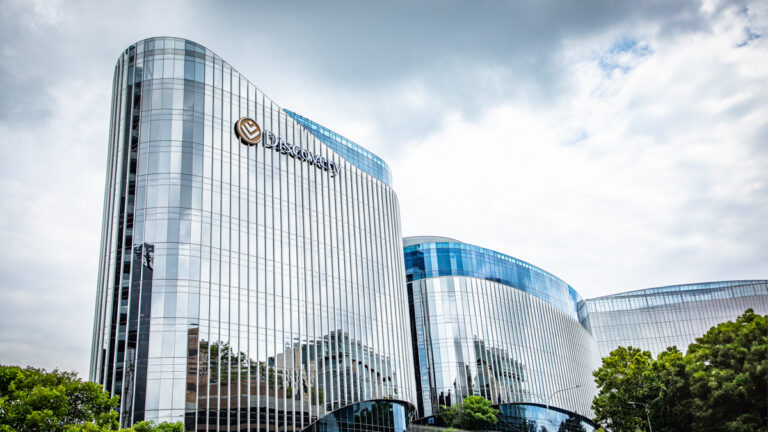
Discovery is buying its own head office building in Sandton, 1 Discovery Place, in a deal worth R4 billion.
Discovery moved into the office in 2018 and believes it will remain there for more than seven years, until the expiration of its current lease agreement.
The move also accounts for the long-term, strategic nature of office planning, especially given the scale of Discovery’s Johannesburg operations.
“The group is deeply committed to South Africa and believes the head office has served the group well in all aspects and aligns with its purpose, values, and its long-term outlook,” Discovery said.
The deal will see Discovery Phase 1, which includes the Grove and Park buildings of 1 Discovery Place, and will cancel the lease for Phase 2 at the Ridge building.
The move will be facilitated by Discovery Propco, which has entered into an agreement with South Africa’s largest landlord, Growthpoint Properties, and the trustees of the Truzen 114 Trust.
Discovery Propco will purchase Phase 1 of the letting enterprise of the office comprising 91,756 sqm.
The sellers have also agreed with Discovery Central Services to cancel the Phase 2 lease, comprising 19,369 sqm.
Discovery said the total consideration for the transaction is R4.05 billion, exclusive of VAT, and that the deal is fully funded via pre-arranged debt.
Discovery said that the transaction is subject to Competition Authority approval and other customary suspensive conditions.
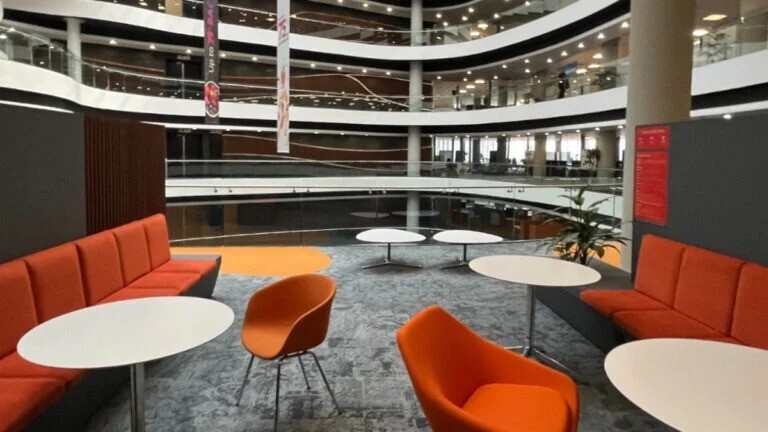
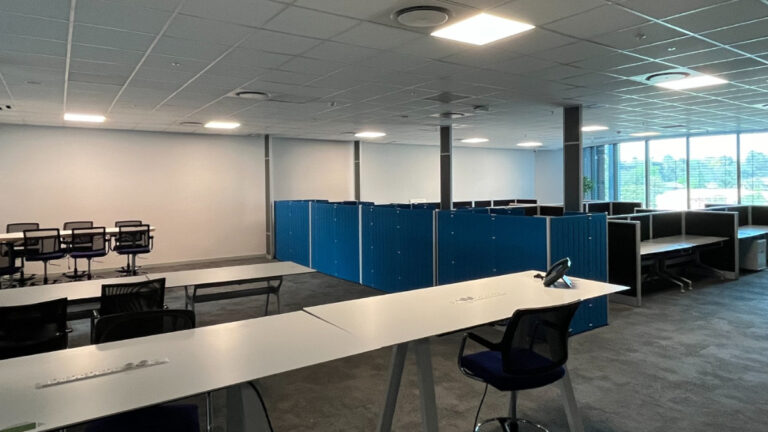
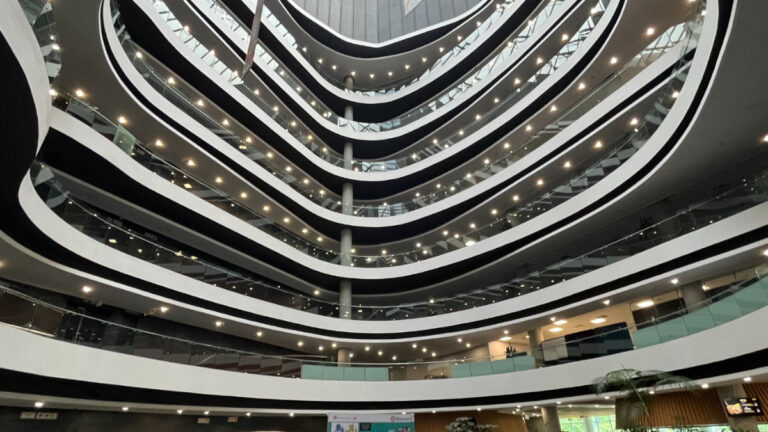
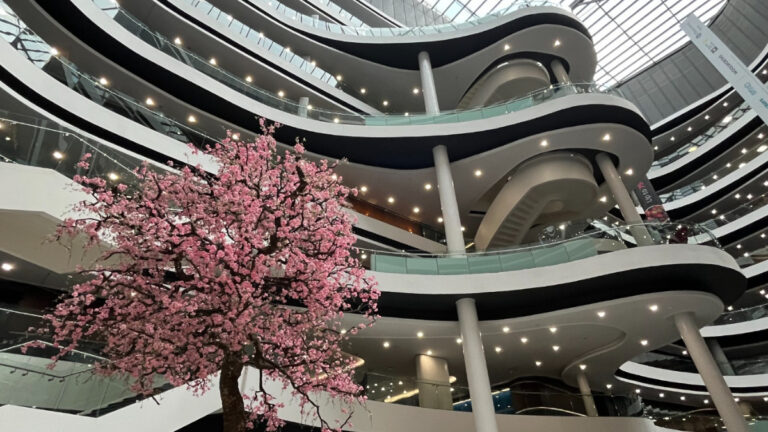
BusinessTech has regularly visited 1 Discovery Place, which differs heavily from most offices in the country.
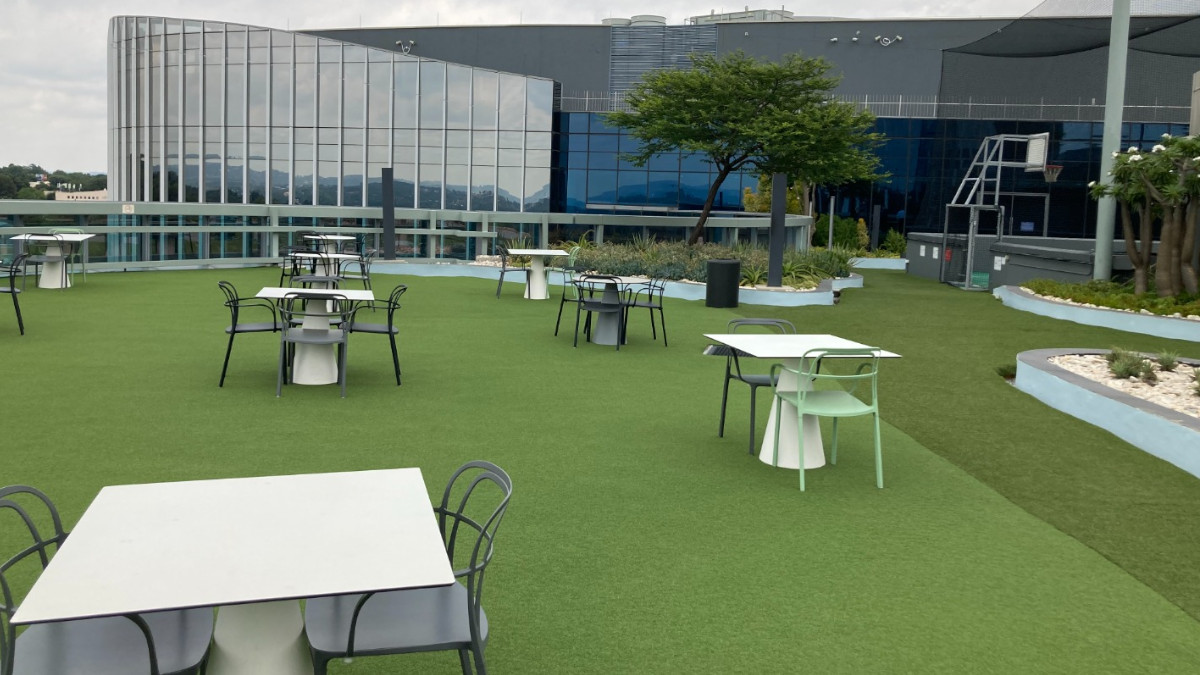
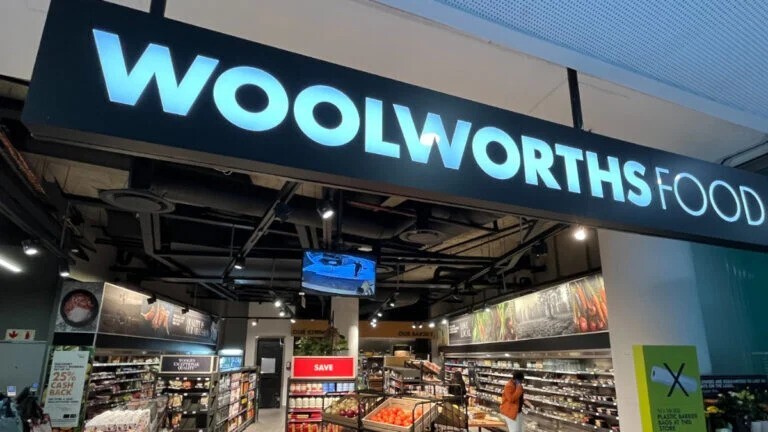
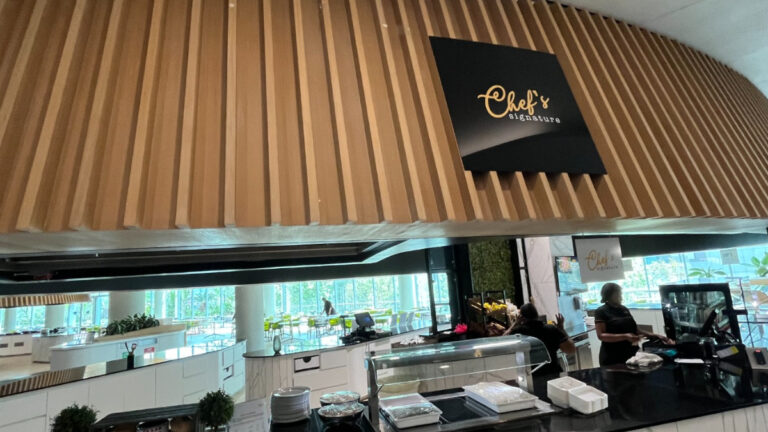
The vast office has several other amenities, including its own Woolworths Food Store, a Seattle Coffee, Home Affairs Services, a gym and a rooftop terrace.
Why the move

Discovery said that the transaction provides strong financial and economic benefits for the group. This arises because economic dynamics have moved in favour of a purchase.
This is due to the interest rate environment, with more cuts expected, and property prices in Johannesburg, which have reduced significantly.
This has enabled Discovery to switch from a long-term lease to a fully funded financing arrangement with ownership, at a lower overall cost.
The positive effect of the move is expected to be immediate and to expand net annual cash-flow savings, delivering roughly R800 million in net present value over the remaining lease period.
The group has accounted for the long-term lease obligations under IFRS 16, where the right-of-use asset and corresponding lease liability are recognised in the statement of financial position.
It noted that the obligations of the financing lease have had a similar risk exposure to debt financing. However, with a different accounting treatment, the value has been excluded from the group’s financial leverage ratio.
Once the transactions take effect, the group expects a positive impact on earnings.
While the financial leverage ratio will initially increase, it is expected to reduce to the lower end of the group’s guidance range of 10% to 20% over the next few years.
Growthpoint Properties said that the move reduces its office exposure and contributes to a reduction in single-tenant asset concentration in the Sandton node.
It also supports a rebalancing of Growthpoint’s portfolio towards sectors and regions expected to deliver more stable, resilient income profiles over the longer term, such as retail, logistics, and the Western Cape.
1 Discovery Place Images



Source: Remax One
Source: Remax One
Source: Remax One
Source: Remax One
Source: Remax One
Source: Remax One
Source: Remax One
Source: https://businesstech.co.za/news/property/850071/discovery-splashes-r4-billion-to-buy-its-own-head-office-which-has-its-own-woolworths/
