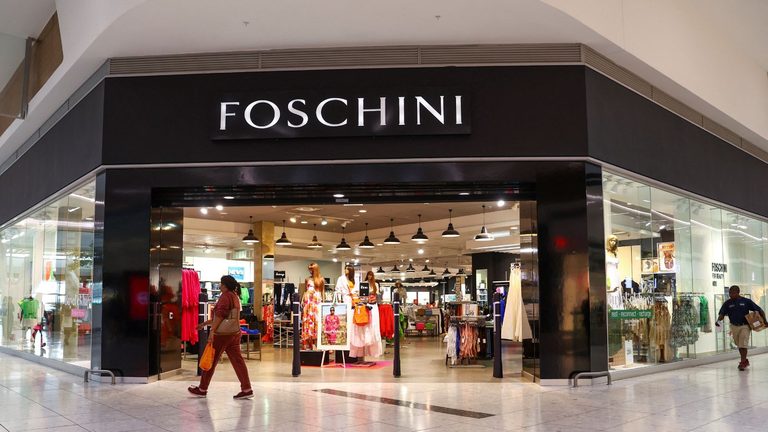
The Foschini Group (TFG) has been warned by the Congress of South African Trade Unions (COSATU) to consider the impact of its planned store closures on its staff.
TFG told investors on 2 September that it has already closed 85 of its stores in the first half of its financial year, with 400 closures planned in total.
This is due to the underperformance of its stores relative to its Bash online offering, which continues to grow strongly.
TFG has also struggled to compete with imports from fast-fashion giants Shein and Temu, as its sales growth has not kept pace with inflation.
It has been explained that it plans to close hundreds of loss-making stores to reduce the cost of doing business and improve the efficiency of its store portfolio.
In its previous financial year, TFG closed 242 stores in Africa and its global operations. On 2 September, it said another 85 had been closed.
TFG said there are a further 80 stores that are likely to fall within closure parameters during the 2027 financial year, and another 100 stores during each of the following two financial years.
“This consolidation is expected to enhance both profitability and return on capital,” the group said.
These store closures have drawn the attention of South Africa’s largest trade union, COSATU, which issued a warning to TFG on 3 September.
“COSATU calls upon TFG to earnestly consider the impact of store closures on its staff following the announcement to cease operations of 280 African outlets in the next three financial years,” the statement said.
“These planned closures come at a time when artificial intelligence and automation are contributing to the drivers of retrenchments.”
COSATU said workers are often left without adequate compensation or measures to accommodate them in this environment.
“Behind TFG’s popular brands, Foschini, Sportscene, and Markham, are hard-working individuals. The business is where it is today due to the blood and sweat of its staff,” COSATU said.
“The billions it accumulates in sales are due to the toil of workers from operating sewing machines to the sales consultants at stores.”
The union said its affiliates will work to stop this devastating blow to workers across the African continent and find progressive alternatives.
“It is vital that TFG demonstrates solidarity towards its workforce, engages in good faith and finds alternatives to store closures,” COSATU said.
“Throwing workers into the devastating unemployment den should not be the pinnacle of decision-making and solution-finding processes.”
TFG’s financial performance
TFG CEO Anthony Thunström
TFG’s financials do not make for pretty reading as the company’s sales come under pressure at home and abroad in Australia and the United Kingdom.
The retailer’s trading update for the 21-week period from 29 March to 22 August 2026 revealed 0.2% sales growth, far below inflation.
Its flat sales growth was driven by a 3.4% rise in TFG Africa sales and a 2.3% rise in TFG London sales.
However, its Australian business came under significant pressure, with sales falling 4.7% in what TFG describes as its toughest trading environment in history.
It attributes the difficult environment to geopolitical shocks. The Australian businesses have also been impacted by the repositioning of its Tarocash brand.
The only bright spot for the company is its online Bash platform, which grew sales by 54.1%. It now accounts for 15.9% of all of TFG Africa’s sales.
TFG is increasingly betting on Bash and its other digital channels to turn the company’s fortunes around, with it no longer investing heavily in its store footprint.
The retailer’s challenges have not only been external. It has also pursued an aggressive acquisition strategy in recent years.
This strategy aimed to diversify its brand portfolio and improve resilience, alongside accelerating its digital transformation.
The strategy saw TFG acquire Street Fever, White Stuff, JD Sports, Granny Goose, Coricraft, Volpes, Dial-a-Bed, and The Bed Store.
While the acquisitions boosted the retailer’s top-line growth, they came at a severe cost to TFG’s profitability.
To fund its ongoing string of acquisitions, TFG has had to take on higher levels of interest-bearing debt, which has led to the retailer’s finance costs skyrocketing.
TFG’s total finance costs have nearly tripled over the past five years, going from R783.8 million in the 2022 financial year to R2.05 billion in 2026.
The acquisitions have also exposed TFG to severe brand impairments, with the retailer having incurred a devastating R1.02 billion write-down in 2026.
In many ways, the string of acquisitions covered up the retailer’s stagnant organic growth.
Foschini Group faces backlash over plans to close 280 store
The Congress of South African Trade Unions (COSATU) has warned The Foschini Group (TFG) against rushing ahead with plans to close about 280 stores on the continent, saying the retailer must consider the impact on workers as it shifts increasingly towards online sales.
COSATU’s warning comes after TFG announced plans to close about 80 stores by the end of March 2027, followed by a further 200 closures over the subsequent two financial years, as weak physical-store sales and surging online shopping reshape its retail strategy.
The union said TFG should engage with workers and their representatives in good faith and explore alternatives to the closures.
The warning
“The country is confronted by stagnant economic growth, growing at a mere 0.5% quarter-on-quarter in the first quarter of 2026. This has undermined efforts to generate jobs and tackle our stubbornly high unemployment rate of 43.8%,” the union said.
Workers say ratings were slashed with no explanation, even as some wards run with two staff caring for up to 40 patients each.
Workers say ratings were slashed with no explanation, even as some wards run with two staff caring for up to 40 patients each.
PHALABORWA – Workers at Maphutha Malatji Hospital in Namakgale have raised concerns over what they describe as unfair and inconsistent Performance Management and Development System (PMDS) ratings, accusing hospital CEO Dr Sello Rasello of disregarding the recommendations of the Moderation Committee.
According to a labour union representative, the dispute centres on performance ratings awarded to employees after the Moderation Committee assessed their performance for the year.
WATCH: Union workers took to the picket line outside Maphutha Malatji Hospital, demanding answers over ratings they say were unfairly slashed.
The committee, which the union alleges was appointed by Rasello, moderated employees and awarded many of them a rating of four, the highest standard rating under the system. Concerns arose, however, when the hospital head allegedly reduced some of these ratings without providing calculations or reasons for the changes.
The union says PMDS policy requires the head of an institution who is dissatisfied with a moderation outcome to refer the employee’s file back to the Moderation Committee, along with reasons for disagreeing with the rating.
Repeated meetings with Rasello have failed to resolve the matter, the union representative said, alleging that he instead told workers they could lodge a dispute through the appropriate channels.
Workers cite staff shortages
Workers accuse Rasello of arrogance and abuse of power over the disputed ratings, saying his handling of the matter is unfair, particularly given the severe staff shortages and difficult conditions they say they are working under.
They also allege that some wards expected to have eight employees are operating with as few as two, who are responsible for between 30 and 40 patients.
Despite these conditions, some employees allegedly received lower ratings from the hospital head than those recommended by their supervisors.
Union demands intervention
The union argues the ratings carry serious financial consequences for workers, as a lower rating can affect progression to the next salary notch.
The union is calling on the department to intervene, ensure the PMDS policy is followed, and investigate what it describes as an abuse of managerial authority.
Hospital management, when approached for comment, said it would deal with the PMDS concerns in consultation with the district, and requested until September 2 to respond.
COSATU faces growing pressure as ANC-SACP rivalry ahead of local elections forces affiliates to reconsider political support while preserving federation unity. Picture: Kgaogelo Magolego
COSATU finds itself caught between a rock and a hard place ahead of the November local government elections, in which its alliance partners, the ANC and SACP, are set to contest against each other for the first time.
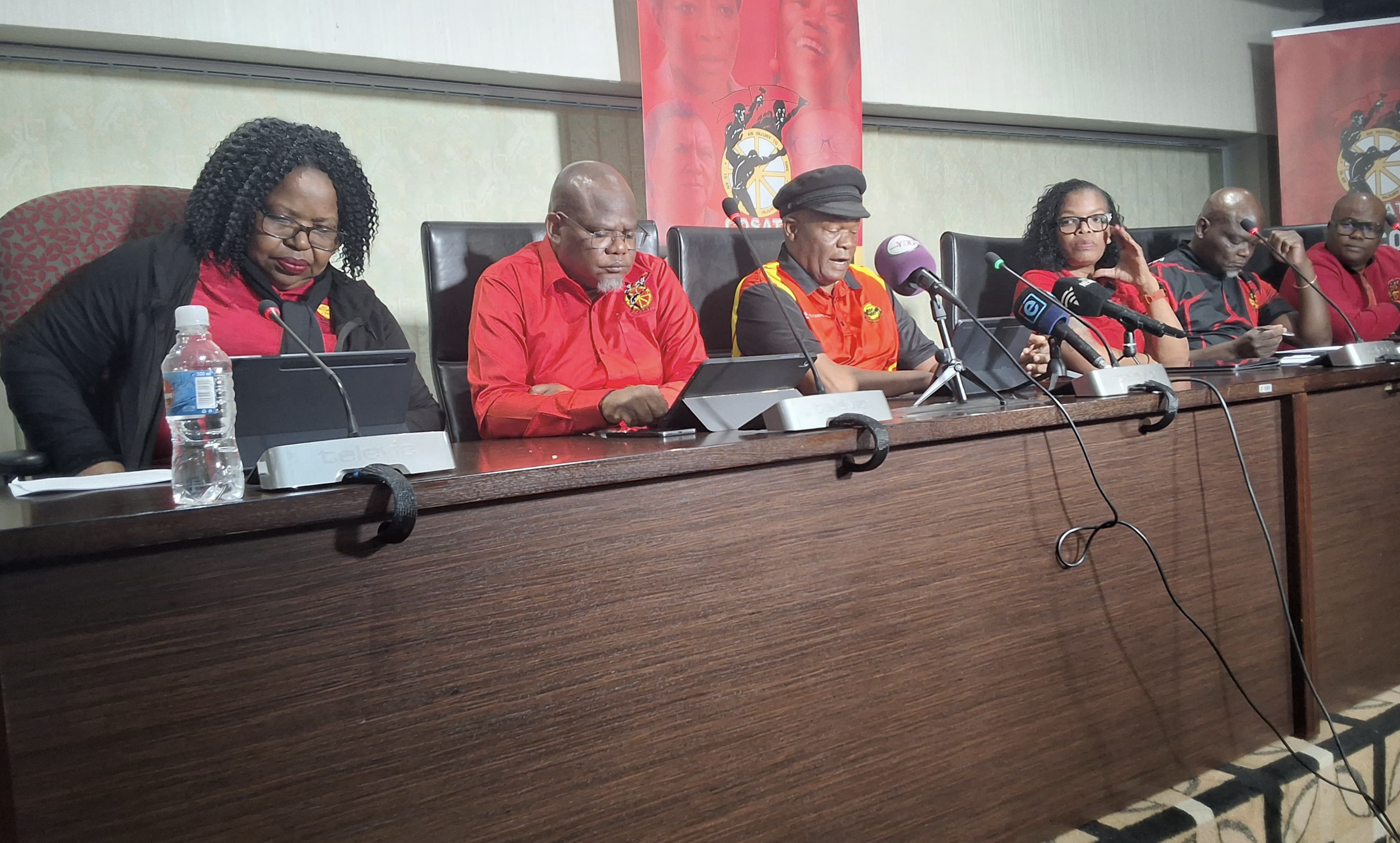
COSATU briefed the media in Johannesburg, where it indicated that affiliates may have to decide which party they are going to support.
COSATU president Zingisa Losi called for patience as the federation struggles to make a choice.
“Firstly, the unity of the federation is sacrosanct. The unity of affiliates within it is important. And so every union has a responsibility to converse this discussion within itself and within the federation and the unions.
“And we have set ourselves a path that takes us to the 15th National Congress, where this discussion will be on the Congress debate floor, where unions will then have a thorough discussion on this issue,” said Losi, effectively deferring the discussion to the federation’s upcoming elective conference.
Losi said COSATU wanted to avoid dividing its affiliates, which are spread across various sectors.
“This federation must not be divided on the basis of whom we are going to choose, because there are issues affecting workers that are central and important, as you would have seen in the statement when we were also taking stock from 2022.
“The challenges confronting workers in the private sector and the shopping sector require workers to be united beyond COSATU. We have a responsibility to unite workers across where they are organised,” she said.
She added that even at the Congress, tensions between the ANC and the SACP would not top its agenda.
“And so this issue must not be the issue when we get to the 15th National Congress. It is just part of the discussions of the 15th National Congress.
“And so, this discussion, we don’t want to pre-empt it or what the outcomes will be.
“We would allow Congress, in the spirit of unity of workers, to engage on it. How then Congress will resolve it, I hope you will all be there. We will all then have to deal with what would have been the outcomes,” said Losi.
The federation’s first deputy president, Mike Shingange, said the federation had learned from previous experiences that it was not wise to prematurely take a position on political issues.
His comments appeared to refer to divisions among affiliates over who should lead the ANC ahead of its 2012 Mangaung conference, which ultimately contributed to the expulsion of the National Union of Metalworkers of South Africa (NUMSA).
The federation is preparing for its 15th National Congress, set to take place next month in Johannesburg.
The Congress of South African Trade Unions (COSATU) is set to update the public on Saturday ahead of its upcoming leadership elections.The federation is preparing for its 15th National Congress, set to take place next month in Johannesburg.
WATCH: COSATU President Zingiswa Losi says the federation will debate the election rift between it's alliance partners, ANC and SACP, at it's congress next month.
Tension is rife in the Tripartite Alliance as the South African Communist Party (SACP) prepares to contest the November local government elections independently of the African National Congress (ANC).The impact of that split is now playing out within COSATU, with its affiliates seeking a mandate on which party to support.
Meanwhile, the federation is also preparing to elect its new national office bearers.
Zingiswa Losi was re-elected as president at the 2022 congress and has been serving for eight years.
Nominations for this year’s leadership elections are yet to be declared.