
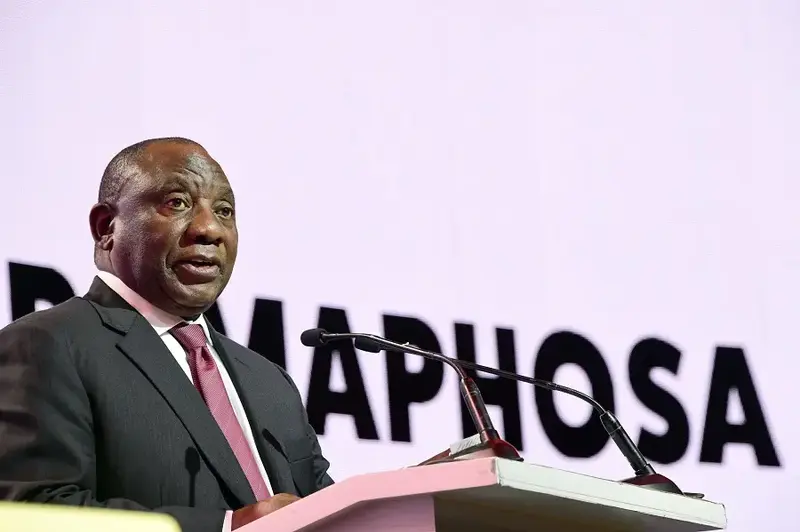
Fractured alliances, a resurgent MK, a compromised KZN lieutenant and an unresolved Phala Phala battle leave Ramaphosa facing his weakest election foundation yet
Cyril Ramaphosa enters the November 4 municipal elections weaker than at any point since he became ANC president.
The New Dawn is dead. The alliance is fractured, Jacob Zuma’s Umkhonto we Sizwe (MK) Party is advancing on ANC strongholds, his lieutenant in KwaZulu-Natal has been compromised by evidence before the Madlanga Commission, and his Phala Phala impeachment battle continues.
The election numbers are more damning. The ANC won 57.5% in 2019, down from 62.15% under Zuma in 2014, then fell to about 46% in the 2021 municipal elections – its first time below 50% nationally – before collapsing to 40.18% in 2024 and losing its parliamentary majority.
It has not recovered in a single election under Ramaphosa – though without his appeal, the results would have been worse.
November will be more than a contest over municipalities. It will be a referendum on Ramaphosa’s eight years as ANC president and his promise to rescue the party from corruption, division and decline.
A poor result will not remove him from the Union Buildings. But it could destroy his authority, accelerate the battle to succeed him and leave him serving out his term as a lame-duck president.
This could be Ramaphosa’s Waterloo.
When Ramaphosa took over from Zuma in 2018, he offered moral relief after a decade of state capture. The New Dawn, Thuma Mina and renewal persuaded voters that a respectable businessman with liberation credentials could clean up the state and restore the ANC.
Ramaphosa inherited a party in decline and promised to reverse it. Eight years later, the decline has accelerated.
His presidency has not achieved nothing. His administration backed the Zondo Commission, restored institutional credibility and introduced reforms in electricity, logistics and public administration. Load-shedding has eased, and the state is more stable than under Zuma.
But elections are not decided in government reports or investor conferences. They are decided by voters who cannot find work, businesses forced to provide their water and electricity, and township families surrounded by sewage, potholes, crime and uncollected rubbish.
ANC unable to win back public trust
The New Dawn promised ethical government and renewal. Instead, commissions produce reports while politically connected officials remain in office, and municipalities adopt rescue plans while taps run dry.
Ramaphosa may have repaired parts of the state, but he has failed to restore public trust in the party controlling it.
He enters this campaign without the political machinery that supported his predecessors.
The South African Communist Party (SACP) will contest the elections independently and has been excluded from ANC campaign structures and candidate lists. The ANC has warned SACP members not to campaign against its candidates.
Cosatu is trying to hold the alliance, but loyalties inside the labour federation are divided. Some remain committed to the ANC, some sympathise with the SACP, and others have simply disengaged.
The MK Party is not simply an opposition party. It is a rival ANC – built on Zuma, liberation history and resentment of Ramaphosa’s leadership – offering disillusioned supporters a way to punish the ANC without abandoning the political tradition with which they identify.
The party destroyed the ANC in KwaZulu-Natal. It is expanding into Mpumalanga, Gauteng, the Eastern Cape and Limpopo. Its elevation of Duduzane Zuma may aim to reach younger voters while preparing the movement for life beyond his father.
MK has not proved it can govern. Leadership changes, purges and dependence on the Zuma family raise questions about stability. But an angry voter does not need to believe MK will govern better – only that the ANC deserves punishment.
Mchunu is causing political damage
In KwaZulu-Natal, neither Ramaphosa nor ANC secretary-general Fikile Mbalula has matched Zuma’s emotional hold. Senzo Mchunu, who was supposed to be one of Ramaphosa’s strongest provincial lieutenants, has been compromised by allegations before the Madlanga Commission.
The commission has heard allegations of interference in policing, disbanding an investigative team and Mchunu’s relationships with controversial figures – and, this past week, that he violated protocol by sharing a confidential report.
Mchunu denies wrongdoing, and the commission has not made final findings. But the political damage is substantial. The ANC cannot deploy him across KwaZulu-Natal as the face of Ramaphosa’s clean-government project while a commission examines whether he undermined law enforcement.
Ramaphosa’s claim to ethical leadership is threatened by Phala Phala.
The public impeachment hearings over the foreign currency stolen from his farm remain suspended while the Western Cape High Court considers his bid to review and set aside the panel’s report. The Constitutional Court last week refused an opposition bid for direct access to overturn the order, though the committee can continue its work.
Ramaphosa has won time, not exoneration.
The president who promised accountability will be campaigning while trying to block the impeachment inquiry before his legal challenge is resolved.
The ANC’s response is to lean on Ramaphosa’s stature and the party’s liberation history.
Where have all the leaders gone?
But this is a municipal election. It should be fought by compelling local candidates with credible records of fixing towns and cities.
Where are the ANC’s celebrated mayors? Where are the municipal champions pointing to clean audits, reliable water, repaired roads and growing local economies?
The ANC has not made mayoral excellence the centre of its campaign, and in many municipalities it cannot campaign on a successful record. Candidate selection remains vulnerable to factional battles, and leaders are deployed to rescue unpopular local structures.
The party returns to its oldest argument: trust the ANC because it liberated you.
That appeal weakens with every election. Millions of young voters were born after apartheid. They respect liberation history but do not experience it as an answer to unemployment, unaffordable transport or a broken sewer outside the family home.
The ANC has not run out of policies. Its new manifesto will promise professional municipalities, better-qualified officials, ring-fenced revenue, infrastructure investment and action against corruption.
The ANC’s crisis is not a shortage of plans. It is the disappearance of reasons to believe the next plan will be implemented.
Ramaphosa arrived to save the ANC from Zuma. Eight years later, Zuma leads the movement taking its strongholds, the communists are campaigning separately, labour is divided, his KwaZulu-Natal lieutenant is compromised and his impeachment remains unresolved.
The New Dawn did not end in a dramatic sunset. It faded election by election.
November 4 will show whether Ramaphosa can arrest the decline – or whether this is the battlefield on which his authority inside the ANC disappears.
Source: https://fm.co.za/opinion/2026-08-17-real-politics-ramaphosa-faces-his-waterloo/