Pilgrim’s Rest’s 132-year-old Royal Hotel stands empty, the latest casualty in more than a decade of problems that have seen businesses close and jobs disappear from the historic tourism town.
Recent media reports say the latest attempt to secure an operator for the Royal Hotel has failed, with none of the bids meeting tender requirements. But the empty hotel is only the latest in a series of problems stretching back more than a decade.
The Royal has been part of Pilgrim’s Rest since the gold-rush era. According to Artefacts, an online repository of South African architectural and historical information, George Edward Roy, who arrived on the Pilgrim’s Rest goldfields as a 19-year-old in 1877, built the hotel in 1894.
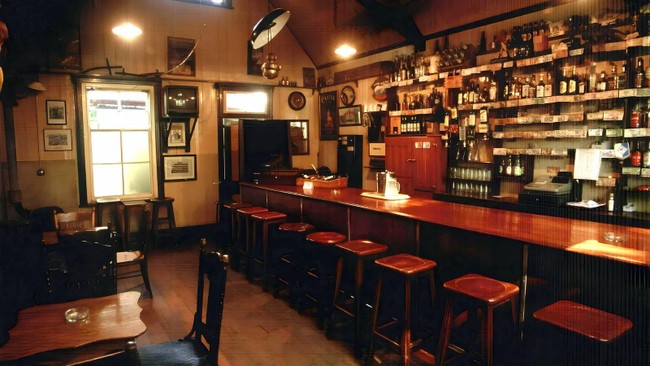
Even its pub has travelled a long way to get there – Artefacts says it was originally the Roman Catholic chapel of St Cyprian’s School in Cape Town before being dismantled, transported via Maputo and reassembled as part of the Royal Hotel.
Major battle
Pilgrim’s Rest’s problems with its state-owned business properties go back much further. A major battle erupted in 2012 after the provincial government put leases for businesses operating from its properties out to tender.
Existing traders were told to leave, including people who had operated businesses in Pilgrim’s Rest for years, prompting some to go to court to stop their eviction. The North Gauteng High Court halted the evictions pending a review of the tender process.
The dispute subsequently attracted the attention of then-Public Protector Thuli Madonsela, whose investigation resulted in the Poisoned Processes report. She found the process used to award shop leases was unlawful and improper and had been characterised by “gross irregularities and maladministration”.
Among the problems were shortcomings in the bid committee process, incorrect scoring and a failure to establish whether prospective tenants would be able to run sustainable businesses.
By 2018, reports described businesses standing empty and jobs disappearing amid continuing uncertainty over leases.
Leave now
Existing tenants had been given 30 days to leave, which Madonsela found was insufficient for longstanding businesses to wind up their affairs and make fair arrangements for employees.
Madonsela found the process had prejudiced business owners and the Pilgrim’s Rest community and affected the sustainability of the heritage and tourism destination. Government subsequently undertook to cancel the affected contracts and start again.
Yet the town continued to struggle. By 2018, reports described businesses standing empty and jobs disappearing amid continuing uncertainty over leases.
The town’s caravan park, once used by visitors, had been without a tenant since 2015 and was falling into disrepair despite repeated attempts by the provincial government to find an operator. The tenders were non-responsive.
In April this year, residents again complained that businesses were closed because of delays in awarding leases, while the provincial government said it was working to revitalise the town.
Royal struggles
The Royal Hotel had problems of its own before its current closure. By 2021, there were warnings that dozens of jobs were at risk after the hotel recorded losses of R770,702 and R3.14 million in successive financial years.
Kruger on Sabie took over the hotel in September 2022 and retained its workers, but a labour dispute subsequently developed. According to earlier reports, the operator wanted to introduce a shift system after concluding it could not afford the existing staffing arrangement. The relationship broke down and Kruger on Sabie left.
By December 2024, the provincial government said the Royal had 35 permanent employees who had been left running the business after the previous tenant allegedly ceased operating the hotel without paying employees or giving them notice, before Kruger on Sabie took over and later also left the operation.
The December 2024 announcement appeared to resolve the problem. Following negotiations involving the Department of Public Works, Roads and Transport, Kruger on Sabie, the Mpumalanga Regional Training Trust and organised labour, government said the department would renovate the Royal while Kruger on Sabie would return to run it, with operations due to resume on 1 March 2025.
The hotel’s pub was originally the Roman Catholic chapel of St Cyprian’s School in Cape Town before being dismantled, transported via Maputo and reassembled as part of the Royal Hotel.
They didn’t
The hotel was still closed when SABC News visited Pilgrim’s Rest in April this year. Residents told the broadcaster that businesses had closed, unemployment was high and fewer tourists were visiting.
The department said it was in the process of appointing an operator, but the latest bid round has produced no qualifying bidder – eight years after the caravan park tender also drew only non-responsive bids.
SACCAWU Mpumalanga’s Godfrey Talana said he was not aware of the Royal Hotel dispute when contacted by IOL on Monday but indicated that a report on the matter may be forthcoming.
The Royal is also not the only property the government is trying to fill. It has sought operators for other business premises in Pilgrim’s Rest as it tries to revive the town’s tourism economy, while acknowledging a shortage of tourist accommodation.
Thirteen years after the Public Protector warned that the handling of Pilgrim’s Rest properties was harming businesses, the community and the sustainability of the town as a tourist destination, government is still trying to find tenants for its properties.
IOL BUSINESS
Get your news on the go. Download the latest IOL App for Android and IOS now.
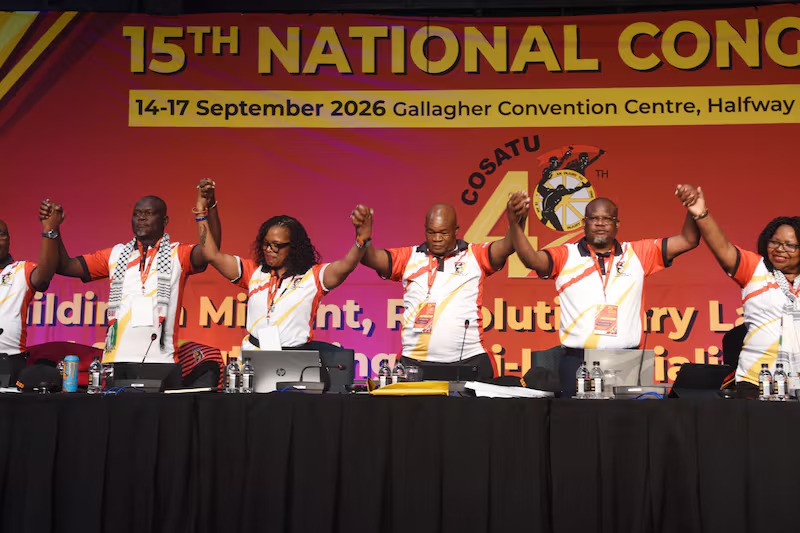
Cosatu’s leadership including president Zingiswa Losi, first deputy president Mike Shingange and first general secretary Solly Phetoe at the national congress in Midrand, Johannesburg, on September 14 2026. Picture: Business Day/ (Freddy Mavunda)
Story audio is generated using AI
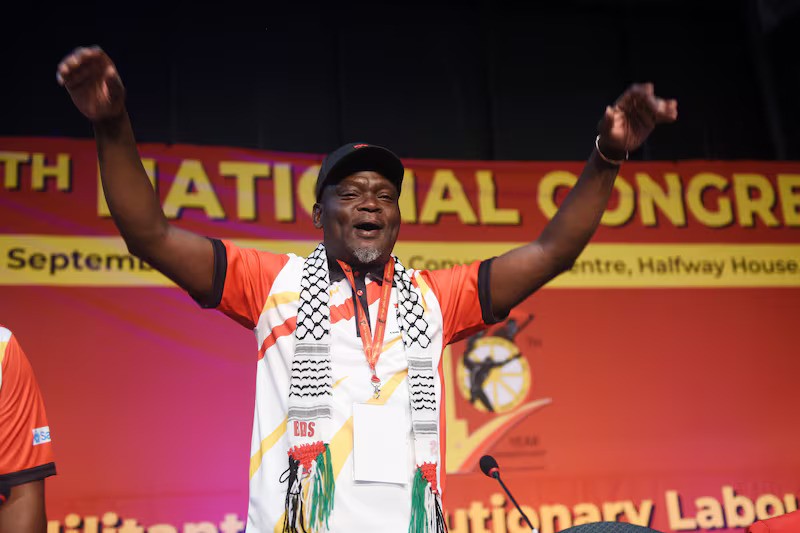
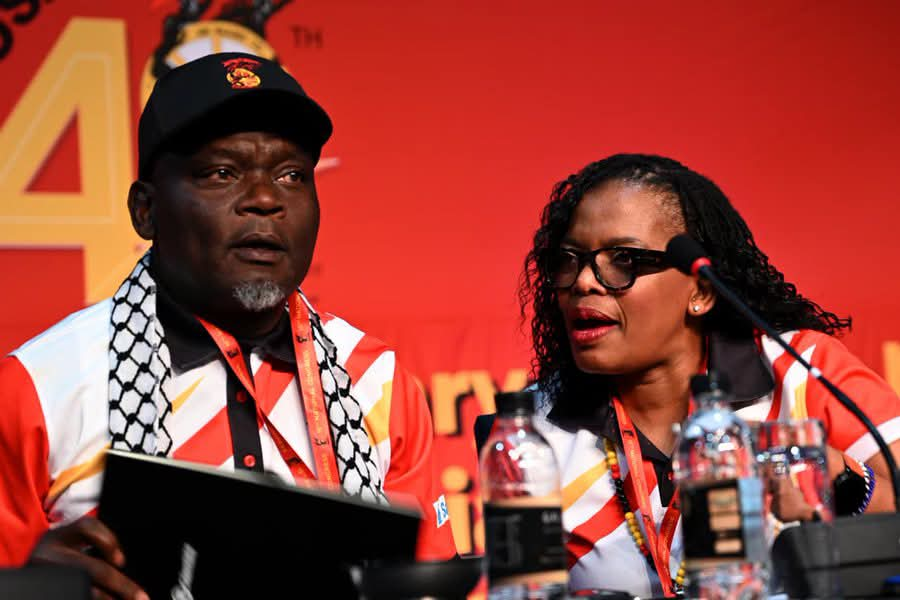
The country’s largest trade union federation, Cosatu, is meeting in Midrand this week for its 15th national congress.
As has become the norm with such gatherings, the first day of the congress yesterday was marked by long delays as delegates from various affiliates argued over who should be allowed into the conference venue and who shouldn’t.
However, such delays over the mundane shouldn’t make anyone dismiss the importance of the congress.
From SA’s earliest days as a mining and industrialised country, organised labour has always played an important part in shaping the country’s future.
At times this role has been destructive, as in 1921, when white trade unions led a strike in the old Transvaal whose main objective was to keep black people from entering the labour market on an equal footing.
But mostly it has been positive, often resulting in moderate improvements in working conditions for union members. The role of trade unions in bringing about an end to apartheid can also never be overlooked.
In the post-apartheid era, organised labour agitated for much of the progressive labour legislation in the country– such as the Labour Relations Act (LRA) and the Basic Conditions of Employment Act – which resulted in increased rights and protections for working people in the workplace.
It can even be argued that in a number of sectors, both public and private, the work of the trade unions has resulted in the lifting of the standard of living for hundreds of thousands of workers and their families.
However, as Cosatu holds its congress this week, it does so in a context in which many of the gains made in the early years of democracy are now being reversed – largely as a result of stagnant economic growth, rising unemployment and the introduction of new technologies that are rapidly changing the nature of work.
Millions of working people are finding themselves outside of the protection provided by the LRA and other labour laws because, as contract and casualised employees, they are not deemed to be workers.
This is especially true of the youth − some of whom spend years in companies as “interns” while doing the work of full-time staffers but without the pay and benefits.
These are the issues that Cosatu delegates should be preoccupied with this week if the 41-year-old federation is to remain relevant in the future.
Expending too much time and energy on ruling party politics is to ignore the real dangers the trade union movement and its members face.
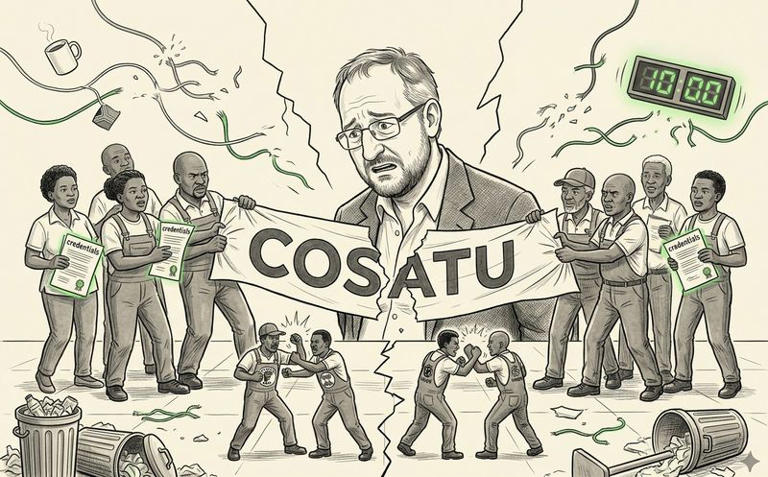
What’s happening in Cosatu is emblematic of what’s happening in the rest of our society, the sort of disintegration of the structures that brought us together. Illustrative image: (Generated with Google Gemini Flash Image 2.5)
There are times when I can only despair at our unions.
Especially when they do things that are just stupid or counterproductive.
Often, South African Municipal Workers’ Union members have been the worst. The people who, during a strike, will take rubbish bins and trash a street.
When I’ve had arguments with their leaders about this they’ve always said that workers will use the tools of their trade for political expression.
Strangely, members of the South African National Defence Union, representing soldiers, have never used this argument.
But there is something tragic about watching trade union federation Cosatu tear itself apart in public.
I almost feel that our national fabric is being ripped along with it.
[And President Ramaphosa’s legacy … he was instrumental in its foundation. – Editorial note]
Yesterday they were not able to get their conference going because there was a big fight about credentials.
As a reader of ATB you’re probably enough of a person of the world to know what that really means. It’s about who can vote and who cannot and therefore who the new leader of Cosatu will be.
In normal times, I kinda wouldn’t really mind that much. So what?
Except that for anyone trying to run a business that will be sustainable in this country for a long time, this is actually a big deal.
What’s happening in Cosatu is emblematic of what’s happening in the rest of our society, the sort of disintegration of the structures that brought us together.
I think it’s really going to matter to firms because when unions start to disintegrate very bad things happen.
First, you lose the ability to have just one person to deal with.
If you have a factory with just one union, the leaders of the union and the people running the factory know each other. They will work out how to get along, how the other takes their tea and how to negotiate.
But when you have more than one union, competition enters the fray. And that means union leaders compete with each other for members.
And they do that by making more and more extreme demands of management.
As if that were not bad enough, you might be confronted with fighting over union members on the shop floor. Now you have to stop a dispute that you have nothing to do with, involving two people who are supposed to oppose you.
But wait, there’s more.
You might be astonished by how often business and unions work together.
There are all sorts of joint initiatives and plans and working groups where workers and business leaders are able to join up for the good of society.
I would argue that without unions and businesses working together against Jacob Zuma in 2016 and 2017, he might not have lost in the way that he did.
But I think there is a much more fundamental reason to worry about the demise of our union movement.
If unions stand for anything it is representing their workers. And they do that through ensuring the rules are followed.
When a worker is fired unfairly they use the rules to fight back. They go to court when the government or a business does something illegal, and they often win.
In the process unions do something else.
From the very formation of the first big union of our modern era, the National Union of Mineworkers, unions have brought people from very different parts of our society together.
In the case of that union it was mineworkers who had previously been in compounds according to language and ethnic group. Together they were an unstoppable force. Even for the apartheid state at the time.
The same has been true of so many other unions.
The National Union of Metalworkers of South Africa, currently the biggest union in the country, represents hundreds of thousands of workers from all over South Africa who speak different languages and have different traditions.
In the process these movements have created a multigroup and multiracial consciousness, where people follow rules and work together.
Crucially, they have also created space for minority groups, including gay and lesbian people, to achieve their own ambitions for equality.
And that has had a huge impact on all of us. I’d argue that without the modern union movement in South Africa our society would look very different.
When this starts to disintegrate, as it is now, the entire environment around business starts to disintegrate with it.
There will be more and more groups of people competing with each other, making it harder to reach any kind of agreement.
And for workers, people who will one day rise through your business to become the CEO themselves, it’s even worse.
They will find themselves exposed, vulnerable to all kinds of abuse.
That means they will not be nearly as productive and will probably lose all of their ambition to help the company they work for do well.
The demise of the union movement is terrible for workers.
Labour federation Cosatu blames the ANC for the crumbling and poor state of local government. (supplied)
Labour federation Cosatu on Monday laid the blame for the crumbling and poor state of local government squarely at the feet of its ally the ANC, accusing it of presiding over decay and corruption in the municipalities it governs.
In what can be seen as a major shift in the country’s political landscape, the federation, a key ANC ally in the tripartite alliance, said it had grown disillusioned with the ANC’s track record.
The federation, which boasts 1.5-million members, has always availed its grassroots structures to campaign for the ANC in local, provincial and national elections.
It is holding its national elective congress in Midrand, Johannesburg, from Monday to Thursday.
Political pundits and opposition parties are keenly awaiting a resolution on which political party the federation will back at the November 4 local government elections.
Its other ally, the SACP, which also used to throw its weight behind the ANC, has registered to compete in the elections, bewildered by the ANC’s market-friendly policies that are seeing the private sector playing a bigger role in the running of public entities.
In its political report, Cosatu said many municipalities countrywide were in a poor state.
Most ANC-led municipalities are “collapsing or on the brink of collapse, with many facing collapsing water, electricity and roads, with municipal services grinding to a halt, denying communities basic services and the dignity of citizenship”, the report said.
“Growing numbers of municipalities cannot even pay municipal workers, with volatile workplace strife across the country.”
Local government audit outcomes for the 2024/25 have shown that of the 257 municipalities, only 39 achieved clean audits — down from 41 in the previous period (2023/24).
“While the ANC manifesto for the 2021 local government elections provided numerous improvements as proposed commitments to turn around many collapsing municipal governments, approaches taken by the ANC after the elections produced more weaknesses, more decay and corruption.”
Among its other complaints, Cosatu has expressed discontent after it was excluded from a business-government partnership aimed at addressing economic growth and job creation in the country.
Besides crises of collapse in municipalities caused by poor governance, the current funding model for local government continues to create conditions that only produce funding challenges for municipalities, especially in poor (mostly historically black) communitie
— Political report by Cosatu
Cosatu said there were serious problems with how money was allocated to municipalities. Resources were not shared fairly, leaving wealthy metropolitan suburbs better developed while black townships and poor rural municipalities continued to struggle with underdevelopment and inequality.
“Besides crises of collapse in municipalities caused by poor governance, the current funding model for local government continues to create conditions that only produce funding challenges for municipalities, especially in poor (mostly historically black) communities,” the report stated.
Cosatu said the revenue crisis at local government was also compounded by “deliberate nonpayment of municipal infrastructure by provincial and, at times, national government, with municipal towns being owed billions of rand by provincial and national government departments”.
“This nonpayment practice continues to compromise municipalities’ revenue collection, as they are also not able to enforce revenue collection among private sector businesses and poor communities when the provincial and national government departments with budgets fail to honour their municipal obligations.”
The crisis in local government, Cosatu said, was also exacerbated by the politics of “thuggery and primitive accumulation, as politically linked and protected tendering syndicates sabotage state infrastructure to induce tenders to provide services that should be provided by the state”.
In July, the National Treasury temporarily withheld the July equitable share payments to 69 failing municipalities across all nine provinces to enforce fiscal discipline, in a move seen as targeting rampant financial mismanagement, unauthorised and wasteful expenditure, failure to pay bulk suppliers like Eskom, failure to pay mandatory third-party deductions in pension funds and the South African Revenue Service, and the adoption of unfunded budgets.
“The federation supports the position of South African Municipal Workers Union on this decision, characterising this decision as collective punishment that will only hurt communities and workers in affected municipalities.
“In our view, National Treasury, while addressing an authentic challenge and problems of municipal maladministration and failure of municipalities to apply consequence management and prosecution of those involved in the fleecing of the public purse, collective punishment will only negatively affect already desperate communities and workers,” Cosatu said.
The federation is not without its own challenges too, the report said. Several of its affiliates have been haemorrhaging membership across the public and private sectors.
Leadership wrangles in the federation and in its affiliates have bedevilled the unions. One such wrangle manifested itself at the conference on Monday. Much of the first day’s programme was eaten up by a lack of clarity on the membership status of its first deputy president, Mike Shingange.
Shingange, who is alleged to be vying for the federation’s presidency, was suspended recently, but the federation had not issued a formal communication confirming it.
He is alleged to have filled in nomination forms for the federation’s presidency despite the suspension.
Some affiliates, including the National Union of Mineworkers (NUM), refused to hand over their lists of delegates, demanding the congress first clarify Shingange’s status at the conference.
Business Day reliably understands Nehawu suspended Shingange for defying the affiliate’s instruction not to enter the race. He refused to comment when approached.
A special Cosatu central executive committee, mandated by the congress, sat on Monday afternoon to examine the issue of credentials and Shingange’s eligibility to contest. By 7pm the meeting was still proceeding.
Shingange’s union, the National Education Health and Allied Workers Union (Nehawu), is the largest critic of the ANC government’s policies, mainly its participation in the Government of National Unity (GNU) and its privatisation drive.
Cosatu first deputy president Mike Shingange at Cosatu’s 15th national congress for the election of office bearers, Gallagher Conference Centre, Midrand, September 14. Picture: Business Day/ (Freddy Mavunda)
Cosatu first deputy president Mike Shingange has taken his fight to lead Cosatu to the labour court after he was suspended for allegedly defying his union — the National Education Health and Allied Workers Union (Nehawu) — over his presidential bid.
Shingange was suspended by Nehawu at the weekend after allegedly defying the union’s instruction to not sign a nomination form. Shingange, who is running for Cosatu president, has approached the labour court for relief and the matter is expected to be heard on Tuesday in Johannesburg.
This comes as the start of Cosatu’s national elective congress was delayed on Monday following a heated debate among delegates over who was in the room. Delegates refused to budge until the “correct” credentials were tabled, declaring that the conference “cannot” begin.
Some affiliated unions including the National Union of Mineworkers (NUM) flatly refused to hand over their lists of delegates attending the conference, demanding that the congress first clarify Shingange’s status, the immediate former president of Nehawu, one of Cosatu’s largest unions.
The Cosatu unions supporting Shingange’s bid for the Cosatu presidency include the South African Municipal Workers Union, Democratic Nursing Organisation of South Africa, finance union Sasbo, South African Commercial Catering and Allied Workers Union, and the National Union of Mineworkers (NUM).
The NUM has also been stepping up its opposition to Eskom’s restructuring plans, with its central executive committee resolving in August to litigate against the utility in the Constitutional Court if necessary, and embark on a strike in the mining and energy sectors, in which it organises.
The decision came after President Cyril Ramaphosa had endorsed a report paving the way for Eskom’s restructuring. The NUM is staunchly opposed to the unbundling of the power utility into three entities responsible for generation, transmission and distribution, arguing that it is a step towards privatisation.
The union argues that privatisation would threaten job security, drive up electricity costs and undermine South Africa’s energy sovereignty. The NUM said electricity was a strategic national asset, and the government must halt all steps towards market liberalisation “until a comprehensive social pact is reached with labour and key stakeholders”.
The NUM and Shingange’s Nehawu were among Cosatu affiliates that called on the labour federation to dump the ANC and support the SACP in elections in 2024. The SACP will contest the upcoming municipal elections on November 4.
At other highly contested Cosatu congresses in the past, when there was a fight over credentials, the labour federation leaders usually proposed a compromise to allow the congress to begin with welcome speeches and messages of support, but this suggestion has not yet been put to the 15th national elective Cosatu conference.
By 11.30am on Tuesday, the congress scheduled to end on Thursday had not yet begun.
COSATU’s 15th National Congress has been adjourned and will reconvene in 30 days, allowing the federation time to address internal matters. PHOTO: X/Supplied
By Amy Musgrave
For the first time in its history, Cosatu has failed to convene its national congress. The four-day meeting, which was due to start on Monday morning, was adjourned on Tuesday night and will now reconvene within 30 days, in line with the trade union federation’s constitution.
The two days were marred by violence, insults and delays concerning the legalities of the meeting.
The federation’s central executive committee (CEC) spent large parts on Monday and Tuesday locked behind closed doors deliberating on the way forward.
The media was informed that a press briefing would be held on Wednesday afternoon. In the meantime, Cosatu president Zingiswa Losi will update the more than 1800 delegates.
Cosatu’s 16 affiliates were unable to find each other earlier in the day on whether to dissolve the 15th elective congress.
At the centre of the chaos was disputed credentials, the legal standing of Cosatu first deputy president Mike Shingange and whether the congress is proceeding lawfully. Unions including the National Union of Mineworkers (NUM) and the SA Municipal Workers Union (Samwu) argued that the congress must be postponed because a quorum was not reached on time.
Section 3.4.2 of Cosatu’s constitution reads: “If after three hours of the time fixed for the meeting, a quorum is not present, the meeting must stand adjourned to a time and place decided upon by the president, provided that the meeting must be held within (1) month.”
The reason for this is that the majority of affiliates had not submitted their credentials documents by lunchtime on Monday because they first wanted clarity on Shingange, who was put on precautionary suspension by his union, Nehawu.
He is the president of the union.
Newhawu has taken issue with Shingange wanting to accept nomination to stand as Cosatu’s next president and the matter is in the Labour Court, according to insiders.
Several affiliates are backing him, however, Nehawu is apparently supporting SA Democratic Techers’ Union deputy president Mabutho Cele.
Unions did not get announcing which candidates they will support for Cosatu’s top six positions.
Cosatu General Secretary Solly Phetoe told delegates that a special meeting of the CEC, which sat late into Monday and Tuesday morning, had agreed that Shingange was under provisional suspension in terms of Nehawu’s constitution, and not Cosatu’s constitution.
This meant that he remained as the federation’s deputy president.
However, it is unclear what will happen if Shingange is expelled by his union.
Some unions demanded a legal opinion on the matter. They also argued that with the time wasted, the congress would have insufficient time to discuss its reports and reach resolutions.
NUM deputy president Olihile Kgwari said in reaction to the CEC decision, that it is not a “tested legal opinion”.
He said while “a lot of money” will be lost by postponing the meeting, “we must do things right”.
“We want to justice to the resolutions… We don’t want to turn this congress into a battle of muscles. We move to evoke that clause (of the constitution on the quorum,” Kgwari said.
Nehawu told delegates it had no objection to Shingange contesting the election, saying its issues with him were an internal union matter.
Sadtu appealed for the congress to continue, saying its members could not afford the cost of attending another meeting.