# COSATU is calling for urgent funding for the Employment and Labour Department’s plan to recruit an additional ten-thousand labour inspectors. Spokesperson Matthew Parks says this would strengthen efforts to crack down on violations of the labour rights of South African and migrant workers. He also wants government, business and labour to regularly review the Critical Skills List to attract scarce skills, upskill local workers and prioritise unemployed South Africans for training:
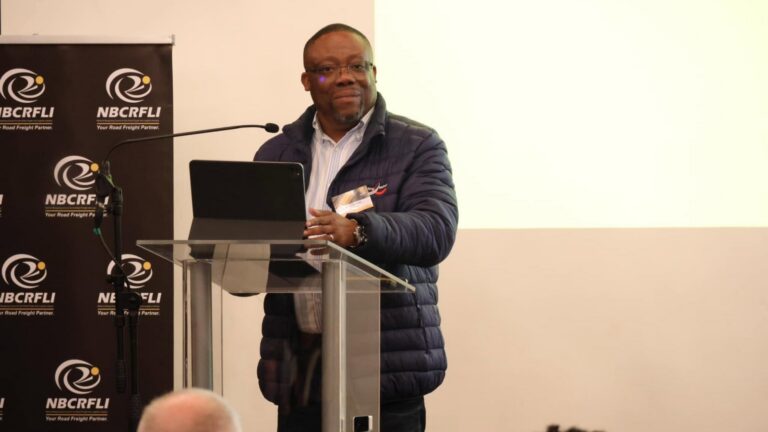
The National Bargaining Council for the Road Freight and Logistics Industry (NBCRFLI) has come under fire for seemingly mismanaging billions of rands in workers’ benefits.
The NBCRFLI was established in 1946 to regulate employment conditions, wages, and labour standards in South Africa’s road freight and logistics sector.
An analysis of the council’s audited financial statements from 2018 to 2025 reportedly found that R2.59 billion in worker benefit assets had been treated as council property in 2025.
The NBCRFLI has thus been accused of placing the money it collected for workers’ benefits on its books as its own assets, raising concerns over transparency in the council’s financial reporting.
The analysis follows an application for disclosure of the council’s financial statements, brought before the High Court in March 2024 by Innovative Staffing Solutions (ISS).
ISS challenged the constitutionality of the NBCRFLI’s Main Collective Agreement after it stopped making its financial statements publicly available.
The High Court granted the application and ordered the NBCRFLI to produce the requested financial statements and to pay ISS’s legal costs.
The council is legally required by its own rules to make its financial information publicly available without the need for court action.
ISS managing director Arnoux Maré said the NBCRFLI must urgently address the concerns raised by the publication of these financial statements.
“Every rand in its benefit belongs to a truck driver, a forklift operator, or a warehouse worker,” Maré said. “Workers should be able to see whether those funds remain properly ring-fenced.”
“They should know whether each fund can meet what it owes to workers, how income earned on that money is being used, and whether it is being used for workers’ benefit.”
ISS explained that as benefit funds are folded into the council’s own accounts, it becomes more difficult to determine whether enough has been set aside to pay workers’ claims.
The council allegedly did not prepare separate statements or audits for its Sick Pay, Holiday Pay, Leave Pay, and Wellness funds, which it is legally required to do.
During 2025, the NBCRFLI recorded R78.5 million in Wellness Fund investments as council assets without showing a clear matching obligation to the fund.
Additionally, it recorded R364.5 million in Wellness Fund contributions as council revenue, while R309.7 million in medical expenses was treated as council expenses.
Through its analysis, ISS also found the Sick Pay, Holiday Pay, and Leave Pay funds had accrued combined shortfalls of R35.8 million in 2021, R23.1 million in 2022, and R31.2 million in 2023.
“The concern is not simply whether the funds are solvent today,” Maré said. “Workers are entitled to understand why these deficits persisted and what has since been done to prevent them from recurring.”
Maré called on the Registrar and Department of Employment and Labour to verify compliance and require the NBCRFLI to publish its separate benefit fund accounts.
The National Bargaining Council’s response
Daily Investor reached out to the NBCRFLI for comment on the ISS claims, and received the following response from Council Spokesperson Amos Tshabalala:
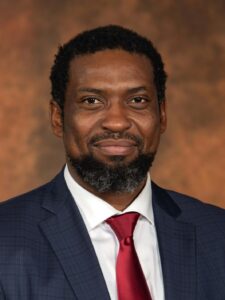
Higher Education and Training Minister Buti Manamela.
By Johnathan Paoli
The Democratic Alliance has demanded that Higher Education and Training Minister Buti Manamela put a concrete, funded rescue plan for the National Student Financial Aid Scheme (NSFAS) on the table, saying that universities and students cannot continue carrying the cost of the scheme’s financial crisis.
DA higher education spokesperson Delmaine Christians said Manamela’s acknowledgement of a projected NSFAS shortfall was not enough, and called for urgent measures to deal with billions of rands owed to universities as well as a sustainable funding model.
“It is no longer sufficient for the Minister to acknowledge that NSFAS has a funding problem. Students and institutions need to know how he intends to fix it,” Christians said.
The DA’s call comes after Parliament was told last month that NSFAS owed universities about R10.49 billion in 2026 tuition payments, with only 61.5% of university allocations having been paid at that stage.
Manamela has warned that the scheme’s financial shortfall could reach R33 billion by 2029 if the current funding model remains unchanged.
Speaking to the media last week, Manamela said government was already engaging the National Treasury over an estimated R15 billion shortfall.
“Last year it was R13 billion. The year before it was R7 billion. The year before it was R5 billion. The first year when we introduced the policy was R2.5 billion. Estimates are that by 2029, we would have a shortfall of R33 billion at NSFAS,” Manamela said.
He said that the problem cannot be attributed solely to governance instability at NSFAS, saying the underlying funding policy itself is unsustainable.
But Christians said talk is cheap and that the figures demonstrated the urgency of producing an immediate intervention and a long-term solution.
“Despite repeated talk shops, the Minister has failed to provide an interim crisis plan to pay money owed, and a long-term sustainable funding model solution to the absolute disaster that is NSFAS. This cannot become another crisis simply rolled into the next academic year,” she said.
Manamela said about R56 billion of his department’s budget was directed towards the scheme.
He warned that a failure of NSFAS would have consequences extending beyond students who rely on monthly allowances.
The minister acknowledged that the scheme still funded hundreds of thousands of students, but said any failure to pay even one student was unacceptable.
Manamela said the government was also considering an income-contingent loan system as part of efforts to develop a more sustainable funding model.
Under such a system, students would not pay upfront and would begin repaying once their income reached a predetermined threshold.
He cited Australia as an example, but said any South African model would have to be adapted to local conditions.
Manamela said stabilising NSFAS and preparing it for the 2027 academic year were immediate priorities.
Former trade unionist Dr. Ebrahim Harvey warns that internal suspensions, rumored NUMSA participation, and SACP electoral independence threaten to overshadow critical worker issues at the upcoming labor federation gathering.
JOHANNESBURG, Gauteng — As the Congress of South African Trade Unions (COSATU) prepares to kick off its 15th National Congress this Monday, the labor federation is navigating a profound internal crisis. According to former COSATU trade unionist and political writer Dr. Ebrahim Harvey, the upcoming elective conference is being dangerously overshadowed by intense leadership battles, threatening to derail the stated goal of rebuilding worker power amid widespread retrenchments.
While the official mandate of the congress centers on revitalizing the labor movement, Dr. Harvey highlighted that the federation is instead grappling with severe internal contradictions. A primary flashpoint is the situation surrounding COSATU’s first deputy president, Mike Shingange, who also serves as the president of the National Education, Health and Allied Workers’ Union (NEHAWU). Shingange recently received a suspension letter from NEHAWU but reportedly defied the order to accept a nomination for the COSATU presidency. Dr. Harvey pointed out the constitutional dilemma this creates, noting that a suspended member cannot legally vote or hold office, leaving the federation with a complex procedural crisis on the eve of its most significant post-apartheid gathering.
This internal strife comes at a critical time for the rank and file. COSATU’s membership has declined from a peak of over 2.2 million to approximately 1.6 million. Dr. Harvey expressed deep concern that while workers are actively facing job losses, unfair labor practices, and a lack of support from the very unions they pay subscription fees to, the leadership is preoccupied with “palace politics.”
Despite the chaos, published reports suggest that the current COSATU president is poised to secure the position of general secretary, reportedly backed by influential affiliates such as the National Union of Mineworkers (NUM).
Beyond internal union dynamics, COSATU is also being dragged into the fracturing of the historic tripartite alliance. The South African Communist Party (SACP) recently decided to contest the impending local government elections independently, a move that has caused significant friction with the African National Congress (ANC). Although COSATU attempted to adopt a position of neutrality and resolved not to persuade its members on how to vote, Dr. Harvey noted that the federation has already been torn apart by these escalating political tensions, having historically served as a convenient electoral base for the ANC.
In what Dr. Harvey described as a shocking and unprecedented development, there is growing speculation that the National Union of Metalworkers of South Africa (NUMSA) may participate in the congress. NUMSA, along with former COSATU leader Zwelinzima Vavi, was expelled from the federation in 2013 following a major ideological fallout with the ANC. Dr. Harvey admitted that the possibility of NUMSA’s attendance highlights the unpredictable and transformative times the labor movement is currently navigating.
Despite these compounding challenges, Dr. Harvey emphasized that workers should not lose faith in the trade union movement. He stressed that COSATU remains a vital centerpiece of civil society and a crucial mass organization in South Africa. He urged members to stay engaged, arguing that resolving the federation’s leadership and operational problems requires active participation from the very workers the union was built to serve.
Consultations on retrenchments at Premier Foods’ fruit canning factory in Tulbagh are ongoing. Photo: Greg Dor
The retrenchment consultation period is due to end on 26 September
COSATU Western Cape will no longer be able to participate in talks over the proposed closure of Premier Foods’ fruit canning factory in Tulbagh.
COSATU says it was invited by its affiliate AFADWU to join the consultations but a commissioner at the Commission for Conciliation, Mediation and Arbitration found that it had no standing to participate.
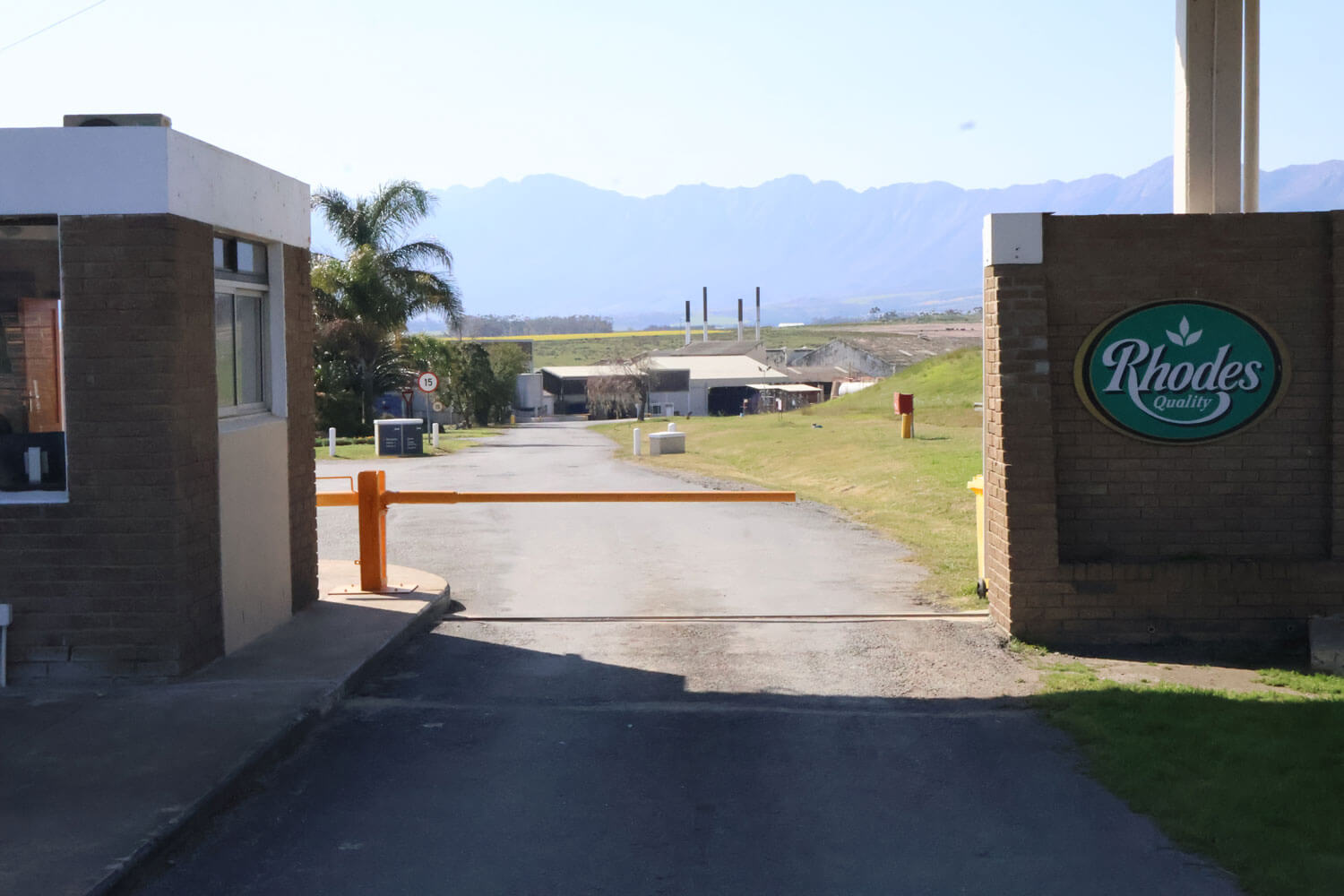
Meanwhile, the Competition Commission is investigating whether the proposed closure breaches conditions attached to Premier’s acquisition of Rhodes Food Group.
COSATU Western Cape says it is shocked by the Commission for Conciliation, Mediation and Arbitration ruling last week that the labour federation may no longer participate in talks over the proposed closure of Premier Foods’ fruit canning factory in Tulbagh.
Malvern de Bruyn, COSATU Western Cape provincial secretary, said, “The commissioner ruled that I am not employed by the Agricultural Food and Allied Democratic Workers Union (AFADWU).”
De Bruyn said COSATU had argued that AFADWU is an affiliate of the federation and that the federation, as its “mother body”, had standing to participate when invited by the union.
But commissioner Willem Connan disagreed, ruling: “I find that Malvern de Bruyn, in the position he seeks to represent (as COSATU), lacks locus standi to represent AFADWU in the current section 189A facilitation process”.
“We are the mother body, and our view was that we had locus standi,” said De Bruyn. “If AFADWU invited us to join them in negotiations, they are allowed to do so … so we are quite shocked by that ruling.”
The commissioner also ruled that an AFADWU shop steward, who was a seasonal worker, could not participate “in the absence of proof that he is still an employee”.
The ruling follows a dispute during a 26 August consultation meeting, when Premier objected to both De Bruyn and the shop steward.
De Bruyn had participated in the first round of consultations, but Premier challenged his participation when the second round began.
The dispute brought the meeting to a halt and was referred to the commissioner.
Unions Solidarity and National Union for All Sectors (NUFAS) and the remaining AFADWU representatives continue with the talks.
Alternatives to closure
COSATU and AFADWU had called for the closure process to be suspended for 12 to 24 months to allow alternatives such as new ownership or business rescue to be investigated.
COSATU had also approached NEDLAC for a section 77 engagement involving Premier, workers and unions, producers, government and community organisations.
But the 60-day consultation period is due to end soon – on 26 September.
“They don’t have any intention to keep the company open,” said De Bruyn.
“I believe there was a potential investor, and the company put questions to the investor, and thereafter the investor didn’t come back to continue those discussions.”
“We don’t see that as meaningful engagement because they don’t have any interest in saving jobs, for them the aim is just to close the factory.”
Competition Commission investigates
The dispute is taking place while the Competition Commission investigates whether the proposed closure breaches conditions attached to Premier’s acquisition of the Rhodes Food Group.
The Competition Tribunal approved the merger on 6 March, including a three-year moratorium on retrenchments resulting from the merger. A further condition provides that retrenchments during the moratorium are presumed to be merger-specific unless Premier can demonstrate otherwise.
The Commission has confirmed it is investigating whether relevant information about the Tulbagh plant was disclosed during the merger process.
If a breach is ultimately established, the competition authorities can impose an administrative penalty of up to 10% of the firm’s annual turnover in South Africa and its exports from South Africa, or revoke approval of the merger.
In response to questions from GroundUp, Premier said the consultation process “is still underway” and it remains committed to following due process. The company said it could not provide substantive comment on the dispute over representatives or the commissioner’s ruling while consultations were continuing.