Unions oppose Post Office liquidation over job loss concerns

The abandoned SA Post Office building at EL’s Oxford street. (Randell Roskruge)

Labour demands removal of business rescue practitioners, calls for new management

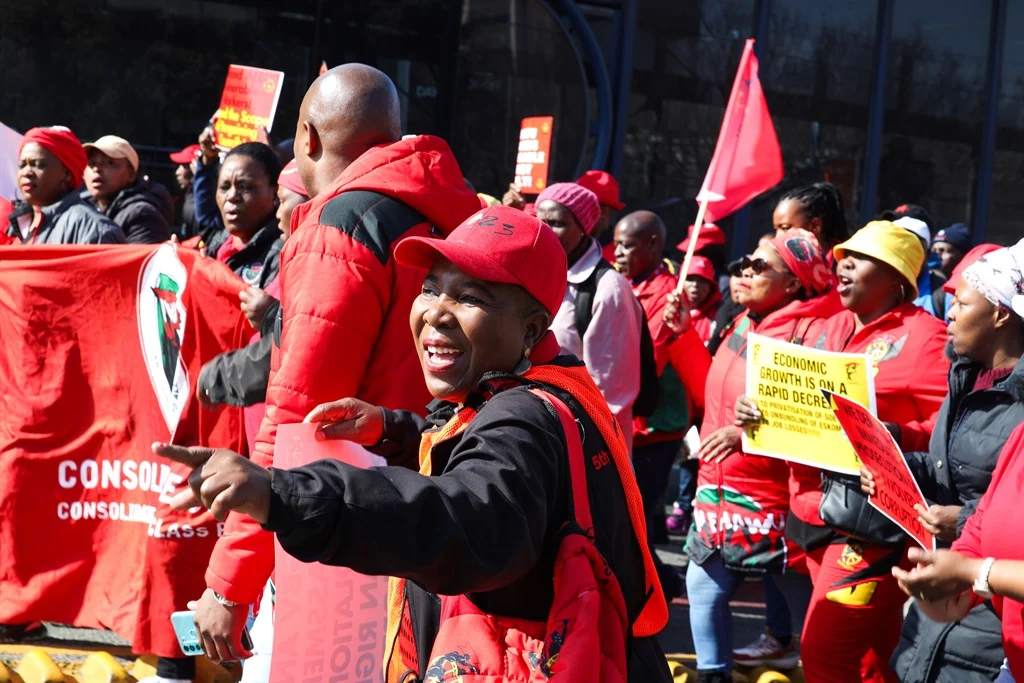
Organised labour has rejected proposals by the business rescue practitioners (BRPs) to liquidate the troubled SA Post Office (Sapo), saying the move would result in 5,700 workers losing their jobs and pushing nearly 100,000 dependants deeper into poverty.

The minister of communications & digital technologies, Solly Malatsi, was questioned by MPs and the rescue practitioners after a letter revealing plans to seek Sapo’s liquidation was leaked.

On Friday, Haroon Laher of Fasken, the rescue practitioner tasked with Sapo’s business rescue, sent a letter to Malatsi and his deputy Mondli Gungubele, saying liquidation would be the only way forward unless the government injected cash into the Post Office.

This adds a twist to the business rescue process for the Post Office, which has cost R12.6m in rescue fees, R220.1m in consultants and specialists, and R27.9m in external advisory since the 2023/24 financial year. It needs an additional R3.8bn to finish the rescue process.

Cosatu parliamentary co-ordinator Matthew Parks said the labour federation rejects the “ludicrous proposals” to liquidate the Post Office.

“It is beyond shameful that the very same BRPs who were appointed through a court agreement with the creditors and the department of communications & digital technologies in 2023 have nothing to show for their tenure beyond retrenching thousands of Sapo employees and plunging their families into absolute poverty and despair, closing hundreds of branches and thus further shrinking its customer base and potential to recover,” Parks said.

“Workers have reported the BRPs’ abysmal failure to pay millions of rand owed to workers, including medical and pension funds plus taxes.

“It is clear that besides further crippling Sapo and pickpocketing its employees, the only thing the BRPs have to show for the past several years are the hefty fees they have helped themselves to from Sapo.”

He said Cosatu will not agree to Sapo’s liquidation, adding that “the only liquidation that must take place is that of the BRPs”.

“It is time that the department approached [a] court to remove the BRPs and put in place competent administrators who have the capability and commitment to ensuring its stabilisation and setting it back upon the path to sustainability.”

Cosatu will seek urgent engagements with Malatsi and parliament’s portfolio committee for communications “to provide comfort to workers that their jobs will be secured, monies paid and that a turnaround plan will be put in place”.

“It is critical that Treasury provide the previously committed financial support to enable such a turnaround to be implemented,” he said.

SA Federation of Trade Unions (Saftu) general secretary Zwelinzima Vavi said if Sapo was liquidated, “it will represent one of the most devastating blows to workers and poor communities since the democratic transition”.

“It will confirm what Saftu has warned repeatedly for more than a decade: that the destruction of the Post Office has been a deliberate consequence of governance failures, corruption, and the refusal of authorities to act despite overwhelming evidence placed before them,” Vavi said.

He said the consequences of liquidating the Post Office would be immediate and catastrophic, with “about 5,700 remaining Post Office workers … immediately losing their jobs”.

“The majority of these workers are older black women, many of whom are the primary breadwinners in their families,” said Vavi.

“Each worker supports multiple dependants. The loss of these jobs would push an estimated 85,000 working-class family members deeper into poverty. In a country already suffering from mass unemployment and deep inequality, such a decision would be socially reckless.”

He called on the government to complete the recapitalisation of the Post Office. “The R3.8bn requested by the BRPs must be released so that the Post Office can settle its remaining debts and stabilise operations.”

Federation of Unions of SA (Fedusa) general secretary Riefdah Ajam said the Post Office has been in crisis for the past decade and the situation has only worsened.

“What exactly have the BRPs been doing when the Post Office continued to collapse year after year? The continued deterioration of the Post Office is a slap in the face to the South Africans and to the taxpayers whose money has been poured into saving the entity,” Ajam said.

“If an application for liquidation is filed, many workers will lose their jobs, and many communities will lose access to the one Post Office that has been convenient and affordable to them.”

“Marginalised and rural communities will suffer the most, as they rely on the Post Office for communication and access to grants.”

Ajam called for those who presided over Sapo’s collapse to be held accountable.

DA MP and labour analyst Michael Bagraim said: “Unfortunately, I think they should look to public-private partnerships and try and sell off some of the assets to use the profits to boost a new public-private company.

“In that way you’ll be able to save all the jobs and will also have money to look at rationalising if necessary.”

“At the moment they don’t even have money to pay proper severance payments to all the employees. There are international companies who would consider going into postal services to challenge all the private companies that exist at the moment in South Africa.

“The post office is asset-rich, which could be turned into a thriving business.”


Source: https://www.businessday.co.za/news/2026-03-17-unions-oppose-post-office-liquidation-over-job-loss-concerns/

IMRAAN BUCCUS | SA is entering a period of profound political realignment

Numsa general secretary Irvin Jim. File image. (Mduduzi Ndzingi)

EFF and SACP discussions signal potential shift in left-wing politics

Like other societies governed by national liberation movements, South Africa has had a distorted party-political terrain. The overwhelming legitimacy of the liberation movement meant a wide range of ideological tendencies were housed within a single political formation. Within the ANC, there have long been technocrats, kleptocrats, communists, neoliberals and both radical and conservative nationalists.

Now that the ANC’s electoral dominance is collapsing and it is almost certain to lose Johannesburg in the coming local government elections, a process of political realignment has become unavoidable. In principle, such a realignment could bring much-needed clarity to South African politics.

The neoliberals in the ANC could align with the DA and similar forces. The democratic left within the ANC, including the SACP, could align with progressive forces outside the party. Other tendencies could organise themselves into their own blocs.

In a rational political landscape, five broad formations might emerge:

  • a genuinely nonracial liberal bloc;
  • a social democratic formation rooted in labour and progressive civil society;
  • a principled left party;
  • a nationalist bloc bringing together the kleptocratic nationalist forces that remain powerful in our politics; and
  • a right-wing populist bloc around figures such as Gayton McKenzie and Herman Mashaba.

However, the ANC’s ability to participate in a rational realignment process is limited, if not rendered impossible, by the absence of a clear and credible successor to President Cyril Ramaphosa. The two key names that are currently being floated are Paul Mashatile and Patrice Motsepe.

Recent developments within the labour movement underline how dangerous the current moment has become

A Motsepe presidency would deepen the neoliberal trajectory in South African politics. Mashatile’s ascendancy would consolidate the corrupt and authoritarian nationalist faction within the ANC and align it with similar forces outside the party, including the EFF and the MK Party. Both outcomes would be disastrous for the country.

The dangers of an ongoing neoliberal trajectory have been noted by analysts such as Duma Gqubule, who has warned that South Africa cannot afford a further consolidation of elite power and technocratic governance detached from the social crisis confronting the majority of the population.

South Africa’s crisis is not simply a crisis of leadership. It is a crisis of inequality, unemployment and collapsing public services. Any political project that deepens the existing neoliberal trajectory will intensify these problems rather than resolve them.

Against this backdrop, recent developments within the labour movement underline how dangerous the current moment has become. At the end of last year National Union of Metalworkers of South Africa (Numsa) general secretary Irvin Jim announced to the union’s central committee that he intended to drive a process that would take Numsa and other independent unions in the South African Federation of Trade Unions (Saftu) back into the Congress of South African Trade Unions (Cosatu) and, through Cosatu, back into the ANC.

He also indicated that he intended to convene a political symposium, co-hosted with NGO Pan Africa Today, that would seek to bring together the MK party, the EFF and Floyd Shivambu’s new political project in discussions about re-aligning South African politics.

Jim’s push has bitterly divided the labour movement. Democratic left forces and trade unionists who are opposed to corruption are rallying around Saftu general secretary Zwelinzima Vavi. Those who appear willing to align themselves with corrupt and authoritarian nationalism are rallying around Jim. The fallout has been extremely bitter and is already reshaping relationships across the labour movement.

An alliance between the SACP and the EFF would represent a profound break with the historical principles of the SACP and the wider democratic left

The situation inside Numsa is now extremely tense. In an internal discussion document deputy general secretary Mbuso Ngubane launched a scathing critique from the left of any return to Cosatu and the ANC.

He argues that unity without political independence serves capital, that Cosatu’s subordination to the alliance coincided with de-industrialisation, labour insecurity and the weakening of worker power, and that a return to those arrangements would place discipline above democracy and loyalty above truth.

One of the most important interventions in this conflict has come from Ruth Ntlokotse, a highly respected trade union leader. In a detailed letter she raised serious questions about governance, accountability and internal democracy within Numsa. Her questions included Jim’s motivations for attempting to take the union back into the ANC and the wider implications of this project for working-class politics. Jim has publicly insulted her on Twitter (now known as X) but has not responded to her letter.

The depth of the crisis is also evident in the resignation of Phakamile Hlubi-Majola, Numsa’s highly charismatic long-time spokesperson. In her resignation letter she said she had received death threats, including a warning that people had been sent to assassinate her, and noted that this was the third time her life had been threatened while working for the union.

She also wrote that this was a congress year and that “a lot of bad things happen during the congress”. Following her resignation, Jim moved to have Pan Africa Today take over Numsa’s communications function. It is extraordinary for an NGO to take over the communications machinery of a major trade union at a moment of such intense internal conflict.

At the same time, new political manoeuvres are emerging elsewhere on the left. Julius Malema of the EFF and Solly Mapaila of the SACP recently appeared together in photographs and announced that discussions had begun about building an alliance between the two organisations. This development raises serious questions. The EFF is an authoritarian organisation and clear evidence of corruption linked to its members has repeatedly been placed in the public sphere through investigative journalism.

Remarkably little attention has been paid to these developments in the mainstream press. Yet they are of enormous importance

An alliance between the SACP and the EFF would therefore represent a profound break with the historical principles of the SACP and the wider democratic left. After all, MK is a deeply authoritarian nationalist project with extreme right-wing positions on many issues, including gender equality and migration. It is difficult to imagine any principled communist formation entering into a political project that could bring such forces into a broader alliance.

The SACP’s weakness at the polls helps explain why such discussions are taking place. In recent by-elections the party has attempted to run candidates independently and has received negligible support. The EFF, by contrast, retains a limited but real electoral base. There is therefore no obvious electoral reason for the EFF to ally itself with the SACP. The more plausible explanation is that such an alliance could serve as a bridge back into the broader nationalist bloc and eventually into government positions.

It is not yet clear whether the project being driven by Jim and the discussions between the EFF and the SACP are linked, or whether they draw on the same sources of political or financial support. It is also not clear whether Pan Africa Today has any role in the attempt to construct an alliance between the EFF and SACP. What is clear though, is that these various initiatives would fit together easily if the SACP were willing to help open the door to MK.

Remarkably little attention has been paid to these developments in the mainstream press. Yet they are of enormous importance. South Africa is entering a period of profound political realignment. The question is whether that realignment will produce ideological clarity and democratic renewal, or open the door for the return to power of kleptocratic authoritarian forces.

• Dr Buccus, a senior research associate at the Auwal Socioeconomic Research Institute, is author of a new book, Politics and Peril, the South African Crisis.


Source: https://www.timeslive.co.za/opinion/2026-03-17-imraan-buccus-sa-is-entering-a-period-of-profound-political-realignment/

In2food and stuff: Woolworths acquires food supplier with plans for more expansion offshore

Woolworths CEO Roy Bagattini. Picture: SUPPLIED (Supplied)

The acquisition, which brings in2food’s operations closer to Woolworths’ business, is expected to enhance supply chain efficiency and product innovation

Woolworths plans to double down on expanding in2food locally and offshore after acquiring its long-standing food supplier.

The food and fashion retailer said on Tuesday that it had bought privately-owned prepared foods manufacturer in2food from the founders, Old Mutual Private Equity (part of Old Mutual Alternative Investments), and other shareholders.

In2Food, bought by Old Mutual Private Equity in 2016, supplies “high-quality convenience foods” with a diversified range of premium private-label products across freshly prepared convenience food, fresh produce and long-life categories as well as several ambient and bakery products.

It has eight manufacturing facilities across the country and about 8,000 employees. Woolworths is in2food’s largest customer, with the relationship spanning three decades. The balance of its customers comprises other local and international companies across the food service and wholesale channels.

“There’s an opportunity to grow it beyond the Woolies component of it, the non-Woolies revenue in in2food, both locally and offshore. Woolies accounts for about 80% of its (in2food) business. But there is a component which is very interesting, which is growing, and which we want to help double down on and expand both locally, but also offshore through offering other big food retailers globally, a sort of a white-label type product. We do that already,” Woolworths Group CEO Roy Bagattini said in an interview.

He said UK retailer Marks and Spencer is one of the biggest offshore customers of in2food.

And what’s very important about that is we can take the efficiency and invest that back into price, which is really good for our customers, but all of these things around the customer offer really ultimately flow through into big market share gains, which ultimately flow through to a better business and our shareholders benefit at the end of the day

—  Roy Bagattini, Woolworths Group CEO

“There are a number of other big retailers in the US, some in Europe, and we’re opening up some channels into the Middle East here as well,” he said.

The acquisition gives Woolworths such a significant competitive advantage in this food space that no one else has and can replicate. We see significant future opportunities to come out of the transaction.”

Bagattini said the food retail landscape is getting a lot more competitive, “and we also know that we have a differentiated position within that”.

“Our food business is a sort of standout performer here. And we continually think about how we protect that. How do we grow the moat? How do we strengthen the moat around this business in a way that we continue to lead as we do? And we do, and you can do that defensively. You can do that offensively. Defensively, it gives us security or assuredness around supply … with all of the IP, the innovation. So it’s our single biggest supplier, and we now own that, which is very important.”

Offensively, it will drive speed to market much more aggressively and help drive agility.

“And what’s very important about that is we can take the efficiency and invest that back into price, which is really good for our customers, but all of these things around the customer offer really ultimately flow through into big market share gains, which ultimately flow through to a better business and our shareholders benefit at the end of the day,” said Bagattini.

In2Food’s management team will continue to lead it as a standalone operating business within Woolworths.

Richard Cooper, CEO of in2food, said the transaction “further enhances Woolworths Foods’ ability to protect product quality, innovation and availability, which are core to its differentiated customer proposition.

“We look forward to further deepening our decades-long connection with Woolworths.”

Bagattini said: “Woolworths and in2food share a more than three-decade history of partnership in creating products of outstanding quality and innovation to meet the evolving needs of our customers. This acquisition represents a compelling opportunity to bring a key strategic capability closer to the Woolworths Foods business, strengthening one of the core points of differentiation in our premium food offering.”

Woolworths plans to grow its food services business into new areas including school spaza shops and events. It already has WCafes and NowNow for fast food, which are housed under Woolworths Ventures.

Last week, Woolworths announced that Bagattini will retire at the end of September, after more than six years at the helm. He will be replaced by Sam Ngumeni, who has been with Woolworths for almost 30 years and is CEO of the food division.


Source: https://www.timeslive.co.za/news/2026-03-18-in2food-and-stuff-woolworths-acquires-food-supplier-with-plans-for-more-expansion-offshore/

Woolworths set to strengthen its food offering with in2food acquisition

Woolworths Holdings Limited has announced its ambitious plan to acquire in2food, a leading prepared foods manufacturer in South Africa.
Image: Supplied

Woolworths Holdings Limited (WHL) unveiled an ambitious plan to acquire 100% of the shares in in2food, a well-regarded prepared foods manufacturer based in South Africa.

in2food has established itself as a market leader in convenience foods, generating revenues exceeding R5 billion annually through a diverse portfolio comprising freshly prepared goods, fresh produce, long-life items, as well as ambient and bakery products.

Notably, Woolworths Food is the largest customer of in2food, which also supplies a variety of local and international companies through food service and wholesale channels.

Commenting on the longstanding partnership between Woolworths and in2food, Woolworths Group CEO, Roy Bagattini, said this acquisition represents a compelling opportunity to bring a key strategic capability closer to the Woolworths Foods business, strengthening one of the core points of differentiation in our premium food offering.

He noted that the acquisition will see in2food operate as a standalone business within Woolworths, with its experienced senior leadership team remaining in place.

Richard Cooper, CEO of in2food, said the transaction further enhances Woolworths Foods’ ability to protect product quality, innovation, and availability, which are core to its differentiated customer proposition.

He also expressed gratitude towards Old Mutual Private Equity and other exiting shareholders for their support and guidance during in2food’s growth journey since 2015.

Bagattini made it clear that this acquisition will not alter Woolworths’ broader food sourcing model.

“Our unique relationship with our suppliers is what differentiates us and is fundamental to delivering our premium food offering,” he said.

He emphasised that the transaction enhances the already strong relationship with one of their most innovative suppliers, benefitting the entire value chain and ultimately the end-customers.

The group expects the acquisition to be earnings accretive, even before factoring in operational efficiencies anticipated to emerge over time. The purchase consideration will be settled in cash, leveraging Woolworths’ current financing facilities.

However, the completion of the transaction remains dependent on the fulfilment of both regulatory and commercial suspensive conditions, including the approval from South Africa’s competition authorities.


Source: https://iol.co.za/business/2026-03-17-woolworths-set-to-strengthen-its-food-offering-with-in2food-acquisition/

Eskom Spearheads Smart Meter Rollout Across South Africa to Enhance Grid Management and Customer Empowerment

Eskom, Smart Meters, Load Shedding

Eskom, Smart Meters, Load Shedding

Eskom is deploying over 444,000 smart meters nationwide to improve electricity management, reduce load shedding, and modernize the power grid, focusing on provinces with high network losses. This initiative also sees Eskom achieving 300 days without load shedding due to improved plant performance. Simultaneously, other developments such as cucumber shortages and the Traditional and Khoisan Leaders Bill are also in focus.

Eskom, South Africa’s primary electricity provider, has made significant strides in modernizing the nation’s power infrastructure by deploying over 444,000 smart meters across the country. This ambitious project is a cornerstone of Eskom‘s broader strategy to enhance electricity management, mitigate the impact of load shedding, and optimize the efficiency of the national grid.

The rollout, strategically focused on provinces experiencing the highest network losses, including Gauteng, Mpumalanga, Limpopo, and KwaZulu-Natal, reflects a targeted approach to address critical infrastructure needs. The implementation of these smart meters represents a crucial step towards creating a more resilient and technologically advanced electricity system, enabling more effective monitoring and control of power distribution across the country. Customers will benefit from increased transparency in their energy consumption, empowering them to make informed decisions about their usage patterns and potentially lower their electricity bills. This proactive initiative is not just about upgrading technology; it is about building a sustainable energy future for South Africa, ensuring reliable power supply for all citizens and businesses. The installation of smart meters also contributes to improved billing accuracy, eliminating discrepancies and fostering greater trust between the utility and its customers. Moreover, the data collected from these smart meters allows Eskom to gain valuable insights into the grid’s performance, facilitating proactive maintenance, identifying potential issues before they escalate, and ultimately minimizing the frequency and duration of power outages. This concerted effort demonstrates Eskom’s commitment to modernizing its operations and adapting to the evolving demands of the energy landscape, creating a more efficient and reliable electricity supply for all South Africans. Furthermore, the implementation aligns with global trends towards smart grid technologies, positioning South Africa as a participant in the worldwide shift towards a more sustainable and technologically advanced energy future.\Simultaneously, Eskom is celebrating a remarkable achievement, reaching 300 days without experiencing load shedding, a significant milestone showcasing the improvements in plant performance and a substantial decrease in power outages across the country. This positive development is attributable to a combination of factors, including enhanced plant maintenance, optimized operational strategies, and proactive grid management. The reduction in load shedding is a welcome relief for businesses and households, allowing for increased productivity and a better quality of life. Alongside the technological advancements, this achievement highlights the dedication and hard work of Eskom’s workforce in ensuring a reliable electricity supply. The company’s focus on operational excellence and proactive problem-solving has contributed significantly to this positive trend. While these advancements are noteworthy, challenges persist, and Eskom continues to work towards addressing them, particularly focusing on long-term solutions for sustainable energy security. Ongoing investments in infrastructure, combined with strategic partnerships and innovative technologies, are essential to further strengthen the power grid and ensure the continued reliability of electricity supply for South Africa. Moreover, this positive progress is a testament to the resilience of the South African economy and its capacity for growth. In addition to Eskom’s progress, various other developments are taking place across the country. Unfavorable weather conditions have impacted the supply of cucumbers, leading to price increases as the demand remains strong. Political landscapes also evolve, with the tabling of the new Traditional and Khoisan Leaders Bill, addressing complex issues of land rights and leadership. Local authorities are actively addressing challenges, like the closure of an unsanitary cow hide cooking site in Johannesburg, along with the detection of a suspected illegal gold refinery. Meanwhile, in the world of sports, Mamelodi Sundowns’ player Nuno Santos is proving his worth as a key player despite adapting to the different style of play. Excitement builds up for fans as the Six Nations come to a close with the newest World Rugby rankings now published.\The widespread installation of smart meters represents a significant investment in South Africa’s energy future. These devices transmit real-time data on electricity consumption, enabling consumers to track their usage patterns and make informed choices to conserve energy and manage their expenses more effectively. This level of granular data also allows Eskom to optimize power distribution, identify and address grid inefficiencies, and proactively manage potential outages. The positive impacts are not limited to the individual consumer level; the enhanced data collection capabilities will contribute to the stabilization of the entire energy grid. The move is also aligned with global trends, where smart grids and smart metering are a key aspect of building a sustainable and resilient energy infrastructure. Besides its technological importance, the rollout is also an indication of Eskom’s financial and operational capabilities, which are crucial for ensuring the stability of power supply. The smart meter rollout is a reflection of the organization’s focus on improving customer service and operational efficiency. The long-term objectives include not only reducing load shedding and improving grid efficiency, but also promoting greater energy efficiency and environmental sustainability. Eskom’s efforts also encompass the modernization of its infrastructure, including the ongoing refurbishment and maintenance of power plants. This holistic approach will ensure a more reliable and sustainable energy future for the country. The initiative to improve the grid and curb outages is critical for economic growth. Reliable power is a fundamental requirement for businesses and industries, therefore contributing to job creation and investments. Further, the project’s success is dependent on collaboration, involving government agencies, technology partners, and the end-users. Community engagement and educational programs are vital to ensure consumers know how to make the most of the new technology and reap the benefits of smart metering. This is a crucial step towards modernizing the South African energy sector and driving economic prosperity.


Source: https://za.headtopics.com/news/eskom-spearheads-smart-meter-rollout-across-south-africa-to-81006052

Postbank Receives Financial Services License from FSCA

Postbank, FSCA, Financial Services License

Postbank, FSCA, Financial Services License

Postbank has been granted a Financial Services Provider (FSP) license by the Financial Sector Conduct Authority (FSCA), announced by Deputy Minister Mondli Gungubele. This allows Postbank to offer financial advice and intermediary services and is a key step in its transformation strategy.

Postbank has been registered as a licensed financial services provider with the Financial Sector Conduct Authority . The Deputy Minister of the Department of Communications and Digital Technologies, Mondli Gungubele, announced the regulatory landmark for the state-owned bank.

Gungubele said that the license, issued under the Financial Advisory and Intermediary Services Act , authorises Postbank to provide financial advice and intermediary services related to financial products. To obtain and maintain an FSP license, institutions must meet strict regulatory requirements covering governance, compliance, risk management, operational capability, and consumer protection. Gungubele said the milestone reflects progress in rebuilding Postbank into a sustainable and well-governed state-owned retail bank.“The granting of this license is an important regulatory milestone for Postbank and a strong signal of the progress being made to stabilise and strengthen the institution,” said the Deputy Minister. “It demonstrates that Postbank is meeting the regulatory standards required to operate responsibly within South Africa’s financial sector.” The achievement forms part of the bank’s five-year transformation strategy, built around three pillars: Stabilise, Build and Differentiate. Obtaining the FSP licence represents a key step in the Build phase of the strategy, allowing it to expand the financial services it offers. The license provides additional assurance that services are delivered under a regulatory regime regarding customers and social grant beneficiaries who already rely on Postbank.While the bank has celebrated the receipt of the FSP licence, it has not yet acquired a full commercial banking licence from the South African Reserve Bank via the Prudential Authority. “The development signals continued progress in building a capable state-owned banking institution that advances financial inclusion and expands access to affordable financial services,” said Gungubele. “This achievement represents another important step in Postbank’s long-term journey towards becoming a fully-fledged commercial bank that serves the needs of South Africans while contributing to the strength and stability of the country’s financial system.”When it was under the South African Post Office, Postbank offered some financial services, but it was strictly a savings subsidiary. After President Cyril Ramaphosa signed the Postbank Amendment Bill into law in September 2023, the Postbank underwent a major change. The new legislation formally transferred Postbank’s shareholding from the embattled South African Post Office to the government. The shift enabled the creation of a bank-controlling company, Postbank SoC Limited, which will enable Postbank to become a fully-fledged bank in South Africa. Business Talk – Quadrupleplay CEO Sthembiso Dlamini unpacks what needs to be done to bridge the digital divide in South AfricaWhy the Iran war dollar surge could reverse South Africa’s rand rally and what forex traders should do next.


Source: https://za.headtopics.com/news/postbank-receives-financial-services-license-from-fsca-81114888