by Dev_SACCAWU | Labour Market News

The South African Municipal Workers’ Union (SAMWU) notes the announcement by National Treasury that it will finally release the equitable share allocations due to affected municipalities by 31 July 2026. While SAMWU welcomes this decision, we cannot simply move on as though nothing happened. The decision to withhold these allocations in the first place was reckless, ill-conceived and devoid of any appreciation of the realities confronting municipalities, workers and communities.
There was simply no logic in taking municipalities that were already experiencing severe financial difficulties, withholding an important source of their revenue and then expecting their financial position and service delivery capacity to somehow improve. From the moment National Treasury announced the withholding, SAMWU warned that the decision would have serious consequences. We warned that workers would not be paid, third-party deductions would not be honoured and public services would be placed at risk.
National Treasury nevertheless assured the country that the withholding would have no impact on service delivery. The experience of the past few weeks has demonstrated how dangerously misplaced that confidence was.
Municipal workers across several provinces have either not received their July salaries, received them late or faced uncertainty about when they would be paid. In some municipalities, workers were already owed salaries from June. This happened at precisely the time when municipal workers were also supposed to receive their salary increases together with their July salaries.
These workers had rendered their services. They continued collecting refuse, maintaining water and sanitation infrastructure, repairing roads, maintaining electricity networks and ensuring that municipalities continued functioning. Yet when payday came, many were left with nothing.
The consequences were not theoretical. Debit orders bounced. Workers could not meet their bond and rental payments. Families struggled to buy food. Parents had to worry about transporting their children to school. Workers faced penalties and the possibility of damage to their credit records because of a decision over which they had absolutely no control.
National Treasury must therefore not expect applause for extinguishing a fire that should never have been started in the first place. The release of the equitable share is welcomed because it will bring desperately needed relief to municipalities and workers, but it cannot erase the hardship unnecessarily inflicted on thousands of municipal workers and their families.
SAMWU maintains that the initial decision was an unacceptable form of collective punishment. Municipal workers did not adopt unfunded budgets. They did not authorise irregular, fruitless and wasteful expenditure. They did not fail to implement consequence management against municipal managers and senior officials. Yet, when National Treasury decided to impose consequences on municipalities, it was ordinary workers and communities who were made to pay.
This approach was neither developmental nor sustainable. If National Treasury was genuinely concerned about the financial health and governance of municipalities, there were other mechanisms available to government. Treasury could and should have worked with the Department of Cooperative Governance and Traditional Affairs, provincial governments and municipalities on targeted interventions, including the constitutional mechanisms available under section 139 of the Constitution.
Municipalities have been allowed to linger in financial distress for far too long. Government cannot stand by while municipalities deteriorate year after year and then suddenly resort to drastic measures that threaten salaries and public services.Intervention must happen before municipalities reach the point of collapse.
SAMWU also agrees with the sentiments expressed by the Minister of Cooperative Governance and Traditional Affairs that government departments and institutions that owe municipalities must be compelled to settle what they owe. Government cannot demand financial discipline from municipalities while its own departments fail to pay municipal accounts.
If municipalities are expected to pay Eskom, water boards, workers, pension funds, medical schemes, service providers and other creditors on time, then national and provincial government departments must equally pay municipalities what they owe, and they must do so on time.
There cannot be one standard of financial discipline for municipalities and another for other spheres of government. The financial crisis in local government requires an honest assessment of the entire municipal funding model. It cannot be reduced to punishment whenever municipalities fail. National government must confront the chronic underfunding of local government, poor revenue collection, government debt owed to municipalities, corruption, financial mismanagement and the failure to intervene early in municipalities that are clearly in distress.
As SAMWU, our interest remains straightforward. We want municipalities that are financially sustainable. We want municipalities that can pay workers their salaries and salary increases in full and on time. We want municipalities that pay pension funds, medical aid schemes, bargaining councils and all other third parties without using workers’ deductions to finance municipal operations.
Most importantly, we want municipalities that have the financial and human capacity to deliver quality services to residents. Accountability and service delivery should never be presented as competing objectives. Those responsible for financial misconduct must be held personally accountable, but workers and communities should never be collateral damage in the process.
We therefore call on National Treasury to ensure that the announced equitable share allocations are released to all municipalities by 31 July 2026 without further delay. Municipalities receiving these funds must, as an immediate priority, settle all outstanding workers’ salaries, implement the salary increases due to workers and pay all outstanding third-party contributions.
The events of this month must never be repeated and National Treasury must learn from the consequences of its decision and abandon interventions that seek to restore municipalities to financial health by first pushing them closer to financial collapse. Workers must never again be made to pay for failures they did not create.
Issued by SAMWU Secretariat
Dumisane Magagula
General Secretary
(076 580 4029)
Or
Sam Lekhuleni
Deputy General Secretary
(082 526 6639)
Or
Papikie Mohale
National Media Officer
076 795 8670
Source: https://cosatu.org.za/samwu-welcomes-release-of-municipal-equitable-share-but-condemns-the-harm-already-inflicted-on-workers/
by Dev_SACCAWU | Labour Market News
The Congress of South African Trade Unions (COSATU) and its affiliate, the South African Transport and Allied Workers Union (SATAWU), unequivocally reject the proposed retrenchments at Great North Transport (GNT).
We view the proposed retrenchment as a devastating blow to workers, their families and the people of Limpopo who rely on GNT as their public transport service.
GNT issued a Section 189 notice attributing the proposed job cuts to declining revenues, a reduced operational fleet, increasing labour costs and organisational restructuring. While the bus operator insists that no final decision has been made and that consultations will take place, COSATU and SATAWU are aggrieved that workers are once again being asked to pay the price for years of mismanagement, poor governance, and failure by the Limpopo Provincial Government via the Limpopo Economic Development Agency to provide proper oversight on the state-owned bus company.
Workers did not create the financial crisis faced by Great North Transport. They therefore should not be sacrificed as a solution to problems created by management failure and inadequate oversight.
Thousands of workers, learners, students and the elderly across Limpopo rely on GNT for their commute. Retrenchments will not only send hundreds of workers to the unemployment line in a province where the rate of unemployment is already higher than the national rate at 47% but will also impact public transport services that communities depend on daily.
COSATU will provide SATAWU with every support so it can vigorously protect every job in the consultation process and ensure that every possible alternative to retrenchment is explored. COSATU and SATAWU will oppose any attempt to use Section 189 to cut jobs without genuinely exploring all alternatives.
COSATU calls on the Limpopo Provincial Government, as the shareholder, not to stand by while workers bear the consequences of management and oversight failures. Government has a responsibility to protect decent work and ensure that state-owned entities fulfil their developmental mandate.
At a time when millions of South Africans are battling an unemployment rate of 43.7%, a stagnant economy and ever-rising cost of living, retrenching workers cannot be the solution. Saving jobs, rebuilding public transport and restoring confidence in Great North Transport must be the priority.
COSATU and SATAWU stand firmly with GNT workers and will use every resource available to fight job losses and defend the livelihoods of working-class families.
Issued by COSATU
Zanele Sabela (COSATU Spokesperson)
Mobile: 079 287 5788 / 077 600 6639
Email: zaneles@cosatu.org.za
Source: https://cosatu.org.za/cosatu-and-satawu-vehemently-oppose-great-north-transports-proposed-retrenchments/
by Dev_SACCAWU | Labour Market News
Boxer will be expanding nationwide. In its rollout, it will open 60 new stores, most of which will be liquor stores.

Discount retailers expanding in economic downturn. Image: Unsplash
by Dev_SACCAWU | Labour Market News

The Public Investment Corporation is dogged by the resignation of board members and the suspension of senior officials.
Image: IOL / File
Labour federations have identified the stabilisation of the Public Investment Corporation (PIC) and the instituting of investigations into the affairs of the institution as a priority.
This comes after the wave of suspensions of senior officials and resignations by board members against the backdrop of calls by some commentators for the discontinuation of the practice of appointing a finance deputy minister as chairperson of the board.
The DA announced earlier this week a Pension Protection Bill that seeks to implement long-overdue reforms by ensuring that the PIC board chairperson is independent rather than a serving politician and that appointments be made on merit.
This week, the PIC experienced resignations by Finance Deputy Minister David Masondo and five other board members ahead of the Monday meeting scheduled by Finance Minister Enoch Godongwana to dissolve the board in the wake of the suspension of CEO Patrick Dlamini and Acting Chief Investment Officer August van Heerden.
Cosatu parliamentary coordinator Matthew Parks said the first step right now was the stabilisation of the PIC.
“They need to appoint a new board quickly. That will include a chair. That’s the first thing, and we will expect the government to respond to comply with the PIC Act, which allows workers through the Public Service and Bargaining Council to select three representatives of workers,” Parks said on Saturday.
He also said the next step was to continue the investigations into corruption, including the investigations around Acapulco investments, the CEO, and other related matters at the PIC, so that those found to have committed an offence are dealt with.
“We would also want to see the president (Cyril Ramaphosa) task the Special Investigating Unit, the Hawks, and the Auditor-General to actually investigate all PIC investments to clear the air; otherwise, it (PIC) will forever be surrounded by allegations of corruption, state capture, and so forth,” he said.
South African Federation of Trade Unions (Saftu) general secretary Zwelinzima Vavi said the current crisis at PIC reinforced the urgent need to strengthen governance within institutions entrusted with managing public wealth.
“Whether or not criminal corruption is ultimately established, governance failures, undisclosed conflicts of interest, weak oversight, and political interference can inflict enormous financial damage and erode public confidence in institutions responsible for safeguarding workers’ pensions,” Vavi said.
He also said Saftu was calling for the immediate preservation of all documents, emails, electronic records, board minutes, recordings, and any other evidence relevant to the matters under investigation.
Saftu also called for the continuation of all ongoing investigations and “a genuinely independent investigation conducted by persons with no actual or perceived conflict of interest”.
It added that there should be full protection for whistle-blowers and an urgent public hearing by Parliament.
Vavi said there should be publication of the findings once investigations have been completed, and immediate referral to the appropriate law enforcement agencies should evidence emerge of corruption, fraud, theft, abuse of fiduciary duty, or any criminal conduct.
Both federations noted the need for reforms at the PIC, with Parks saying there has been a lot of discussion on the matter.
“Amending the legislation would take a little bit of time. The critical thing is to help drive the current or the last amendments to the Act, which are quite critical,” he said.
“We would want to see further amendments that protect and retain those provisions, which include worker representation on the PIC board, clear criteria for the board itself, investment guidelines for PIC, which should be disclosed publicly, whether they’re listed or unlisted,” Parks said.
He also stated that there should be checks and balances and what a minister can and cannot do, as well as the merits and demerits of who should chair the board.
“We should be moving forward and see how you further strengthen governance, how to further protect the institution from corruption, and how to further strengthen transparency and so forth. But I think right now is about stabilising it, having a new board, continuing investigations, actually expanding investigations, and then, yes, you can have discussions around what needs to be tweaked in the Act itself.”
Vavi said a number of recommendations were made to strengthen governance, transparency, accountability, and oversight within the PIC made by the Mpati Commission.
“South Africans are entitled to know whether those recommendations were fully implemented and, if not, why another governance crisis of this magnitude has emerged. This question must be answered regardless of who is ultimately found to have acted improperly,” he said, adding that a public report on the implementation of the recommendations of the Mpati Commission should be made available.
mayibongwe.maqhina@inl.co.za
Source: https://iol.co.za/news/politics/2026-07-26-labour-federations-demand-urgent-reforms-and-investigations-into-the-public-investment-corporation/
by Dev_SACCAWU | Labour Market News
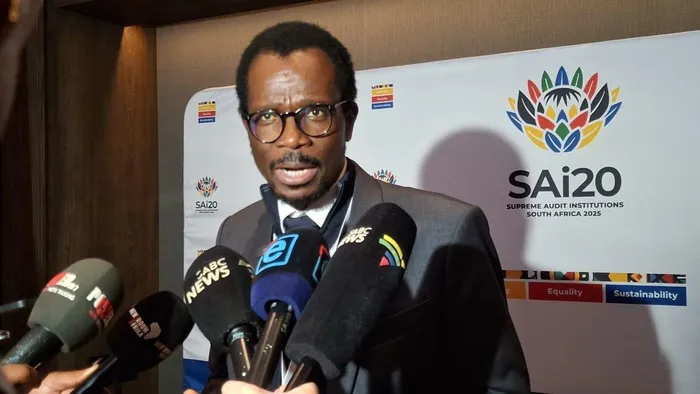
Dr David Masondo, Deputy Minister of Finance. The labour federation Cosatu says South Africa’s R3.6 trillion public investment fund must remain protected through stronger governance, worker representation and continued investigations into alleged wrongdoing.
Image: Timothy Bernard / Independent Newspapers
The Congress of South African Trade Unions (Cosatu) has called on Cabinet to urgently appoint a new board for the Public Investment Corporation (PIC), warning that investigations into alleged corruption and governance failures must continue despite the resignation of the corporation’s board.
The federation acknowledged the resignation of the PIC board, including chairperson and Deputy Finance Minister Dr David Masondo, as well as labour representatives, while commending their stewardship during a period in which the PIC’s assets under management doubled.
According to Cosatu, the funds managed by the PIC belong to South African workers and pensioners and must remain protected from political interference and corruption.
“It is important for all parties to understand that the monies invested by the PIC, namely the Government Employees’ Pension, Unemployment Insurance and Compensation of Occupational Injuries and Diseases Funds, belong to workers and pensioners, not PIC officials, politicians, tenderpreneurs or their families,” the federation said.
Cosatu praised the outgoing board for overseeing strong investment growth.
“We commend the PIC’s performance that saw these assets doubling over the past six years from R1.8 trillion to R3.6 trillion, far outstripping other funds and entities,” it said.
Despite the strong financial performance, the federation warned that governance concerns remained unresolved.
“We remain deeply concerned, notwithstanding the performance of the outgoing Board, that serious instances of corruption, wastage and state capture remain entrenched within the PIC,” Cosatu said.
The federation added that it had been “extremely disappointed by whistleblower reports alleging continued interference by politicians in PIC appointments and investments.”
Cosatu also welcomed the outgoing board’s decision to refer the Acapulco investment linked to Lanseria Airport to the Special Investigating Unit for further investigation.
“It is critical that this and other investigations into governance and corruption are not blocked or swept under the carpet by the Board’s resignation,” the federation said.
The labour federation urged President Cyril Ramaphosa to expand investigations into the PIC’s investment portfolio.
“The Federation urges the President, Cyril Ramaphosa, to task the SIU with the support of the Auditor General and the Hawks to investigate all PIC investments, listed and unlisted, and to hold any persons, no matter who they may be, fully accountable under the law for any instances of corruption.”
Cosatu said stability at the PIC was now essential and called on Cabinet to move swiftly in appointing a new board comprising individuals with the necessary expertise and integrity.
“It is critical that Cabinet move with speed to appoint a new PIC Board. It must consist of persons of integrity and capacity to provide the necessary stability and leadership to the PIC.”
The federation also stressed that the appointment process must comply with the Public Investment Corporation Act by ensuring that three worker representatives are selected through the Public Service Coordinating Bargaining Council.
“We expect Cabinet to comply with the PIC Act’s requirements that three representatives to the PIC Board be selected by workers through the Public Service Coordinating Bargaining Council. These are key to assuring workers and pensioners that their hard earned monies are safe.”
Looking ahead, Cosatu said it would oppose any legislative changes that weakened protections introduced under the 2019 PIC Amendment Act.
“Cosatu insists and will ensure that any proposed amendments to the PIC Act retain and protect the progressive gains workers secured in the 2019 PIC Amendment Act, namely worker selected representatives and clear criteria for Board appointments, checks and balances upon the executive authority, progressive investment mandates and the required public disclosure of all listed and unlisted investments.”
The federation said it would continue engaging with the Presidency, National Treasury and Parliament to ensure that workers’ retirement savings remain protected and that all allegations of corruption and state capture at the PIC are thoroughly investigated.
Source: https://iol.co.za/business-report/economy/2026-07-24-cosatu-calls-for-urgent-pic-board-appointments-as-pension-fund-assets-reach-r36-trillion/
by Dev_SACCAWU | Labour Market News
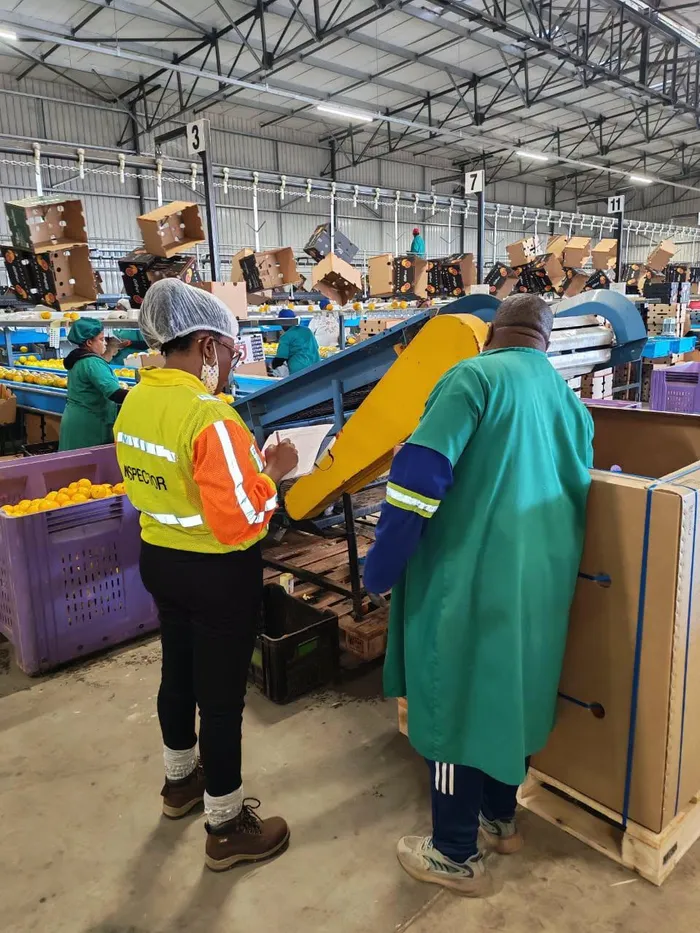
The Department of Employment and Labour in Mpumalanga conducted a multidisciplinary high-impact blitz inspection at Tomahawk Farm in Malelane.
Image: Facebook/ Department of Employment and Labour
A total of 137 foreign nationals were arrested and only three of 114 workplaces were found compliant during a nationwide inspection blitz by the Department of Employment and Labour on Friday.
Deputy Minister Jomo Sibiya said the high-impact operation, one of the largest multi-departmental blitzes to enforce compliance across the country, would continue.
The operations were conducted nationally, with major enforcement activities in Gauteng, KwaZulu-Natal and the Western Cape, alongside operations in other provinces, for the promotion of lawful employment, protection of workers’ rights, and addressing workplace non-compliance.
“The national operation saw 114 workplaces inspected and only three were compliant. The operations led to the arrest of 137 foreign nationals,” said department spokesperson Teboho Thejane.
He said the operation aimed to address systemic non-compliance with employment laws, immigration regulations, and municipal by-laws, while arresting individuals for offences like illegal residency and highlighting government responses to critical issues.