
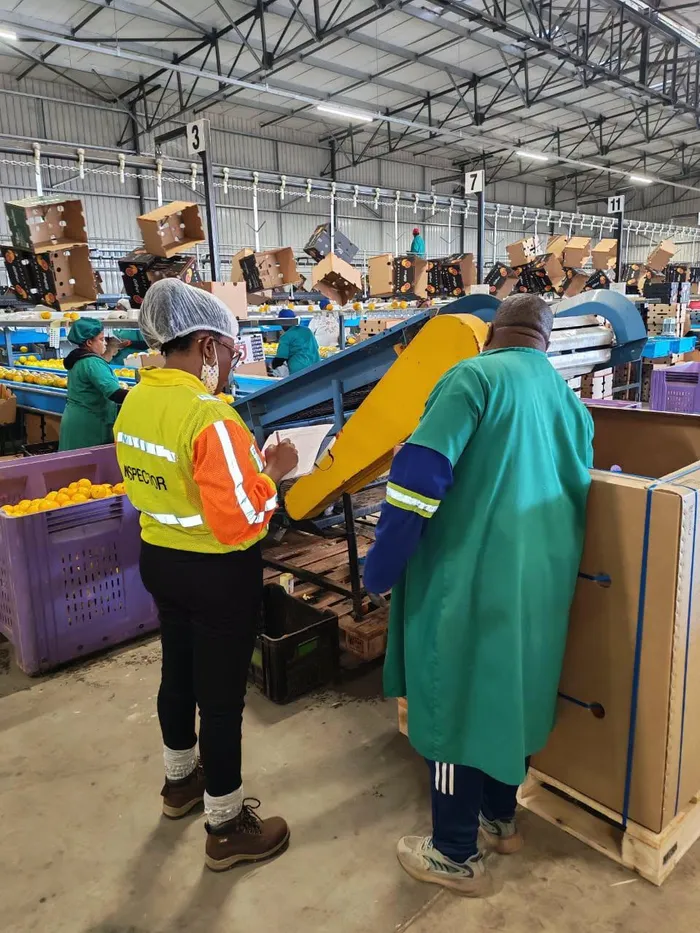
The Department of Employment and Labour in Mpumalanga conducted a multidisciplinary high-impact blitz inspection at Tomahawk Farm in Malelane.
Image: Facebook/ Department of Employment and Labour
A total of 137 foreign nationals were arrested and only three of 114 workplaces were found compliant during a nationwide inspection blitz by the Department of Employment and Labour on Friday.
Deputy Minister Jomo Sibiya said the high-impact operation, one of the largest multi-departmental blitzes to enforce compliance across the country, would continue.
The operations were conducted nationally, with major enforcement activities in Gauteng, KwaZulu-Natal and the Western Cape, alongside operations in other provinces, for the promotion of lawful employment, protection of workers’ rights, and addressing workplace non-compliance.
“The national operation saw 114 workplaces inspected and only three were compliant. The operations led to the arrest of 137 foreign nationals,” said department spokesperson Teboho Thejane.
He said the operation aimed to address systemic non-compliance with employment laws, immigration regulations, and municipal by-laws, while arresting individuals for offences like illegal residency and highlighting government responses to critical issues.
Thejane said the National High-Impact Blitz Inspection saw a total of 164 labour inspectors, 47 immigration officers, 123 SAPS officials, 56 municipal/law enforcement officials, two Border Management Authority officials, specialised stakeholders (environmental health practitioners, agriculture officials, Liquor and Gambling Board representatives, Brand Protection officials, Consumer Protection officials, private security, and Centlec).
He said inspections revealed recurring non-compliance with key provisions of the Occupational Health and Safety Act (OHSA), the Compensation for Occupational Injuries and Diseases Act (COIDA), the Unemployment Insurance Act (UIA), the Basic Conditions of Employment Act (BCEA), and the National Minimum Wage Act (NMWA). There was also non-compliance with the immigration act and by-laws.
“Consolidated data from provinces showed that the national inspection blitzes impacted 4,291 South African employees; the total number of foreign employee nationals was 546. The number revealed that 119 notices were issued, 10 prohibition notices were issued, and 29 contravention notices were issued,” Thejane said.
“Compliance with the OHS Act was at a paltry 2.6%, compliance with COIDA was at nine percent, while compliance with UIF was 0.2% and compliance with BCEA, including the (NMW and sectoral determinations), was at 31%.”
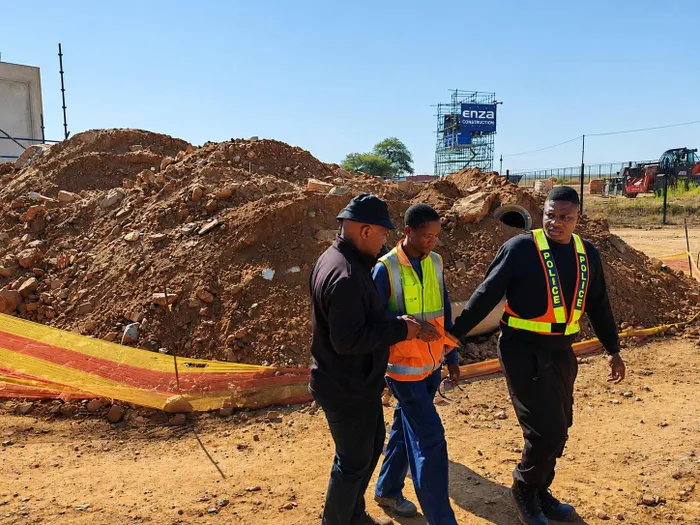
The national high-impact blitz inspection was conducted at the Limpopo Central Hospital construction site. Image: Facebook/ Department of Employment and Labour
In the Centurion and Pretoria areas, Sibiya, Home Affairs Deputy Minister Njabulo Nzuza, and Tshwane Mayor Dr Nasiphi Moya spearheaded Gauteng operations.
Speaking to the media after inspecting one of the companies, Sibiya said they found that the company did not comply with several South African laws, including labour and immigration laws.
“The big challenge that we have found is that workers are being underpaid here. The Minimum Wage Act is not being observed. They are paid far less than the level of the minimum wage that we have set, which is currently R30.23 an hour. They are paid R28 an hour,” Sibiya said.
“They are made to work far longer hours, and they are not paid overtime. They are locked inside the company at night. They work a 12-hour shift, but at times they work beyond the 12-hour shift, which they are not paid for. They are not registered, some of them with UIF (Unemployment Insurance Fund). They are not registered with the compensation fund. Some don’t even have contracts. They don’t get PPE (personal protective equipment), the uniform.”

Deputy Ministers Njabulo Nzuza and Jomo Sibiya unite for a common cause: ensuring compliance in South Africa’s workplaces. Image: Facebook/ Department of Employment and Labour
Sibiya said the department would engage employers, but would enforce the law and ensure compliance.
“We are going to continue to conduct all these across the country. We have been doing this work for some time. We have ramped up things. When we collaborate, we see results. This is about enforcing the laws of the country. As a government, we cannot allow the employment of illegals to continue. We want to cut the demand because the employment of illegal foreigners is being done deliberately,” Sibiya said.
Nzuza said the number of arrests may appear small, but the message had been received.
thobeka.ngema@inl.co.za