Image Credits : FACEBOOK_KZN Department of Transport
The Congress of South African Trade Unions (COSATU) is warning of a public transport crisis in KwaZulu-Natal after several major commuter bus operators threatened to halt services as early as next week over unpaid government subsidies.
Bus companies say they have not received payments from the KwaZulu-Natal Department of Transport since April, despite contractual obligations.
The National Department of Transport has confirmed that subsidy allocations were transferred, pointing to a breakdown at provincial level.
Operators say they have exhausted their reserves covering the shortfall, and financial institutions are no longer willing to extend credit.
Thousands of daily commuters who rely on buses to travel to work, school and healthcare facilities could be affected, along with more than 1 000 workers employed by the bus companies.
COSATU spokesperson Zanele Sabela said the consequences of a shutdown would be severe, particularly for the working class and low-income earners.
“Thousands of commuters will not have transport if that were to happen. Transport that they use to go to work, to school — there’s even a bus company that ferries university students up and down. If that actually happens, then the economy will grind to a standstill because a lot of people use buses for their daily commute. KZN is the second largest provincial economy in the country, bringing in about 16% of the GDP. So this will definitely spell disaster if it happens,” Sabela said.
She said the national department had confirmed the funds had been paid, making the provincial department the source of the problem.
“The bus companies wrote to the Passenger Bus Bargaining Council to let the general secretary know, and he immediately phoned the National Department of Transport, and they said these have been paid. So the problem is obviously in KZN in the Department of Transport in the province, which has not paid these funds. The bus companies have had to dig deep into their reserves to continue services so that commuters are not inconvenienced. But now they’re finding that those reserves are finished. And what’s worse is the financial institutions are not willing anymore to extend their credit lines,” Sabela said.
She said the situation also raised serious governance concerns about the KwaZulu-Natal Department of Transport, and called on the National Department to follow up with the province.
Sabela warned that commuters left without bus services would be forced to use taxis, which typically raised their prices when bus services were disrupted — adding further financial pressure at a time when diesel costs had also increased.
“If you have budgeted for a bus, which is normally cheaper than a taxi because it is subsidised, then you find that you will be out of pocket because they also tend to raise those prices. This will definitely be affecting the working class and the poor the most, and those are the people that the government needs to protect,” Sabela said.
COSATU said it had not yet directly engaged the KwaZulu-Natal government but would be activating its provincial structures to establish where the payment breakdown had occurred.
Retrenchment could cripple Tulbagh’s economy, ‘weaken agricultural production and breach merger commitments’
Premier Foods brands include Blue Ribbon Classic white bread. Picture: (supplied)
Labour federation Cosatu has called on JSE-listed food manufacturer Premier Foods to suspend a retrenchment process, warning that it could affect thousands of jobs across the agricultural value chain, weaken agricultural production and devastate businesses in Tulbagh and surrounding areas of the Western Cape.
The call follows Premier Foods’ announcement last week that it plans to close the Rhodes processing plant after completing its merger with Rhodes Food Group Holdings in March.
Cosatu said the move would affect 300 permanent employees and about 2,000 seasonal workers, stressing that 80,000 jobs were at stake across the agricultural value chain.
Premier Foods, which owns brands including Blue Ribbon, Mister Bread, Impala Maize Meal, Bull Brand, Rhodes and Snowflake, secured approval for the merger from the Competition Commission subject to conditions. These included an undertaking not to implement retrenchments for three years, Cosatu Western Cape secretary Malvern de Bruyn said on Tuesday.
On March 1, Premier said the merger marked an important step “in bringing together two businesses with strong brand portfolios, deep manufacturing capability and a shared commitment to long-term growth”.
“Based on results for the 12 months to September 30 2025, the combined entity will generate revenues of approximately R28.6bn and employ more than 15,500 people across South Africa, Eswatini and Mozambique. Following final implementation, [Rhodes Food Group] will delist from the JSE and become part of the Premier Group,” it said.
De Bruyn said the closure of the Rhodes processing plant would destroy an estimated 80,000 jobs in the value chain.
“Retailers, suppliers, transport operators and many other enterprises depend on the continued operation of the plant. This reckless decision threatens the economic future of the entire region,” he said.
Cosatu’s demands were that the processing plant remain operational, there be no retrenchments and no removal of machinery from the plant, and the Competition Commission determine whether the proposed closure violates the “commitments made when Premier acquired Rhodes, including undertakings relating to employment protection”.
Premier also needed to disclose the financial and operational information underpinning its decision to close the Tulbagh plant and a comprehensive socio-economic impact assessment must be conducted to determine the “devastating consequences that closure would have on workers, farmers, businesses and the wider Tulbagh community”.
De Bruyn said the labour federation would engage Premier Foods’ shareholders, the department of trade, industry and competition, the office of the Western Cape premier and all relevant stakeholders to secure a sustainable solution that protects jobs and preserves industrial capacity in Tulbagh.
“The federation also calls on companies throughout the agricultural value chain to oppose decisions that undermine local production and threaten thousands of livelihoods.
“Should Premier insist on exiting the operation, Cosatu believes the facility should instead be sold as a going concern to a consortium capable of preserving production, protecting jobs and advancing worker ownership.”
He said government development finance should be explored to support such an initiative, while workers must have an equitable stake in the future ownership of the enterprise.
“The unity demonstrated by workers, farmers and the community sends a powerful message that Tulbagh will not stand by while corporate greed destroys its economic future.
“Cosatu pledges to stand solidly with the workers and the people of Tulbagh until this closure is defeated and the Rhodes processing plant remains a thriving contributor to the local economy,” De Bruyn said.
Responding to questions from Business Day, Premier Foods said in a statement: “Premier confirms that it has commenced a section 189 consultation process with affected employees and recognised representatives regarding the proposed controlled closure of its Fruit Products Western Cape business in Tulbagh.
“Premier recognises that this is a deeply difficult and uncertain time for affected employees, many of whom have given years of service. The company understands the impact that this process may have on employees, their families and the broader Tulbagh community and is committed to managing the process with care, respect and transparency.”
The company said the fruit products business was no longer economically sustainable in its present form, as it had been affected by sustained pressures in the canned fruit market. These included declining global demand, changing export market conditions, pricing pressure, rising input costs and the need for greater scale in an increasingly competitive global industry.
The company said about 90% of the fruit products business’s canned fruit production is exported, “making the operation highly dependent on global demand and international competitiveness. Demand has declined sharply, year on year.”
Premier said it was engaging with the Competition Commission, local and national government, and other interested stakeholders, including the remaining canning facility, to help lessen the impact on farmers, the community and employees. “The company will continue to approach the proposed controlled closure responsibly, lawfully and with respect for all those affected.”
Business Unity South Africa CEO Khulekani Mathe. Picture: (, SUPPLIED )
Story audio is generated using AI
The lack of a funding framework for the government’s cabinet-approved industrial development strategy (IDS) 2026 was a key weakness identified by presenters during a parliamentary engagement with business organisations and trade unions on Tuesday.
Parliament’s trade, industry and competition committee chair Mzwandile Masina summed up the views, saying that a clear funding strategy is needed or the IDS “will fail dismally”.
But the fiscal constraints faced by the government in the context of low economic growth raise questions about whether the necessary funding will be forthcoming.
Bureau for Economic Research senior economist Roy Havemann noted that without a specialised financing mechanism such as a ring-fenced industrial development fund with multi-year appropriations, the strategy risked being executed “cheaply” without full implementation. This had been the downfall of previous industrial policies which lacked sufficient resources.
Business Unity South Africa (Busa) CEO Khulekani Mathe noted that there would be uncertainty in the business community in the absence of a multi-year framework of ring-fenced funding.
The strategy identifies priority sectors categorised under the policy goals of decarbonisation, diversification and digitalisation, which are required to modernise the economy and ignite its lacklustre growth trajectory, which has suffered from decades of deindustrialisation and a decline in the manufacturing sector’s share of GDP.
One deficiency of previous industrial strategies, namely the silo approach by different government departments — highlighted by a number of presenters — has been addressed in the strategy, which proposes the creation of a multi-departmental co-ordinating committee led by the department of trade, industry & competition and an interministerial committee chaired by the presidency.
Deputy trade, industry & competition minister Zuko Godlimpi emphasised the need for co-ordination.
Havemann said the strategy recognised that “industrial policy failure primarily stems from inadequate state co-ordination rather than solely market shortcomings. South Africa urgently requires a framework to streamline fragmented activities.”
He said it was uncertain whether the proposed presidency-based structure would be able to effectively co-ordinate the macro-institutional realignment that was necessary, saying the IDS could not resolve interdepartmental conflicts.
Cosatu’s Tony Ehrenreich also emphasised the need to remove the silos existing between government departments and to adopt an integrated approach, while DA spokesperson on trade, industry & competition Toby Chance also highlighted the lack of co-ordination but pointed out that there were too many ministries.
While Havemann hailed the IDS 2026 as the most advanced industrial policy framework since 1994, he said there were key weaknesses outside its control, namely the lack of fiscal space and the need to rebuild state capacity quickly.
“It assumes a capable developmental state, not recognising persistent domestic risks.
“Improved co-ordination alone cannot fix implementation challenges,” he said. “The real question for 2026-29 is not whether the IDS is a decent strategy but whether South Africa’s leadership can guide, co-ordinate and implement it.”
Mathe also questioned the capacity of the department to implement the strategy given its high level of vacancies.
He criticised the strategy for its “bottom-up” approach of aggregating what already exists without offering alternative scenarios on how to support growth. He said the economy needed to be mapped as a multi-nodal supply chain and constraints ranked in order of importance so choices could be made.
Trade & Industrial Policy Strategies senior economist Neva Makgetla criticised the IDS as not being an instrument to create employment. Its priority was to support established businesses, which, though necessary, would not create a lot of jobs.
Increasing competitiveness without increasing demand would not create a lot of employment. Neither would beneficiation, which was extremely capital intensive.
“I do think we need more innovative thinking,” she said in an interview ahead of her presentation.
COSATU said it has noted with ‘extreme dismay’ the appointment of the council by President Cyril Ramaphosa, after receiving recommendations from Parliament.
COSATU’s Parliamentary coordinator Matthew Parks. Picture: X/Radio702
The Congress of South African Trade Unions (COSATU) said it will be calling on the Presidency and Parliament to intervene after no labour representatives were appointed to the National Council on Gender-Based Violence and Femicide (GBVF).COSATU said it has noted with “extreme dismay” the appointment of the council by President Cyril Ramaphosa, after receiving recommendations from Parliament.
However, COSATU said the appointments have failed to include key sectors like representatives from labour and business.
The president announced the appointment of the National Council on Friday and named academic Dr Ramalepe Mathibe as the chairperson.
The council comprises seven members, including academics, a gender activist, a clinical psychologist and a social worker.
COSATU parliamentary coordinator Matthew Parks said this is despite the act establishing the council specifically stipulating that representatives from business and labour should be included in the council, and “this was not done”.Parks said GBVF “is not a mere academic discussion”.
He said it is the lived experience of women in everyday life, including women who are victims of abuse and intimidation in the workplace.
Parks said they will be engaging with the Presidency and the presiding officers of Parliament to allow the State to ignore its own legislation and “legally binding provisions”.
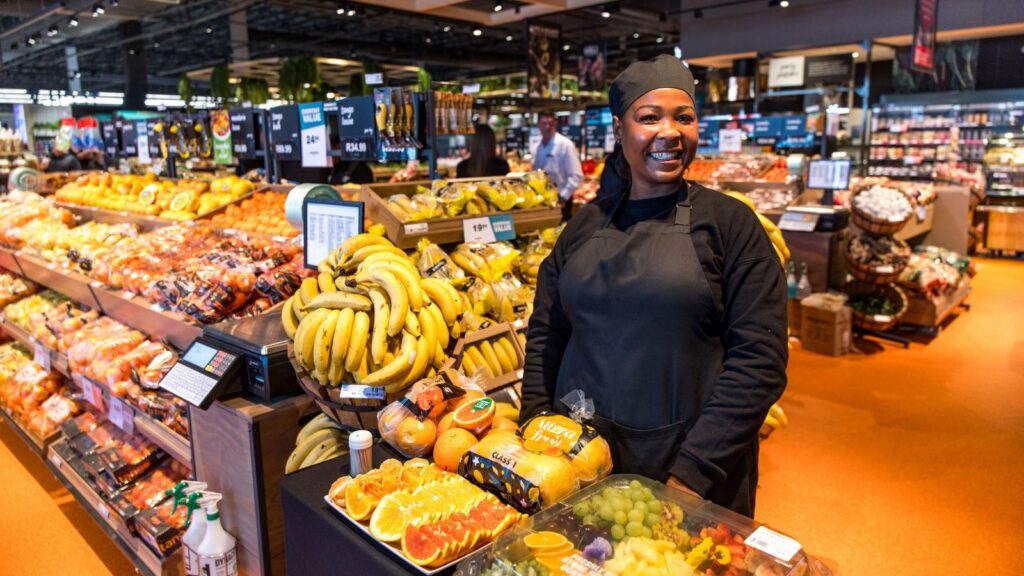
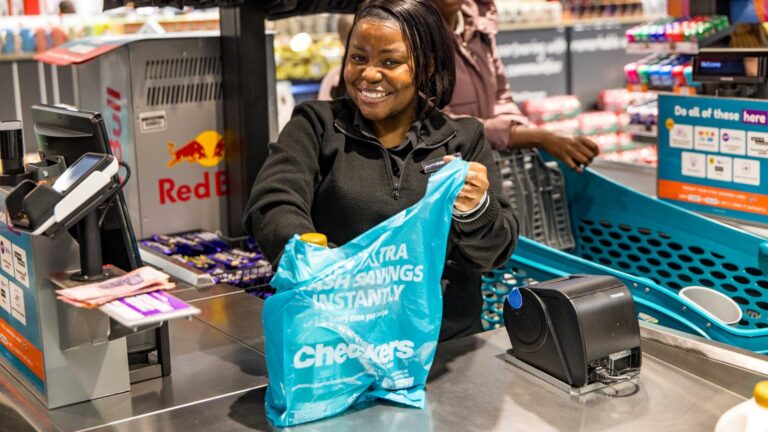
The Shoprite Group has opened a new Checkers Hyper at Irene Village Mall in Centurion, taking on established Woolworths and Pick n Pay stores.
This new Checkers Hyper has 5,369 square meters of floor space, promising a world-class experience to clients.
It offers a wide selection of fresh food, groceries, general merchandise and speciality offerings, supported by a range of in-store services.
The hypermarket has a dedicated meat market, a hot-and-cold food deli, a bakery, and a fresh fruit and vegetables section.
Customers can also enjoy speciality food offerings from well-known brands, including Sushi, Krispy Kreme, Kauai, and Tandoori Chicken.
The new Checkers Hyper also offers a coffee shop, milkshake bar, hamburger bar, smoothie bar and chocolate fountain.
Additional in-store services and features include a refrigerated flower cart and a money market counter.
“Customers want more choice, fresh food and convenience, and that’s what we’ve delivered at Checkers Hyper Irene Village,” said Checkers COO Willem Hunlun.
“This store showcases the best of what Checkers has to offer, bringing together quality, innovation and specialist offerings in one destination.”
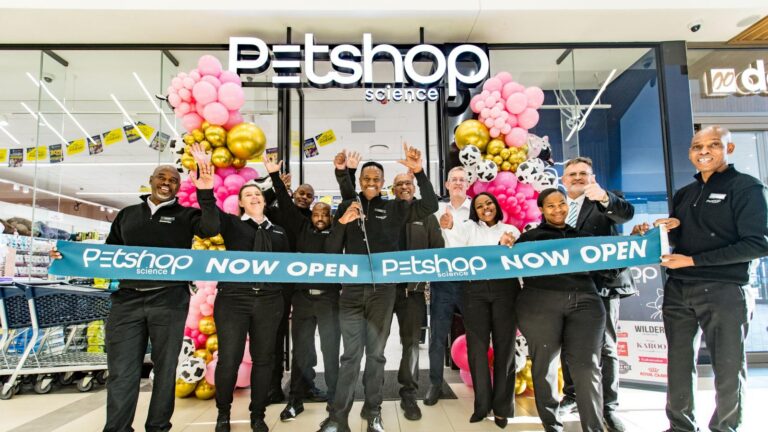
Shoprite Group has also launched UNIQ Clothing by Checkers and Petshop Science at Irene Village Mall as part of the new Checkers Hyper.
These two stores complement the hypermarket by offering clothing and pet products in dedicated retail settings.
Together, the new stores in Irene created 115 employment opportunities in the area, including 102 positions at Checkers Hyper.
What is interesting about the new Checkers Hyper is that it will compete head-on against established Woolworths and Pick n Pay stores in Irene Village Mall.
Shoprite is confident that its superior range at the new Checkers Hyper will be enough to lure customers away from its competitors.
Aggressive rollout targets for Checkers
The new Checkers Hyper Irene Village forms part of the Shoprite Group’s aggressive expansion strategy, which saw it surpass its store rollout target.
Shoprite’s 2025 Annual Integrated Report provided details about its rollout strategy for the Checkers brand.
This rollout included core supermarket formats, fresh store revamps, digital e-commerce expansion, and adjacent specialist retail chains.
The Checkers supermarket chain reached 350 stores in South Africa, comprising 310 Checkers supermarkets and 40 Checkers Hypers.
During the 2025 financial year, Shoprite opened 29 new Checkers supermarkets and 3 Checkers Hypermarkets.
On-demand delivery service Checkers Sixty60 expanded to 694 locations across South Africa, a net addition of 155 locations in the 2025 financial year.
Shoprite said that it had identified significant scope for further expansion of the Checkers store footprint.
It added that it continued to leverage the Checkers store network and platform infrastructure to roll out adjacent retail brands.
These adjacent retail brands include Petshop Science, UNIQ clothing by Checkers, Checkers Outdoor, and Checkers Little Me.
At Checkers Hyper Irene Village, Shoprite used the additional space to add Petshop Science and UNIQ clothing from Checkers.
This makes sense given the demographic it serves at Irene Village Mall, with people spending thousands on their pets.
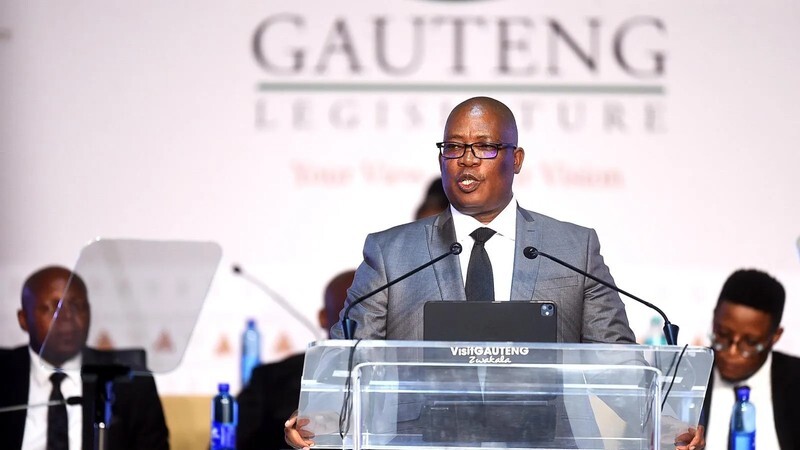
Cosatu, through its Gauteng Chairperson Amos Monyela, has voiced strong support for the recently launched Gauteng Human Resource Development Council (GHRDC).
Gauteng Premier Panyaza Lesufi unveiled this initiative on Tuesday at the University of South Africa (Unisa), aiming to equip workers with the necessary skills for a rapidly advancing job market.
Welcoming the initiative, Monyela emphasised that the GHRDC will play a crucial role in facilitating continuous upskilling and reskilling initiatives, especially as artificial intelligence and emerging technologies reshape the workforce landscape.
Monyela added that this new programme will ensure workers remain prepared to deliver quality services and support Gauteng’s economic growth.
“The economy of Gauteng is improving, and has been improving consistently. Therefore, you are likely to upskill young workers regularly to ensure that young people are at par with the skills that are required.”
Gauteng Premier Panyaza Lesufi, alongside Deputy Minister Dr Nomusa Dube-Ncube, arriving at Unisa for the launch of the Human Resource Development Council (HRDC) on Tuesday.
Lesufi, accompanied by Deputy Minister of Higher Education and Training, Dr Nomusa Dube-Ncube, reiterated the transformative potential of the GHRDC, describing it as a blueprint for developing a skilled workforce that meets the province’s economic needs.
He further articulated a vision of a future where young people contribute meaningfully to the economy, dreaming of innovations such as a speed train connecting Gauteng to Limpopo, operated by young women from local townships, and tech-enabled classrooms for modern education.
“I dream about a speed train that moves from here to Limpopo in 67 minutes, and that train is driven by a young lady from Mamelodi or Tembisa. I dream about a school where every learner has a tablet, the teacher has a laptop, and a classroom has a smart board,” he stated.
Reflecting on the council’s objectives, Lesufi stressed that investing in people and developing the right skill sets are essential for unlocking economic growth, creating jobs, and improving the overall quality of life for Gauteng residents.
From AI-powered healthcare systems to modernised transportation and advanced crime-fighting technologies, the GHRDC aims to ensure that education and skills development are closely aligned with the province’s evolving economy.
The event also saw the appointment of community activist Vuyo Sibiya to the council.
Sibiya asserted his commitment to ensuring that young people, particularly those in the townships, have access to skills development and employment opportunities.
“I am an activist. In fact, this opportunity is going to be a good opportunity for young people. I will make sure that we continue to share the opportunities with young people and ensure that young people benefit from these opportunities as we have been doing,” he stated.