The Department of Employment and Labour has committed to strengthening collaboration and expanding outreach programmes to improve ex-mine workers’ access to social security and compensation benefits, including an estimated R10 billion in outstanding claims.
Acting Director-General Jacky Molisane said the department will intensify efforts to improve access to services provided by the Unemployment Insurance Fund (UIF) and the Compensation Fund (CF), while working closely with partners to ensure former mine workers receive the dignity, support and benefits they deserve.
“The Department of Employment and Labour, through the Unemployment Insurance Fund and the Compensation Fund, continues to implement interventions aimed at improving access to social protection and compensation benefits for workers, including former mine workers,” Molisane said.
Molisane was addressing an ex-mineworkers’ stakeholder session held at Port St Johns, Eastern Cape. The meeting sought to resolve outstanding issues relating to compensation claims and access to social security benefits for former mine workers.
The session brought together the Department of Employment and Labour, the Eastern Cape provincial government led by Premier Oscar Mabuyane, the Compensation Fund, Rand Mutual Assurance, the National Department of Health, the South African Medical Association, and various stakeholders.
The initiative forms part of a coordinated intervention to address historical injustices experienced by ex-mine workers. Discussions focused on strengthening coordination and mobilising resources for the Ex-Mineworkers Intervention Programme.
The stakeholders’ session concluded a week-long multidisciplinary government outreach campaign that brought services directly to communities in Port St Johns and surrounding areas.
Services included workplace inspections, processing UIF and Compensation Fund claims for occupational injuries and diseases, career counselling and the registration of workseekers on the Employment Services of South Africa (ESSA) system.
The Medical Bureau for Occupational Diseases (MBOD) and the Compensation Commissioner for Occupational Diseases (CCOD), Barry Kistnasamy, said an estimated R10 billion in compensation claims remains unpaid to ex-mine workers nationwide.
The Eastern Cape Premier called for improved information sharing. “I cannot accept excuses that databases cannot be accessed when we are trying to alleviate the suffering of our people. It is unfortunate that the rewards of workers’ efforts have not followed them home,” the Premier said.
Molisane acknowledged the contribution of the Office of the Premier, Rand Mutual Assurance, the Thubelisha Project, organised labour, community structures, and all stakeholders for their continued efforts to address challenges facing ex-mine workers.
She reiterated that the Compensation Fund remains a critical pillar in supporting workers who suffered occupational injuries and diseases in the course of their employment, while the UIF continues to provide unemployment, illness, maternity, dependants’ and other qualifying benefits.
“The fund’s outreach programmes have been instrumental in taking services closer to communities and ensuring vulnerable citizens are not excluded from accessing their rights,” she said.
Despite progress, Molisane said significant challenges remain, including incomplete documentation, historical employment records, benefit tracing and limited access to services.
“These challenges require a collective response from government, social partners and community stakeholders,” she said.
According to Molisane, the Eastern Cape has contributed approximately 370 000 ex-mine workers to the national total of about one million since 1965, making it one of the provinces most affected by the legacy of labour migration.
She said many former mine workers had been exposed to occupational hazards such as silica dust, resulting in high rates of tuberculosis, silicosis, coal workers’ pneumoconiosis (black lung disease), other occupational lung diseases, workplace injuries and fatalities.
Since 2019, the UIF has paid R16.7 million in benefits to 5 625 former mine workers, Molisane said. – SAnews.gov.za
Betrayed workers demand answers as savings disappear
Picture: iStock
After 40 years of service to a Mpumalanga municipality, a 60‑year‑old line manager now fears retirement may bring ruin instead of deserved rest.
His worry is simple but devastating: the council has failed to pay over millions in employer and employee pension contributions, leaving him – and thousands of other municipal workers – uncertain of their futures.
Municipalities owe R1.7 billion in unpaid pensions
Finance Minister Enoch Godongwana recently confirmed municipalities nationwide have withheld more than R1.7 billion in deductions, exposing workers to a bleak retirement and raising urgent questions about accountability, governance and justice.
The municipal employee said he believed thousands of rands had been deducted from his salary over two years and not paid over to the retirement fund. He was not sure whether the employer contributions had similarly disappeared.
“Most of my former colleagues who already retired did not get enough money and they are challenging the municipality to have the matter investigated.
The employee said he approached the pension fund adjudicator for assistance, and the municipality was requested to submit the supporting documents detailing why the money was not transferred.
“It’s about a month now; we are still waiting for them to give details of why the money was not transferred,” he said. “I am one of the employees who used to work for the apartheid government, and we were told that the money would be transferred to the democratic government. But by the look of things, something went wrong because some of my former colleagues did not receive what they were due.
“Before retiring, I need to make sure that the issue of the missed contributions for two years is sorted out and also double-check whether the municipality would be able to pay me all that is due to me.”
A 72-year-old granny, who had worked at the financial department of the government from 1985 until 2019, said after retiring, she was only paid R600 000 and a monthly stipend of about R10 000.
“Most of the former longest-serving employees only received less than R1 million, mostly about R500 000,” she said. “We are not happy, and some of us reported the matter to our former unions to investigate.”
One of the secretaries at the same municipality said she has only 10 years of service, but her pension fund is about R700 000.
“If I am at that figure now, why does a person who started working here when I was only three years old receive the same amount as mine when they retire?”
Call for municipal managers to be charged
Cosatu parliamentary coordinator Matthew Parks said what happened to the workers was an abomination.
“Until we begin charging managers and employers for stealing workers’ pension funds, this mass theft will continue unabated,” he said. “Cosatu remains extremely concerned by the lack of a comprehensive package of interventions to stabilise and rebuild the alarming number of financially distressed municipalities.”
Parks said the federation notes tentative progress with 42 delinquent municipalities responding to National Treasury’s temporary withholding of their equitable share grants and the staggered release of these payments to them.
“The absence of plans to respond to Treasury’s call for actions from the remaining 17 municipalities is staggering,” he said. “Equally worrying is the seemingly pedestrian approach from the South African Local Government Association to the deterioration of municipal governance and even the collapse of basic services in countless municipalities under its lacklustre watch.”
He added that Cosatu appreciated the need to instil financial discipline in these errant municipalities, in particular to ensure that they honour their payment obligations to workers’ salaries and pension funds, Eskom, water boards and other third parties.
“We are, however, deeply worried about the unintended potential consequences of withholding payments to municipalities, with 21 of them so financially cash-strapped that this action may cause some basic services to grind to a halt and leave many municipal workers unpaid once again.”
Johannesburg, South Africa – The Congress of South African Trade Unions has vowed to fight African Bank’s plans to retrench 1,200 workers and close around 90 branches. COSATU says South Africa simply cannot afford to lose more jobs at a time when unemployment remains painfully high and many families are already struggling to survive.
The federation has thrown its full support behind Sasbo, the union that represents bank workers, in opposing the proposed cuts. COSATU leaders have warned that every job lost adds to the heavy burden already carried by working-class communities across the country.
COSATU Vows to Oppose African Bank’s Retrenchment Plans
COSATU has made it clear that it will use every available tool to stop the retrenchments. The federation says it will stand shoulder to shoulder with Sasbo during negotiations and will not accept any process that leaves thousands of families without income.
Union leaders argue that African Bank’s plans come at the worst possible time. With the economy still recovering from years of slow growth, load shedding, and high living costs, further job losses in the financial sector would hit ordinary South Africans hard.
The union has called on the bank’s management to explore other options before moving ahead with mass retrenchments. These options include reskilling programmes, early retirement packages for those who want them, and finding ways to keep branches open in communities that need them most.
Details of the Proposed Job Cuts and Branch Closures
African Bank has indicated that it needs to restructure its operations to remain competitive and financially sustainable. The bank plans to cut 1,200 positions and close approximately 90 branches as part of this overhaul.
The proposed cuts would affect staff across different levels, from tellers and branch managers to back-office workers. Many of those facing possible retrenchment have worked at the bank for years and have families who depend on their salaries.
Branch closures would also have a wider impact. In smaller towns and townships, African Bank branches often serve as the main or only place where people can access banking services, apply for loans, or receive social grants. Closing these branches could force customers to travel long distances or turn to more expensive alternatives.
Impact on Workers and Their Families
For the workers who may lose their jobs, the news has brought fear and uncertainty. Many have mortgages, school fees, and medical aid payments that depend on their monthly salaries. Losing a job at African Bank would not only affect the individual but entire households.
COSATU has highlighted how job losses in one sector quickly ripple through communities. When a breadwinner loses their income, families cut back on food, transport, and other essentials. Children may be forced to drop out of school, and health problems can go untreated because of a lack of money.
The union says it has already begun engaging with affected members to provide support and information about their rights during the retrenchment process. It has also called on government to step in and help protect jobs in the financial sector.
Broader Economic Context of Rising Unemployment
South Africa’s unemployment rate remains one of the highest in the world. Millions of people, especially young people and those living in rural areas, struggle to find work. Every new round of retrenchments adds to this crisis and makes it harder for the economy to recover.
The financial sector has not been immune to these pressures. Banks have faced rising bad debts, higher operating costs, and increased competition from fintech companies. Some institutions have responded by cutting costs, often through job reductions.
COSATU argues that retrenchments are not the only solution. It says companies should look at sharing the pain more fairly, perhaps by reducing executive bonuses or finding efficiency savings that do not involve mass dismissals.
The federation has also pointed out that when banks close branches in poorer areas, they often leave communities without access to financial services. This can push people towards loan sharks and other risky options that deepen poverty.
Union’s Call for Alternatives to Job Losses
COSATU and Sasbo are pushing African Bank to consider alternatives before finalising any retrenchment plans. These include voluntary severance packages, early retirement options, and training programmes that could help workers move into new roles either inside or outside the bank.
The unions have also called for meaningful consultation with workers and their representatives. They say any restructuring must be transparent and must take into account the human cost of job losses.
In addition, COSATU has appealed to government to use its influence to protect jobs. It wants the Department of Employment and Labour and other relevant bodies to engage with African Bank and explore ways to minimise the number of retrenchments.
The federation believes that protecting jobs in the banking sector is not just about the workers directly affected. It is also about maintaining stability in communities that rely on these jobs and the services the bank provides.
Government and Public Response Expected
Government has not yet made an official statement on African Bank’s plans, but pressure is likely to grow for intervention. With unemployment already a national crisis, any large-scale job cuts in a major bank will attract political attention.
Civil society groups and other unions are also expected to weigh in. Many South Africans have personal experience of retrenchments and understand the pain they cause. Social media has already seen an outpouring of support for the workers facing possible job losses.
Public anger about rising living costs and job insecurity could turn this into a wider debate about how companies treat workers during difficult economic times. COSATU is hoping to use this moment to push for stronger protections against unfair retrenchments across all sectors.
What Happens Next in the Dispute
The next few weeks will be critical. Sasbo and COSATU will continue to engage with African Bank management in an attempt to reduce the number of job losses or find alternatives. If talks fail, the unions have indicated they are prepared to take further action, including possible protest action or legal challenges.
For the workers whose jobs are on the line, every day brings more anxiety. Many are hoping that public pressure and union support will force the bank to reconsider its plans.
COSATU has made it clear that it will not stand by while thousands more South Africans are pushed into unemployment. The federation says the fight to save these jobs is part of a bigger struggle to protect the dignity and livelihoods of working people across the country. As the process unfolds, all eyes will be on African Bank and whether it chooses the path of mass retrenchments or finds a more humane way forward.
Central News Special Edition | Issue 122: Download the Latest Print and E-Edition | Suspended Ekurhuleni Deputy Chief Julius Mkhwanazi Vows ‘I Can’t Go to Jail and Leave My Kids’ Amid Blue Lights Saga Scrutiny
Central News also offers Sponsored Editorial Content, Podcasts , Radio / Social Media Simulcast, Video Production , Live Streaming Services, Press Conferences, and Paid Interviews (Video/Audio) etc.
We guarantee exceptional exposure, reach, and engagement, with an excellent return on investment.
Advertisement:
To place your advert on our platforms (Print Newspaper or Digital Platforms) : Please email : sales@centralnews.co.za
For Business Related:
business@centralnews.co.za
Newsroom:
Send your Stories / Media Statements To: newsroom@centralnews.co.za
General Info:
info@centralnews.co.za
Office Administrator:
admin@centralnews.co.za
Whatsapp / Call: 081 495 5487
Website: https://www.centralnews.co.za
Social Media Platforms (@centralnewsza) : Linkedin, Facebook, Tiktok, Twitter, Instagram, Youtube
Cosatu expresses grave concern over the alarming rise in employers defaulting on pension fund contributions, revealing a staggering R8.33 billion owed to 590,000 workers. This growing crisis threatens the financial security of South African workers and their families. Image: Morgan Morgan / DALL-E / DFA / Illustration
The latest reports from the Financial Sector Conduct Authority (FSCA) tasked with overseeing good governance in our pensions funds, shine a powerful spotlight in what can best be described as a national crime scene.
16 566 employers are in arrears to 75 pension funds for an estimated R8.33 billion affecting 590 000 workers. This is a tripling of the number of employers involved since 2023 and a 14% increase in monies outstanding since 2025.
Sectors where this theft of workers’ hard-earned monies is most prevalent are in the security, cleaning and transport sectors as well as local government.
In some instances, this can be seen as an indicator of cash strapped employers struggling to stay afloat and this may be the case with some essentially broke municipalities.
No matter what the cause may be, it is a criminal offence. It is the theft of workers’ monies. It is fraud when employers state on their salary slips that the monies have been paid to the pension funds. It is a criminal activity to report monies deducted for pension funds to the South African Revenue Service (SARS) when that has not been done.
It is estimated that less than 10% of South Africans are able to save enough money to ensure that they can retire in comfort. This mass theft of workers’ pension funds by some employers compounds an already dire savings crisis. It not only affects these workers but also their many dependents, a challenge worsened by a staggering 43.7% unemployment rate.
In most instances it is not only pension fund contributions that these employers are defaulting on but also other third-party payments, e.g. medical aids, disability and life insurance, unemployment and occupational injury and disease insurance, and income tax payments. Again, workers pay the price when their medical aid or insurance policies lapse, or their taxes are not paid.
The FSCA has played an important role in shining the spotlight on this national crisis. What is needed is a decisive set of interventions to tackle this ticking time bomb. If it is not dealt with, then we should not be surprised one day when angry workers decide to take the law into their own hands.
One of the unintended benefits of the Two Pot Pension Reforms initiated and driven by Cosatu has been that workers now regularly check their pension fund statements. This will be a critical turning point for workers to be aware of what’s in their funds and whether their employers are transferring their payments.
In short, the reforms have incentivised workers to begin policing employer compliance.
Cosatu has raised this matter at Nedlac and received countless less than inspiring reports from the South African Local Government Association, the Security and Transport Bargaining Councils amongst others. It is clear that they couldn’t be bothered by the rampant looting taking place by their members under their watch.
Cosatu was able to secure a progressive agreement at Nedlac with the Department of Employment and Labour to empower labour inspectors to include checking pension fund compliance during workplace inspections from 2026.
In one of the most important interventions in defence of workers’ rights by the African National Congress led administrations has been to substantially increase the number of labour inspectors from 1 200 in 2020 to 2 000 today. 20 000 contract labour inspectors are being employed as part of the Presidential Employment Stimulus.
In the 2026 State of the Nation Address, President Cyril Ramaphosa, announced plans to employ a further 10 000 permanent labour inspectors over the next three years bringing the total number of permanent inspectors to 12 000 with the support of 20 000 contract inspectors. We have already begun to see the fruits of these investments with a significant increase in the number of workplace inspections.
As many of these delinquent employers are located in sectors with bargaining councils, e.g. security, cleaning and local government; it is critical that these councils crack the whip and act to ensure their members abide by their collective agreements and our pension laws.
Employers who do not honour their legal obligations should be deregistered by the Companies and Intellectual Property Commission as well as the Private Security Industry Regulatory Authority in the case of the security industry.
Treasury should blacklist them from doing business with the state at all levels, e.g. national, provincial and local government as well as entities and state-owned enterprises.
Whilst we are deeply concerned by Treasury’s withholding the Equitable Share payments to 69 defaulting municipalities, we are hopeful that it will help ensure that local government will get its house in order and pay municipal workers’ pension funds timeously as well as settling outstanding contributions.
Cosatu will be publicising the list of delinquent employers cited by the FSCA’s public reports. Workers need to know which employers are stealing from their pension funds. We will be making sure shop stewards challenge these employers at their workplaces to pay their monies.
Discussions are needed on how to further empower the FSCA to take action against defaulting employers.
Similar engagements are needed on what role SARS can play in tackling this national calamity, e.g. withholding tax compliance certificates for employers until pension fund contributions are paid in full as well as issuing garnishing orders to recover outstanding payments owed to pension funds.
The most powerful action to stop this theft is for workers to report pension payments theft by employers to the police. It is long overdue that such employers are charged, arrested and their assets attached. This is precisely what Cosatu will be mobilising workers to do.
Government and Organised Business have time and again stated their determination to see crime and corruption defeated. Now is the time for them to work with Cosatu and workers to deal with this cancer of crime taking place at our workplaces.
Solly Phetoe is the general secretary of Cosatu.
Solly Phetoe is the general secretary of Cosatu. Image: Doctor Ngcobo / Independent Newspapers.
JOHANNESBURG – A retail workers’ union is asking Pick n Pay to shop for a better deal.
It’s taking the company to court over its planned restructuring.
The South African Commercial, Catering and Allied Workers Union (SACCAWU) is asking the Labour Court to urgently halt the grocery giant’s proposed retrenchments.
SACCAWU said that 22 thousand workers could be retrenched, even though Pick n Pay says it’s trying to prevent job losses while bringing pay and working conditions in line with the industry.
The union says reducing employee benefits and changing working conditions is an attempt to weaken long-standing collective agreements.
Labour union federation Cosatu is backing this action.
It is concerned about deepening South Africa’s unemployment crisis.
The Congress of South African Trade Unions (COSATU) joins its militant affiliate, the National Union of Mineworkers (NUM), as it condemns the decision of De Beers to halt production for two years at Venetia Mine in Limpopo, and issue a Section 189A notice threatening the livelihoods of 1214 workers.
NUM is fuming at De Beers’ portrayal of the decision to pause production as a sudden and unavoidable crisis, when the company has long been aware of the challenges facing the diamond industry including depressed prices and rising demand for synthetic diamonds.
De Beers claims the move to pause production is part of a wider effort to cut costs and reassess capital expenditure amid a global slump in the diamond industry. But NUM is adamant that workers cannot be treated as expandable and discarded whenever companies face economic pressures.
Section 189A of the Labour Relations Act compels employers to genuinely engage in consultations to find alternatives to job losses and not merely resort to retrenchment.
COSATU reiterates the alternatives NUM has put forward for consideration including retraining and upskilling workers, decreasing non-essential expenses along with a comprehensive review of executive and management costs.
South Africa’s unemployment rate is already dangerously high at 43.7%, we therefore cannot afford to lose a single job. Moreover, the unemployment rate in Limpopo is even higher than the national rate at 47%. Worryingly, the impact of the halted production will extend beyond workers and their families and will also harm the economy of Musina and surrounding areas.
COSATU amplifies NUM’s call for all stakeholders including including the Department of Mineral and Petroleum Resources, Department of Employment and Labour, De Beers, other sector trade unions to engage with NUM to devise means to save jobs and mitigate the economic damage that will be caused by this decision.

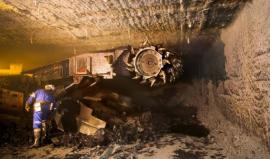 The Department of Employment and Labour has committed to strengthening collaboration and expanding outreach programmes to improve ex-mine workers’ access to social security and compensation benefits, including an estimated R10 billion in outstanding claims.