Compares proposal to apartheid-era segregation efforts
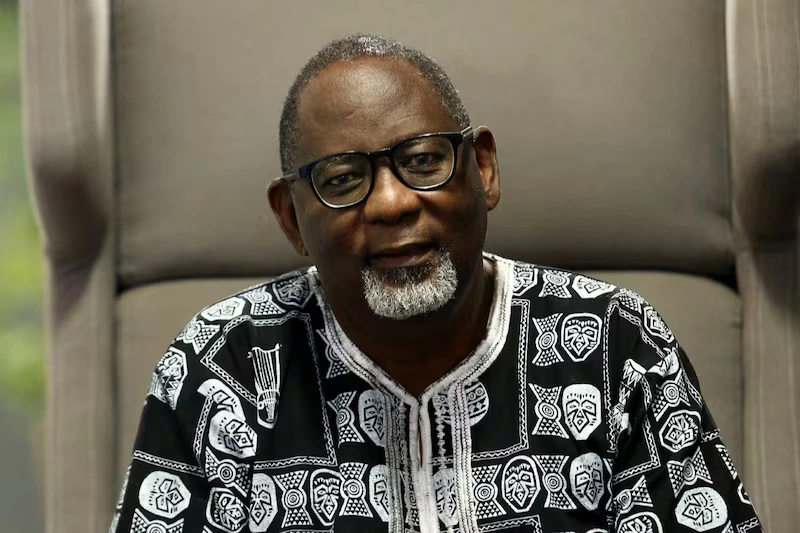
General secretary of the South African Federation of Trade Unions Zwelinzima Vavi accused March and March Movement founder Jacinta Ngobese-Zuma of promoting a form of ethnic division that he said threatened the country’s unity. Picture: (Masi Losi)
General secretary of the South African Federation of Trade Unions (Saftu) Zwelinzima Vavi has criticised March and March Movement founder Jacinta Ngobese-Zuma over comments calling for universities to be established along linguistic and ethnic lines.
Ngobese-Zuma’s remarks were made during a recent protest in central Durban, where she led demonstrators through the CBD towards the Inkosi Albert Luthuli International Convention Centre, the venue for the 46th Southern African Development Community (Sadc) Heads of State and Government Summit.
In a video circulating on social media, Ngobese-Zuma questioned why communities could not establish their own institutions, drawing comparisons with AfriForum’s links to a new university, its private prosecution initiatives and other structures.
Ngobese-Zuma said communities should consider establishing their own institutions and universities that teach in their respective languages.
“Why can’t we have our own stuff that we do for ourselves? If we need to learn from white people then we’ll learn from them, and if we have to learn how to have our own universities that use our own languages, so be it,” she said.
“There’s nothing [wrong] with us saying there is a university for Zulu, Xhosa, Pedi, Tshwana, Tsonga. Everyone can have their own university.”
What she is expressing is a dangerous desire to Balkanise South Africa along ethnic and linguistic lines, to turn our diversity into separate political and territorial enclaves
— Zwelinzima Vavi, Saftu general secretary
Her comments drew a strong response from Vavi, who rejected the notion of universities being established for particular ethnic or linguistic groups.
“There is no such thing as a ‘university of the people who speak isiZulu’ in the first place. Our universities are South African institutions, open to all South Africans regardless of language, ethnicity or province,” Vavi said in a social media post.
He accused Ngobese-Zuma of promoting a form of ethnic division that he said threatened the country’s unity.
“What she is expressing is a dangerous desire to Balkanise South Africa along ethnic and linguistic lines, to turn our diversity into separate political and territorial enclaves,” he said.
Vavi drew parallels between the proposal and the apartheid government’s use of segregation and ethnic divisions.
“Colonialism and apartheid tried precisely this through segregation, Bantustans and the deliberate manipulation of ethnic identities to divide and rule. They failed to permanently fracture South Africa and those attempting to revive the same poisonous politics of ethnic division will fail again,” said Vavi.
He said South Africa’s diversity should be regarded as a shared national asset rather than a basis for creating separate institutions or territories.
“We must defend a united, non-racial and democratic South Africa in which isiZulu, isiXhosa, Sesotho, Tshivenda, Afrikaans and every other language belong equally to all of us. No ethnic group owns a province, a university or any part of this country,” he said.
“South Africa belongs to all who live in it. We will not allow it to be Balkanised,” said Vavi.
The meeting between Ngobese-Zuma’s March and March organisation and AfriForum resulted in an agreement to establish a joint working group.
The two organisations agreed to co-operate on issues including crime, illegal migration and socio-economic conditions despite their differences on a range of political and ideological issues.
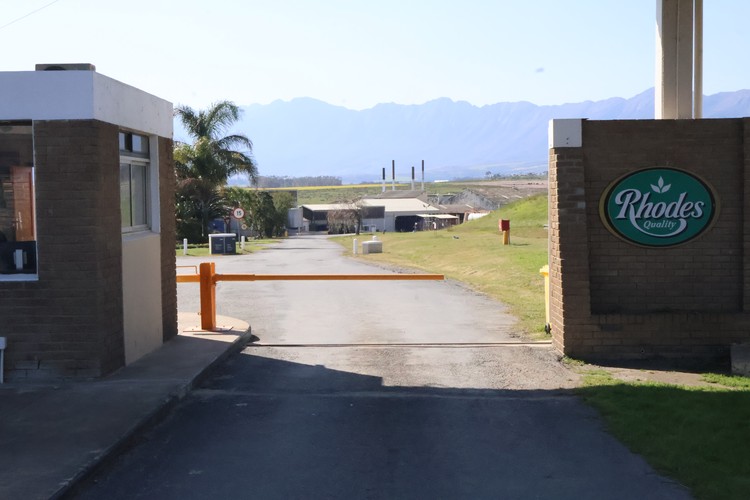
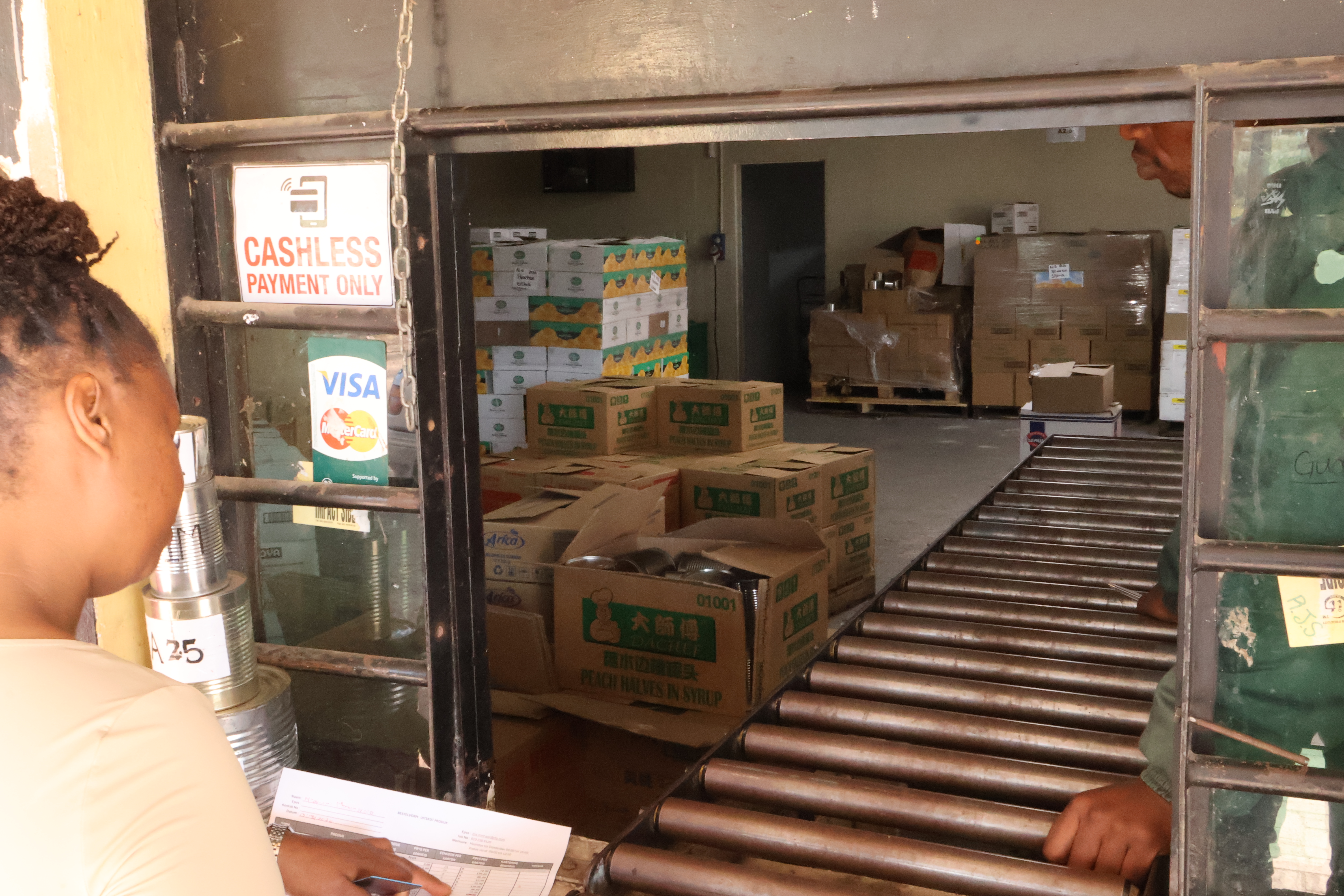
Life in Tulbagh has centred on the fruit canning factory for generations. Photos: Greg Dor
For more than 70 years, life in the small Western Cape town of Tulbagh has centred on the fruit canning factory. The rhythm of the fruit seasons determined when people worked and earned, when shops were busy, and what food families could put on the table. Now the factory is facing closure, threatening not only thousands of jobs but a way of life that generations of people in the valley have built around it.
The factory has been a major source of work since it was established in 1954. for generations of workers. Some are from Tulbagh and nearby towns like Gouda, Wolseley and Saron; some who travel from the Eastern Cape, following the seasons for apricots, peaches, pears, and guavas.
According to COSATU, the factory employs more than 3,500 people. Very few are permanent: most are seasonal or work on fixed-term contracts which are renewed.
Premier Group bought the plant from Rhodes Food Group in March, only to announce soon afterwards – just months before the main season starts in November – that it would be closed.
In a statement earlier this month, Premier said the business was no longer sustainable. About 90% of the factory’s production was exported, it said, “making the operation highly dependent on global demand and international competitiveness. Demand has declined sharply, year on year.”
Premier said it recognised that this was “a deeply difficult and uncertain time for affected employees”, many of whom had given years of service to the factory. “The company understands the impact that this process may have on employees, their families and the broader Tulbagh community, and is committed to managing the process with care, respect and transparency.”
The decision has created uncertainty far beyond the factory gates. Factory workers fear the loss of their livelihoods; some have already lost them. About 2,000 farm workers’ jobs are also at risk. Producers are appealing for time and scrambling for solutions before the coming season. Community organisers are already dealing with increased demands for food and other basics. Local businesses, taxi operators and informal traders are concerned about revenue that is heavily dependent on factory workers. And young people who have traditionally relied on the factory for their first jobs are wondering where they will go.
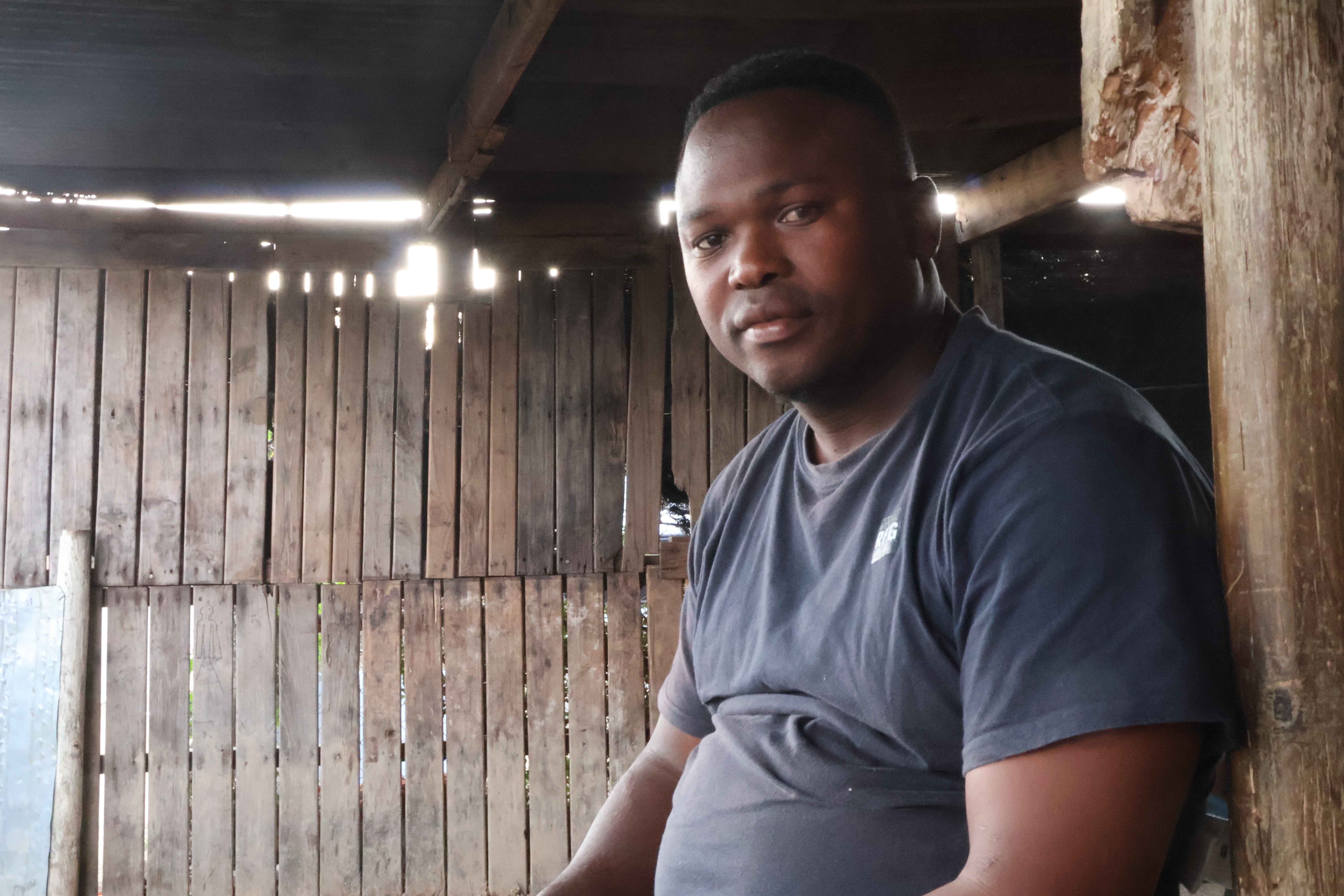
Siya Ndzongana, his wife and his brothers all work at the factory, as did his father.
Generations of workers
Siya Ndzongana, a shop steward at the Agricultural Food and Allied Democratic Workers’ Union (AFADWU) has worked at the factory since 2010. His wife works there; his older brothers worked there, and before them his father worked there. As a schoolboy living in the Eastern Cape, Ndzongana would travel to Tulbagh during the school holidays to work during the main fruit season, which runs from November to April or May.
“In the middle of November we would finish exams and come for holidays to work in the factory. That place has a history for us,” he said.
Ndzongana started as a general worker, then became an operator and driver before being promoted to supervisor. He was employed on fixed-term rolling contracts, but he has not been called back by management since the season ended in May. And his brother, whose family lives in the backyard of Ndzongana’s house, has been told he need no longer come to work.
Ndzongana has turned the front of his RDP house into a car wash to supplement his income. But he says business has slowed because customers no longer have money to spend.
“At the moment I found some construction work, but it’s only been for a few weeks,” he said.
“The whole town has connections with that factory,” says Dinene Coetzee, whose mother and sister were seasonal workers at the factory. Many of the parents of children at the aftercare where she works are employed there.
For generations, the plant has also provided young people with an entry point to the labour market.
“When the matrics finish, they get the first option to get their first job as a seasonal worker,” Coetzee said. “Where will they go now?”
Alfonso Scheepers has worked at the factory for 12 years on fixed-term contracts. Although he works for most of the year, he signs a succession of short contracts — one for the main fruit season and others for work, such as labelling, during the off-season.
“I am not permanent but I work throughout the year. They call it an onlopende contract.”
He currently works as a forklift driver in the labelling department, which workers say is one of only two parts of the factory still operating. The other is the warehouse.
Many fixed-term workers have not had their contracts renewed. Others have been told that their contracts will expire in the coming months. Scheepers expects his current contract to continue until January while labelling is completed, but he doesn’t know what will be offered in terms of retrenchment.
“When I finish at the factory I will have to rely on my UIF, but that will run out soon. Then I will have to find a new job, but there are none.”
Scheepers and his wife both work at the factory. Together they support a household of six. They have been able to manage this by working different 12-hour shifts in the factory, where production runs around the clock.
“We don’t know where we stand,” he said.
R45 an hour
The lowest paid workers at the plant earn about R45 an hour, compared with the R30 minimum wage for farm workers.
Alungile Ntulo moved to Tulbagh from the Eastern Cape three years ago. She lives in an informal settlement near the town and has worked at the factory for the past three seasons, peeling fruit and removing stones.
“I need the work at the factory in the season, because it pays more than any other farms and because it lasts for more months,” she said.
Waiting outside the factory gates to process her UIF paperwork, she was unsure what to do.
“I can’t go back to the Eastern Cape,” Ntulo said. “I will have to stay in Tulbagh and look for other jobs.”
There is some work available on nearby berry farms, she said, but “the money there is not good and the season is short. And there are many people looking for those jobs. It is not easy.”
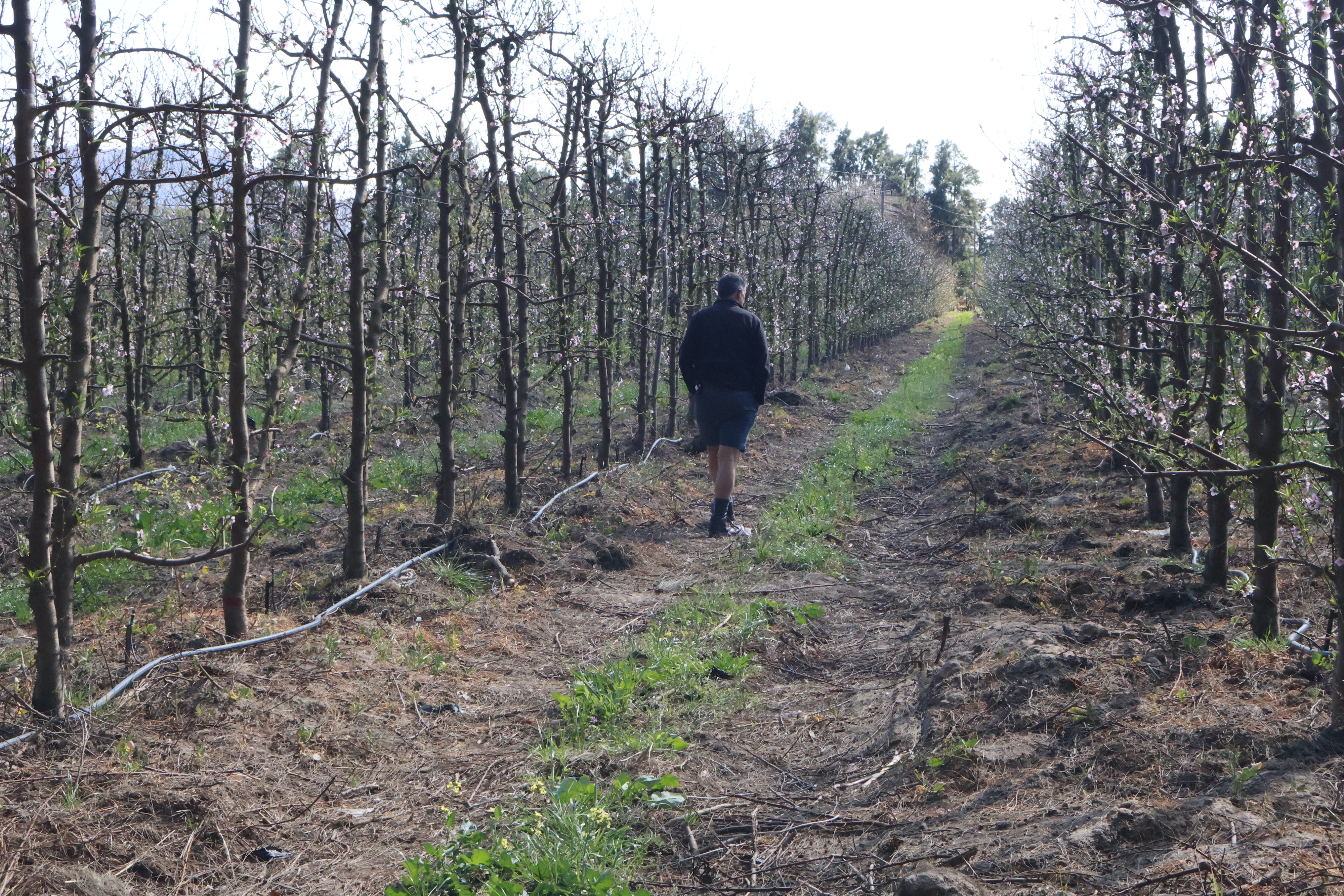
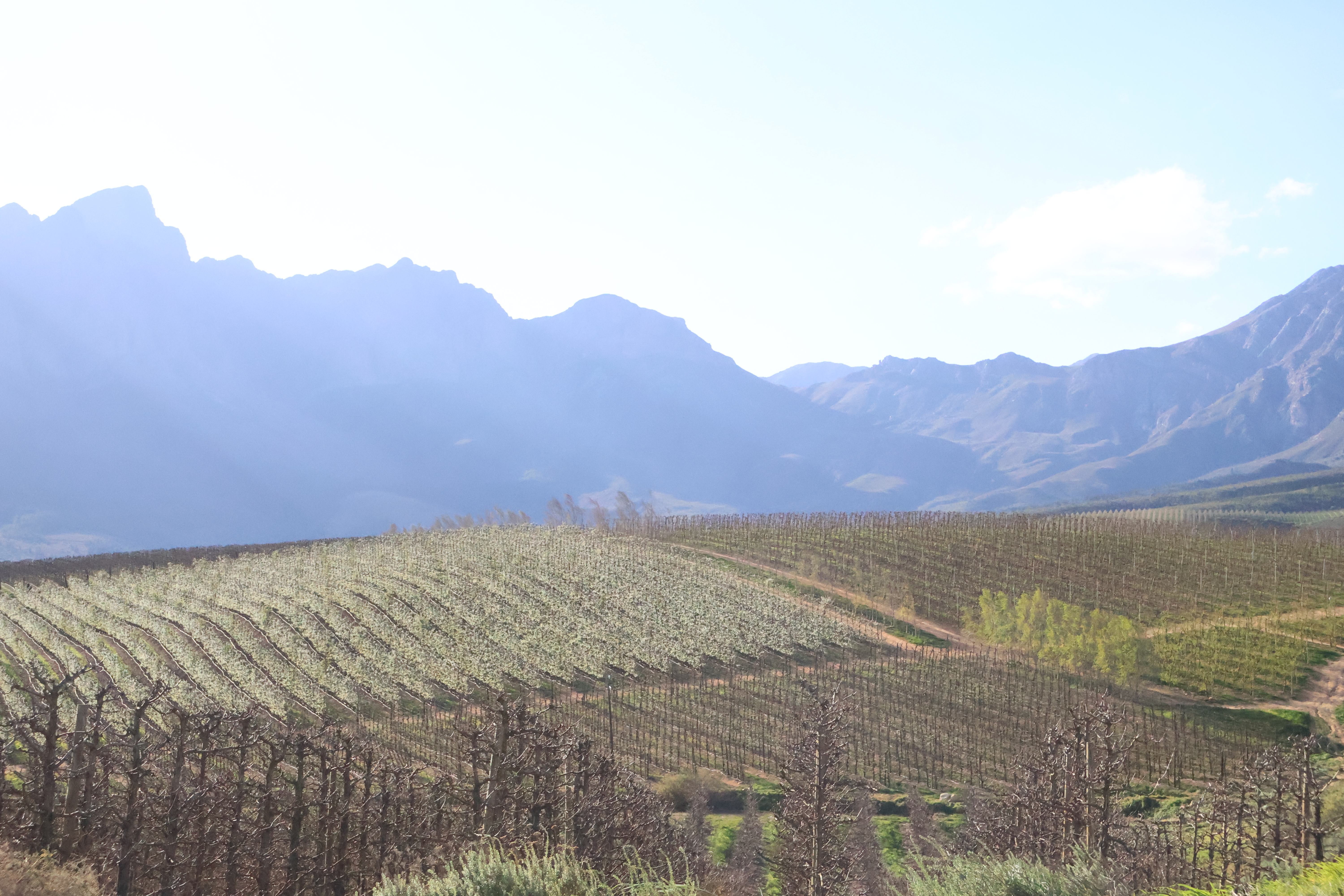
The peach trees are in blossom but the future of the harvest is uncertain.
A town that depends on the harvest
The factory’s seasonal cycle has shaped the economic life of Tulbagh.
This year, though, guava processing, which usually takes place in the off season, is not happening, nor is the factory being prepared for the next harvest in the usual way. Normally, workers service machinery during the winter months.
Ndzongana said Premier has a new approach: “The company says you only fix what is broken,” he said.
“Now they are just packing the old stock and selling everything. You can go to the factory shop and see, they are selling the tins at half price.”
“The entire Tulbagh is going to suffer, not only the employees, the farm owners and farm workers too.”
“The businesses are going to go down — the taxis, Spar, Shoprite, Pep, the garage. They wait for us workers,” he said.
Taxis that would normally transport workers are already sitting idle and shops are quieter, according to Ndzongana.
“When the workers get their money they get transported straight to the shops,” said Coetzee. The effects of the closure are already being felt, she said. “People are not coping and are unable to buy basics.”
At the aftercare, which she runs with a friend, she sees parents struggling. “People are coming to me asking for food, electricity, and stuff like that.”
She refers them to one of the 15 soup kitchens in the area run by members of the community. They are already under pressure. Coetzee fears things will get worse at the start of the next season, when the factory would normally start hiring.
“Rent even for a shack is about R500 to R1,000 per month,” she said. “And electricity is only getting more expensive.”
“This is a good community,” said Ndzongana. “There are issues, like anywhere. But we know each other, from the top of the hill to the bottom, there is respect.”
“If people are not working all of that can change,” he said.
“People are very worried and stressed,” said Coetzee. “Bills need to be paid and people need to eat.”
“And then the crime, drugs and drinking will only get worse. Because when there is nothing in the house, what are you supposed to do? And then that stress will also lead to more … violence in the house.”
Farmers under pressure
Charl Herbst, chair of the Canning Fruit Producers’ Association negotiations committee, farms about 15 minutes from the town. All the fruit he produces for canning goes to the Tulbagh factory. The farm has recently invested in pears and peaches for canning.
An orchard, he says, lasts between 25 and 30 years. “Now, we are faced with difficult decisions about whether to pull up that orchard, which also decreases the property value of the farm and affects our margins,” he said.
“The main thing we are asking for is time.”
The factory processes fruit from about 2,000 hectares. He estimates that each hectare requires one permanent farm worker to take care of it.
“So if the factory closes, we estimate that at least 2,000 permanent workers will lose their jobs. And many of those workers also live on the farms.”
Herbst said producers were told by Premier in March that it would be business as usual following the takeover.
Premier has since met producers and promised to pay them for next year’s harvest, he said. But this “is a short-term fix to a long-term problem”.
Diverting fruit for canning towards the fresh produce market could flood that market, on which the same producers rely.
Producers are also experiencing the same market pressures Premier has cited, including tariffs, declining consumer markets, and a weak rand.
Herbst said producers have two-year rolling contracts with Premier, meaning either party is required to give two-years’ notice, unless there is force majeure or a party exits the industry, which it appears Premier is trying to do.
“Premier needs to take responsibility. To all of the stakeholders, not only to their shareholders,” he said. “This is a value chain that was built over many decades. It is being destroyed in months.”
“The main thing we are asking for is time,” says farmer Charl Herbst.
A declining industry
According to a former factory manager, who did not want his name used, at its peak, the factory processed up to 78,000 tonnes of fruit. But the market has shrunk, under pressure from changing household preferences as well as pressure from tariffs and a strong rand. By last year, processing volume had fallen to 42,000 tonnes, he said.
Nyaniso Gqalaqha, AFADWU’s Western Cape provincial secretary, said the union wanted to know how the company had taken its decision before even operating the factory for one season. AFADWU says it has 115 members at the factory who are permanent and over 800 who are seasonal workers.
“How did they assess that the company is making profit or not, when they haven’t even worked a full season?”
“It seems like the company will get better returns from selling the equipment and stripping the factory,” he said. “Is it not a contradiction that they are complaining that they are not making money, but they are selling everything at half price?”
He said the union was also seeking answers from the Competition Commission, which approved Premier’s purchase of Rhodes Food Group.
The union has not yet reached the stage of auditing the company’s books and says it has so far only heard Premier’s explanation for the proposed closure. The next part of the retrenchment process is expected to deal with alternatives.
“Whatever they can come up with to rescue the business, we will accept in the benefit of our members and the community,” Gqalaqha said. “Closing the factory and selling the equipment is not an option.”
Workers say produce at the factory shop is being sold off at half price.
Langeberg shows an alternative — but it took years
Workers and producers see the Langeberg Foods factory in Ashton as an example of a possible ownership model. It is owned by a grower-led consortium, with the Ashton Fruit Producers Agricultural Co-operative (AFPAC) holding 40%, Norfund 40%, management 10% and the Langeberg Community Trust 10%, according to Anthony Dicey, chair of AFPAC and Langeberg Foods.
But Dicey said Langeberg cannot simply absorb the Tulbagh operation at short notice. Setting up the consortium took years, he said, and Langeberg is only in the first year of a three-year consolidation phase.
Gqalaqha said the union expected the Section 189 process to take about two months, and this was not enough to find a solution.
“We want at least a 12-month engagement,” he said. “We think that will be fair to everyone, including the business itself. It will give time to allow a potential buyer to come in.”
Invited to comment, Premier said: “Given that consultations with affected employees and recognised representatives are ongoing, our priority is to respect the integrity of that process and the people participating in it.
“At this stage, we believe it would be inappropriate to comment beyond the statement already provided. We remain committed to conducting the process with care, transparency and respect, and will communicate further where appropriate as the consultation process progresses.”
The union is planning a picket outside the factory on 26 August. The organisers also hope producers will participate.
“We want to negotiate nicely,” Gqalaqha said. “It will be a peaceful picket outside of the factory. Not a strike.”
“The people from Premier can sit there in Johannesburg and make these decisions; they don’t care about what will happen to Tulbagh,” said Ndzongana. “They don’t even know this community.”
Orchards stretch to the blue mountains of the Boland in the distance.
Private Education group, Advtech Limited (Advtech), has announced a three-year partnership with Cricket South Africa (CSA).
The agreement assigns Advtech as the official sponsor of the National U13, U16, and U19 Boys’ and Girls’ Youth Weeks, as well as Women’s Test Cricket.
In the agreement, Advtech will also serve as an associate partner of Men’s Test Cricket.
The education group said that this partnership aims to increase participation in the sport and actively contribute to developing South Africa’s future talent through educational initiatives.
“We are excited about teaming up with Advtech. This partnership goes beyond what happens on the field,” CSA CEO Pholetsi Moseki said.
“For CSA, it is important that our work has a meaningful social impact, and partnering with Advtech strengthens the connection between cricket, education and the development of young people throughout our pathway.”
He explained that introducing young boys and girls to cricket through the KFC Mini-Cricket program, the Youth Weeks programme, and the professional game is crucial.
He said that education plays an important role at every level of the sport and that this partnership aims to enhance support for the system and help prepare cricketers for opportunities beyond their playing careers.
As the Education Partner for the National Youth Weeks, Advtech said it is committed to investing in the sport and its young players.
Advtech said this initiative reflects the group’s broader dedication to shaping the lives and futures of young people throughout South Africa.
In 2025, the U16 and U19 Youth Weeks featured 850 players from all nine provinces and saw more than 350 matches.
In line with Cricket South Africa’s efforts to professionalise women’s cricket, Advtech announced plans to enhance the pathway to elite-level play by implementing specialised girls’ cricket programmes in select schools.
“Our partnership with Cricket South Africa extends across the sport, from grassroots to the elite Men’s and Women’s teams,” said Advtech CEO Geoff Whyte.
“It represents a powerful investment into South Africa’s most inclusive sporting code that will also significantly benefit our brands,” he said.
Advtech is hitting sixes
JSE-listed Advtech anticipates a substantial increase in earnings for the six months ending in June 2026.
In a voluntary trading statement released earlier this month, the company projected that its headline earnings per share for this period would rise between 13% and 18%.
This would result in earnings of 127.4 to 133.3 cents per share, compared with 113 cents in the previous interim period.
Advtech owns several well-known private education institutions, including Crawford International, Trinityhouse, Pinnacle Colleges, and the newly launched Emeris.
In addition to operating in South Africa, the company has a presence in Kenya, Ethiopia, Botswana, and Ghana.
With a market capitalisation of R26 billion, Advtech is valued higher than major South African brands such as SPAR and Pick’n Pay, as well as other publicly listed private education groups.
After Curro’s sale and delisting, Advtech leads the private education sector, ahead of Stadio Holdings and the Pembury Lifestyle Group.
At the beginning of 2026, the group reported nearly 120,000 students enrolled across 122 schools.
However, the company acknowledged that it faces a challenging 2026 due to South Africa’s uncertain economic outlook, characterised by persistently low growth and high unemployment.
This situation has also created a skills shortage, resulting in a strong demand for quality education despite the prevailing economic pressures.
“With the public education system facing declining quality and increasing space constraints, demand for quality private education has grown,” it said.
Failure to resolve branch-level disputes could see some wards without candidates in elections
The ANC in the Eastern Cape is in a race against time to resolve branch-level disputes or risk contesting parts of the province without councillor candidates.
Only 10 days are left before the Electoral Commission’s (IEC) August 28 deadline, which requires all political parties and independent candidates to submit their lists before the 5pm cutoff.
The commission warned that there would be no room for late submissions.
With the IEC deadline looming, the party is under pressure to resolve a number of branch general meeting disputes.
At the weekend, an ANC provincial list conference at the East London ICC had to be abruptly halted after disgruntled branches from the Alfred Nzo and Chris Hani regions threatened legal action if the gathering went ahead while disputes remained unresolved.
The conference was to finalise and adopt the electoral candidate lists.
Those invited included all provincial list committee members and those serving in the regional interview and vetting panels, office bearers of all ANC regions in the province, delegates from the provincial ANC youth, women and veterans’ leagues, and those from alliance partners Cosatu and Sanco.
A senior ANC insider said on Monday that almost 180 branch general meeting disputes had been lodged and while admitting many of these had been resolved, about 50 remain outstanding.
The disputes were mainly from the Chris Hani, Alfred Nzo, OR Tambo, Dr WB Rubusana in Buffalo City Metro and Amathole regions, with those from the latter two the subject of legal challenges before the courts.
The ANC insider said in some of the resolved cases, branch general meetings had been reordered.
This meant that the process to select councillor candidates had to start afresh.
“The party is in a serious race against time to finalise its candidate list for these upcoming elections,” the insider said.
“We are at risk of not fielding candidates in some areas because of the ongoing disputes which are yet to be fully resolved.
“The process [of BGMs being reconvened] could further be delayed by those who will not be happy about such outcomes and who would appeal against those processes…
“It’s a worrying situation that gives us sleepless nights as the organisation.”
Another senior party member said while some of the regions had compiled their candidate lists, “such submission process faces serious delays, as we do not have a provincial structure to rubberstamp such lists”.
“This will lead to further delays in us submitting to the IEC.
“With the deadline looming, the entire province might be in danger of not submitting candidates if our internal disputes are not resolved soon.”
The ANC has been without an Eastern Cape leadership after the high court in Makhanda declared the establishment of the party’s provincial task team (PTT) unlawful and invalid.
The PTT was announced after the term of office of the provincial executive committee (PEC) ended.
The court had also barred those appointed to the task team from representing the provincial ANC in any meeting or conference, while all decisions the PTT had taken in the few weeks of its existence were declared null and void.
The party has since lost its leave to appeal the judgment in the high court in Makhanda. However, on Monday, the ANC filed their notice of motion to appeal the decision in the Supreme Court of Appeal.
ANC acting national spokesperson Nonceba Mhlauli said: “The ANC will announce the outcome of its candidate selection processes via the secretary-general [Fikile Mbalula] this week.
“We will do a comprehensive briefing on the process … Just to be clear, there is no province of the ANC that is at risk of missing any IEC deadline.
“As previously stated, we are engaged in the legal process on the matter of the PTT and shall await those processes.”
The briefing is scheduled to take place on Tuesday.
In correspondence to Mbalula, dated August 13, attorneys representing two disgruntled ANC members from the Alfred Nzo and Chris Hani regions threatened legal action if the list conference was hosted in the absence of the party’s PEC.
They argue that the June high court judgment nullifying the PTT meant the PEC was reinstated.
The attorneys, who could not be reached late on Monday, in correspondence said Mbalula did not have the requisite delegated authority and power to perform the functions of the PEC.
ANC veteran Mavuso Msimang on Monday cast doubt over the party’s election campaign in the province, as party disputes continued.
Speaking on the sidelines of the Rhodes University Samora Machel symposium in Makhanda, Msimang said the constant legal battles that the party was facing were “tearing the party apart”.
He said it was painful to see the party “in such a poor state of affairs”.
“It is very saddening that the ANC has no leadership structure in the province,” Msimang said.
“The Eastern Cape is one of the most important provinces for the ANC historically, and to have these kinds of factions taking place is a terrible statement.”
While Mavuso was optimistic that the party would do better in the upcoming elections, he said this was a high mountain to climb.
Despite Boxer being one of South Africa’s leading food retailers, many employees experience exploitation and unequal treatment, the union Saccawu says. Picture: (Supplied)
Story audio is generated using AI
The South African Commercial Catering and Allied Workers Union (Saccawu) has criticised JSE-listed retailer Boxer for what it described as the unfair treatment of its workforce.
Saccawu deputy general-secretary Jerrie Mmoneri called on the Pick n Pay group-owned retailer, which has a market capitalisation of about R33bn, to provide safe and reliable transport for employees required to work late-night and early-morning shifts, and to pay employees for overtime worked, among other demands.
Business Day reported in July that Boxer was on track to deliver its ambitious store expansion strategy, with the discount retailer opening 19 new stores during the first 20 weeks in the second half of its 2026 financial year.
The retailer, spun off from Pick n Pay in 2024, saw its turnover for the 20 weeks ended July 19 grow 7.2%, slowing from the 10.9% growth reported in the second half of its 2025 financial year. Boxer has grown by more than 15% since listing on the JSE, taking its market capitalisation to just more than R33bn, more than double the value of parent company Pick n Pay, which is now valued at R13bn.
“It is unacceptable that workers who play a vital role in the company’s success continue to be denied basic rights, fair working conditions and equal employment benefits,” Mmoneri said.
“We call on Boxer to provide reliable transport from the workplace directly to employees’ homes for all qualifying shifts. We are equally disturbed by reports that employees are instructed to clock out at the end of their scheduled shifts and then return to continue working without pay,” said Mmoneri.
“If proven, this practice amounts to unpaid labour and is a serious violation of workers’ rights and South African labour legislation. Every employee deserves to be paid for every hour worked.”
Mmoneri said for more than a decade flexitimers — part-time employees working flexible shifts, such as till packers and cashiers — “continue to be excluded from benefits enjoyed by permanent employees. While they receive funeral benefits, they are denied access to performance bonuses, provident fund membership and meaningful medical aid benefits”.
“This injustice has devastating long-term consequences. Many employees retire after decades of loyal service with no retirement savings, leaving them financially vulnerable. This stands in stark contrast to workers in comparable retailers who are able to retire with meaningful retirement benefits after years of service.”
Saccawu’s demands include the immediate provision of safe and reliable transport for employees working late-night and early-morning shifts, an end to all forms of unpaid work, and the extension of provident fund, medical aid and performance bonus benefits to flexitimers.
The Cosatu affiliate called on Boxer management to engage in what it said were “meaningful negotiations” to resolve the issues.
Boxer has been approached for comment, which will be added once received.
Marikana exposed the fault lines between labour, power and profit, leaving families to bear the deepest costs
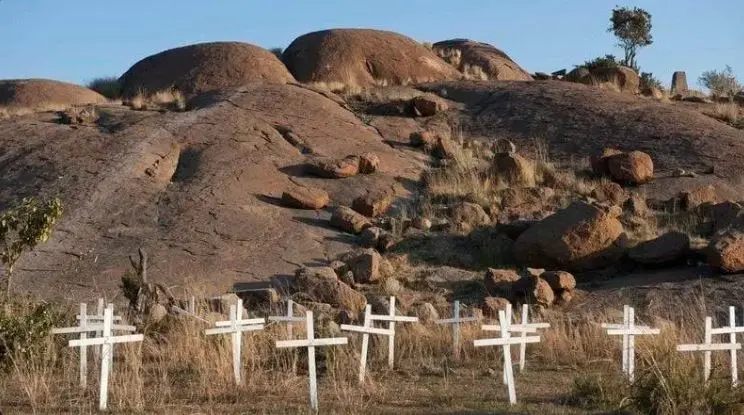
Fourteen years after the tragedy at Lonmin’s platinum mine in Marikana, the 16 August 2012 massacre remains a significant event in South Africa’s democratic history.
The state’s killing of 34 striking miners was more than just a failure in policing; it highlighted a serious crisis in the country’s political economy. Marikana revealed the weaknesses in South Africa’s post-1994 class compromise and underscored the fragility of its institutions.
State-corporate collusion and capital extraction
South Africa’s post-apartheid capitalist system relies on cheap black labour, historically supported by migrant labour systems.
At Marikana, Lonmin operated within this framework, prioritising profits and shareholder dividends over worker safety and fair wages. When miners organised an independent strike to demand a living wage, the state deployed the police service, not to mediate but to protect corporate interests and economic stability. The situation illustrates how the state functions as an arm of patriarchal-capitalist power, enforcing compliance through violence rather than democratic negotiation.
South Africa’s industrial relations were meant to balance capital growth with social fairness, aiming for shared prosperity in a growing economy. Marikana exposed this as a false promise. The political economy of the platinum belt depends on cheap, racialised migrant labour, low corporate tax contributions and aggressive profit-shifting by multinational companies. Firms like Lonmin amassed significant wealth while leaving workers in poor, informal settlements lacking basic sanitation and infrastructure.
It is essential to recognise that the R12 500 demand was not just a dispute over wages. It highlighted the organisation of migrant labour and the burden of sustaining workers that fell elsewhere.
Migrant labour systems depend on workers whose families remain in rural areas. These communities bear the domestic responsibilities needed to support workers’ lives away from the mine. The demand questioned whether the pay at the mine was enough to support the life it was meant to sustain.
The industrial relations system failed to address the inequalities because its focus shifted to maintaining stability for investors rather than redistributing economic power. Marikana demonstrated that capital and labour cannot negotiate shared prosperity peacefully while the economy remains rooted in colonial-era extraction.
The structure of South Africa’s labour relations, established under the Labour Relations Act, aimed to control class struggle through regulated collective bargaining. It relied on a supposed harmony among the state, organised businesses and formal labour.
However, Marikana indicated a serious decline in the system.
Crisis of representation and bureaucratic unionism
The rock drill operators’ strike began outside the usual bureaucratic collective bargaining channels. It disregarded a comfortable corporatism where major trade unions became disconnected from workers’ concerns. When miners demanded a
living wage of R12 500, they challenged not only Lonmin’s profits but also the legitimacy of a rigid bargaining system.
Their disconnection stemmed from a crisis of representation. The National Union of Mineworkers’ (NUM) position in Cosatu and the ANC-led Tripartite Alliance created tension between representing workers in conflict with capital, which the state protected and operating within a political alliance tied to the state. The rise of independent worker committees revealed a lack of meaningful representation. Also, the state’s use of deadly force indicated what could happen when institutional methods failed to suppress class resistance.
For nearly 20 years after 1994, South Africa celebrated the strength of labour because of its partnership with the governing ANC. Marikana violently shattered the belief, showing that the working class’s nominal power was constrained by its integration into state processes.
The traditional labour movement became ideologically divided, torn between loyalty to a liberation movement that became a governing party and the harsh realities of worker exploitation.
When workers took real action by organising outside established structures, they quickly found that state power was used to protect capital against labour struggles. Labour power proved conditional, permitted only within state-approved channels but met with violence when it threatened the status quo.
As the strike gained momentum beyond established bargaining structures, the miners were gradually depicted not as workers uniting for a labour issue but as a threat to public order and capital.
The night before the massacre, the then-minister of mineral resources, in discussing the situation with then Lonmin non-executive director Cyril Ramaphosa, asserted that it was “not a labour dispute but a criminal act”. The label had significant consequences.
Once the miners’ actions were framed as criminal rather than labour claims, their demands could be minimised by “concerns” over disorder. The shift meant that their form of organisation was not viewed through a lens of negotiation but through the need for containment. This led to one of the deadliest uses of force by the police since the Sharpeville massacre.
The aftermath: Widows and female dependants faced the immediate shock of the Marikana massacre, wrestling with bureaucratic hurdles for compensation while managing unpaid care work amid profound poverty. Photos: Paul Botes/File
The impact on widows and female dependants
South Africa’s capitalist-patriarchal system shifts the costs of industrial extraction onto women. While miners were the immediate targets of state-corporate violence, the structural shockwaves revealed the vulnerabilities faced by women as mothers, wives and primary caregivers. In a migrant labour economy, families are often separated, with women taking on all domestic and caregiving responsibilities in rural areas while men work in the mines.
When breadwinners were killed or imprisoned on 16 August 2012, the fragile division of labour crumbled. Widows suffered immediate financial loss, losing support and having to navigate patriarchal customs and bureaucratic obstacles to claim compensation or maintain their housing.
Additionally, the trauma of Marikana showed how public violence seeps into private life. Grieving women became the unseen bearers of grief, poverty and community instability, performing significant emotional and physical labour without adequate support from the state.
Viewing Marikana through a feminist lens reframes the massacre as not just a labour issue but as a violent expression of a system that exploits male labour while obscuring the
vital contributions and vulnerabilities of women.
Beyond the workplaces, the violence from Marikana affected families. This revealed how closely mining production connected to the maintenance of households and communities, which were often geographically distant from the mines. The massacre exposed the social relationships that mining depended on but that workplaces often ignored.
It also devastated rural households reliant on miners’ remittances, highlighting the deep economic vulnerabilities faced by the Marikana widows. Without income, the women encountered neglect from corporations and indifference from the state, struggling for basic reparations.
The massacre dismantled the economic and social security of families of miners, intensifying patriarchal power dynamics. In households centred on male migrant earnings, the loss or arrest of breadwinners triggered significant financial collapse.
Widows and female dependants faced the immediate shock, wrestling with bureaucratic hurdles for compensation while managing unpaid care work amid profound poverty.
Patriarchal structures in traditional communities and state systems often complicated women’s access to land, housing and financial support, exacerbating their marginalisation.
Moreover, the breakdown of the Tripartite Alliance, especially the collusion between the ruling party, capital and the NUM, showed how vulnerable democratic labour institutions can be.
Workers seeking representation outside established hierarchies faced brutal repression, signalling that institutional labour systems often prioritise control over dissent rather than protecting workers.
Marikana serves as a sharp critique of bureaucratic unionism, illustrating how institutional labour groups became disconnected from workers and overly influenced by state-capital partnerships.
To progress in today’s class struggle, labour must reflect on itself, dismantle top-down hierarchies, eliminate political favouritism and foster genuine grassroots solidarity.
Only by returning to worker-led organising can the working class reclaim its power, challenge modern capitalism’s structural imbalances and ensure that collective bargaining genuinely reflects workers’ interests rather than serving to uphold corporate and political authority.
Unfulfilled promise of democracy and national trauma
The psychological toll stretched beyond individual families, leaving lasting trauma in the wider community and South Africa as a whole. It underlined that for the black working class, the transition to democracy has left issues of personal safety and economic security unfulfilled.
Fourteen years later, Marikana stands as a stark reminder that without significant changes in
economic ownership and class power, the promise of liberation remains incomplete.
Ultimately, Marikana demonstrated that South Africa’s move towards democracy left its capitalist foundations intact. The massacre exposed how corporate-state collusion exploits human lives to sustain an unequal economy, shifting the burden of production onto the domestic and emotional labour of bereaved families.
We must continue to honour the tragic loss of the 34 miners at Marikana, stand with their families and advocate for justice, dignity and the fair advancement of workers’ rights without state violence or corporate oppression.
Sinazo Kunene is a master of arts graduate in anthropology in the department of sociology and anthropology at Nelson Mandela University. Lubabalo Cengani is a master of arts graduate in political studies in the department of history and politics at Nelson Mandela University