This comes as it added its voice to COSATU’s call for the suspension of retrenchment consultations at Premier Foods.
Sliced white bread. Image: pb29 on Pixabay
The Agricultural Food and Allied Democratic Workers Union (AFADWU) said investors across the country should consider the plight of the Tulbagh community.This comes as it added its voice to the Congress of South African Trade Unions (COSATU)’s call for the suspension of retrenchment consultations at Premier Foods.
The union has also echoed COSATU’s claims that the company is not honouring a merger agreement that states that retrenchments should not be affected within the first three years.
Premier Foods announced its proposed closure earlier in August, putting the livelihoods of workers and the wider community at risk.AFADWU’s Nyaniso Gqalaqha said employees are not only panicked about the livelihoods at stake, but also about the debts they may need to service.
Gqalaqha has extended the call to anyone who may be able to assist the affected workers and community.
“We believe that the other stakeholders or the people that are willing to assist. They can be touched with this situation, the investors across the country. They must come forward to assist. This is going to be a big effect to the community of Tulbagh.”
Sibanye-Stillwater says workers’ wages have continued to rise, with mineworkers who fought for a R12 500 wage in 2012 now earning more than double that amount, 14 years after the Marikana massacre.
Lonmin had committed to reaching the R12 500 for entry-level workers by 2017. Sibanye-Stillwater took over in 2019.
As the Association of Mineworkers and Construction Union (AMCU) prepares for the 14th Marikana massacre commemoration, the union’s Labour Party takes the centre stage ahead of this year’s local government elections. https://t.co/u1DvLsPgUxpic.twitter.com/kpcrVTOi1T
The company’s Stakeholder Relations Manager is Thabisile Phumo says they are currently on a five-year wage deal with their organised labour.
“Our basic salary is R20 000 for an entry-level employee. With benefits, this rises to R31 000, including other related benefits and a living-out allowance of R2 300 to enable employees who do not want to stay in mine accommodation to secure decent accommodation outside.”
VIDEO | Victory at last for Marikana platinum mineworkers
A sign seen at a police station. Image Credits: X@SAPoliceService
The Police and Prisons Civil Rights Union (POPCRU) says the police service is facing a number of challenges threatening its ability to effectively fight crime.
POPCRU members have convened at the Birchwood Hotel in Kempton Park for the Central Executive Committee meeting.
The five-day gathering comes at a particularly difficult time for the police service as the Madlanga Commission lays bare serious allegations of corruption and criminality within its ranks.
POPCRU says the over 1 million hopefuls competing for 5 500 spots to become an officer highlights the unemployment crisis in the country. Spokesperson Richard Mamabolo says this is one of the challenges the union is grappling with.
“There’s a high unemployment in the country and we think that there should be some form of a multifaceted approach to us dealing with unemployment so that you do not only have such a large number of people focused on getting jobs within the police service as opposed to many other areas and that of course demonstrated that there is definitely unemployment in the country as has been related by the latest unemployment statistics.”
Mamabolo says interventions such as releasing crime statistics more frequently have not delivered the intended benefit of making it easier to track and tackle crime.
“We’ve been seeing challenges where there’s been well understaffing in police of course the numbers are continue going down yet the population keeps rising on a regular basis. Similarly, with the DCS you know we’ve got a declining staff complement while the prison population keeps going higher so it’s going to be important that as we deal with those things. We look into the capacity that they have because there is also challenges around the uneven allocation of resources. So, you might have manpower but go to any police station especially within rural areas as compared to those within affluent areas, have got all the resources yet those within townships and rural areas have got shortages of vehicles.”
Mamabolo says these challenges have created the impression that police are unresponsive to the challenges facing communities.
The two largest unions at Prasa – reacted with fury after the rail operator announced plans to retrench workers.
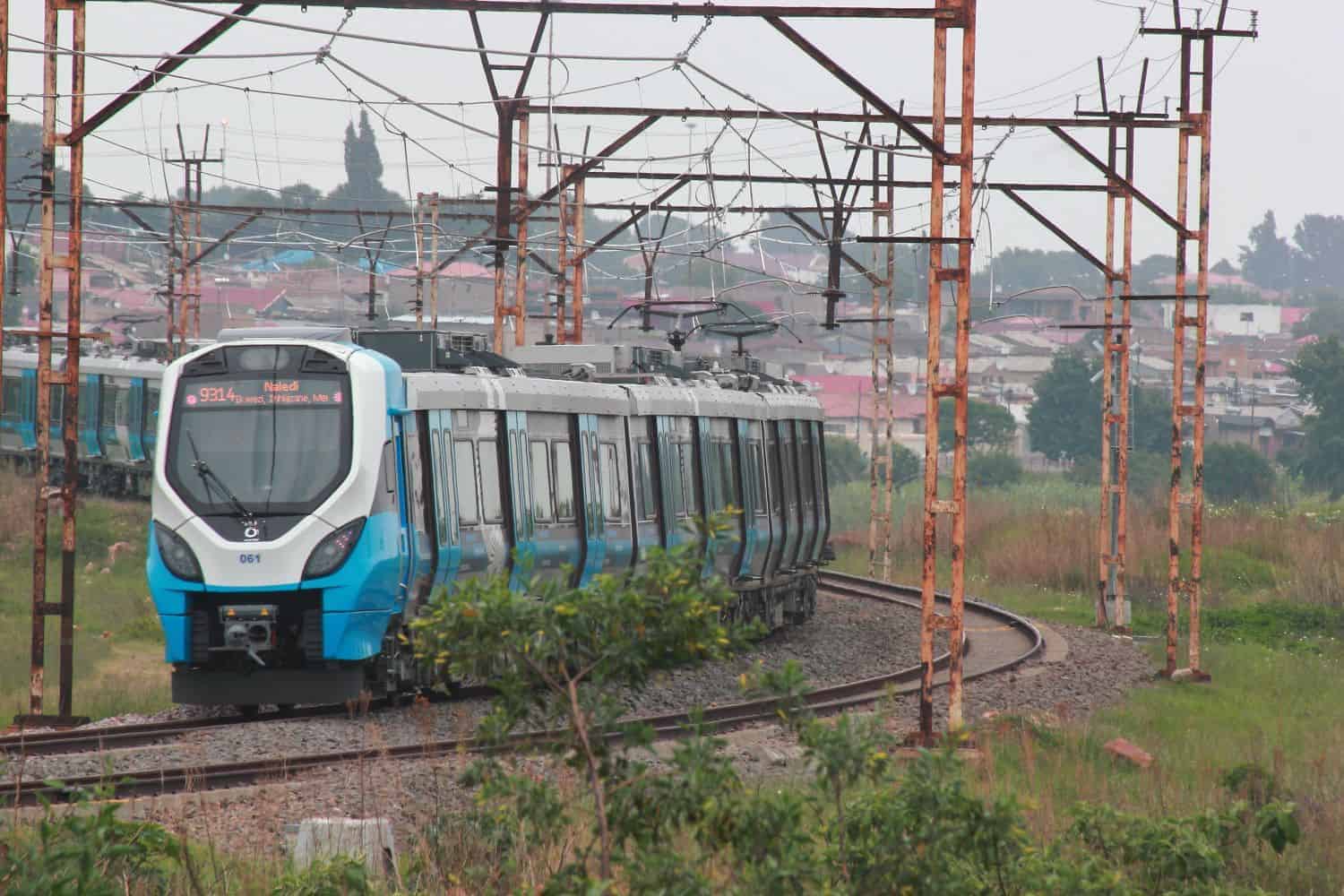
A ministerial task team has been appointed to explore alternatives to retrenchments at the Passenger Rail Agency of South Africa (Prasa). Picture: Gallo Images/Fani Mahuntsi
A ministerial task team appointed to explore alternatives to retrenchments at the Passenger Rail Agency of South Africa (Prasa) has made headway, with early retirements, staff placements and asset‑transfer talks already reducing the number of jobs at risk in the long‑distance passenger services.
Transport Minister Barbara Creecy appointed a section 189 Ministerial Task Team to limit the number of employees to be retrenched and to find alternatives to retrenchment within the Long-Distance Passenger Services at Prasa.
Fury
The South African Transport and Allied Workers Union (Satawu) and the United National Transport Union (Untu) – the two largest unions at Prasa – reacted with fury after the rail operator announced plans to retrench 508 workers, citing “severe financial and operational constraints” in its long‑distance passenger services.
The task team was appointed on 2 June 2026 and comprises the Department of Transport, organised labour, and Prasa’s management.
Update
Creecy spokesperson Collen Msibi said in its recent update report to the minister that the Task Team has made significant progress.
43 employees took early retirement packages (above statutory requirements), effective 1 August 2026.
102 employees were matched and placed into vacancies across PRASA divisions, also effective 1 August 2026, retaining skills within the organisation.
208 Protection Services employees were ring‑fenced pending asset transfer talks with Transnet; a formal notice has been issued, and the process is underway.
Affected employees have been formally informed of these developments by Prasa.
Consultation
Msibi said Prasa has initiated a consultation process in terms of Sections 189 and 189A of the Labour Relations Act in November 2025, following a business decision to address excess staffing levels within its Long-Distance Passenger Services.
“The consultation process was facilitated by the CCMA and included formal engagements with UNTU and SATAWU.”
Msibi said Creecy has extended the Section 189 notice period until the end of August 2026 in order to allow the Task Team to explore alternatives for the remaining 227 employees.
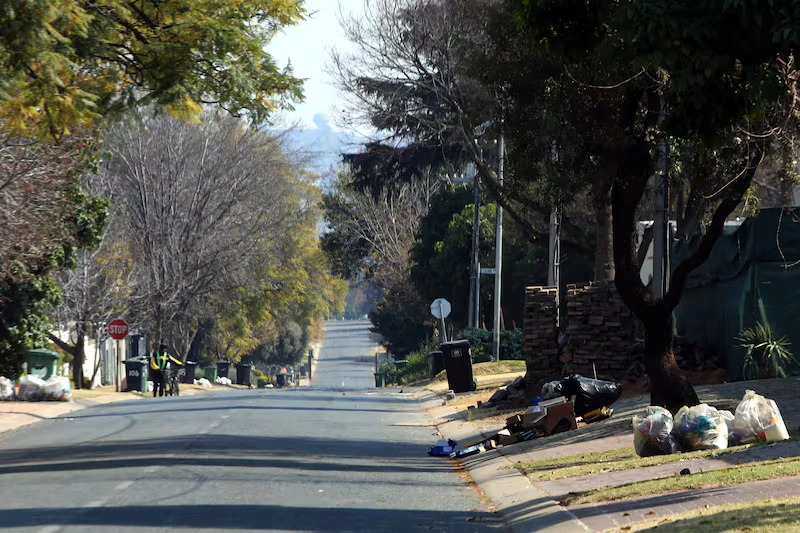
Refuse piles up in Parkmore, Johannesburg, following a missed collection, on July 29 2026. Picture: Refilwe Kholomonyane (Refilwe Kholomonyane)
Story audio is generated using AI
A scheduled meeting between Pikitup and more than 300 casual workers was postponed at the eleventh hour on Wednesday after the City of Johannesburg’s waste management provider said it had reached an agreement with the workers, who are threatening to strike if they are not given permanent employment.
This comes as Pikitup seeks a court order interdicting the casual workers from disrupting operations at its 12 depots across Joburg’s seven regions.
“The agreement has been reached, but it is not for public consumption at the moment,” Pikitup spokesperson Anthony Selepe told Business Day.
According to extracts of minutes of a meeting between city officials, Pikitup and ad hoc casual worker representatives, dated August 6, which Business Day has seen, it was noted that subject to operational requirements, affordability, funded vacancies and the necessary approvals, “Pikitup may consider the phased recruitment of qualifying casual workers against suitable vacancies arising through natural attrition, including resignations and retirements”.
Meanwhile, in court papers seen by Business Day, Pikitup seeks an order interdicting the casual workers from “unlawfully disrupting or calling for the disruption of operations” at Pikitup’s depots including Norwood, Southdale, Orange Farm, Avalon, Roodepoort, Zondi, Marlboro, Midrand, Waterval, Central camp, Randburg and Selby.
Pikitup also wants the casual workers to be interdicted from intimidating, threatening, assaulting or attempting to assault any person entering, leaving or lawfully present at the depots; damaging or inciting damage to Pikitup’s property, vehicles; and barricading depot entrances, exits or access routes.
The casual workers, who are employed by Pikitup service providers, have been protesting for weeks, demanding permanent employment contracts from the metro’s waste management entity.
They blocked entrances to the Marlboro, Waterval, Roodepoort, Randburg, Orange Farm and Avalon depots recently, preventing waste collection vehicles and city employees from carrying out scheduled services.
The workers’ demand has divided labour and economists, with some saying the metro is not legally obliged to hire them while others argue that the workers have a legal right to be employed.
Selepe previously said there is no money to recruit the casual workers and the city, which has a budget of R97.1bn for 2026/27, has frozen employment. He said even if the waste collection company wants to employ them, it is impossible due to the city’s financial constraints.
Joburg, South Africa’s biggest metro and financial and economic hub, has a moratorium in place regarding recruiting personnel.
Desk and chairs seen in a classroom at a school. Image Credits: Unsplash
The Congress of South African Trade Unions (Cosatu) has expressed outrage at the more than 27 000 vacant teaching posts, while the country is battling high levels of unemployment.
This follows a written parliamentary reply from Basic Education Minister Siviwe Gwarube that more than 2 600 teaching posts have been frozen across the country as at 30 June this year. She, however, says this should not be interpreted as all were deliberately frozen due to budget constraints.
Gwarube indicated that the Eastern Cape tops the list with more than 5 000 vacancies, followed by KwaZulu-Natal with 4,700 and Gauteng with more than 3 900.
Cosatu has expressed concern, saying the government is not moving fast enough to address this challenge, as it poses a risk on the learning and teaching processes.
Cosatu’s Communication officer, Nonzuzo Dlamini says, “We emphatically request that both National Treasury and the Minister of Education refrain from hiding behind oblivious behavior to these shortages that overload current educators, inflate class sizes and compromise student learning.”
The National Professional Teachers’ Organisation of South Africa (NAPTOSA) says it is concerned by the number of frozen teaching posts in the Department of Basic Education. NAPTOSA’s executive director Basil Manuel says these figures are worrying. “We are more concerned about the fact that there are 2 700 posts that have been frozen and that worries us what are the reasons for this and of course because it means that if they are frozen people haven’t been appointed into these not even in a temporary nature.
X | SABC News | The Congress of South African Trade Unions (Cosatu) says the country’s unemployment rate is alarming. The labour federation was reacting to the latest Quarterly Labour Force Survey, which shows the official unemployment rate has risen to 33.6%. https://t.co/8BxxfqD0bfpic.twitter.com/DotbNqqXVJ
The Congress of South African Trade Unions (Cosatu) says the country’s unemployment rate is alarming. The labour federation was reacting to the latest Quarterly Labour Force Survey, which shows the official unemployment rate has risen to 33.6%. https://t.co/8BxxfqD0bfpic.twitter.com/DotbNqqXVJ