Basic Education Minister Siviwe Gwarube reveals a massive provincial breakdown of unfilled educator roles, prompting labor unions to demand immediate intervention from the National Treasury.
SOUTH AFRICA — Labor representatives are expressing severe frustration over the revelation that there are more than 27,000 vacant teaching posts across South Africa, a staggering figure that stands in stark contrast to the nation’s ongoing battle with high unemployment rates. The scale of the national teacher shortage was brought to light following a written parliamentary inquiry, exposing critical gaps in the education sector that unions warn are compromising student learning and overburdening current staff.
Provincial Breakdown of the Teacher Shortage
The alarming statistics were officially confirmed by Basic Education Minister Siviwe Gwarube in a formal written response to a question posed by the Patriotic Alliance. According to the minister, the data reflects the situation as of the end of June this year. She noted that while the landscape of public sector employment is fluid—with positions constantly being vacated and filled—the current snapshot highlights severe regional deficits.
The Eastern Cape currently bears the heaviest burden, topping the national list with over 5,000 unfilled teaching positions. KwaZulu-Natal follows closely in second place with 4,700 vacancies, while Gauteng ranks third with more than 3,900 open posts.
Labor Unions Demand Treasury Intervention
The disclosure has triggered a fierce backlash from labor organizations, including the Congress of South African Trade Unions (COSATU), which voiced deep concern over the government’s sluggish response to the crisis. Union representatives emphasized that the persistent teacher shortage has a profoundly negative impact on both educators and learners.
In a strongly worded statement, labor leaders demanded that the National Treasury and the Department of Basic Education stop hiding behind “oblivious behavior.” They argued that ignoring these shortages directly leads to overloaded teachers, unmanageable and inflated class sizes, and a compromised quality of education for students nationwide.
The Controversy Over Frozen Educational Posts
Adding fuel to the controversy, the ministerial reply also indicated that as of June 30, thousands of educator posts had been officially frozen. While Minister Gwarube clarified that it should not be interpreted that every single frozen post was deliberately withheld due to strict budget constraints, the revelation did little to quell union anxieties.
Another prominent labor federation highlighted specific alarm regarding 2,700 posts that remain entirely frozen. “What are the reasons for this?” a spokesperson asked, pointing out the absurdity of leaving positions unfilled—even on a temporary basis—while qualified educators remain jobless and classrooms overflow.
In response to the mounting pressure and questions surrounding financial limitations, the Department of Basic Education has outlined its next steps. Minister Gwarube stated that she will be instructing provincial education departments to submit verified, detailed information specifically regarding any vacancies that have been deliberately frozen as a direct result of budget constraints.
As the country grapples with the dual crises of unemployment and educational resource allocation, all eyes remain on the National Treasury and provincial departments to see how swiftly these critical vacancies will be addressed.
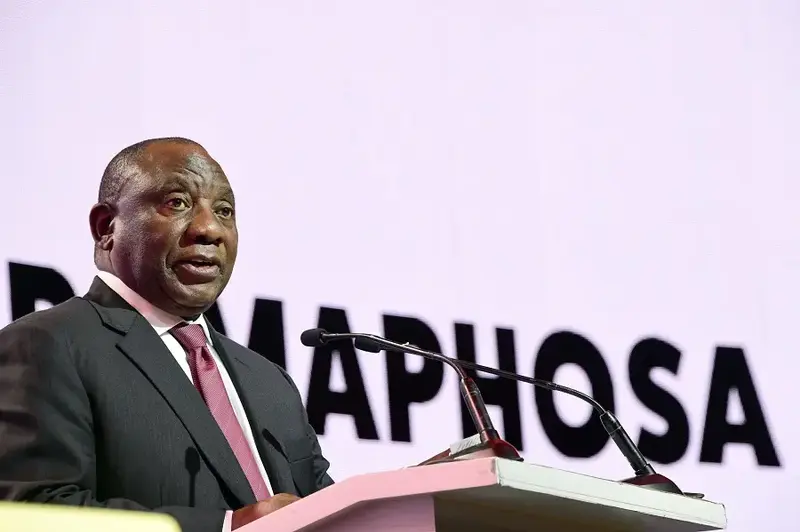
Fractured alliances, a resurgent MK, a compromised KZN lieutenant and an unresolved Phala Phala battle leave Ramaphosa facing his weakest election foundation yet
Cyril Ramaphosa enters the November 4 municipal elections weaker than at any point since he became ANC president.
The New Dawn is dead. The alliance is fractured, Jacob Zuma’s Umkhonto we Sizwe (MK) Party is advancing on ANC strongholds, his lieutenant in KwaZulu-Natal has been compromised by evidence before the Madlanga Commission, and his Phala Phala impeachment battle continues.
The election numbers are more damning. The ANC won 57.5% in 2019, down from 62.15% under Zuma in 2014, then fell to about 46% in the 2021 municipal elections – its first time below 50% nationally – before collapsing to 40.18% in 2024 and losing its parliamentary majority.
It has not recovered in a single election under Ramaphosa – though without his appeal, the results would have been worse.
November will be more than a contest over municipalities. It will be a referendum on Ramaphosa’s eight years as ANC president and his promise to rescue the party from corruption, division and decline.
A poor result will not remove him from the Union Buildings. But it could destroy his authority, accelerate the battle to succeed him and leave him serving out his term as a lame-duck president.
This could be Ramaphosa’s Waterloo.
When Ramaphosa took over from Zuma in 2018, he offered moral relief after a decade of state capture. The New Dawn, Thuma Mina and renewal persuaded voters that a respectable businessman with liberation credentials could clean up the state and restore the ANC.
Ramaphosa inherited a party in decline and promised to reverse it. Eight years later, the decline has accelerated.
His presidency has not achieved nothing. His administration backed the Zondo Commission, restored institutional credibility and introduced reforms in electricity, logistics and public administration. Load-shedding has eased, and the state is more stable than under Zuma.
But elections are not decided in government reports or investor conferences. They are decided by voters who cannot find work, businesses forced to provide their water and electricity, and township families surrounded by sewage, potholes, crime and uncollected rubbish.
ANC unable to win back public trust
The New Dawn promised ethical government and renewal. Instead, commissions produce reports while politically connected officials remain in office, and municipalities adopt rescue plans while taps run dry.
Ramaphosa may have repaired parts of the state, but he has failed to restore public trust in the party controlling it.
He enters this campaign without the political machinery that supported his predecessors.
The South African Communist Party (SACP) will contest the elections independently and has been excluded from ANC campaign structures and candidate lists. The ANC has warned SACP members not to campaign against its candidates.
Cosatu is trying to hold the alliance, but loyalties inside the labour federation are divided. Some remain committed to the ANC, some sympathise with the SACP, and others have simply disengaged.
The MK Party is not simply an opposition party. It is a rival ANC – built on Zuma, liberation history and resentment of Ramaphosa’s leadership – offering disillusioned supporters a way to punish the ANC without abandoning the political tradition with which they identify.
The party destroyed the ANC in KwaZulu-Natal. It is expanding into Mpumalanga, Gauteng, the Eastern Cape and Limpopo. Its elevation of Duduzane Zuma may aim to reach younger voters while preparing the movement for life beyond his father.
MK has not proved it can govern. Leadership changes, purges and dependence on the Zuma family raise questions about stability. But an angry voter does not need to believe MK will govern better – only that the ANC deserves punishment.
Mchunu is causing political damage
In KwaZulu-Natal, neither Ramaphosa nor ANC secretary-general Fikile Mbalula has matched Zuma’s emotional hold. Senzo Mchunu, who was supposed to be one of Ramaphosa’s strongest provincial lieutenants, has been compromised by allegations before the Madlanga Commission.
The commission has heard allegations of interference in policing, disbanding an investigative team and Mchunu’s relationships with controversial figures – and, this past week, that he violated protocol by sharing a confidential report.
Mchunu denies wrongdoing, and the commission has not made final findings. But the political damage is substantial. The ANC cannot deploy him across KwaZulu-Natal as the face of Ramaphosa’s clean-government project while a commission examines whether he undermined law enforcement.
Ramaphosa’s claim to ethical leadership is threatened by Phala Phala.
The public impeachment hearings over the foreign currency stolen from his farm remain suspended while the Western Cape High Court considers his bid to review and set aside the panel’s report. The Constitutional Court last week refused an opposition bid for direct access to overturn the order, though the committee can continue its work.
Ramaphosa has won time, not exoneration.
The president who promised accountability will be campaigning while trying to block the impeachment inquiry before his legal challenge is resolved.
The ANC’s response is to lean on Ramaphosa’s stature and the party’s liberation history.
Where have all the leaders gone?
But this is a municipal election. It should be fought by compelling local candidates with credible records of fixing towns and cities.
Where are the ANC’s celebrated mayors? Where are the municipal champions pointing to clean audits, reliable water, repaired roads and growing local economies?
The ANC has not made mayoral excellence the centre of its campaign, and in many municipalities it cannot campaign on a successful record. Candidate selection remains vulnerable to factional battles, and leaders are deployed to rescue unpopular local structures.
The party returns to its oldest argument: trust the ANC because it liberated you.
That appeal weakens with every election. Millions of young voters were born after apartheid. They respect liberation history but do not experience it as an answer to unemployment, unaffordable transport or a broken sewer outside the family home.
The ANC has not run out of policies. Its new manifesto will promise professional municipalities, better-qualified officials, ring-fenced revenue, infrastructure investment and action against corruption.
The ANC’s crisis is not a shortage of plans. It is the disappearance of reasons to believe the next plan will be implemented.
Ramaphosa arrived to save the ANC from Zuma. Eight years later, Zuma leads the movement taking its strongholds, the communists are campaigning separately, labour is divided, his KwaZulu-Natal lieutenant is compromised and his impeachment remains unresolved.
The New Dawn did not end in a dramatic sunset. It faded election by election.
November 4 will show whether Ramaphosa can arrest the decline – or whether this is the battlefield on which his authority inside the ANC disappears.
Economist Dawie Roodt said that teacher salaries in South Africa should be halved to double the number of teachers and demand higher performance standards.
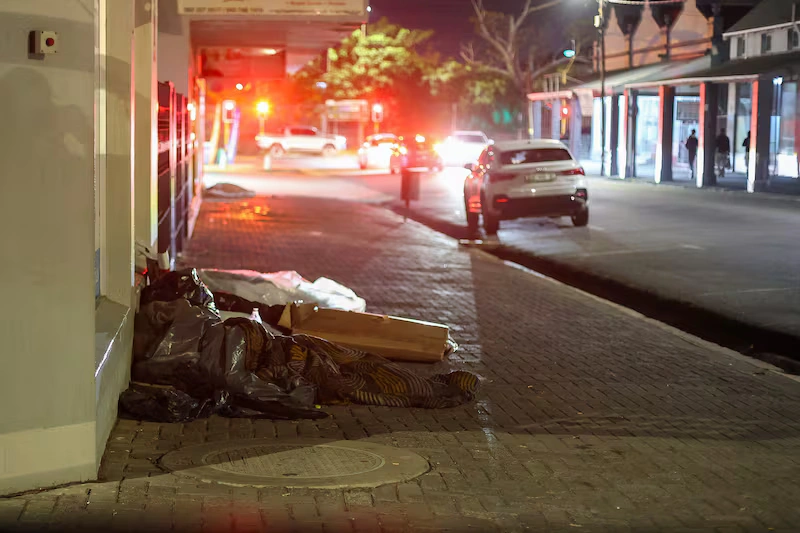
As winter tightens its grip on East London, a heartbreaking reality continues to unfold in the city’s central business district. Men and women, driven by unemployment, poverty, and difficult life circumstances, have turned the streets into their homes. (ALAN EASON)
The Eastern Cape once again recorded the highest official unemployment rate among SA’s provinces, with the number of unemployed people rising by 147,000 in the second quarter of this year.
The province’s official unemployment rate surged to 47.5% between April and June, leaving nearly one in every two economically active people without work.
According to the latest Quarterly Labour Force Survey released on Tuesday, the rate increased by 2.9 percentage points from 44.6% in the first quarter, the steepest quarterly increase among the nine provinces.
It was also eight percentage points higher than the 39.5% recorded during the same period last year, representing the largest deterioration nationally.
The number of unemployed people in the Eastern Cape rose from 1.07-million in the first quarter of 2026 to 1.22-million in the quarter under review.
The number of unemployed people was 263,000 higher than a year ago, representing an increase of 27.5%.
Mdantsane-born Xabiso Stemele (not his real surname) knows the realities of losing a job.
He has been unemployed since January, after a company he had worked for in Cape Town for six years retrenched some of its staff.
“I had worked in that company’s human resources unit for six years.
“Those were the best years of my life as I was able to financially support my family, which now fully depends on the old age grant my grandfather receives.
“As I was starting to construct a backyard flat for myself at home, the talk of restructuring surfaced in our company, and unfortunately I was one of those who were later served with retrenchment letters.
“For the past eight months now, I have been back home as I could no longer afford to pay rent, fend for my family and survive in the big city while unemployed and looking for a job.
“It has been a humiliating situation to depend on my grandfather’s social grant.
“However, I have not given up hope that I would one day find something here in the province,” Stemele said.
The unemployment crisis remained particularly severe outside the province’s two metropolitan areas.
The official unemployment rate in the Eastern Cape’s non-metro areas rose from 53.4% to 56.5%.
The number of unemployed people increased by 105,000 to 918,000, while employment declined marginally by 1,000 to 707,000.
Buffalo City Metro’s unemployment rate increased from 28.7% to 30.5%.
Employment grew by about 7,000 to 268,000, but the number of unemployed people increased by 12,000 to 118,000.
Nelson Mandela Bay recorded a sharper increase, from 29.8% to 33.1%.
It added about 7,000 jobs, taking total employment to 371,000, but its unemployed population grew by 29,000 to 183,000.
At industry level, finance added about 18,000 jobs, while manufacturing and construction each gained about 17,000.
These gains were offset by losses of about 16,000 jobs in transport, 12,000 in trade and 5,000 each in community and social services and private households.
Compared with the second quarter of 2025, trade employment fell by about 37,000, transport by 30,000, manufacturing by 20,000 and private household employment by 18,000.
Premier Oscar Mabuyane said unemployment was one of the problems “that we still need to find a formula to solve”.
He said the province had been hit hard by challenges in the auto sector, which he described as the “backbone in the province”.
While welcoming the 13,000 jobs created during the quarter, he said the increase was too small to address the unemployment challenge.
“But with the work that we’re doing in mobilising investors, bringing people into our province, it’s exactly that issue that we need to address.
“If we can perform better as government, we will be able to create a better conducive environment for the private sector to be on board.”
Young people continued to bear the brunt of the crisis.
More than half, or 51.1%, of Eastern Cape residents aged between 15 and 34 were not in employment, education or training during the second quarter.
This represented about 1.28-million young people, an increase of 26,000 from the previous quarter and 131,000 from a year ago.
DA MPL Andrew Whitfield said the latest statistics exposed the depth of the Eastern Cape’s economic crisis.
He said the province urgently needed to get municipalities working so they could attract investment and create jobs.
“The Eastern Cape does not have a shortage of people willing to work.
“It has a shortage of jobs, investment and functioning local economies capable of creating opportunity.”
Whitfield said the figures could not be separated from the province’s outward migration crisis.
“Working towns and cities attract investment. Investment allows businesses to expand, and expanding businesses create jobs,” he said.
EFF provincial secretary Simthembile Madikizela said his party was “outraged, but not surprised” by the figures.
He said the unemployment rate “reflects the devastating consequences of decades of ANC misgovernance, economic stagnation and failure to industrialise the province”.
Black Business Forum president Luthando Bara said the loss of so many jobs should be treated as an economic emergency requiring urgent and co-ordinated action.
“These figures cannot become statistics that we simply acknowledge every quarter.
“Behind them are households that have lost incomes, young people entering the labour market with diminishing prospects, and businesses operating in communities where disposable income continues to decline.”
A KuGompo City-based recruitment agency official, who asked not to be named, said there were many unemployed people suitable for entry-level positions, but skilled candidates were harder to find.
She said there was also a shortage of companies hiring.
“I think a lot of companies are cutting costs. When one person resigns, they don’t want to hire a replacement.
“They’re just going to find people internally who they can split the work between.”
Nationally, the official unemployment rate increased from 32.7% to 33.6%.
Employment declined by 16,000, while the number of unemployed people increased by 345,000 to about 8.5-million.
Cosatu provincial chair Gura Maleki said the statistics were “highly disturbing, with the youth hardest hit”.
“Loss of jobs in the two metros have a ripple effect in the economy of surrounding towns and far-flung areas, as a result, working class communities are plunged into deeper poverty, and that is a real concern,” Maleki said.
The prospective closure of Premier Foods’ fruit processing plant in Tulbagh has raised concerns well beyond the loss of factory jobs. Producers warn it could leave hundreds of them scrambling for alternatives just months before the next harvest.
Premier has begun a Section 189 consultation process on the proposed closure of Fruit Products Western Cape (FPWC). The company says the business is no longer economically sustainable because of rising production costs and declining global demand. About 90% of the factory’s canned fruit is exported.
The company responded to GroundUp with a statement saying it is working with farmers, the government, the Competition Commission, and other stakeholders to minimise the impact on employees, farmers, and the Tulbagh community.
Producers face uncertainty
“Basically half the capacity for the industry will disappear,” said Jacques Jordaan, chief executive of the Canning Fruit Producers’ Association (CFPA).
According to Jordaan, South Africa has two main canning facilities: the FPWC plant in Tulbagh and Langeberg Foods in Ashton. Closing Tulbagh would remove almost half of the country’s canning capacity.
The announcement comes shortly before the deciduous fruit harvesting season begins in November and producers have already incurred most of their annual production costs – pruning, fertilising, irrigating and controlling pests.
Jordaan says between 200 and 220 producers supply the Tulbagh factory, many of whom produce fruit varieties specifically bred for canning rather than the long-shelf-life varieties required for the fresh export market.
Without the canning facility, producers will have to remove orchards and invest in alternative crops and in new packhouses and distribution infrastructure.
The association says producers operate under rolling, long-term supply agreements that provide for a two-year notice period, allowing time to adapt if processing capacity changes.
In a letter to producers, dated 29 July, the company confirmed it would pay outstanding balancing payments (“agterskotte”) for fruit supplied during the 2025/26 season at the end of October, in accordance with existing contracts.
The letter included projected final payments for apricots, peaches and pears while explaining that Premier had decided to exit the soft-fruit canning industry after deteriorating international market conditions.
“It’s not an honour to honour a contract. They have received the fruit, worked the fruit, and now they pay for it,” Jordaan said. “At this stage there have been no commitments to the future seasons. Premier had commitments. It cannot just walk away from them.”
Industry under pressure
Premier attributed its decision to global oversupply, higher tariffs in the United States, uncertainty surrounding the African Growth and Opportunity Act (AGOA), exchange-rate pressures, and consolidation within the canned fruit industry. It points to the closure of one of the United States’ two major fruit canning operations earlier this year.
“Canning fruit internationally is under pressure,” Jordaan agreed. But he argues that South Africa remains internationally recognised for the quality of its canned fruit and should be competing at the premium end of the market.
The announcement has also prompted questions about why the company would close a facility that had recently benefited from substantial investment.
According to Jordaan, more than R200-million has been invested in the Tulbagh operation over the past three years, making it difficult for producers to understand why Premier now believes the plant has no viable future.
“It feels like Premier just took over and now says they are going to exit,” he said.
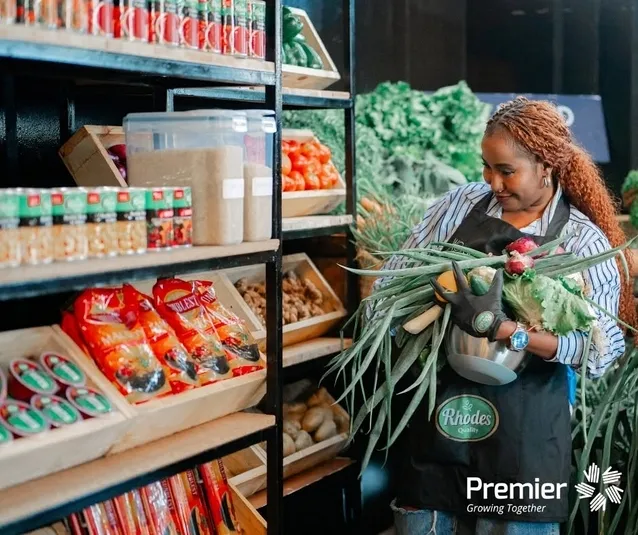
Earlier this year, Premier completed its acquisition of the Rhodes Food Group, adding the Tulbagh processing operation to its portfolio. Last year, Langeberg Foods took over the former Tiger Brands canning factory in Ashton. Premier says it intends to work with Langeberg Foods to process future harvests rather than continuing operations in Tulbagh.
Jordaan says shifting all processing to Langeberg Foods cannot be achieved within a few months and would create significant commercial and financial risks.
The first round of Section 189 consultations took place on Thursday.
Job losses
COSATU Western Cape provincial secretary Malvern de Bruyn said organised labour refused to engage on retrenchments during the first meeting, insisting that discussions should focus on saving jobs instead.
“Why throw in the towel right at the beginning?” De Bruyn asked.
“Our position remains that we want a halt to the Section 189 process and look for a business rescue alternative … They were able to save the Ashton factory, why can’t they do the same here?”
He said COSATU was not directly involved in negotiations but played a role through its affiliate Southern African Clothing and Textile Workers’ Union (SACTWU).
“Over 150 farms will be affected by this decision, so thousands more workers will be indirectly affected and could also lose their jobs. The farm owners will also suffer because of this inhumane decision,” he said.
“We are hopeful because we’ve got 60 days in which to find an agreement.”
The Competition Commission is also scrutinising the proposed closure.
De Bruyn said the Section 189 consultation process should be suspended while the Commission investigates whether the proposed retrenchments comply with public-interest conditions attached to Premier’s acquisition of Rhodes Food Group, including undertakings relating to employment. He said similar retrenchments following mergers had occurred elsewhere, citing PepsiCo’s acquisition of Pioneer Foods.
In the coming days, COSATU will consult with its national leadership on whether to seek an interdict to halt the retrenchment process.
The Commission did not respond to GroundUp’s questions.
The next round of Section 189 consultations is scheduled for 26 August. Labour must submit questions to the company by 14 August, with the company expected to respond by 21 August.
For producers, however, time is running out. With the next harvest only months away, producers say they need certainty about who will process their fruit, whether existing contracts will be honoured beyond this season, and how South Africa’s remaining canning capacity will absorb volumes previously handled by Tulbagh.
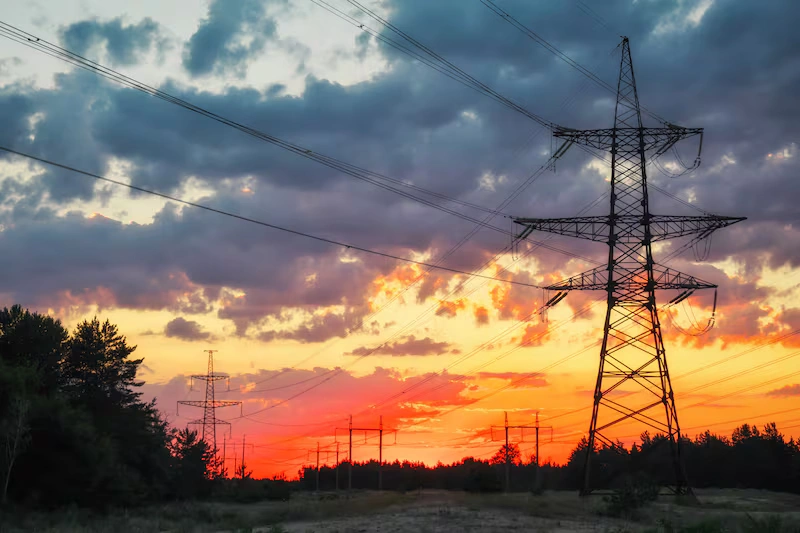
Plans to restructure Eskom are under way. File picture: (ESOlex)
Story audio is generated using AI
The government’s decision to approve the first phase of Eskom’s restructuring could eventually lead to the privatisation and increased private-sector control of the electricity grid, according to the National Union of Mineworkers (Num).
President Cyril Ramaphosa has approved the first phase of the Eskom restructuring task team report, which recommends establishing an independent transmission system operator (TSO) separate from Eskom.
The project has been under discussion since the late 1990s and was rejected by Cosatu in 2014.
Ramaphosa said the restructuring is intended to encourage competition, attract investment and strengthen energy security. The proposed TSO would run the transmission system independently from Eskom’s generation section and other functions.
This is against a backdrop of mounting municipal debt to Eskom of R118bn that severely threatens its financial sustainability and the entity’s own debt of almost R300bn.
The union believes splitting Eskom’s transmission business from the rest of the utility could weaken Eskom’s control over the electricity network and open the door for more private companies to play a bigger role in supplying power. The union said this could eventually lead to higher electricity costs, reduced public control over a key national service, and uncertainty over jobs in the electricity sector.
Num general secretary Mpho Phakedi said the union was not opposed to improving Eskom but rejected reforms that could weaken public ownership.
“Electricity is a strategic national asset. Eskom workers have carried the burden of keeping the grid stable, and their livelihoods must be protected.”
Phakedi said workers should not lose their jobs or see their employment conditions weakened as a result of the restructuring, and the Num is demanding guarantees that this will not happen.
The union also wants organised labour to be involved in decisions affecting Eskom employees.
“Labour must not be treated as passive observers in decisions that affect thousands of livelihoods,” Phakedi said.
It also opposes transferring strategic assets, infrastructure, employees or operational functions from the National Transmission Company of South Africa to a new TSO without comprehensive consultation with organised labour.