The department says remedial measures must be implemented to ensure affected municipal workers are paid within 48 hours.
The Department of Cooperative Governance and Traditional Affairs (KZN COGTA) in KwaZulu-Natal has ordered an investigation into claims that employees of the Zululand District Municipality have not received their September salaries.
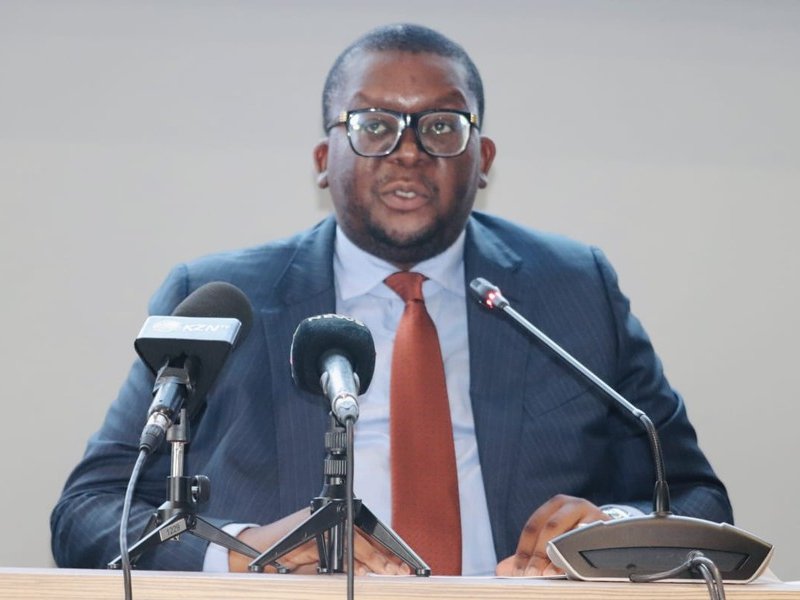
Siboniso Mngadi of the department says the government will not tolerate municipalities failing to respect workers’ rights.
Investigation
“In the absence of formal communication from the municipality, MEC [Thulasizwe Buthelezi] has directed KZN Cogta’s Head of Department to immediately investigate the cause of non-payment of salaries.
“He will also implement remedial measures for salaries to be paid within 48 hours.
“He will also ensure that consequence management is enforced against officials who are responsible for this financial misconduct.”
Meanwhile, earlier this month, the South African Municipal Workers’ Union (SAMWU) called for a financial lifeline for the Impendle Local Municipality.
The municipality is currently under administration, but SAMWU says the intervention has failed to resolve its financial problems, including ongoing delays in paying workers’ salaries.
The Department of Cooperative Governance and Traditional Affairs (KZN COGTA) in KwaZulu-Natal ordered the municipality’s administrator to urgently resolve the salary crisis and pay workers their outstanding salaries within 48 hours.
The union’s Mzwandile Zuma says workers were paid but are still owed months of pay.
Zuma says a government bailout would prevent the financial crisis from continuing to affect service delivery.
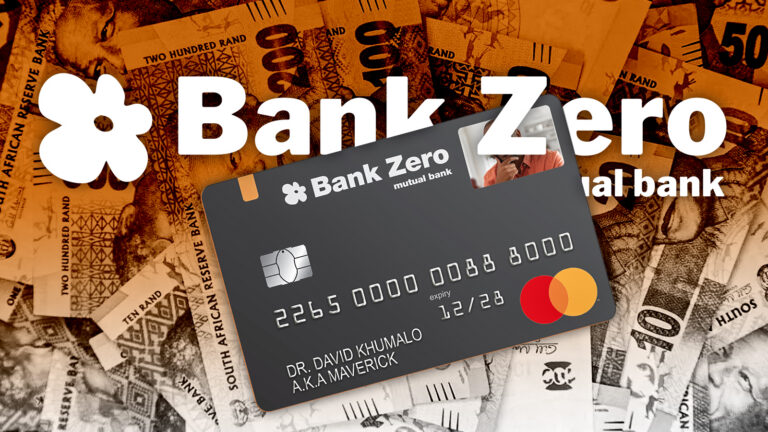
Bank Zero’s founders chose not to pay themselves upfront for nearly a decade until the bank broke even.
This decision gave the business a much longer runway, helping it avoid higher upfront costs during its start-up phase.
The success of this decision was recently revealed when Bank Zero announced that it reached the critical break-even target faster than some of its competitors.
In an interview with Daily Investor following this announcement, Bank Zero co-founder and chairperson Michael Jordaan explained how the company reached this milestone.
Bank Zero was launched to the public in October 2021 with a unique proposition: a bank account with no monthly subscription fee and lower transaction costs than conventional accounts.
The model’s singularity posed a challenge from the jump: since it had never been done before, it was unclear whether it could be profitable.
At the same time, Bank Zero also had to contend with something its other digital banking competitors, TymeBank (now GoTyme) and Discovery Bank, did not: no institutional backing.
Until they reached break-even, GoTyme was backed by billionaire Patrice Motsepe’s African Rainbow Capital, while Discovery Bank had the eponymous insurance giant’s backing.
Both of these competitors have now turned profitable. TymeBank achieved the break-even milestone in four years and 10 months after launch.
Discovery Bank took seven years to reach this milestone, having launched in 2019 and achieving its maiden operating profit in the year through June 2026.
It was initially projected that Bank Zero would reach break-even status within two years after launch, as its founders expected the company to benefit from fewer customers and less risk.
While this original deadline did not pan out, Bank Zero now also finds itself among the profitable banks, having achieved break-even in 4 years and 10 months, the same amount of time as GoTyme.
This proved that Bank Zero’s model can be and is profitable.
Bank Zero’s founders
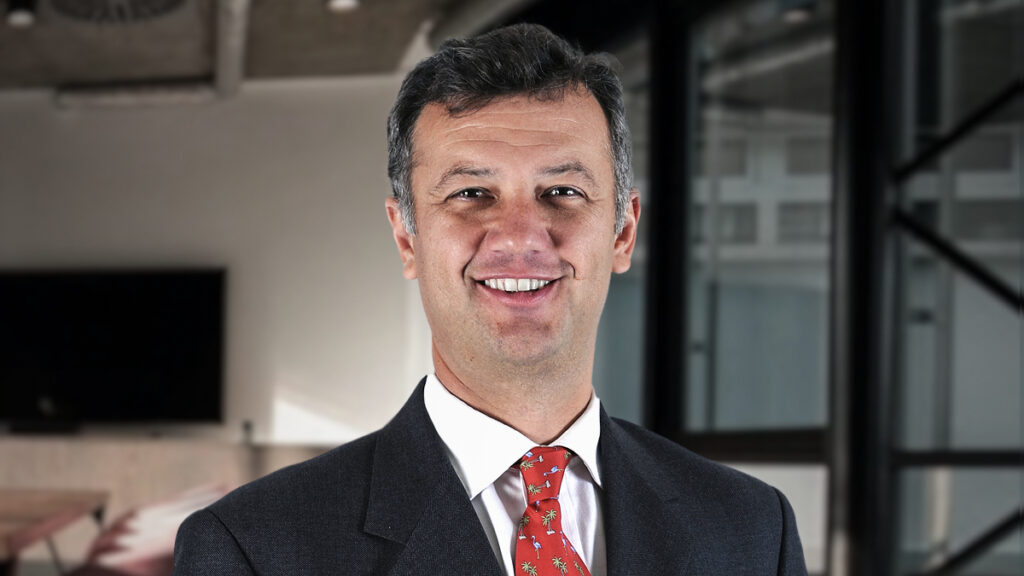
Bank Zero co-founder and chairman Michael Jordaan
Jordaan said five of the founding investors, Yatin Narsai, Liné Wiid, Lezanne Human, Mo Hassem, and Jay Prag, worked long, hard hours to get the bank off the ground.
They also made an important decision from the get-go: They would not pay themselves until the bank broke even.
Jordaan explained that start-ups are more likely to be successful if they have a “long runway”.
Essentially, if a start-up has enough cash to keep operating for a long time before it runs out of money and needs new funding, it is far more likely to succeed.
By choosing not to take initial salaries, Bank Zero’s founders established a lean, frugal operating model that kept the business’s burn rate low.
“The way to get a longer runway is to not be very expensive upfront. So, it’s a frugal startup, this one, and that’s definitely part of the success factor,” Jordaan said.
“This is why break-even is important, because now it can scale and it can scale inexpensively and scale beautifully. You built a truck, and now you just have to load the truck.”
He explained that the bank’s frugality since launch will now serve it well as it seeks to scale and attract more customers.
By keeping its costs low and not being beholden to legacy pricing, Bank Zero can offer its customers more benefits through lower prices.
Now, the bank is well-positioned to accelerate its profitability and scale faster than some competitors.
Bank Zero will soon also have the advantage that many of its competitors have: institutional backing.
JSE-listed fintech Lesaka is in the process of acquiring Bank Zero in a deal worth R1.1 billion.
This partnership will give Bank Zero access to Lesaka’s 2 million retail customers and 125,000 business customers essentially overnight.
# COSATU is calling for urgent funding for the Employment and Labour Department’s plan to recruit an additional ten-thousand labour inspectors. Spokesperson Matthew Parks says this would strengthen efforts to crack down on violations of the labour rights of South African and migrant workers. He also wants government, business and labour to regularly review the Critical Skills List to attract scarce skills, upskill local workers and prioritise unemployed South Africans for training:
The National Bargaining Council for the Road Freight and Logistics Industry (NBCRFLI) has come under fire for seemingly mismanaging billions of rands in workers’ benefits.
The NBCRFLI was established in 1946 to regulate employment conditions, wages, and labour standards in South Africa’s road freight and logistics sector.
An analysis of the council’s audited financial statements from 2018 to 2025 reportedly found that R2.59 billion in worker benefit assets had been treated as council property in 2025.
The NBCRFLI has thus been accused of placing the money it collected for workers’ benefits on its books as its own assets, raising concerns over transparency in the council’s financial reporting.
The analysis follows an application for disclosure of the council’s financial statements, brought before the High Court in March 2024 by Innovative Staffing Solutions (ISS).
ISS challenged the constitutionality of the NBCRFLI’s Main Collective Agreement after it stopped making its financial statements publicly available.
The High Court granted the application and ordered the NBCRFLI to produce the requested financial statements and to pay ISS’s legal costs.
The council is legally required by its own rules to make its financial information publicly available without the need for court action.
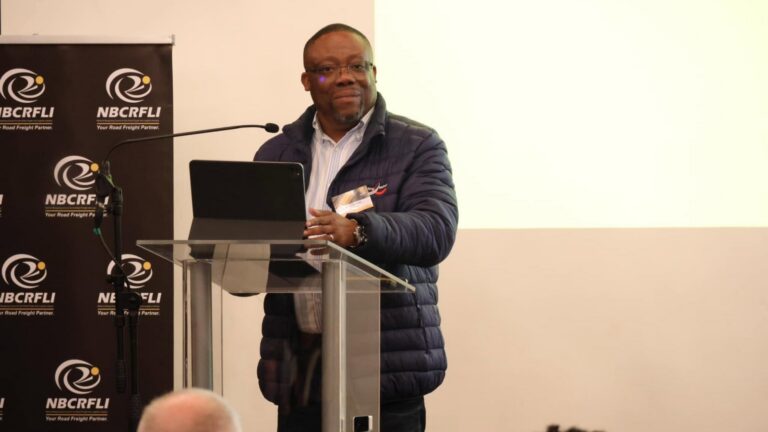
ISS managing director Arnoux Maré said the NBCRFLI must urgently address the concerns raised by the publication of these financial statements.
“Every rand in its benefit belongs to a truck driver, a forklift operator, or a warehouse worker,” Maré said. “Workers should be able to see whether those funds remain properly ring-fenced.”
“They should know whether each fund can meet what it owes to workers, how income earned on that money is being used, and whether it is being used for workers’ benefit.”
ISS explained that as benefit funds are folded into the council’s own accounts, it becomes more difficult to determine whether enough has been set aside to pay workers’ claims.
The council allegedly did not prepare separate statements or audits for its Sick Pay, Holiday Pay, Leave Pay, and Wellness funds, which it is legally required to do.
During 2025, the NBCRFLI recorded R78.5 million in Wellness Fund investments as council assets without showing a clear matching obligation to the fund.
Additionally, it recorded R364.5 million in Wellness Fund contributions as council revenue, while R309.7 million in medical expenses was treated as council expenses.
Through its analysis, ISS also found the Sick Pay, Holiday Pay, and Leave Pay funds had accrued combined shortfalls of R35.8 million in 2021, R23.1 million in 2022, and R31.2 million in 2023.
“The concern is not simply whether the funds are solvent today,” Maré said. “Workers are entitled to understand why these deficits persisted and what has since been done to prevent them from recurring.”
Maré called on the Registrar and Department of Employment and Labour to verify compliance and require the NBCRFLI to publish its separate benefit fund accounts.
The National Bargaining Council’s response
Daily Investor reached out to the NBCRFLI for comment on the ISS claims, and received the following response from Council Spokesperson Amos Tshabalala:
Higher Education and Training Minister Buti Manamela.
By Johnathan Paoli
The Democratic Alliance has demanded that Higher Education and Training Minister Buti Manamela put a concrete, funded rescue plan for the National Student Financial Aid Scheme (NSFAS) on the table, saying that universities and students cannot continue carrying the cost of the scheme’s financial crisis.
DA higher education spokesperson Delmaine Christians said Manamela’s acknowledgement of a projected NSFAS shortfall was not enough, and called for urgent measures to deal with billions of rands owed to universities as well as a sustainable funding model.
“It is no longer sufficient for the Minister to acknowledge that NSFAS has a funding problem. Students and institutions need to know how he intends to fix it,” Christians said.
The DA’s call comes after Parliament was told last month that NSFAS owed universities about R10.49 billion in 2026 tuition payments, with only 61.5% of university allocations having been paid at that stage.
Manamela has warned that the scheme’s financial shortfall could reach R33 billion by 2029 if the current funding model remains unchanged.
Speaking to the media last week, Manamela said government was already engaging the National Treasury over an estimated R15 billion shortfall.
“Last year it was R13 billion. The year before it was R7 billion. The year before it was R5 billion. The first year when we introduced the policy was R2.5 billion. Estimates are that by 2029, we would have a shortfall of R33 billion at NSFAS,” Manamela said.
He said that the problem cannot be attributed solely to governance instability at NSFAS, saying the underlying funding policy itself is unsustainable.
But Christians said talk is cheap and that the figures demonstrated the urgency of producing an immediate intervention and a long-term solution.
“Despite repeated talk shops, the Minister has failed to provide an interim crisis plan to pay money owed, and a long-term sustainable funding model solution to the absolute disaster that is NSFAS. This cannot become another crisis simply rolled into the next academic year,” she said.
Manamela said about R56 billion of his department’s budget was directed towards the scheme.
He warned that a failure of NSFAS would have consequences extending beyond students who rely on monthly allowances.
The minister acknowledged that the scheme still funded hundreds of thousands of students, but said any failure to pay even one student was unacceptable.
Manamela said the government was also considering an income-contingent loan system as part of efforts to develop a more sustainable funding model.
Under such a system, students would not pay upfront and would begin repaying once their income reached a predetermined threshold.
He cited Australia as an example, but said any South African model would have to be adapted to local conditions.
Manamela said stabilising NSFAS and preparing it for the 2027 academic year were immediate priorities.