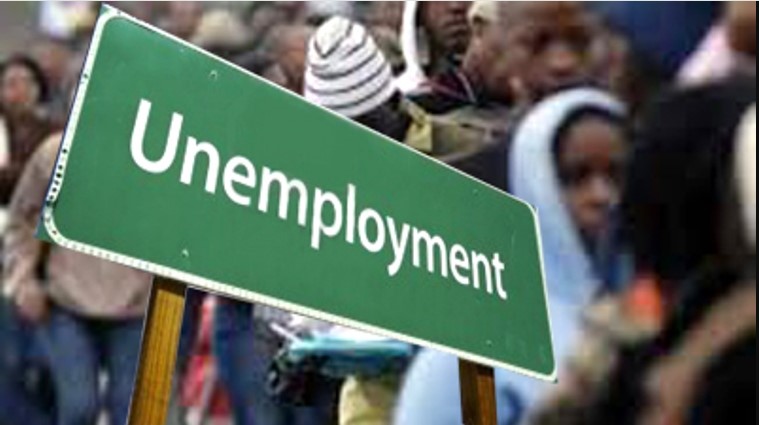
Mpumalanga’s unemployment rate has increased sharply to 36.3% in the first quarter of the year, up from 32.3% in the previous quarter. More than 53,000 jobs were lost in the province between January and March, worsening the economic situation for many households. The expanded unemployment rate, which includes discouraged job seekers, now stands at 49.6%.
Labour federation Congress of South African Trade Unions (COSATU) has called on government to urgently implement a jobs turnaround strategy to tackle the growing crisis. Provincial Secretary Thabo Mokoena says government must introduce practical and measurable plans to create decent jobs, especially for young people, through training and internship programmes aimed at reducing unemployment in the province.
There have been more than 53 000 job losses in Mpumalanga between January and March this year. The provinces unemployment rate has increased to 36.3 from 32.3 in the previous quarter.
The expanded unemployment rate is now sitting at 49.6.
Labour Federation Cosatu has called on government to develop an urgent jobs turn around strategy.
President Cyril Ramaphosa’s decision to take the Section 89 Independent Panel Report on Phala Phala for judicial review is a cynical, self-serving manoeuvre.
It is not a genuine attempt to clear his name but a calculated response to the Constitutional Court’s recent judgment, which dismantled his efforts to bury the scandal. Ramaphosa is betting on two outcomes: that the review will stymie the Impeachment Committee’s work and that prolonged litigation will shield him from accountability for years.
Three years ago, Ramaphosa approached the Constitutional Court seeking direct access to review the Independent Panel’s report, which found prima facie evidence that he may have committed serious violations of the Constitution and anti-corruption laws. Luthuli House then used the application as a pretext to instruct ANC MPs to reject the report in the National Assembly. They obliged with enthusiasm.
Having neutralised the immediate threat, Ramaphosa lost the appetite to clear his name. He declared the matter moot after the Assembly’s 13 December 2022 vote against referring it to an impeachment committee. The Constitutional Court later dismissed Ramaphosa’s application for failure to make a case for exclusive jurisdiction or direct access.
Fast forward to 2026. The Constitutional Court has ruled that the National Assembly’s vote was unconstitutional. It struck down Rule 129I, which had allowed the Assembly to terminate the impeachment process prematurely — before a full investigation and proper ventilation of the facts. The apex court was clear: where the Panel recommends proceeding with a Section 89 inquiry, the matter must be referred to an Impeachment Committee unless the Report is successfully set aside on review.
Ramaphosa’s decision to revisit the judicial review of the Section 89 Independent Panel report is a masterclass in deception and obfuscation. He has repeatedly weaponised legal processes to evade substantive accountability — a tactic that has too often worked because he can count on compliant mainstream media, quiescent civil society, and organisations such as COSATU that instinctively protect him.
As Justice Malala observed in the Sunday Times (10 January 2021): “It must be nice to be in President Cyril Ramaphosa’s administration… There is no accountability, no taking responsibility, and no consequence.” Peter Bruce described South Africa’s COVID-19 response as an “omnishambles” — a comprehensive failure marked by blunders and miscalculations. Yet the ANC and sympathetic media have since rewritten this period as evidence of Ramaphosa’s sterling leadership.
Ramaphosa and his praise-singers also blame COVID-19 for the economy’s collapse. The facts contradict them. In March 2019, even the Business Day noted that 2018 growth had slumped to a mere 0.7% — below the 1.3% achieved in Jacob Zuma’s final year and far short of the 5% required to address unemployment. The downward spiral began long before the pandemic.
At the core of Ramaphosa’s resistance lies his deep attachment to office. He has ruled out resignation, insisting he has “not stolen public money, committed any crime nor violated [his] oath of office.”
The emphasis on “public money” is a deliberate red herring. Neither Arthur Fraser’s complaint nor the Independent Panel accused him of stealing state funds. In his complaint, Mr Arthur Fraser alleged that an undisclosed number of hundreds of thousands of US dollars was brought in from certain Middle East and African countries and concealed in his farm in the couches with the full knowledge of the President. Nothing about the public money. The issue centres on hundreds of thousands of undeclared US dollars concealed at his Phala Phala farm.
The Panel found Ramaphosa’s explanation difficult to believe. According to his version, a Mr Hazim arrived unannounced on Christmas Day 2019 carrying at least US$580,000 in cash to buy buffaloes.
The Panel posed direct questions: How did Hazim Mustafa know there were buffalo for sale? Was the sale advertised? How did he know the exact purchase price unless carrying far more cash? How did he bring this huge sum into South Africa? Did he declare it at the point of entry? What is its source? Did he have authority from his country to export it? Why carry more than half a million dollars in cash across borders and then to the farm — behaviour the Panel described as un-businessman-like? Why not use a money transfer, as is normal in such transactions?
These questions remain unanswered. Ramaphosa has also failed to explain why the burglary at the farm and attempts to recover the stolen money were never reported to the police. The Panel rightly observed that someone concealing large amounts of illicit cash is unlikely to involve the authorities for fear of exposure.
The Panel’s findings were damning. It concluded there was prima facie evidence that the President may have committed serious misconduct and serious violations of the Constitution. Specifically:
He was prima facie obliged under section 34(1)(b) of PRECCA to report the theft of foreign currency to the Directorate for Priority Crime Investigation, but failed to do so.
There was a deliberate decision to keep the investigation secret.
He abused his position as Head of State by involving the Namibian President in apprehending a suspect.
He acted in a manner inconsistent with his office and exposed himself to a conflict between his official responsibilities and private business interests, violating section 96(2)(b) of the Constitution.
Rather than seize the impeachment process to clear his name under public scrutiny — as someone confident of innocence would do — Ramaphosa has rushed to the courts when it suits him. He understands the political and reputational dangers of full disclosure.
Professor emeritus Raymond Suttner captured the deeper malaise: “There is little in the record of Ramaphosa to suggest anything more than a self-indulgent, narcissistic attachment to the idea of being president, a presidency that has little content. What ideas, what vision, what ethics, if any, drive this man, and for that matter the organisation that he leads?” (Daily Maverick, 9 January 2021).
The Constitutional Court has now removed the procedural shield Ramaphosa relied upon. Parliament must proceed with the impeachment inquiry. With the Independent Panel having established prima facie that he has a case to answer, nothing prevents any party from opening a criminal case against President Ramaphosa.
South Africans deserve a comprehensive examination of the facts, not further evasion disguised as respect for legal process. Ramaphosa’s refusal to confront the substance of the allegations through an impeachment process only confirms that self-preservation, not principle, dictates his response.
* Professor Sipho P. Seepe, Higher Education and Strategy Consultant.
** The views expressed do not necessarily reflect the views of IOL or Independent Media.
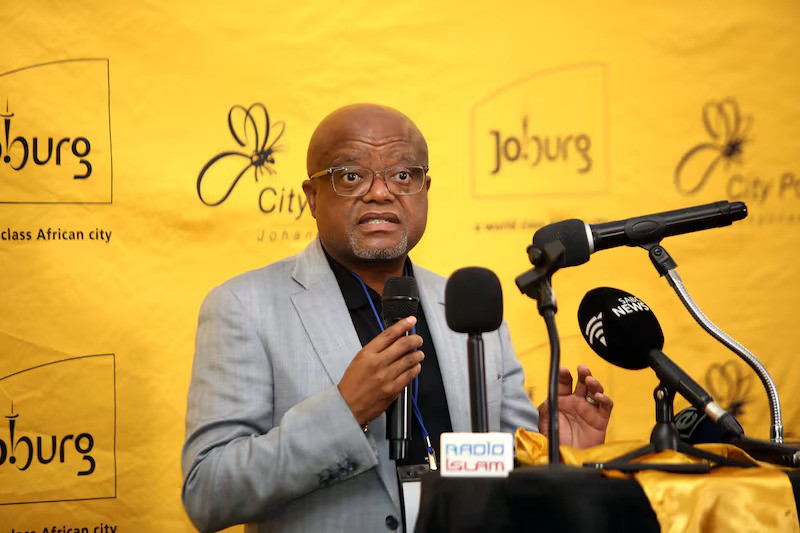
The executive mayor of Johannesburg, Dada Morero. Picture: Refilwe Kholomonyane (Refilwe Kholomonyane)
Morero ordered to scrap council’s R10.3bn offer to city workers before looming strike last year
Finance minister Enoch Godongwana has threatened to withhold the Joburg metro’s equitable share instalment for July if the mayor fails to scrap a R10.3bn wage offer the council made to city workers threatening to strike last year.
In an explosive letter, which Sunday Times’ sister publication Business Day has seen, Godongwana said he is worried about the city’s financial governance failures and would withhold R8bn, a move that could severely affect service delivery for the city’s more than 6-million residents.
The city is insolvent as revenue collection levels do not meet budgeted targets, and it has an overexpenditure of about R3.9bn on employee-related costs, bulk electricity purchases, inventory consumed and operational costs.
The council’s finances are severely constricted with poor revenue collection resulting in its failure to meet service delivery targets.
It desperately needs the equitable share from the Treasury to enhance service delivery ― especially in an election year.
The city, the country’s financial and economic hub, entered into a politically facilitated agreement (PFA) regarding a R10bn wage agreement with the South African Municipal Workers’ Union (Samwu) late last year, aimed at aligning staff salaries with those of employees in other metropolitan municipalities.
In the deal the metro committed to pay a minimum of R1.2bn and up to a maximum of R2bn by March 2026; a minimum of R5bn and up to a maximum of R6bn by July 2026, and R4.1bn by July 2027.
The wage deal came amid threats by Samwu to disrupt the G20 Leaders’ Summit in Johannesburg in November 2025 by “closing down all the freeways”.
In his letter, Godongwana orders mayor Dada Morero to “stop proceeding with the implementation of this illegally signed agreement that has the potential to destroy the sustainability of the City of Johannesburg beyond this term of office as well as the negative impact on the national economy at large”.
“Secondly, not only is your adjustments budget not funded in terms of section 18 of the MFMA [Municipal Finance Management Act], but you very well know the city cannot afford this agreement.
“In the event that the city is not willing to remedy the situation with immediate effect, I hereby give you formal notice that the National Treasury will invoke section 216 (2) of the constitution targeting your July 2026 equitable share instalment.”
In the letter dated April 23 and copied to co-operative governance & traditional affairs minister Velenkosini Hlabisa, Gauteng finance MEC Nkululeko Dunga and Jacob Mamabolo, Godongwana said he had observed a series of violations of various legislative and regulatory compliance requirements under the Municipal Finance Management Act “that suggest a deterioration in the city’s governance and overall financial health”.
The executive mayor has formally requested a meeting with the minister and the city is currently awaiting confirmation of the engagement date.
Morero’s spokesperson Khathutshelo Mulaudzi said the mayor received Godongwana’s letter last week.
“Thereafter, the mayor engaged directly with the minister to discuss the contents of the letter and the issues raised. Both parties have since agreed to convene a formal engagement between the City of Johannesburg and the ministry of finance to address and clarify the matters outlined,” Mulaudzi said.
“The city acknowledges the critical oversight and governance role of the ministry of finance in engaging municipalities on matters of financial sustainability, governance and accountability.
“The executive mayor has formally requested a meeting with the minister and the city is currently awaiting confirmation of the engagement date.”
The letter comes barely nine months after Godongwana wrote a damning letter to Morero demanding a plan to rein in the metro’s unauthorised, irregular, fruitless and wasteful expenditure.
Godongwana had already flagged a crisis of accountability after uncovering R1.4bn in authorised outlays, R22bn in irregular spending and R705m in fruitless and wasteful payments.
In April, Global Credit Rating (GCR), revised the City of Joburg’s ratings outlook from stable to “rating watch negative” over the metro’s delays in finalising its annual financial statements.
The rating watch negative was due to “material uncertainty in the audit process, as highlighted by the continued delay in finalising the annual financial statements for the year ended June 30 2025, which were expected to be released by no later than May 31 2026, Global Credit Rating said.
A rating watch negative meant the city’s credit rating was under review for a potential downgrade in the near term, usually within 90 days. The action indicated increased risks such as deteriorating financial performance, regulatory issues or economic instability.
The municipality has long been plagued by crumbling roads and infrastructure as well as deteriorating water and electricity networks, prompting President Cyril Ramaphosa, during an oversight visit to the city a year ago, to propose the establishment of a Presidential Johannesburg Working Group.
This was part of efforts to address service delivery challenges in a metro responsible for 16% of South Africa’s GDP and employing 12% of the national workforce.
Ramaphosa noted on the visit that the city faced “enormous challenges, ranging from financial and governance instability to rapidly deteriorating infrastructure”.
On Wednesday, ActionSA Gauteng chair Funzi Ngobeni said the contents of the latest letter are alarming.
“The National Treasury warns of deteriorating governance, ongoing noncompliance with financial regulations, severe liquidity pressures, rising creditor obligations and commitments that the city may not be able to sustain financially,” he said.
“Most notably, the minister directly instructs the city to halt implementation of the salary agreement linked to the Politically Facilitated Agreement [PFA], warning that the city cannot afford the commitment in its current financial state.”
Rise Mzansi MP Makashule Gana said Godongwana’s letter reveals a city in a state of “severe financial distress”, characterised by an unfunded 2025/26 adjustments budget, a liquidity crisis as the city owes creditors R25.2bn, “yet only has R3.9bn in cash ― a gap that makes it impossible to meet its basic financial obligations”.
“The city continues to operate on noncompliant, manual or interim financial systems, which prevents transparent reporting. The administration is playing politics and cutting corners to everyone’s demise.
“As a result, the city’s 6-million residents, the city’s employees and the broader business community will continue to suffer from unsafe streets, leaking pipes, uncollected refuse and crumbling roads,” Gana said.
“The minister’s threat to invoke section 216(2) of the constitution, which would withhold the city’s July 2026 equitable share instalment, is a direct consequence of this reckless leadership.”
Morero had to present “a credible, cash-backed plan to restore the city’s liquidity and ability to deliver services”, while Ramaphosa had to answer for the collapse in financial governance, given that the Presidential Johannesburg Working Group was established to “strengthen governance and financial sustainability. It is clear that his intervention is not working.”
Presidency spokesperson Vincent Magwenya confirmed the president is aware of the Treasury letter to Morero “raising issues linked to alleged breaches” of the Public Finance Management Act. These concerns formed part of the rationale for establishing the working group.
Cosatu Gauteng chair Amos Monyela said: “The refusal to fully implement the PFA, which was adopted to address legitimate grievances regarding wage disparities, demonstrates a blatant disregard for collective bargaining and worker solidarity. This failure to implement the PFA is not just a technicality; it is an economic injustice that leaves municipal workers vulnerable to poverty despite being employed.”
It is unacceptable that the Treasury, under Godongwana, continues to prioritise fiscal austerity over workers’ livelihoods, he said.
He called on the Treasury to “cease its adversarial approach towards workers and honour the agreements made to ensure fair compensation”.
“Cosatu will not stand by while workers are treated as expendable. We call on minister Godongwana to reconsider this hostile stance and fully fund the implementation of the PFA immediately.
“If the minister continues to hold back, Cosatu will escalate this matter to the highest levels of struggle to ensure that workers receive what is rightfully theirs.”
DA Joburg mayoral candidate Helen Zille said the metro’s financial challenges were the reason for its inability to repair or maintain infrastructure, leading to consistent power and water outages, and the failure to fix breakdowns, “resulting in the steady collapse of service provision across the board”.
“Overall, the DA has been warning for more than three years that the city was headed for a major financial crisis. We have also consistently warned in council that the above decisions, alluded to in the minister’s letter, were unlawful and that we would pursue corrective measures under section 32 of the MFMA.
“This means that we will seek to hold all councillors who supported these illegal decisions in council personally responsible for the recovery of the money lost to the city under section 21 (1) of the MFMA, which states that ‘political office-bearers or officials who deliberately or negligently permit such expenditures are personally liable‘.”
South Africa’s entry-level wage floor has cracked under inflationary pressure, exposing a structural mismatch between graduate expectations and employer budgets—just as the country’s fiscal deficit widens to 6.4% of GDP [per the National Treasury’s 2026 Medium-Term Budget Policy Statement][1]. The data, sourced directly from the Statistics South Africa (Stats SA) Q1 2026 Labour Force Survey, reveals starting salaries now sit at R18,500–R22,000 monthly—a 12% real-term decline since 2023 when adjusted for CPI. For employers, this isn’t just a hiring cost; it’s a liquidity crunch. With unemployment stubbornly above 30% [World Bank 2026 Africa Economic Outlook][2], firms are forced to choose between poaching talent at inflated rates or settling for candidates with suboptimal skill alignment—a dilemma that’s pushing HR tech adoption rates up by 47% YoY [LinkedIn Workforce Report 2026][3].
The Fiscal Math: Why R22K Isn’t Enough
Entry-level salaries in South Africa now require a minimum R250,000 annualized cost—yet 68% of SMEs report revenue growth below inflation [FNB Business Confidence Index Q1 2026][4]. The gap isn’t just about numbers; it’s about opportunity cost. A graduate earning R20,000 in Cape Town could afford a 1-bedroom apartment in the city’s outskirts but would struggle to cover student loan repayments + transport + data costs—the trifecta of post-graduation financial stress. Meanwhile, employers in finance, tech, and mining (the top three sectors hiring entry-level talent) face EBITDA margin compression as wage bills swell. In the financial services sector, where starting salaries average R25,000, firms are now outsourcing 30% of junior roles to nearshore hubs [PwC Africa Talent Mobility Report 2026][5]—a move that triggers knowledge transfer risks and compliance headaches under South Africa’s Employment Equity Act.
From Instagram — related to Level Salaries, Enough Entry
“The entry-level wage standoff is a classic case of the ‘employer’s dilemma’—pay enough to retain talent, but not so much that you erode margins in a high-unemployment, low-growth economy.”
— Dr. Thabo Mthembu, Chief Economist at Standard Bank Group, in a recent earnings call.
Three Ways This Trend Reshapes Hiring
Upskilling Arms Race: With formal qualifications no longer guaranteeing employability, firms are doubling down on internal L&D budgets. Companies like [Corporate Upskilling Platforms] are seeing demand surge for micro-credentialing programs—especially in data literacy and AI fundamentals—as employers scramble to future-proof entry-level hires.
Contractualization Surge: To avoid permanent salary commitments, 42% of employers are shifting to fixed-term contracts [Boston Consulting Group SA Labor Market Study 2026][6]. This creates a compliance minefield around unemployment insurance contributions (UIF) and labor law adherence, prompting a rush toward [Specialized Labor Law Firms] that specialize in atypical employment structures.
Geographic Arbitrage: Firms in Johannesburg and Cape Town (where living costs inflate salaries by 20–25%) are relocating back-office roles to lower-cost hubs like East London or Polokwane. This triggers infrastructure bottlenecks—particularly in digital connectivity and power reliability—forcing companies to partner with [Regional Expansion Consultants] to mitigate operational risks.
The B2B Fix: Who’s Profiting from the Wage Crisis?
For every problem, there’s a monetizable solution. Here’s where the money’s flowing:
22% YoY growth in SA’s employer branding sector [LinkedIn]
The Quarter Ahead: What’s Next for South African Wages?
The 2026/27 fiscal year will test whether South Africa’s wage floor can stabilize—or if employers will accelerate automation to offset labor costs. With the SARB holding rates at 8.25% [Monetary Policy Committee May 2026][7], borrowing remains expensive, but ESG-linked loans (tied to diversity hiring quotas) are emerging as a niche funding pathway for firms willing to trade liquidity for social impact. The real wild card? Union pushback. If COSATU and other labor federations successfully lobby for a national minimum wage hike (currently R25.42/hour), entry-level salaries could jump another 15–20%—forcing a second wave of offshoring or massive layoffs.
Bottom line: This isn’t just a wage issue—it’s a structural productivity crisis. The firms that survive will be those that leverage data-driven hiring, optimize compliance spend, and future-proof their talent pipelines. For the rest? The [Turnaround Consultants] are already placing calls.
Need a vetted partner to navigate this? Explore World Today News’ Global Directory for B2B solutions tailored to South Africa’s labor market challenges.