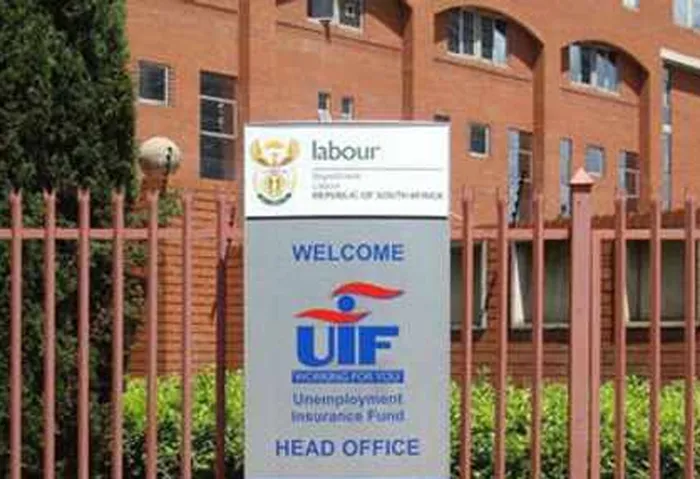
Business Unity South Africa have joined a chorus of concerns among trade unions in South Africa about the dysfunction and alleged governenace failures at the Unemployment Insurance Fund. Image: Supplied
Business Unity South Africa (Busa) has joined key trade unions in calling for the Unemployment Insurance Fund (UIF) and Compensation for Occupational Injuries and Diseases Fund to be placed under administration or new management, citing rampant corruption and dysfunction.
Business Unity CEO Khulekani Mathe said the organisation has withdrawn from the UIF structures at Nedlac following six years of “sustained effort” to try to help reform the problems at the UIF, and he wants the fund to “urgently” be placed under administration to stabilise operations, clear claims backlogs, and address governance failures.
He also stated that a forensic investigation was needed at the UIF to assess the “legality and appropriateness” of all fund expenditures. “The current situation is unsustainable,” he said. Business Report questions to the Department of Employment and Labout were not answered at the time of going to press.
The latest concerns follow a call one month ago by four trade union bodies—Cosatu, the Federation of Unions of South Africa, the South African Federation of Trade Unions, and the National Council of Trade Unions—for President Ramaphosa to deploy the Hawks and Special Investigating Unit to the UIF to probe allegations of “systemic and serious corruption” at the UIF and the Compensation Fund.
Last month, the Groupdup publication also reported that thousands of unemployed South Africans had unknowingly submitted UIF claims through an outdated online system that accepts their applications but does not process them. The Department of Employment and Labour stated at the time that a new portal would be up and running by November.
Meanwhile, in April, a Supreme Court of Appeal ruling in the case of Van der Vyver Transport vs Minister of Labour and others, highlighted a state of dysfunction at the Compensation Fund and ruled that it required “an urgent, independent investigation.”
In addition, by 2025, the Compensation Fund has received disclaimer audits from the Auditor-General for no less than 12 consecutive years.
Mathe said the UIF remained characterised by “persistent operational failures, governance weaknesses, delays, unresponsiveness, and a drift away from its core mandate.”
“It is unacceptable that contributors are left without support while funds are redirected, delayed, or absorbed into programmes that do not directly address the statutory entitlements,” said Mathe.
He expressed concern regarding the continuous expansion of the Labour Activation Programmes in ways that appear to overlap with the mandate of the Department of Higher Education and Training and the Sector Education and Training Authorities.
“Equally troubling are efforts to redirect UIF resources towards government-to-government programmes that primarily benefit non-contributors, while contributors themselves face delays, exclusion, and administrative barriers,” said Mathe.
He noted that Busa had also decided to remove its representatives from the UIF board to “safeguard the reputation of our representatives, uphold sound governance principles, and send an unequivocal message that the current situation is unsustainable.”
As an example of the operational dysfunction of the UIF, he mentioned that the UIF’s rigid requirement for distressed employers to rectify up to 20 years of compliance data is impractical and “demonstrates a lack of responsiveness to stakeholders.”
“There is a growing impression that proper governance systems have been deliberately undermined. UIF board meetings have frequently been scheduled at short notice, making it difficult for members to adequately prepare or adjust their commitments. The disruptions have contributed to repeated failures to achieve quorum—not due to a lack of willingness to participate, but because of impractical and ad hoc arrangements,” he said.
Withdrawal is essential to safeguard the reputation of our representatives, says Busa CEO Khulekhani Mathe
Busa CEO Khulekani Mathe has called on employment and labour minister Nomakhosazana Meth to urgently place the UIF under administration. File picture: Thapelo Morebudi
Story audio is generated using AI
Business Unity South Africa (Busa) has given up on the dysfunctional Unemployment Insurance Fund (UIF) after years of trying to get the state-owned entity on the right track.
In a vote of no confidence, Busa CEO Khulekhani Mathe announced it had taken the “difficult but necessary decision” to withdraw from the UIF structures at the National Economic Development and Labour Council (Nedlac) and to remove its representatives from the UIF board.
“This step is essential to safeguard the reputation of our representatives, uphold sound governance principles and send an unequivocal message that the current situation is unsustainable,” Mathe said.
Busa has called on employment & labour minister Nomakhosazana Meth to urgently place the UIF under administration, with an independent administrator tasked with stabilising operations, clearing claims backlogs and addressing governance failures. A forensic investigation should be undertaken to assess the legality and appropriateness of all fund expenditure.
No plans to fix UIF
Labour federation Cosatu agrees with the call, with parliamentary co-ordinator Matthew Parks saying Cosatu shared Busa’s concerns and frustrations. He described the UIF as a “disaster” with no attempts being made to improve the problems.
Workers waited for months and even years for payment of unemployment and maternity benefits. “The department has no plans to fix it,” Parks said.
Labour planned to meet President Cyril Ramaphosa soon about its call for the UIF to be put under administration, he said.
The UIF is funded by contributions from employers and employees and is meant to provide income support during periods of unemployment, maternity, illness, adoption, parental leave, reduced working time or other qualifying income loss.
The fund has repeatedly received qualified audit opinions from the auditor-general due to weaknesses in internal controls, an inability to substantiate documentation and major ICT challenges. Irregular, wasteful and fruitless expenditure without any meaningful consequence management has also taken place.
The fund is not bankrupt but its systems are broken, its critics say. At the end of the 2024/25 financial year (the latest figures available) it had net assets of R154bn. In that year its total revenue amounted to R26bn, with investment revenue of R11bn. A total of R18.6bn was paid out in benefit payments.
Busa said the UIF remained “deeply dysfunctional”, characterised by persistent operational failures, governance weaknesses, delays, unresponsiveness and a drift from its core mandate.
“It is unacceptable that contributors are left without support while funds are redirected, delayed or absorbed into programmes that do not directly address their statutory entitlements,” Mathe said.
He said Busa’s decision to withdraw from UIF structures followed six years of sustained engagement, repeated warnings of maladministration and ongoing efforts to support reform for the benefit of workers, employers and the stability of the labour market. “Regrettably, these efforts have not yielded the required results.”
Reform programme
Mathe said organised business and organised labour had participated in many processes aimed at reforming the UIF since 2020. Detailed proposals had been submitted, addressing governance, operational effectiveness, service delivery and the need to place contributors at the centre of the system.
In 2024, Busa called for the establishment of a Nedlac task team to develop a credible reform programme for the UIF, but progress has stalled over the past two years, with no clear commitment to ensuring the effectiveness of the task team. This undermined confidence in the process and reinforced concerns that the UIF is either unwilling or unable to confront the extent of its dysfunction.
Mathe said there was a growing impression that proper governance systems had been deliberately undermined. UIF board meetings had frequently been scheduled or rescheduled at short notice, making it difficult for members to adequately prepare or adjust their commitments. The disruptions had contributed to repeated failures to achieve quorum.
Also of serious concern was the continued expansion of labour activation programmes in ways that appeared to overlap with the mandates of the department of higher education & training and the sector education and training authorities.
“Equally troubling are efforts to redirect UIF resources towards government-to-government programmes that primarily benefit non-contributors, while contributors themselves face delays, exclusion and administrative barriers,” Mathe said.
“Business remains committed to constructive engagement with the government and labour to build a functional and credible social security system that protects vulnerable workers. However, such engagement must be grounded in accountability, urgency and a genuine commitment to reform. Workers and employers cannot be expected to continue funding a system that fails them when they need it most,” Mathe said.
• This article has been updated with new information.
The company is urging the government and Eskom to reach an urgent agreement, warning that permanent closure could become inevitable if no solution is found before the end of the month.
Supplied
At least 600 jobs and another 7,000 livelihoods are at risk after South Africa’s last remaining manganese smelter stopped operations.
Operations suspended
Transalloys says it had no choice but to shut down its furnaces [in Mpumalanga] after years of financial losses and high electricity costs.
Chief Executive Konstantin Sadovnik has called on the government and Eskom to intervene before the current suspension becomes permanent.
He warned that unless a sustainable solution is agreed to and implemented by the end of the month, the company’s unlikely to survive winter.
“Transalloys has now reached the point where continuing to operate would simply accelerate our own collapse. We have exhausted every option available to us operationally while engaging Eskom, the government and the regulators, and there are still significant points of difference between them and us. We have now had to stop our production entirely.
“South Africa will lose its last manganese smelter, thousands of livelihoods and decades of industrial capability. Once those furnaces go cold permanently, which is a near-term reality, there is no turning back.”
Cosatu demands intervention
Meanwhile, trade union federation Cosatu says the government needs to find an urgent solution to prevent the closure.
Spokesperson Matthew Parks says the country can’t afford to lose so many jobs.
“It would mark a massive setback for South Africa’s efforts to re-industrialise the economy, expand local beneficiation, and nurture value chains. It is critical that Trans Alloys, Eskom, and the Departments of Electricity, Energy, Trade, Industry and Competition meet and pull out all stops to find solutions to this long-simmering crisis.
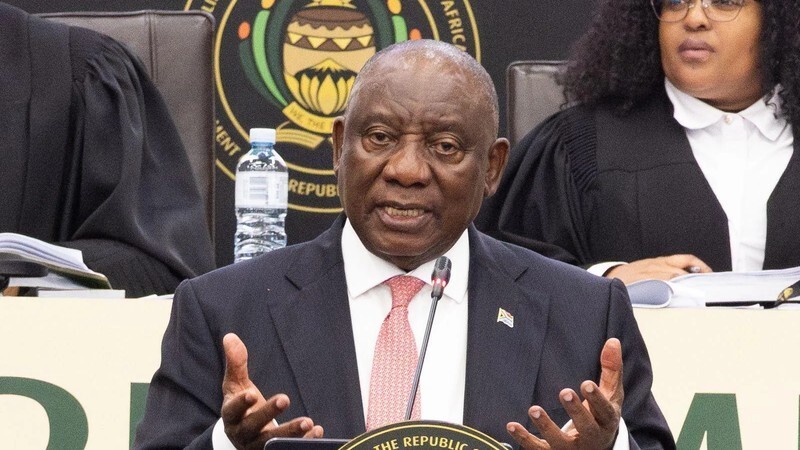
Nearly a year after President Cyril Ramaphosa unveiled the National Dialogue as South Africa’s blueprint for tackling the country’s deepest social and economic divisions, its role is being questioned after weeks of anti-illegal migrant protests unfolded with little visible intervention from the flagship initiative.
Launched in August last year, the National Dialogue was billed as a citizen-led process to help South Africans confront poverty, unemployment, inequality, and social divisions.
While critics argue the recent migration tensions presented exactly the kind of national conversation it was created to facilitate, the government said the initiative is a long-term democratic process rather than a crisis-response mechanism.
As protests targeting undocumented migrants spread across several communities in recent weeks, many expected the Dialogue to provide a platform for national engagement on an issue that has increasingly polarised public opinion.
For the Rural Women’s Assembly (RWA), that opportunity was missed.
Denia Jansen, the organisation’s Western Cape representative, said very little had happened on the ground since the Dialogue was launched.
“Nothing much has been done. Things have not yet started concerning the dialogues, and different sectors are trying to reach out to members to pilot the National Dialogue,” Jansen said.
“Our sector – land, rural communities, and agriculture – has a draft plan to invite all the stakeholders to identify pilot areas for the National Dialogue, but at the moment nothing has been done.”
Jansen said that if the National Dialogue was genuinely intended to be a bottom-up process, it should have played a visible role as anti-illegal migrant tensions escalated.
“The National Dialogue should have prioritised the anti-illegal migrant protests. The absence of the National Dialogue proves it exists only on paper.“
She argued that the demonstrations reflected deeper structural failures that the government had failed to address.
“Poverty, unemployment, hunger, and violence are daily struggles for our communities. Women are at the centre of all these crises. The anti-illegal migrant issue is another burden on communities, especially women, whose responsibility is to put food on the table.
“Migrants were never our enemies. We live and work together and become friends and neighbours. Women and children will suffer the consequences of a collapsed local economy.”
Jansen also linked the current tensions to stalled land reform.
“The president has not adequately provided land for women to grow food to feed their families. As long as women cannot access land, hunger and unemployment will always be huge issues in South Africa while the government watches the poor fight each other for crumbs – like what is happening now with migrants.”
The government, however, maintains that the National Dialogue should not be viewed as an emergency response mechanism.
Deputy Minister in the Presidency for Women, Youth and Persons with Disabilities, Mmapaseka Steve Letsike, said the initiative was never intended to replace government institutions responsible for maintaining public order.
“We should be careful not to judge the National Dialogue as though it were a once-off event that could immediately resolve decades of social and economic challenges.”
Letsike said the purpose of the Dialogue was to strengthen democratic participation over time.
“The success of the National Dialogue should not be measured by whether difficult issues continue to arise. Rather, it should be measured by whether South Africans increasingly choose dialogue over division, participation over polarisation, and democratic engagement over violence.”
Letsike acknowledged that the recent protests exposed deep anxieties around unemployment, inequality, crime, service delivery, and belonging, but said those were exactly the kinds of issues the Dialogue was designed to confront.
“The National Dialogue provides an opportunity for citizens to engage honestly on complex issues such as migration, unemployment, inequality, social cohesion, and public trust.”
The minister said sustainable peace could not be secured through law enforcement alone and argued that South Africa needed democratic spaces where citizens could confront difficult issues before they escalated into conflict.
“The National Dialogue should become part of South Africa’s democratic infrastructure.”
Organised labour has also urged patience.
Matthew Parks, parliamentary coordinator for the Congress of South African Trade Unions (COSATU), said the process was still in its rollout phase.
“The dialogue is still in its rollout phase with sectoral engagements taking place and soon ward engagements to begin.”
Parks said that expecting the Dialogue to intervene directly during the recent protests was a misunderstanding of its purpose.
“The Dialogue would not have the capacity or mandate to do so. It’s intended to engage society on its issues and proposals, and to provide solutions for government and society on issues like migration, unemployment, and crime.”
However, he agreed that the initiative now needed to become more visible in communities.
“We need it to move to engaging people on the ground and coming with concrete proposals on what needs to be done,” he said.