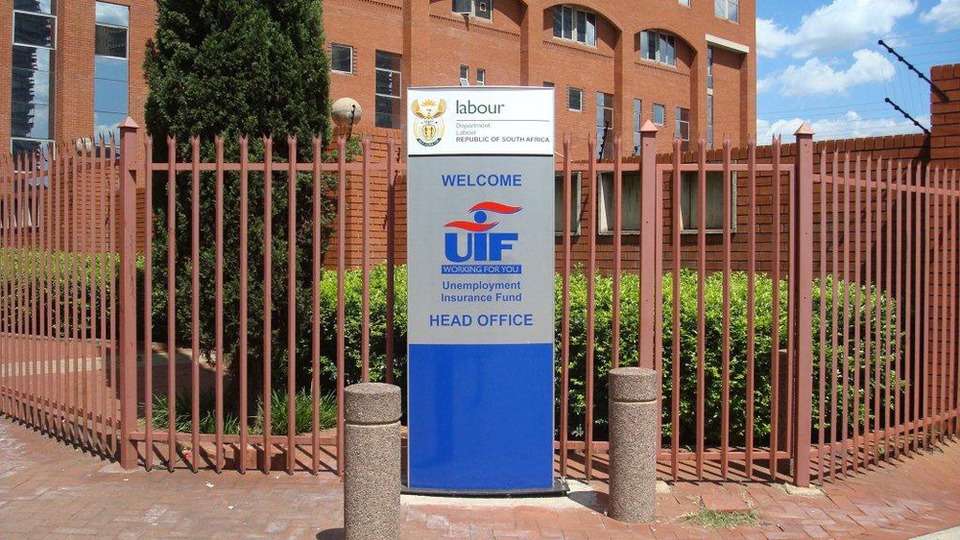
Business Unity South Africa (Busa) has made the “difficult but crucial” decision to withdraw from the Unemployment Insurance Fund (UIF) structures at the National Economic Development and Labour Council (Nedlac).
The business organization confirmed this choice in a statement on Wednesday, announcing the withdrawal of its members from the UIF board.
This action follows six years of ongoing dialogue and persistent warnings about alleged mismanagement, along with efforts to implement labor reforms.
“Regrettably, these initiatives have not yielded the anticipated results,” remarked Busa CEO Khulekani Mathe.
“This decision is essential to safeguard the integrity of our representatives, uphold sound governance standards, and clearly convey that the current situation is untenable.”
Since 2020, organized business and labor have engaged in various efforts aimed at reforming the UIF.
Busa has submitted detailed proposals targeting governance, operational efficiency, and improvements in service delivery.
In 2024, major corporations sought the establishment of a task team at Nedlac to create a viable plan for resolving the UIF’s deficiencies.
However, Busa pointed out that the reform process has become stagnant over the past two years, leading to persistent dysfunction, operational failures, and ongoing lack of responsiveness.
“This has diminished confidence in the process and raised concerns that the fund is either unwilling or unable to address its dysfunction,” Mathe elaborated.
Read: You may be sending your UIF claim to a non-functional website
The organization has also highlighted long-standing issues, including the diversion of UIF resources to government-to-government programs that benefit non-contributors, while rightful contributors face delays in their claim submissions.
Busa believes that the UIF-Ters (temporary employer/employee relief scheme) during the Covid-19 pandemic should have emphasized the need for efficient systems and accountability; instead, it exposed critical flaws in the fund’s administration.
The alleged mismanagement of UIF funds has been well-documented.
In 2020, during the Covid-19 Relief Funds Audit, then-Auditor General Kimi Makwetu identified several issues, including payments to deceased individuals, duplicate payments, overpayments, and government officials benefiting from the scheme.
Last year, Parliament’s Select Committee on Economic Development and Trade reported that the UIF disbursed over R800 million in Ters funding, yet more than R200 million was unaccounted for.
Busa calls on Minister of Employment and Labour Nomakhosazana Meth to place the UIF under administration to stabilize its operations, resolve claim backlogs, and address governance concerns.
“A forensic investigation should commence to assess the legality and appropriateness of all fund expenditures,” Mathe stated.
The growing pressure to put the UIF under administration follows recent demands from major trade union federations, including Cosatu, Saftu, and the National Council of Trade Unions.
Meth, in a statement issued in June, welcomed an investigation by the Special Investigating Unit into allegations of maladministration, corruption, and unlawful actions related to training contracts at the agency.
It remains unclear whether she has heeded calls for an independent administrator to intervene.
Moneyweb has reached out to Meth’s office for comments on this matter and will update the story upon receiving a response.
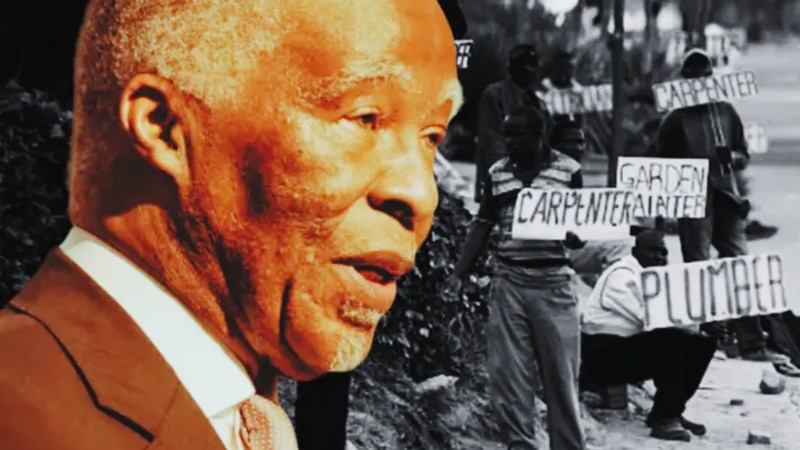
RESPONDING to the current anti-immigrant crisis in South Africa, former President Thabo Mbeki is fundamentally wrong when he strongly asserted that the country is under an externally organised and coordinated political destabilisation campaign and that it was not a spontaneous eruption.
I completely disagree with Mbeki. Instead, the root causes of the unprecedented anti-immigrant crisis, while very complex, multifaceted and convoluted, are deeply systemic and structural.
It is not true that these huge and combustible protests, especially over the past few weeks, suggest that these are the results of an organised effort to isolate South Africa from the rest of the African continent.
I think Mbeki wants to deflect our attention from his role in our current neoliberal economic policies, especially when the Reconstruction & Development Plan office was shut down in March 1996 and just three months later, in June, the Growth, Employment & Redistribution and Strategy (Gear) was imposed by the ANC government, in which he, as deputy president, and former finance minister Trevor Manuel played the biggest roles.
The allies of the ANC, the Congress of South African Trade Unions (Cosatu) and the South African Communist Party (SACP), have, in public, many times criticised these policies and attribute the ongoing austerity budgets we are saddled with to those macroeconomic policies.
While the roots of the current unlawful immigration crisis are undoubtedly serious problems with corruption and inefficiencies at the Home Affairs Department over many years, there must be no doubt that we have had an unprecedented socioeconomic crisis which has had a devastating effect on the daily lives of the majority black working-class communities.
Things have never been as bad as they are today in South Africa. We have the biggest jobless, food, health, housing and education crisis since 1994, if not since the Union of South Africa was formed in 1910.
It is a devastating crisis which has torn communities apart, affecting both South Africans and immigrants from other parts of Africa.
It is this same and ever-worsening crisis which has pitted poor Black South Africans in townships against immigrant workers and small business operators, such as spaza shop owners.
We have had a generalised infrastructural crisis for many years, which has increased cost-of-living pressures on both these sections of what is essentially a Black working class living under similar social conditions.
When people are daily and intensely affected by a devastating socioeconomic crisis and struggling to survive, they tend to take out their accumulated frustrations on others within their communities. In this sense, there indeed has been a largely scapegoating of African migrants from other countries in Africa.
But it was the responsibility of the government to have taken administrative enforcement measures to deal with and act against unlawful or undocumented migrants over the years. They did not do so or certainly not to the extent necessary.
This is the root cause of the undocumented crisis, and there can be no doubt that corruption in the Home Affairs department played a huge role in this administrative failure.
So, it is not only a failure by undocumented migrants to deal with the problems, but also the failure by the authorities to enforce the relevant laws timeously. It is this administrative failure by Home Affairs which must bear the biggest responsibility for the undocumented crisis.
But to understand the real roots of this crisis, we need to locate it within the overall societal context we have had for many years. This has been a context of persistent cost-of-living increases and daily struggles to eke out a living in the black townships.
It is this context which gave rise to both Operation Dudula and the March and March organisations. While much of the conduct and sentiments of supporters of these organisations do point to xenophobic and Afrophobic elements, I think it is a worsening socioeconomic crisis which underlies it.
I repeat what I stated recently: the crisis is not really as a result of conscious xenophobia or Afrophobia by Black South Africans towards Africans from other parts of the continent but much more the devastating impacts of a worsening socioeconomic crisis of unemployment, poverty and raging inequalities.
There has been much in the media which strongly points to the fallacy of the belief that the problems of unemployment and a whole host of social evils experienced by Black South Africans will be resolved if those who are undocumented return to their countries of origin.
This is a vitally important, factual and compelling observation, which those who glibly attribute their problems to the presence of other African migrants should consider, because it shows that indeed they are being scapegoated.
But a very big and ominous danger is that it strongly appears that many black South Africans want all migrants to leave South Africa, including those who are properly documented. That would not only be highly unlawful but, in fact, plainly xenophobic or Afrophobic.
On the other hand, if indeed it is true that Nigerians are prominently involved in the drug trade and especially the selling of drugs to teenagers, then it must be dealt with, but we must try to avoid generalisations.
I am sure that there are also Black South Africans who are involved in the drug trade in Black townships.
But there can be no or little doubt that the ANC is going to be adversely affected by the African migrant crisis in the upcoming local government elections in November.
The comments expressed on various social media platforms on this crisis strongly suggest that many or even most think the ANC bears primary responsibility for the immigrant crisis.
This is not to say that the ANC government, until they lost the 2024 national elections, did nothing to address the problems in the Home Affairs Department. But very clearly, they allowed the problems and weakness there to worsen over a long period of time.
It appears that the corruption in Home Affairs over many years has had a very negative impact on both dealing with those problems and available resources. We learnt recently that the department nationally only has 832 officers dealing with these complex immigration issues.
But it is very important to understand that the primary causes of the immigrant crisis are not exogenous, as much as the global situation is so complex that there could indeed be other unfavourable agendas at play. I doubt very much that those are of pivotal causal importance.
No, it is the devastating socioeconomic crisis of worsening poverty, unemployment, inequalities and the related daily miseries and fierce competition for dwindling resources which lie beneath it, which are the biggest causes of the immigration crisis.
Besides, we are the most unequal society in the world, with one of the highest unemployment rates in it, especially among Black youth.
But not even all of that prepared me for the horrors I seen on TV and social media over the past few weeks, when affected undocumented migrants and their families hurriedly tried to get out of the country by the deadline of June 30.
Though not official, the stern warning they were given was to be out of the country by that date.
Migrants being terribly beaten up included some who were documented, and some were even killed, signalling the most dangerous, unfortunate, chaotic and, in fact, tragic situation to have developed recently.
The biggest danger is the insane demand by some protesters that all migrants, included those documented, must leave this country.
If that inclination persists, we are going to descend into utter chaos and naked vigilantism, some elements of which we already seen recently. It is my earnest wish that the government and all forms of our media actively combine to play a role in dissuading such a course of action.
To go down such a disastrous path is going be the worst and most catastrophic development in post-apartheid SA, which we must very urgently avoid. It is a doomsday scenario we must collectively do our utmost to avoid because there will be no winners.
* Dr Ebrahim Harvey is a political writer, analyst, and commentator.
** The views expressed here do not reflect those of the Sunday Independent, Independent Media, or IOL.
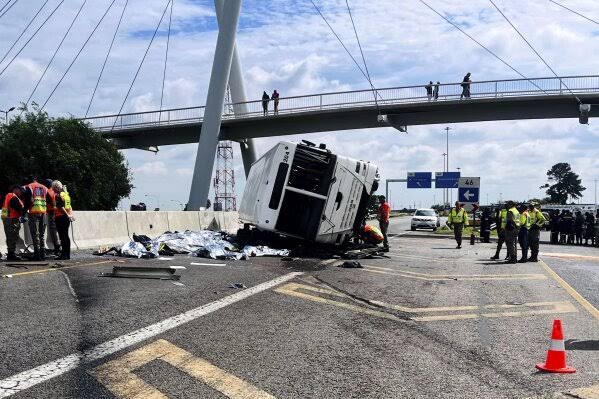
A tragic bus accident claimed the lives of 16 people, including at least three children, after a passenger bus overturned near Touws River in the Western Cape shortly after midnight on Thursday. The devastating crash has also left 35 people injured, including the driver, who were rushed to nearby hospitals for medical treatment.
According to authorities, the bus was carrying 73 passengers and was travelling from Cape Town to various destinations in the Eastern Cape. Many of those on board were holidaymakers returning home after spending time in the City of Cape Town.
The Western Cape Department of Mobility confirmed that emergency services responded swiftly to the scene following reports of the crash. Rescue teams worked through the night to assist survivors, recover those trapped inside the overturned vehicle, and transport the injured to hospitals.
Chief Director for Traffic Management in the provincial Mobility Department, Maxine Bezuidenhout, said preliminary information provided by the driver suggests that another vehicle may have contributed to the accident.
According to the driver’s account, he was travelling along the N1 highway towards Touws River when a vehicle allegedly emerged from a side road. In an attempt to avoid a collision, the driver reportedly swerved, causing the bus to lose control and overturn.
Officials confirmed that among the survivors receiving treatment is a child younger than two years old. The identities of those who lost their lives have not yet been released as authorities continue informing their families.
One of the passengers who survived the crash described the terrifying moments leading up to the accident. Speaking anonymously, the survivor said the journey had already been delayed before the bus departed.
He explained that he was originally scheduled to leave Bellville at around 7:30 pm, but passengers continued boarding at Kraaifontein until approximately 11:30 pm before the bus finally continued its journey.
The passenger recalled that he had started falling asleep when loud screams suddenly woke him. Moments later, he realised the bus had overturned onto its side.
He described being trapped inside the vehicle with other passengers pressed against one another as people cried out for help. He said he could feel his arm touching the ground while pinned inside the bus, highlighting the frightening conditions survivors endured before emergency responders arrived.
Meanwhile, the Congress of South African Trade Unions (COSATU) in the Western Cape has extended its condolences to the families and loved ones of those who died in the crash.
The federation has called on law enforcement agencies and the Department of Transport to conduct a comprehensive investigation into the circumstances surrounding the accident.
COSATU said investigators should examine every possible contributing factor, including the condition of the road, the mechanical fitness of the bus, and whether driver fatigue may have played any role in the tragedy. The organisation stressed that identifying the exact cause is essential to preventing similar incidents in the future.
Authorities have confirmed that investigations into the fatal crash are ongoing. More information is expected to be released once officials complete their preliminary assessment and notify the families of all those affected.
ActionSA has criticised President Cyril Ramaphosa’s Cabinet adjustments, saying the Government of National Unity is “out of ideas” and warning against a bloated executive structure and controversial ministerial appointments. Image: Social development department/ X
President Cyril Ramaphosa’s latest Cabinet adjustments have drawn criticism from ActionSA and labour federation COSATU over governance concerns, the size of the executive, and recent ministerial appointments.
The changes come after Ramaphosa removed three deputy ministers and reassigned DA leader John Steenhuisen in a Cabinet adjustment.
They follow a proposal from DA leader Geordin Hill-Lewis to restructure the party’s representation in Cabinet, which Ramaphosa has approved.
Under the adjustments, Steenhuisen has been moved from Minister of Agriculture to Deputy Minister of Trade and Industry.
He will be replaced as Agriculture Minister by Willie Aucamp, who previously served as Minister of Forestry, Fisheries and the Environment.
Three DA deputy ministers have also been removed from the executive, including Samantha Graham-Mare from Electricity and Energy, Sello Seitlholo from Water and Sanitation, and Mimmy Gondwe from Higher Education and Training.
ActionSA Parliamentary Leader Athol Trollip MP said the changes reflect deeper problems within the Government of National Unity (GNU).
“This is yet another example of papering over a Government of National Unity that is out of ideas,” Trollip said.
He said the administration was “lurching from one crisis to the next while clinging to a bloated executive of 75 Ministers and Deputy Ministers.”
Trollip strongly criticised the appointment of former minister Dina Pule as Minister of Social Development.
“The ANC is scraping the bottom of the barrel,” he said.
He pointed to her removal from Cabinet in 2013 following findings by Parliament’s Ethics Committee that she had breached the Executive Ethics Code, saying her return sent “a dangerous message” about accountability in government.
Trollip also criticised the appointment of DA leader John Steenhuisen as a Deputy Minister, saying it followed the handling of the Foot-and-Mouth Disease crisis, which he said had devastated farmers and cost the economy more than R13 billion.
He argued that Deputy Minister posts were being used to “cushion the fall of disgraced former ministers rather than serve the public.”
He further questioned the promotion of Willie Aucamp to Minister of Agriculture, citing concerns over his previous tenure as Minister of Forestry, Fisheries and the Environment, including issues related to captive lion hunting and breeding, delays to the Marion Island research programme, and management challenges at Kirstenbosch National Botanical Garden.
Trollip added that the reshuffle did not address ongoing concerns involving other ministers.
“The Government of National Unity uses Cabinet as a vehicle for political patronage rather than good governance,” he said.
He said there was little appetite for accountability measures such as performance agreements and lifestyle audits, adding that ActionSA had introduced its Cabinet Reform Package, which includes the Enhanced Cut Cabinet Perks Bill and the 23rd Constitutional Amendment Bill aimed at reducing the size and cost of government.
Meanwhile, the Congress of South African Trade Unions (COSATU) said it noted the changes made to Cabinet by President Cyril Ramaphosa, describing them as adjustments largely affecting parties within the Government of National Unity rather than a full reshuffle.
COSATU Parliamentary Coordinator Matthew Parks said the federation was concerned that it had not been consulted on the changes, saying this was “deeply worrying” given workers’ stake in government leadership decisions.
“It is deeply worrying that COSATU, a long standing and loyal member of the Tripartite Alliance, was not consulted on these changes to Cabinet,” Parks said, adding that appointments must reflect competence and integrity.
Parks criticised the appointment of Dina Pule as Minister of Social Development, calling it “extremely worrying” in light of findings previously made by the Public Protector and Parliament’s Ethics Committee. He said the appointment risks distracting from efforts to rebuild public trust after state capture.
He also raised concern over repeated leadership changes at the Department of Forestry, Fisheries and the Environment, noting that the department is now on its third minister in two years, warning that instability undermines service delivery.
“It is important that the new members of the Executive hit the ground running. There will be no honeymoon,” Parks said, adding that ministers are facing high unemployment, weak economic growth, and rising levels of poverty, inequality, and crime. He said COSATU would support ministers who perform but hold those who fail accountable.
Newly appointed Social Development Minister Dina Pule. Image Credits : Facebook – Department of Social Development
The Congress of South African Trade Unions (Cosatu) has expressed disappointment over the appointment of former Communications minister Dina Pule as the new minister of Social Development.
Pule was removed from her position during the tenure of Jacob Zuma after being found guilty of maladministration and improper conduct.
She was sworn in yesterday along with other new ministers following a cabinet reshuffle.
Pule fills the position left vacant after the dismissal of Sisisi Tolashe, who was facing allegations of undeclared gifts and irregular appointments in her department.
Cosatu Parliamentary Coordinator, Matthew Parks, says cabinet portfolios should be filled by leaders with integrity.
“One can argue that, look, that’s a decade ago, now people will be rehabilitated. But we don’t think that is the kind of quality of leadership we want to see in cabinet. We’re not saying she must be unemployed. She’s been at a backbencher; she’s been a chair of a portfolio committee. But we really want to have people with the highest integrity and credibility in cabinet, especially as society is correctly irritated after a decade plus of state capture and corruption. We want to see leaders who will inspire confidence in society and rebuild the trust of society in the state.”
Meanwhile, the Democratic Alliance says it rejects and condemns Pule’s appointment.