The Congress of South African Trade Unions (COSATU) is deeply concerned that South Africa’s second largest provincial economy will grind to a halt if 20 commuter bus companies stop operating next week.
Major commuter bus companies operating in Kwa-Zulu Natal including South Coast Bus Service, Metrow Bus Service and Combined Transport Services, say they will be forced to halt operations from next week if the KZN Department of Transport does not pay subsidies as per signed contracts. In a letter to the South African Road Passenger Bargaining Council (SARPBAC), the bus companies state that they will not be able to ferry thousands of passengers across the province to work, school, university, hospital or any other destination if their subsidies remain unpaid.
The KZN DoT is in breach of contract as it has not paid subsidies since April this year, the passenger bus companies maintain. Subsidies are meant to be paid monthly. The companies say have had to dig deep into their reserves to ensure services to commuters across KZN were not disrupted in the past few months. Given the fuel price increases since the war in the Middle East started, plus the latest diesel price hike, the bus companies say their reserves are now depleted. Worse still financial institutions are unwilling to grant further extensions on their credit lines.
On contacting the National Department of Transport, the passenger bus bargaining council General Secretary, Gary Wilson, was informed that the allocation for subsidies was paid over to the KZN DoT. The question then arises, why have funds not been transferred to the bus companies?
Were bus companies to stop operating next week, commuters would have no transport to get to work or school, the provincial economy would be adversely impacted, and the livelihoods of more than 1 000 workers would be threatened, along with that of their families. Workers’ salaries were also paid from reserves in recent months. If the subsidies are not paid within this week, the consequences will be dire.
COSATU calls on the National Department of Transport as well as the KZN Provincial Government to intervene to ensure subsidies are paid within this week to avoid disruptions that could ultimately cost the economy multiples more, given volatile nature of the province.
The Federation calls on all stakeholders to do all in their power to avoid this impending disaster because it will affect the working class and the poor the worst.
The Congress of South African Trade Unions (COSATU) reaffirms its unwavering solidarity with the workers, farmers and the broader Tulbagh community in their united campaign to stop the proposed closure of the Rhodes processing plant.
Premier Foods announced the plan to close the Rhodes processing plant last week, following the merger with Rhodes Food Group Holdings in March this year. The merger was sanctioned by the Competition Commission with conditions attached, including Premier’s undertaking of no retrenchments for three years.
COSATU extends its appreciation to the community of Tulbagh for inviting the Federation to participate in the public meeting and prayer service on Sunday. The overwhelming unity displayed by workers, farmers and residents demonstrates that the future of the Rhodes processing plant is not merely a workplace issue but a matter affecting the survival of the entire local economy.
The closure of the processing plant would destroy an estimated 80 000 jobs in the value chain, weaken agricultural production and devastate businesses throughout Tulbagh and surrounding areas. Retailers, suppliers, transport operators and many other enterprises depend on the continued operation of the plant. This reckless decision threatens the economic future of the entire region.
COSATU rejects any attempt by Premier Foods to sacrifice workers and communities in pursuit of short-term profits for shareholders. The people of Tulbagh helped build this industry over generations and deserve a meaningful voice in determining its future.
The Federation supports the following immediate demands:
The Rhodes processing plant must remain operational.
There must be no retrenchments and no removal of machinery from the plant.
The current Section 189 retrenchment process must be suspended until the Competition Commission determines whether the proposed closure violates the commitments made when Premier acquired Rhodes, including undertakings relating to employment protection.
Premier must justify its claim that South Africa requires only one processing plant, as this assertion does not make sense.
The company must disclose the financial and operational information underpinning its decision to close the Tulbagh plant.
A comprehensive socio-economic impact assessment must be conducted to determine the devastating consequences that closure would have on workers, farmers, businesses and the wider Tulbagh community.
COSATU is equally concerned that the company appears to be ignoring alternative market opportunities by insisting the decision to close was prompted the USA agreement, but they say nothing of the offer by China to take on SA exports and how this can benefit the company. South Africa’s canning industry requires growth and innovation, not contraction.
The Federation believes the future of the canning industry cannot be determined through unilateral corporate decisions. A national master plan for the industry must be developed through engagement between government, organised labour, producers, processors and affected communities.
As part of the campaign to save the plant, COSATU, together with its affiliate Southern African Clothing and Textile Workers’ Union (SACTWU) and other recognised trade unions, will continue to participate in negotiations and legal processes, particularly those involving the Competition Commission. The Federation also welcomes the intervention made by local farmers and will support every lawful effort to prevent the closure.
COSATU will further engage Premier’s shareholders, the Department of Trade, Industry and Competition, the Office of the Western Cape Premier and all relevant stakeholders to secure a sustainable solution that protects jobs and preserves industrial capacity in Tulbagh.
The Federation also calls on companies throughout the agricultural value chain to oppose decisions that undermine local production and threaten thousands of livelihoods.
Should Premier insist on exiting the operation, COSATU believes the facility should instead be sold as a going concern to a consortium capable of preserving production, protecting jobs and advancing worker ownership. Government development finance should be explored to support such an initiative, while workers must have an equitable stake in the future ownership of the enterprise.
The unity demonstrated by workers, farmers and the community sends a powerful message that Tulbagh will not stand by while corporate greed destroys its economic future.
COSATU pledges to stand solidly with the workers and the people of Tulbagh until this closure is defeated and the Rhodes processing plant remains a thriving contributor to the local economy.
Issued by COSATU Western Cape
Malvern De Bruyn (Provincial Secretary) 060 977 9027
Tony Ehrenreich (Deputy Parliamentary Coordinator) 082 773 3194
When it comes to expenses, one of the questions we asked in both Surveys was what the biggest monthly expense was to remain employed. Last year, the clear “winner” was the cost to travel to and from work, at 34.4 percent among respondents.
As for this year, transport remains a significant cost, almost doubling among respondents at 64.9 percent.
That is a considerable increase, but does make sense given the meteoric rise in petrol price we have seen in South Africa as a result of the ongoing crisis in the Middle East involving the United States and Iran. This geopolitical tension and uncertainty has brought with it several changes, as unpredictable conditions have resulted in trips to petrol stations costing more and more.
This month, South Africans have a slight reprieve, with the petrol price going down by 52 cents per litre. While the decrease is welcome, it does not change the impact that the rest of 2026 has had in terms of commuting to and from work each day.
We therefore do not expect to see much change in terms of next year’s numbers, as transport costs will likely remain the biggest expense for workers in South Africa.
As for the other key expenses, connectivity ranked second at 21.6 percent. It is an essential element of working in most professions these days, and interestingly, this number is higher than data/airtime. It therefore points to the fact that most South Africans lean heavily on WiFi in order to connect to the internet, with the cost of data and airtime still being quite exorbitant in the country.
This outlook won’t change soon either, as local networks continue to adopt many practices that are anti-consumer. For example, the ICASA ruling on data bundle expiry has not been implemented as intended locally, which means purchasing data in South Africa is still onerous.
The other option in the Survey was electronics. It garnered 10.3 percent of responses. This is likely due to the fact that the question is phrased as monthly expenses and not annual ones, which may see this category rise in terms of importance.
As such, it looks like South African workers are happy to get by with whatever hardware sees them through the day and not invest in anything needless at the moment, especially as the RAMaggedon has pushed the price of electronics up in 2026, much like petrol has.
As we near the end of 2026, it will be interesting to see what happens during the festive season, and whether holiday commuting numbers are up or down from last year, depending on the petrol price.
WE’RE PUBLISHING A NUMBER OF FEATURES THIS MONTH BASED ON THE RESPONSES FROM OUR 2026 STATE OF WORK SURVEY. YOU CAN CHECK THEM OUT HERE.
The National Union of Mineworkers has warned that the possible loss of jobs at De Beers’ Venetia Mine and De Beers Sightholder Sales South Africa could have “devastating consequences” for workers, their families and surrounding communities.
The National Union of Mineworkers has raised concerns about how companies balance production demands, profits and worker safety.
The union says every fatality represents a failure of accountability.
Dive Deeper
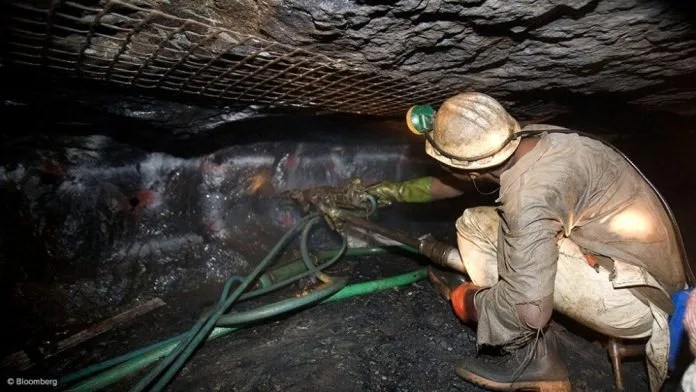
The National Union of Mineworkers (NUM) has accused mining and construction companies of failing to prevent workplace deaths, warning that workers continue to bear the human cost of an industry that depends on their labour to generate wealth.
The union’s National Health and Safety Committee (NAHSCO) said 38 mineworkers and 23 construction workers had died in workplace incidents during the reporting period, describing the fatalities as preventable failures of leadership, planning and accountability.
‘They left home to earn an honest living but never returned’
“These are not mere statistics,” NUM said. “They are human beings, parents, siblings, and breadwinners who left home to earn an honest living but never returned.”
The warning comes as the union raises concerns about how companies balance production demands, profits and worker safety.
NUM said workers were “sacrificing their lives while generating wealth for companies that too often prioritise production and profit above human dignity, safety, and health”.
A failure of accountability
The union said every fatality represented a failure of accountability that left families and communities carrying the consequences.
The committee also raised concern about an increase in women workers dying at workplaces, calling for urgent investigation and intervention. It said memorial services and condolences were not enough without enforceable action to prevent further deaths.
NUM said the impact of workplace failures extended beyond fatalities, pointing to serious injuries, occupational diseases, psychological trauma and a demoralised workforce.
Safety discussions among employers, labour and government
The union’s criticism extends to the way safety discussions are handled among employers, labour and government.
NUM said major mining companies were withdrawing from Tripartite Health and Safety Forums at a time when the industry needed stronger cooperation. It cited Anglo American’s withdrawal from the initiative, followed by Valterra, and said all planned Tripartite Health and Safety meetings for 2026 had been cancelled.
“Employers should be strengthening cooperation — not withdrawing from it,” the NUM said.
The union said these forums were essential because they brought together organised labour, employers and government to identify risks and prevent deaths.
NUM also criticised Impala Mine’s “Safety Day” following multiple workplace fatalities, saying the union had been excluded from the event despite being a recognised workforce representative.
Public relations responses to safety failures ‘do not help’
The union rejected what it described as public relations responses to safety failures, saying safety required proper equipment maintenance, effective supervision, visible leadership and worker participation.
Beyond safety, NUM raised concerns about job losses in the diamond sector, warning that workers were being forced to carry the burden of company restructuring.
The union highlighted threats to more than 1 100 permanent jobs at Venetia Mine in Musina, uncertainty at Cullinan Mine and the business rescue process at Finch Mine in Kimberley.
NUM said mineworkers should not bear the cost of corporate restructuring while executive interests remained protected.
The union has called on the Department of Mineral and Petroleum Resources, the Mine Health and Safety Inspectorate and employers to strengthen enforcement, hold companies accountable and ensure workers have a meaningful role in safety decisions.
“Our message is clear: Every worker who leaves home for work deserves to return home alive,” NUM said.
Summary
The National Union of Mineworkers (NUM) reports 61 workplace deaths (38 in mining, 23 in construction) due to preventable safety failures, emphasizing the human cost behind these fatalities.
NUM criticizes companies for prioritizing production and profit over worker safety, highlighting a failure of leadership, planning, and accountability.
Concerns include rising deaths among women workers, inadequate cooperation in safety forums due to company withdrawals, and exclusion of union voices in safety events.
The union warns against superficial public relations responses, stressing the need for proper safety measures, and highlights ongoing job insecurity amid company restructuring in the diamond sector.
NUM calls on government agencies and employers to enforce safety regulations, hold companies accountable, and ensure workers have a meaningful role in safety decisions.
Listen
🎧 Listen to this article
The National Union of Mineworkers (NUM) has accused mining and construction companies of failing to prevent workplace deaths, warning that workers continue to bear the human cost of an industry that depends on their labour to generate wealth.
The union’s National Health and Safety Committee (NAHSCO) said 38 mineworkers and 23 construction workers had died in workplace incidents during the reporting period, describing the fatalities as preventable failures of leadership, planning and accountability.
“These are not mere statistics,” NUM said. “They are human beings, parents, siblings, and breadwinners who left home to earn an honest living but never returned.”
The warning comes as the union raises concerns about how companies balance production demands, profits and worker safety.
NUM said workers were “sacrificing their lives while generating wealth for companies that too often prioritise production and profit above human dignity, safety, and health”.
The union said every fatality represented a failure of accountability that left families and communities carrying the consequences.
The committee also raised concern about an increase in women workers dying at workplaces, calling for urgent investigation and intervention. It said memorial services and condolences were not enough without enforceable action to prevent further deaths.
NUM said the impact of workplace failures extended beyond fatalities, pointing to serious injuries, occupational diseases, psychological trauma and a demoralised workforce.
The union’s criticism extends to the way safety discussions are handled among employers, labour and government.
NUM said major mining companies were withdrawing from Tripartite Health and Safety Forums at a time when the industry needed stronger cooperation. It cited Anglo American’s withdrawal from the initiative, followed by Valterra, and said all planned Tripartite Health and Safety meetings for 2026 had been cancelled.
“Employers should be strengthening cooperation — not withdrawing from it,” the NUM said.
The union said these forums were essential because they brought together organised labour, employers and government to identify risks and prevent deaths.
NUM also criticised Impala Mine’s “Safety Day” following multiple workplace fatalities, saying the union had been excluded from the event despite being a recognised workforce representative.
The union rejected what it described as public relations responses to safety failures, saying safety required proper equipment maintenance, effective supervision, visible leadership and worker participation.
Beyond safety, NUM raised concerns about job losses in the diamond sector, warning that workers were being forced to carry the burden of company restructuring.
The union highlighted threats to more than 1 100 permanent jobs at Venetia Mine in Musina, uncertainty at Cullinan Mine and the business rescue process at Finch Mine in Kimberley.
NUM said mineworkers should not bear the cost of corporate restructuring while executive interests remained protected.
The union has called on the Department of Mineral and Petroleum Resources, the Mine Health and Safety Inspectorate and employers to strengthen enforcement, hold companies accountable and ensure workers have a meaningful role in safety decisions.
“Our message is clear: Every worker who leaves home for work deserves to return home alive,” NUM said.
Johannesburg – The Congress of South African Trade Unions has expressed extreme dismay at President Cyril Ramaphosa’s appointment of members to the National Council on Gender-Based Violence and Femicide, saying the process ignored clear legal requirements for the inclusion of labour and business representatives.
COSATU noted that the National Council on Gender-Based Violence and Femicide Act of 2024 specifically calls for representatives from business and labour to form part of the Council. This did not happen. Highly experienced gender rights activists from the labour movement had been nominated to Parliament, yet none were appointed. The federation said this failure was formally raised with the Portfolio Committee on Women, Youth and Persons with Disabilities, which handled the selection process, but no response was received.
Exclusion of Labour and Business Representatives
The Act establishes the Council as a statutory body to provide strategic leadership in eliminating gender-based violence and femicide. It must coordinate a multi-sectoral and inter-sectoral approach to implement the national strategy on GBVF at national, provincial and local levels. The Board is limited to no more than 15 members. Seven of these must come from civil society and the private sector. Civil society is defined in the law to include non-governmental organisations, labour, and structures that represent citizens’ interests in the field of gender-based violence and femicide. Government departments also nominate representatives of a certain rank.
President Ramaphosa appointed the members for a three-year term from 1 August 2026 to 31 July 2029. Dr Ramalepe Lebogang Mathibe was designated chairperson and Ms Welheminah R. (Shoki) Tshabalala deputy chairperson. The other members are Ms Keitumetse Fatimata Moutloatse, Ms Caroline Peters, Dr Zubeda Dangor, Ms Vuyisiwe Numalo, Mr Anele Siswana and Mr TWM Limema.
COSATU argued that the absence of organised labour and business leaves a critical gap. “We cannot allow the state to bluetick its own legislation and their legally binding provisions,” the federation stated.
Workplace Gender-Based Violence Must Sit at the Centre
Gender-based violence and femicide is not an abstract issue, COSATU stressed. It is the lived reality of the cashier at a supermarket harassed by customers, the daily abuse faced by cleaners who fear their own colleagues, and the nightmare of young women across workplaces who are told they will only be appointed if they sleep with the boss.
Workplace trauma linked to GBVF needs to sit at the centre of the Council’s work. The federation said the Council requires the active collaboration of partners in organised labour and business if it is to meet its important objectives and progressive mandate. Without that partnership, the body risks falling short of the multi-sectoral approach the law itself demands.
Long Delays and a National Crisis
The Council’s establishment has been years in the making. The enabling Act was signed in 2024 after earlier commitments dating back to the 2018 Presidential Summit on Gender-Based Violence and Femicide. Delays stretched through 2025 as concerns over funding, vetting and process arose in Parliament. President Ramaphosa himself previously expressed disappointment at the slow progress, noting that the Council was meant to drive down incidents of gender-based violence and that due processes had taken an inordinately long time.
Gender-based violence and femicide was later classified as a national disaster. This classification was intended to unlock stronger coordination, faster resource allocation, expanded survivor support, and better monitoring. The new Council is expected to build on that classification by challenging harmful attitudes, advancing women’s economic empowerment, strengthening law enforcement and scaling up survivor-centred services. Its term begins at the start of Women’s Month.
COSATU described Parliament’s handling of the simple but critical task of including labour and business as a tragedy. The federation said it will engage the Presidency and Parliament’s Presiding Officers to request intervention so that the legal requirements are met.
The Council is mandated to develop an action plan within six months of its establishment for implementing the national strategy. Whether it can deliver meaningful results without the full partnership of labour and business will now be closely watched by those who experience gender-based violence daily in homes, communities and workplaces across South Africa.
Central News also offers Sponsored Editorial Content, Podcasts , Radio / Social Media Simulcast, Video Production , Live Streaming Services, Press Conferences, and Paid Interviews (Video/Audio) etc.
We guarantee exceptional exposure, reach, and engagement, with an excellent return on investment.
Advertisement:
To place your advert on our platforms (Print Newspaper or Digital Platforms) : Please email : sales@centralnews.co.za
For Business Related:
business@centralnews.co.za
Newsroom:
Send your Stories / Media Statements To: newsroom@centralnews.co.za
General Info:
info@centralnews.co.za
Office Administrator:
admin@centralnews.co.za
Whatsapp / Call: 081 495 5487
Website: https://www.centralnews.co.za
Social Media Platforms (@centralnewsza) : Linkedin, Facebook, Tiktok, Twitter, Instagram, Youtube