by Dev_SACCAWU | Labour Market News
A startling new report highlights the extreme severity of South Africa’s crime crisis, revealing that just three local metros have recorded double the murders of the entire European Union. Regionally, a key official is arrested following the catastrophic Lake Kariba ferry disaster. Globally, rescue teams are frantically searching for over 1,300 people missing in devastating flash floods on the Nepal-China border, while tech giant Meta agrees to a historic $18 billion legal settlement.

The Brief cover by TheProfiler
SOUTH AFRICA | KEY DEVELOPMENTS
SA’s Three Biggest Cities Record Double the Murders of the Entire EU
A shocking new data analysis reveals the extraordinary scale of South Africa’s violent crime epidemic. The combined cities of Johannesburg, Cape Town, and eThekwini recorded 8,553 murders in the latest reporting period, more than double the 3,953 murders documented across the entire 27-nation European Union in 2024. While the three metros hold just 3% of the EU’s total population, Cape Town’s staggering murder rate hit 71.5 per 100,000 people, compared to the EU average of just 0.9. This lethal violence and the resulting security costs continue to severely cripple South Africa’s potential for economic growth and job creation.
Broken by: The Common Sense
Parliament Alarmed by Defence Department Corruption
The Parliamentary Defence Committee has raised severe red flags over widespread tender irregularities within the Department of Defence and Military Veterans. Lawmakers were recently briefed by the Hawks regarding 13 ongoing investigations into suspicious contracts worth hundreds of millions of rand, some of which have already been referred to the National Prosecuting Authority. One of the most glaring probes involves the alleged unlawful transfer of R40 million contributed by active-duty soldiers to the South African Army Foundation, intensifying calls for a sweeping crackdown on military corruption.
Broken by: Parliamentary Monitoring Group (PMG)
Premier Foods Workers Strike Over Looming Factory Closure
Industrial tensions are boiling over in the Western Cape as Cosatu rallies behind workers at Premier Foods’ fruit products plant in Tulbagh against a proposed factory closure. Employees fear the shutdown will devastate the local community, threatening an estimated 3,000 permanent and seasonal jobs. The union argues that the sudden loss of income will devastate the region’s agricultural value chain, highlighting the severe socio-economic impact of corporate restructuring in rural farming hubs.
Broken by: SACCAWU / Cosatu
AFRICA | KEY DEVELOPMENTS
Official Arrested for Culpable Homicide Over Lake Kariba Ferry Disaster
In a major push for accountability following Zimbabwe’s deadliest recorded maritime disaster, authorities have arrested Ignatius Chiome, a district coordinator for the Kariba Rural Infrastructure Development Agency (RIDA). Chiome has been charged with culpable homicide and remanded in custody after the RIDA-operated Mbuya Nehanda ferry capsized on August 11, killing 97 people. Investigations revealed the vessel was severely overloaded—carrying well beyond its 90-passenger authorized capacity—when it encountered rough conditions on the lake.
Broken by: The Herald / allAfrica
Guinea President Dismisses 173 Soldiers in Massive Shake-Up
Guinea’s military ruler, President Mamadi Doumbouya, has abruptly dismissed 173 military personnel over allegations of desertion. The sweeping purge includes Michel Lamah, a prominent member of the elite Special Forces unit who was highly visible during the execution of the September 2021 coup that originally brought Doumbouya to power. The move is widely viewed as a decisive effort by the president to eliminate internal dissent and consolidate his grip on the mineral-rich West African nation.
Broken by: Business Insider Africa
WORLD | KEY DEVELOPMENTS
Over 1,300 Missing in Devastating Nepal-China Flash Floods
A catastrophic glacier collapse on the Nepal-China border has triggered massive flash flooding along the Trishuli River. Authorities report that over 1,300 people remain missing across both nations, while the death toll in Nepal has climbed to at least 162. The missing include hundreds of foreign tourists and pilgrims traveling to sacred Hindu sites, with authorities noting that at least four South African nationals are currently unaccounted for. The United Nations has urgently mobilized humanitarian teams and helicopters to assist the overwhelmed emergency rescue operations.
Broken by: Reuters / Daily Maverick | SABC News
Meta Agrees to Historic $18 Billion Settlement Over Social Media Addiction
In a landmark legal capitulation, tech behemoth Meta has agreed to pay up to $18 billion to settle claims brought by a massive coalition of US state attorneys general. The lawsuits alleged that the company actively engineered its Facebook and Instagram apps to be addictive to children and teenagers, leading to anxiety and depression across a generation of youth. The unprecedented financial penalty marks a turning point in the global push to regulate Big Tech, forcing Meta to implement strict daily time limits and overnight access blocks for teenage users.
Source: https://theprofiler.co.za/the-brief-27-august-2026-1200-pm-sast
by Dev_SACCAWU | Labour Market News
THE Congress of South African Trade Unions (Cosatu) will be holding its 15th national congress from 14 to 17 September.
– SOLLY PHETOE
It is a workers’ parliament where thousands of workers from our farms to our factories will be raising the many dire challenges that they experience at the workplace and in their communities. Most importantly, it is a chance to debate and craft solutions for the Federation to take beyond congress.
Congress will take place against the backdrop of some of the most intractable challenges facing the working class from a dangerously high 43.8% unemployment rate, to entrenched poverty and inequality, to the rising cost of living, to intolerable crime and corruption.
It occurs at a time when despite the substantial progress in tackling state capture and corruption, loadshedding and other challenges facing the state; many frontline public and municipal services are reeling from years of austerity budget cuts, mismanagement and neglect.
South Africa is facing many brutal headwinds, from the collapse of municipal services in many towns and communities to skyrocketing oil and fuel prices due to the war in the Persian Gulf to the weaponisation of international trade tariffs.
These have real consequences for domestic economic growth, for the very survival of many local companies to the jobs of thousands of South African workers, black and white, and their ability to take care of their families.
Over the past year we have seen furniture, jewellery and other manufacturing companies close in different parts of the Western Cape and South Africa because of the impact of the high tariffs set by the United States upon South African exports to the world’s largest economy.
Read more
Source: https://www.magzter.com/stories/newspaper/Cape-Times/WORKERS-UNITE-KEY-ISSUES-AT-COSATUS-UPCOMING-NATIONAL-CONGRESS
by Dev_SACCAWU | Labour Market News
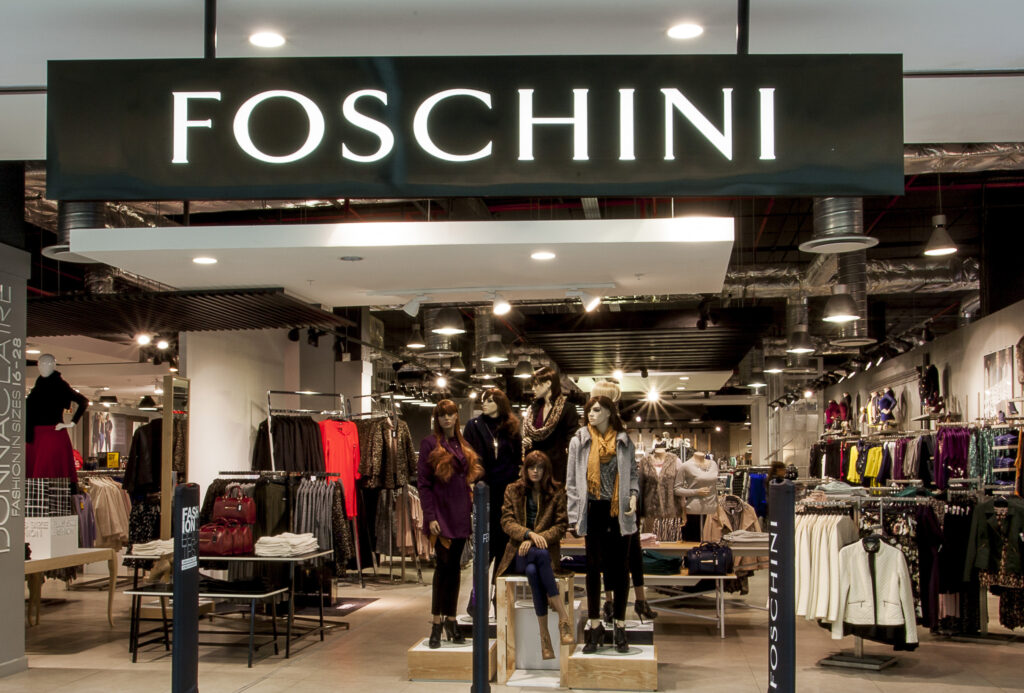
TFG plans to close ‘hundreds’ of unprofitable SA stores and ‘fold’ marginal brands into more efficient operating models. Image: Supplied
Retail major The Foschini Group Limited (TFG), the owner of around 40 brands across three markets, has commenced a formal consultation process under Section 189A of the Labour Relations Act that could see retrenchments of some of its South African staff.
Staff were notified of the restructuring process last week, and TFG confirmed to Moneyweb that the process is under way.
Read:
TFG borrowed R1bn to buy back shares that are now worth R553m
TFG slumps to levels last seen in 2010
Moneyweb understands that a number of roles at its head office could be affected but that this process does not impact its store-level retail operations.
It is entirely unclear whether any of its sprawling manufacturing units across both clothing and furniture will be affected.
‘Protecting employment’
In response to questions from Moneyweb, TFG said only that it “has been reviewing part of its Head Office operating model to reduce complexity and structurally lower our cost of doing business, in line with the group’s strategic objectives”.
“Where roles are affected, we always follow a consultation process in terms of Section 189 of the Labour Relations Act. These are proposals, not decisions, and we will follow the appropriate due process.
“Employees who may be affected are engaged directly, and any alternatives they raise are fully and properly considered,” it said.
“Our priority is to protect employment wherever possible, including redeployment into suitable roles across the group.”
Read:
TFG did not directly address any of Moneyweb’s questions, including those related to how many roles and/or which functions may be impacted.
It hinted at this eventuality in its annual report, saying that the “strategic actions” it is now “implementing go further: tight control of capex and inventories, an aggressive reduction in structural operating expenses and further cutting corporate overheads now that the build phase is reaching completion”.
Organising brands into ‘stacks’
In its TFG Africa retail business, its Project Vela programme will “organise brands into operating ‘stacks’”, which “will simplify structures, remove layers and improve agility, with marginal brands folded into more efficient operating models”.
Read: TFG ups its sneaker game with Street Fever acquisition [2022]
Moneyweb understands that the Section 189A process is, in part, related to the 2022 acquisition of Street Fever, which saw it combine that brand’s 114 stores with its fast-growing Sneaker Factory outlets.
At that point, it ‘absorbed’ about 650 jobs from that independent retailer, of which no more than around 50 would’ve been traditional ‘head office’ ones.
The real question is why it has taken TFG more than three years to deal with potential duplications arising from this purchase.
It has an extensive ‘Sports and Lifestyle’ brand portfolio, anchored by Sportscene and Totalsports. Along with this, it has opened JD Sports stores under licence from the UK brand, and it operates the niche youth-focused Archive brand.
Sneaker Factory targets the value segment and was specifically acquired to allow TFG to extend its penetration lower down into that market.
TFG Africa under pressure
Within TFG Africa, ‘Sports’ accounts for just more than 20% of sales, making it the largest contributor among divisions.
Its share price has reflected this pressure with shares down 35% so far this year.
Over one year, its share price has more than halved (down 51%).
Since the start of its, in hindsight, disastrous capital markets day in August 2025 (technically two days), it has shed 54% of its market value, with the big drop coming in October after it published a profit warning where practically every metric was in the wrong direction.
Over the last 30 days, shares are up 7%.
Closing unprofitable stores
It continues to pursue an “aggressive” closure of unprofitable stores in South Africa, in which it has the vast majority of outlets in the TFG Africa division.
Read: TFG takes earnings hit despite sales growth
At the end of the financial year, it had 3 432 of its total 4 914 outlets in South Africa. It aims to shut “hundreds” of unprofitable stores as part of this reset.
Source: https://www.moneyweb.co.za/news/companies-and-deals/tfg-commences-section-189-process/
by Dev_SACCAWU | Labour Market News
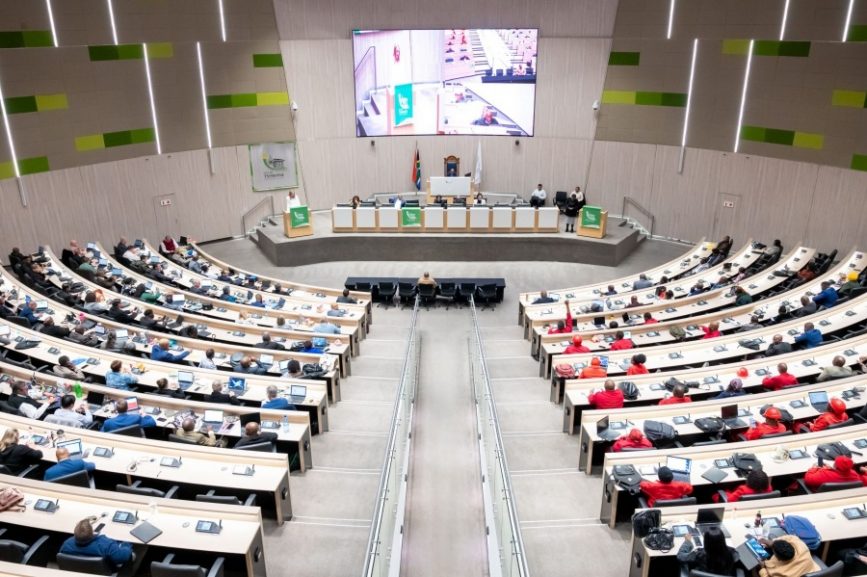
City of Tshwane chambers
Image Credits: X@CityTshwane
The City of Tshwane has rejected claims that its 2026/27 budget faces a R2 billion shortfall for employee-related costs.
According to the city, the figure reflects the difference between an initial departmental request and the final approved allocation.
Group Human Capital Management initially requested about R15bln for personnel costs, but Group Financial Services approved approximately R13mln following affordability and budget scrutiny.
The city says the approved allocation is sufficient to meet anticipated employee-related expenditure and that it has not identified a material risk of overspending at this stage.
Tshwane City says that the R13bln allocation includes R229mln for filling vacancies and R362 mln for salary back-pay obligations during the financial year.
The difference between the initial request and approved allocation should not be interpreted as an unfunded liability or salary shortfall.
The city emphasises that employee-related expenditure will continue to be closely monitored to ensure personnel costs remain within the approved budget.
Should spending trends require additional funding, the city says this can be addressed through established processes, including the adjustments budget.
-Reporting by Culvin Mabasa
Source: https://www.sabcnews.com/sabcnews/city-of-tshwane-denies-r2-billion-shortfall-for-employee-costs/
by Dev_SACCAWU | Labour Market News
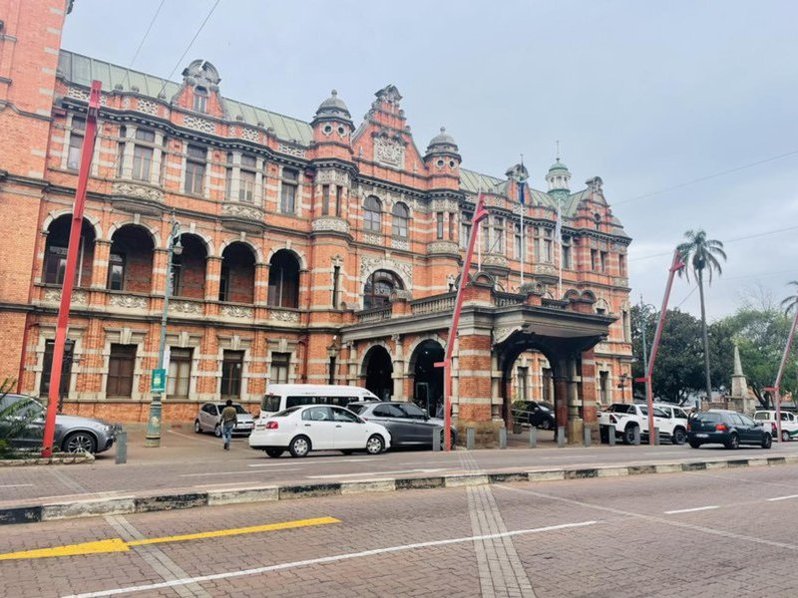
Msunduzi Municipality – City of Choice / Facebook
The South African Municipal Workers’ Union says it is still working to reach an agreement with Msunduzi Municipality following a renewed strike by municipal workers.
The South African Municipal Workers’ Union says it is still trying to reach an agreement with the Msunduzi Municipality.
On Thursdays, workers downed tools as part of an ongoing labour dispute – with the municipality saying the strike affected service delivery across the city.
SAMWU‘s Bongi Gule says the latest strike follows an earlier work stoppage in June, which was suspended after the union and municipality agreed on eight issues.
She says the union then tried to get the agreement signed, but the municipality failed to come on board – leading to the strike resuming.
“We’ve agreed with the municipality that on Monday we must finalize this thing. We’re not too sure whether they will sign, because I cannot confirm at the moment whether they will sign or not, because that’s what they did last time.
“They said they will sign and then they didn’t. But still we are hoping that on Monday everything will be finalized.”
The municipality has meanwhile condemned the alleged intimidation of staff, damage to municipal infrastructure and any actions that infringe on the rights of others.
It says the right to strike does not give anyone the right to intimidate employees, damage public property or compromise the safety and freedom of residents and other workers.
The municipality is appealing for restraint and patience from residents and businesses while engagements with SAMWU continue.
Source: https://www.ecr.co.za/news/news/samwu-msunduzi-strike-labour-agreement/

