Venetia Mine in South Africa Image Credits: Handout via Reuters
Members of labour union, National Union of Mineworkers (NUM) are calling for the resignation of Venetia diamond mine’s general manager Ntokozo Ngema.
The call was made during a march to the mine’s operations in All Days, outside Musina in Limpopo.
The mine has served over 1 000 workers with notices of retrenchments. A number of off-duty workers were joined by NUM members from various regions across the province in protest against the impending retrenchments.
However, NUM regional organizer Emmanuel Mohale believes the mine’s decision is as a result of austerity measures.
“The reason why we are saying that this manager must go. This manager has failed this mine, dismally so. There is R13.6 billion which the mine has lost under his auspices, under his supervision. Since he has came here, there was a lot of retrenchment which has happened, with inclusive of the contractors. You can look on the Murray and Robert, we lost 1 500 under his management. Again, with the employees of the mine, last year we lost 185. And he’s unable to tell us where did this R13.6 billion went to.”
This includes back pay to the date the lecturers achieved applicable qualifications for a raise
Five Ingwe TVET College lecturers are to receive salary adjustments and back pay after a three-year battle. File picture: (123RF/marwphoto)
Five lecturers at Ingwe TVET College in the Eastern Cape are to receive salary adjustments and back pay after a three-year battle with the department of higher education.
The South African Democratic Teachers’ Union (Sadtu) said it had secured the notch adjustment after the lecturers were left waiting despite obtaining qualifications that entitled them to higher salaries.
The union said the lecturers were employed at the college at REQV 13 level but obtained the necessary qualifications between 2019 and 2020 to qualify for REQV 14, including the applicable cash bonuses.
In 2024, Sadtu approached the Education Labour Relations Council (ELRC), asking it to determine whether the department had committed an unfair labour practice by failing to adjust the lecturers’ salary notches after they submitted their qualifications between 2019 and 2022.
During arbitration proceedings, the department conceded that the lecturers qualified for the salary adjustment because they had obtained the required qualifications.
The ELRC then ordered the department to adjust the salary notches and pay the money owed to them. The adjustments were to be backdated to the dates the lecturers obtained their qualifications, while one lecturer’s adjustment was to start from the date of employment.
But the matter did not end there.
Sadtu said the department failed to comply with the arbitration award, forcing the union to take the matter to the labour court.
On July 24, the court ordered the department to appear virtually on August 28 to show why it should not be found guilty of contempt for failing to comply with the ELRC award. While waiting for the labour court proceedings, the lecturers received supplementary payslips confirming that their salary notches would be adjusted.
For Sadtu general secretary Mugwena Maluleke, the development was a victory for the union and the educators it represents.
“The defence of educator rights and the advancement of learner rights are inseparable tasks of a teachers’ union,” said Maluleke.
Sadtu remained committed to building a strong union in the TVET sector and challenging policies and management practices it viewed as undemocratic and anti-worker.
The union said it welcomed the resolution and would continue working to ensure its members received the salaries, benefits and working conditions to which they were entitled.
Imatu shop steward Thulani Nzimande said workers who had stayed on the job were being made to bear the financial consequences of a dispute in which they were not involved.
IMATU shop steward Thulani Nzimande confronted Msunduzi Municipality officials at the city’s council chambers yesterday morning over delayed salary payments to municipal employees amid the strike led by the South African Municipal Workers’ Union (SAMWU). PHOTO: SUPPLIED
Tempers flared at Msunduzi Municipality’s council chambers on Monday as workers demanded answers over delayed salaries, with some saying bounced debit orders had left them facing financial penalties.
Mayor Mzimkhulu Thebolla apologised to employees for the delay but insisted it was not because the municipality had run out of money.
He blamed disruption caused by the ongoing strike, saying officials had been unable to complete the processes needed to release salaries on time.
“The delay in the payment of salaries is not because the municipality has no money,” Thebolla said.
Shop stewards from the Independent Municipal and Allied Trade Union (Imatu), representing employees who were not participating in the strike, confronted municipal officials shortly before a scheduled media briefing.
Imatu shop steward Thulani Nzimande said workers who had stayed on the job were being made to bear the financial consequences of a dispute in which they were not involved.
“Their debit orders bounced because their salaries were not paid. Why punish people who are not part of the strike?” Nzimande asked.
He said affected workers faced additional costs from banks and other service providers.
“Those debit orders will accrue penalties, and we expect the municipality to deal with those penalties,” he said.
Nzimande said shop stewards had earlier gone to municipal manager Felani Mndebele’s office seeking an explanation but were unhappy with his response.
We went to the City manager’s office seeking to be addressed by him, but he said he had no time for us. How can he not have time for us, yet he has time to hold our salaries?
“He further told us to go seek answers from Samwu, and that was unprofessional for him to say that,” he said.
He said Imatu had a right to be recognised and represent its members.
The confrontation continued inside the council chamber before Deputy Mayor Mxolisi Mkhize intervened and urged them to leave the chamber so he could address them outside.
Police maintained a presence outside while Church Street remained blocked by employees continuing their strike action over several issues.
Samwu chairperson in Msunduzi Brandon George said municipal employees had initially not received their salaries in the morning, although some payments began reflecting around midday.
Employees said the delay had caused anxiety for households with monthly financial commitments.
Nompumelelo Dladla said workers were worried and disturbed by the situation.
Another employee, who asked not to be named, said the impact went beyond bounced debit orders.
Besides debit orders, we have families to care for; we have school-going children to worry about.
“We received no communication from the city management alerting us to the non-payment of our salaries,” the employee said.
Thebolla said the industrial action had prevented officials from accessing municipal premises and completing the administrative, financial, verification and authorisation processes required before salaries could be released.
He said municipal leadership had held five meetings since Tuesday the previous week in an effort to resolve the dispute.
Thebolla said agreement had been reached on all 10 issues under discussion with union representatives, with the parties expected to sign an agreement soon.
DA caucus leader Ross Strachan disputed the municipality’s explanation, saying the salary delays reflected wider financial pressures facing Msunduzi.
“There simply isn’t enough money flowing through the municipality to meet all of its financial obligations,” Strachan said.
He warned that continued disruption could further undermine revenue collection, payments and service delivery.
The ACDP also called for an end to the strike, saying the municipality was already in dire financial straits and service delivery was at an all-time low.
Transport Minister Barbara Creecy has extended the notice period for the retrenchment of employees at the Passenger Rail Agency of South Africa (PRASA) to allow the Ministerial Task Team more time to explore alternatives.
Of the 580 affected employees, 43 have accepted early retirement packages, while 102 have been matched and placed in identified vacancies across PRASA divisions and departments.
A further 208 Protection Services employees have been ring-fenced pending the conclusion of engagements with Transnet on the transfer of stations and related assets.
The Department of Transport said a formal notice for the transfer of assets has been issued and that the parties are working to conclude the process as soon as possible.
“Creecy has extended the Section 189 notice period until the end of August 2026 to allow the Task Team to explore alternatives for the remaining 227 employees,” the department said in a statement on Wednesday.
The Task Team was appointed on 2 June 2026 and comprises representatives from the Department of Transport, organised labour and PRASA management.
“PRASA initiated a consultation process in terms of Sections 189 and 189A of the Labour Relations Act in November 2025, following a business decision to address excess staffing levels within its Long-Distance Passenger Services.
“The consultation process was facilitated by the Commission for Conciliation, Mediation and Arbitration (CCMA) and included formal engagements with the United National Transport Union (UNTU) and the South African Transport and Allied Workers Union (SATAWU),” the department said. – SAnews.gov.za
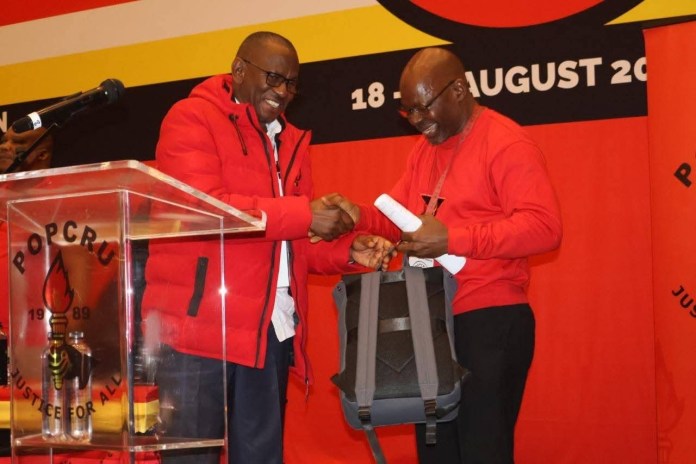
Popcru president Thulani Ngwenya and SACP general secretary Solly Mapaila at the Popcru CEC meeting in August 2026. / Popcru
Dive Deeper
The South African government, chiefly the National Treasury, has come under heavy attack for advancing budget cuts that are hollowing out the public service.
This was the common thread at the ongoing Police and Prisons Civil Rights Union (Popcru)’s central executive committee (CEC) meeting taking place at the Birchwood Hotel in Boksburg, east of Gauteng.
Speaker after speaker, including Popcru president Thulani Ngwenya, South African Communist Party (SACP) general secretary Solly Mapaila, and Congress of South African Trade Unions (Cosatu) president Zingiswa Losi were all singing from the same hymn book.
According to the three, the budget cuts in public service were a ruse to tilt the scales in favour of business, which was now getting into the space of providing services that historically were reserved only for the public sector.
A case in point is the provisions of identity documents and passports through some banking institutions, which meant fewer jobs for workers within the Department of Home Affairs.
According to statistics presented by Ngwenya, as a result of austerity measures, the number of prison wardens has almost halved in the past 16 years, from 40,000 in 2009 to 26,000 now, while the number of inmates continues to rise. This in a space where private players like security firm G4S having entered.
Driving the point further, Mapaila pointed to the South African Democratic Teachers Union (Sadtu)’s recent revelations that there were 27,000 outstanding posts within the basic education sector, which breeds fertile ground for more private schools to enter the space.
Ngwenya said time for tiptoeing around the issue of the negative impact of budget cuts was over as it was time to face who they perceive as an enemy in this regard – National Treasury.
Ngwenya said:
“Our enemy as workers is National Treasury. Your ammunition and AK47s must be directed to the National Treasury, not wrong places. National Treasury is busy implementing neoliberal policies that are against the working class.”
“What makes matters worse is that the minister at National Treasury is a worker (former Numsa general secretary Enoch Godongwana). He is one of the people who were teaching us about how bad GEAR was. Today he is one of those telling us that we do not understand”, he continued.
“When there are budget cuts and critical posts are left vacant, those are policy choices which should never be blamed on “lazy” public servants. Some functions are outsourced that could be performed by the state.”
Ngwenya said the “policy choices” of the government of the day to centralise its strategy on budget cuts should never be a burden of public servants who automatically become overworked.
Mapaila accused the ANC-led government of making it their “policy choice” to embark on austerity way before the birth of the government of national unity in which known liberal parties also have a stake.
According to Mapaila, the policy choice of the ANC to pursue neoliberal decisions, including budget cuts, had led to, among other anomalies, understaffed police stations, broken police vehicles, overcrowded prisons, collapsing infrastructure and public service centres carrying impossible loads.
“These are outcomes of budget cuts – austerity imposed by a capitalist government. The weakening of the state is not neutral; it is a capitalist project that shifts its crisis on to the workers and the poor,” said Mapaila. He added that the government was demanding workers to do more, with less, while growth is being witnessed in the same areas in the private sector.
Losi hammered the final nail in the budget cuts’ coffin when he said South Africa can kiss building a developmental state goodbye if austerity measures are the order of the day.
“The ultimate end is that the state itself, its capacity, becomes weak. And therefore, comrades, a developmental state cannot be built through austerity. A capable state cannot be built by continuously reducing its capacity,” she said.
“That is why Cosatu said we need a developmental budget, a people’s budget – that invests in people, that invests in infrastructure and that invests in industrialisation and the frontline public services.
Summary
The South African government, led by the National Treasury, is being criticized for budget cuts that are weakening the public service, according to Popcru and allied unions at a meeting in Boksburg.
Budget cuts have resulted in a significant reduction of prison wardens from 40,000 in 2009 to 26,000 currently, despite rising inmate numbers, and have opened space for private firms like G4S.
The Department of Home Affairs is outsourcing services such as identity documents and passports to banks, leading to fewer jobs in the public sector.
The South African Democratic Teachers Union revealed 27,000 outstanding posts in basic education, which is encouraging growth of private schools.
Cosatu president Zingiswa Losi stated that austerity measures undercut building a developmental state because they weaken the state’s capacity by continuously reducing its resources.




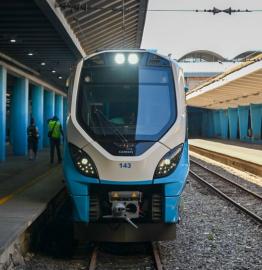 Transport Minister Barbara Creecy has extended the notice period for the retrenchment of employees at the Passenger Rail Agency of South Africa (PRASA) to allow the Ministerial Task Team more time to explore alternatives.