by Dev_SACCAWU | Labour Market News
After a difficult few years, Pick n Pay says its turnaround is gaining traction, with improving earnings guidance and renewed focus on operational recovery. But the road ahead remains complex. The retailer has pushed out its break-even target for its core supermarket business by a year to FY2029, even as Boxer continues to outperform, competitive pressures intensify and global geopolitical risks cloud the consumer outlook. Joining CNBC Africa is Pick n Pay CEO, Sean Summers.
Source: https://www.cnbcafrica.com/media/7779708632641/pick-n-pays-fy26-group-turnover-up-34-boxer-boosts-performance
by Dev_SACCAWU | Labour Market News

Illustrative image: Trolley (Graphic: Freepik) | Pick n Pay logo (Source: picknpay.coza)
Pick n Pay is in a tough spot – wanting to improve the customer experience for SA’s savvy shoppers as well as its operational efficiency, yet facing resistance from workers over proposed changes in shifts and pay. All that, and it must keep its investors happy, who are concerned about its decision to sell R4.7-billion worth of shares in Boxer.
The other day I had an excellent breakfast with a friend and found myself with a few minutes before I had to do my usual dash around the potholes to my first port of work for the day.
Finding myself at a loose end in a shopping centre, without the fun company of any of my family members, my first pang was one of guilt.
Should I really be here? Without looking at my Google Keep shopping list of reasons to be at the mall at this particular time.
I decided to put away my pang of guilt (I have some practice at this) and walk to the bottom floor to see what I could see.
There was a Pick n Pay liquor outlet. And idly browsing the Irish medicinal section I realised, with something of a start, that a particular item was on a massive special.
In fact, owing to a global glut of high-quality Irish medicine (Really, I’m not making this up), there are some good prices around. And there was one on offer. In fact, it was literally a third off.
Out of duty to a friend I felt I needed to buy two, which would save me literally the full price I would now pay per bottle.
With a start I realised I had never bothered, never felt the need until that moment, to get a Pick n Pay Smart Shopper card. I had not been into one of their stores to actually buy something for that long.
Obviously, I did the rational thing, got the card (to make a friend happy) and ran out of the mall before anything else could happen.
Turnaround strategy
In a way, this is Pick n Pay’s fundamental problem.
While Boxer is doing incredibly well, the turnover at Pick n Pay supermarkets was down 1.6%.
Now, the group will say, correctly, that one of the reasons for this is that it shut some of their stores during the period. And this was part of the turnaround plan.
As Pick n Pay CEO Sean Summers has previously explained, it made no sense to keep its big branch at Hyde Park in Joburg when the design of the store did not work for the group (in particular, he said it meant the group was paying for non-public space behind the store that came to around half the rent – of course, Checkers has taken the gap at Hyde Park).
But what really spooked investors last week was the announcement that Pick n Pay was selling R4.7-billion worth of its shares in Boxer. While it still has a controlling share (it now owns just more than 53%) it really looks like the group is selling what’s working to fund what’s not.
And it is doing this in the teeth of the toughest competition one can find.
Meanwhile, just up your street…
Checkers seems to have all the advantages at the moment. It is ahead in its delivery service; its corporate structure (it owns all its stores) allows it to invest in that service more easily (like Spar, Pick n Pay doesn’t own all its stores making this more difficult); it has huge momentum; and it’s able to keep its pricing down.
The real problem I think for Summers and Pick n Pay is simply to get people in through the doors.
And to do that, the group needs to make my experience better than anywhere else, and it needs to be cheaper.
But as previously discussed in this newsletter, in South Africa, you’re dealing with the best shoppers in the world. The nature of our society and the incredible pressure on promotions have created a group of people who plan their shopping and literally feed their families through the clever use of promotions.
Unlike the ultimate lazy shopper such as myself, they have all the cards and are not afraid to use them.
And Summers has to do all of this with workers who might well resist the major changes that are coming their way.
Workers’ perspective
The union Saccawu has condemned the changes, blasting management for introducing a Section 189 process.
While it is not the role of this newsletter to advise union leaders, if I were them, I would tread a little carefully here.
Pick n Pay says it’s not planning to fire or retrench people. It wants to change the shift system to make sure there are more workers in their stores on weekends and outside office hours. The reason is obvious – that’s when you shop.
But this will mean workers will, for example, get paid less for working on a Sunday.
If I were one of those workers I would be angry at that too – my life is about to be fundamentally changed and I might end up poorer.
But if this process goes badly, if Summers and those with him fail in turning around Pick n Pay, they might just be out of work completely. Because then this programme will move from changing shift patterns to actual retrenchments.
And if you used to work at Pick n Pay, you will have no option but to hope you can work for Checkers, which already uses the kind of shift pattern that Pick n Pay wants to emulate.
It reminds us that just because you haven’t been into a store for a while doesn’t mean it’s not important.
Pick n Pay is in a tough spot, it needs to make us all want to go to its stores to shop more often. And to spend more money. And to get Smart Shopper cards.
And if it fails to do that, the knock-on effects will be ghastly to contemplate. DM
Source: https://www.dailymaverick.co.za/article/2026-05-25-after-the-bell-pick-n-pay-struggling-uphill-with-the-worlds-best-shoppers
by Dev_SACCAWU | Labour Market News
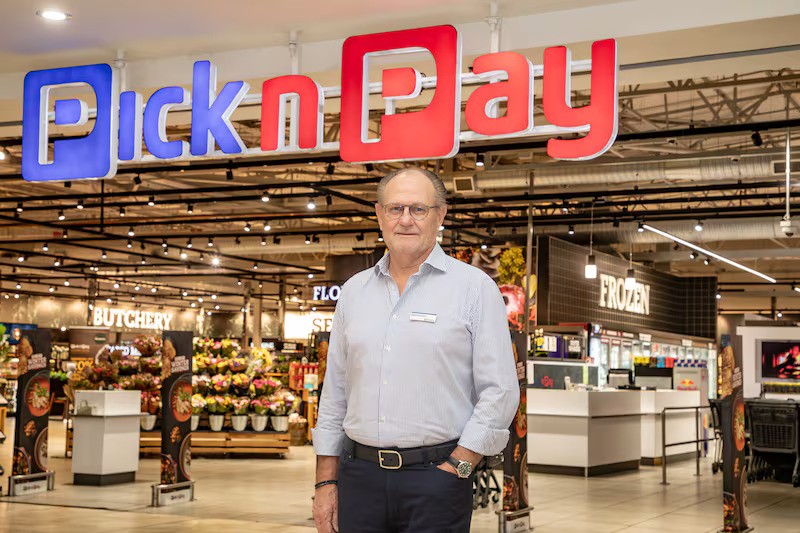
Pick n Pay CEO Sean Summers. Picture: Supplied (Supplied by Pick n Pay)
Retailer shifts to expansion after closing and converting underperforming outlets
Pick n Pay plans to open seven new stores in South Africa this year as it moves beyond a period of closures and conversions of underperforming outlets and continues its turnaround strategy.
The group currently operates 1,538 stores in South Africa across clothing, liquor and hyper/supermarkets. Of these, 950 are company-owned while 588 are franchised. In total it has 2,261 stores including 576 under subsidiary Boxer, and operations in Zimbabwe, Eswatini, Lesotho, Botswana and Zambia.
Over the past two years, Pick n Pay has been closing loss-making company-owned stores and converting some into its Boxer brand as part of efforts to restore profitability.
CEO Sean Summers said the store reset was largely concluded in the financial year to March 2026, with the focus now shifting to selective expansion. He added that the company continued to make progress with its turnaround objective of “driving improved like-for-like sales growth in profitable stores and those with reasonable prospects of achieving profitability, while closing or converting those with limited opportunity for recovery.”
Pick n Pay said it has delivered improvements in store standards, product availability and range, particularly in fresh categories. Progress has also been made on key priorities including improving support office efficiencies and optimising the supply chain, supported by a materially improved logistics contract and enhanced marketing initiatives.
We have a clear path to sustainability, driven by ongoing incremental gains, and remain confident that the initiatives we have put in place are starting to bear fruit as we rebuild a stronger, more competitive Pick n Pay for the long term.
— CEO Sean Summers
“Our store estate reset is effectively behind us, and we have achieved some of the key milestones we set ourselves. The positive customer feedback we are receiving is very encouraging,” Summers said.
For the 52 weeks to March 1 2026, Pick n Pay reported a 1% increase in turnover to R120.3bn, while its headline loss narrowed to R386m from R408m. Trading profit declined 4.2% to R1.68bn.
Summers said the turnaround strategy remained firmly on track, supported by improving top-line growth, renewed operational discipline and careful cash management.
“We continue to see encouraging progress across the business, but the challenges facing Pick n Pay developed over an extended period. Rebuilding the business into a leading supermarket retailer will take time, disciplined execution and difficult but necessary decisions,” he said.
He warned that market conditions could add pressure in the coming period, with higher diesel prices driving inflation and squeezing already strained consumers. “However, this is affecting the entire retail sector, not just us, and it is our job to control the controllables,” he said.
Encouragingly, in the nine weeks after the period-end, Pick n Pay’s South African supermarkets recorded slightly stronger like-for-like sales growth than in FY2026.
“We have a clear path to sustainability, driven by ongoing incremental gains, and remain confident that the initiatives we have put in place are starting to bear fruit as we rebuild a stronger, more competitive Pick n Pay for the long term,” Summers said.
Source: https://www.timeslive.co.za/news/business/2026-05-25-pick-n-pay-targets-new-store-openings
by Dev_SACCAWU | Labour Market News
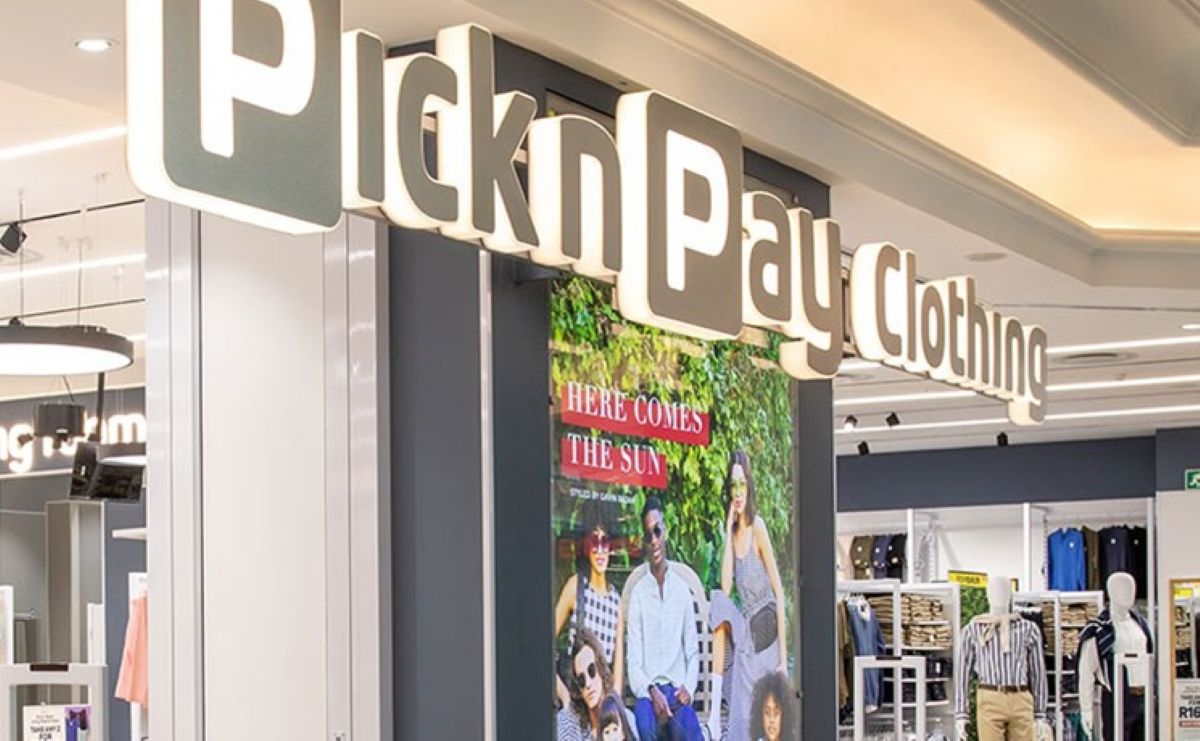
JOHANNESBURG — Retail veteran Sean Summers is not sugarcoating the reality of the task before him. Two-and-a-half years into spearheading the turnaround of one of South Africa’s most iconic retail institutions, the Pick n Pay CEO is making the hard, structurally painful choices required to rescue a bleeding giant.
The group’s financial results for the 52 weeks ended 1 March 2026 (FY26) paint a picture of a business starkly divided: a highly successful, fast-growing discount engine keeping the lights on, while the core supermarket brand undergoes intensive care.
The Numbers: A Tale of Two Businesses
At a group level, Pick n Pay managed a modest 3.4% increase in turnover. However, peeling back the layers reveals two wildly divergent trajectories:
- Boxer: The group’s low-cost champion continues to be its crown jewel, posting a stellar 12.3% turnover growth and increasing its trading profit by R330 million to reach R2.6 billion.
- Pick n Pay Supermarkets: Conversely, turnover for the core Pick n Pay brand declined by 1.6%. This drop was heavily influenced by aggressive store closures under its “store reset” strategy. The segment’s trading loss widened by R404 million, culminating in a R1.0 billion trading loss for the year.
Despite the heavy losses in the core segment, there are clear vital signs of recovery. Thanks to aggressive cost management and structural interventions, the Group successfully trimmed its overall Headline loss by R45 million, bringing it down to R363 million. Gross profit margin also expanded by 0.5% to 18.8%, showing improvements across both brands. Furthermore, the group’s online business continues to be a massive bright spot, with turnover surging by 32.7%.
Fixing the Foundation: Three Down, Three to Go
In 2024, Pick n Pay mapped out six strategic priorities to steady the ship. Summers notes that three of these pillars are now largely complete: recapitalising the business, re-establishing leadership structures, and resetting the store estate.
The balance sheet received a monumental boost post-period-end on 18 May 2026 via a R4.7 billion Boxer share placement. This capital raise significantly enhanced financial flexibility while allowing Pick n Pay to retain a controlling stake in its star performer.
“We now have the balance sheet strength to support our return to profitability,” Summers stated, though he quickly added that achieving break-even depends entirely on tackling the remaining, more complex priorities.
PICK N PAY FY26 PERFORMANCE AT A GLANCE
┌──────────────────────────────┬──────────────────────────────┬──────────────────────────────┐
│ GROUP TURNOVER │ BOXER TRADING PROFIT │ PnP TRADING LOSS │
│ +3.4% │ R2.6 Billion │ R1.0 Billion │
│ (Driven by Boxer) │ (Up R330m vs FY25) │ (Widen R404m vs FY25) │
└──────────────────────────────┴──────────────────────────────┴──────────────────────────────┘
The Battleground: Structurally High Store Labour Costs
The final frontier of Summers’ turnaround plan is a direct confrontation with the company’s cost structure. The group has entered a formal Section 189 consultation process, facilitated by the CCMA, to address what Summers calls “significantly distorted labour cost base relative to competitors”.
According to leadership, successive labour concessions over multiple years have heavily compromised the company’s cost base. Having already frozen management salaries and reduced support office headcounts, the company is now tackling store operations, where the bulk of labour costs are incurred.
Summers was quick to clarify that the initiative is not aimed at a mass reduction of workforce, but rather introducing a new, competitive labour model. “Without this recalibration, we cannot solve the Group’s cost base or return the business to profitability in a thin-margin industry,” he warned.
Operational Vital Signs and the Road Ahead
For all the red ink, operational disciplines are starting to yield results. Company-owned Pick n Pay supermarkets recorded like-for-like sales growth of 3.9%, up from 3.3% in FY25, accompanied by a 0.4% improvement in the segment’s gross profit margin. Customer growth has shown positive momentum over the last two years, driven by better product availability, improved store standards, and optimized supply chains.
Crucially, internal selling price inflation for Pick n Pay SA sat at just 1.9%—well below the national CPI food inflation of 4.4%—while Boxer actualized price deflation of -1.2%, passing immense value back to cash-strapped consumers.
The road ahead remains steep. As Pick n Pay approaches its 60th year, macroeconomic headwinds like rising diesel prices are expected to pressure the wider retail sector. Yet, early indicators for the new financial year provide a glimmer of hope: in the nine weeks following the period-end, Pick n Pay’s South African supermarket like-for-like sales growth trended slightly ahead of FY26 levels.
Rebuilding a retail empire takes time, and Pick n Pay is currently making the painful adjustments necessary to ensure it survives to see its next chapter.
Source: https://thebusinessweekly.co.za/turnaround-and-turf-wars-inside-pick-n-pays-high-stakes-strategy-for-survival
by Dev_SACCAWU | Labour Market News
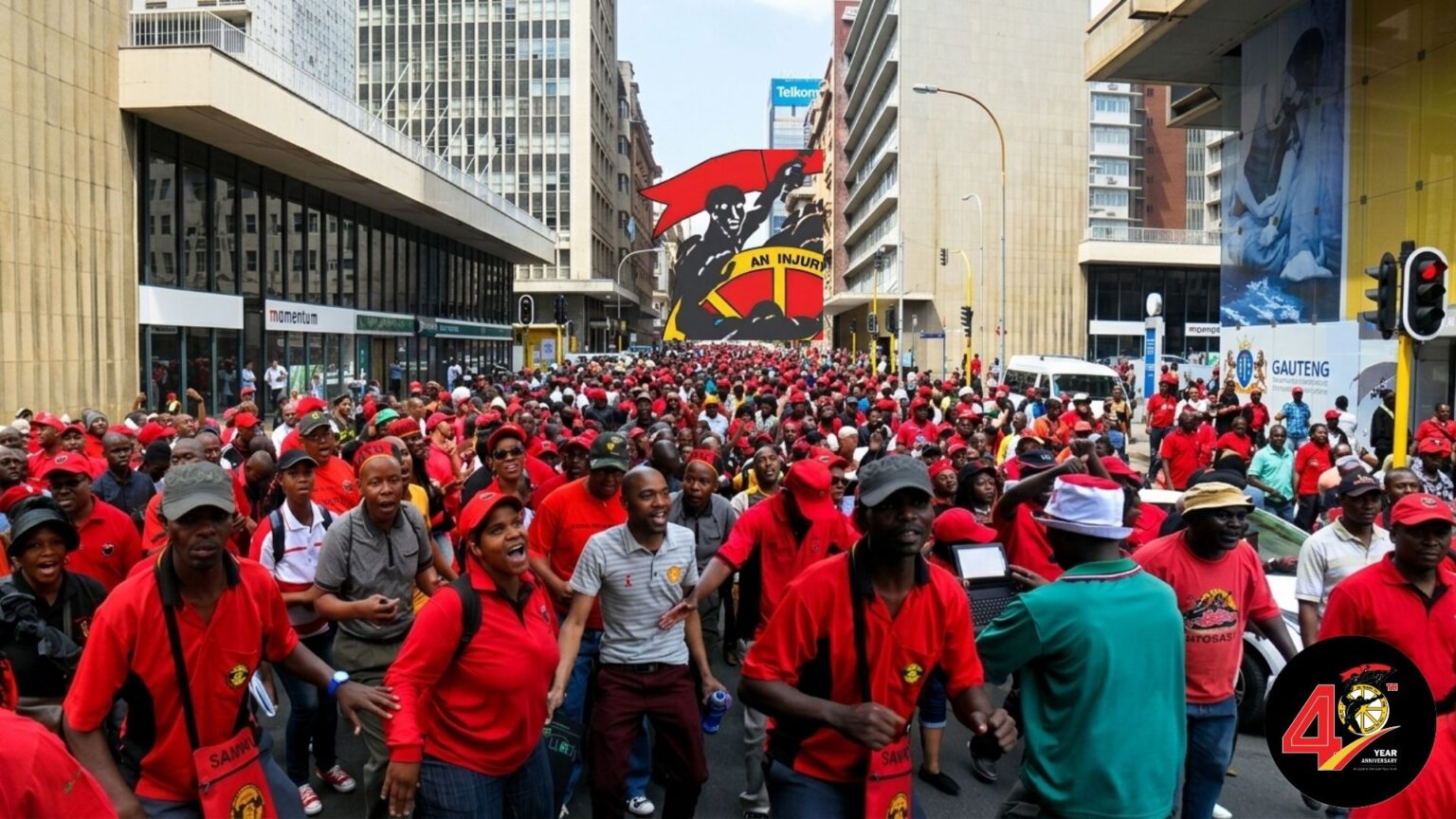
The Congress of South African Trade Unions (COSATU) urges the South African Reserve Bank not to increase the repo rate during its Monetary Policy Committee meeting this week.
Workers are battling to cope with massive increases in the cost of living, in particular the doubling of international oil and fuel prices due to the war of insanity unleashed in the Persian Gulf, the source of 20% of the world’s oil and gas supplies. Working- and middle-class families have felt the pain with subsequent taxi and bus fare increases as well as above inflation electricity tariff hikes.
Most workers are drowning in debt and borrowing simply to buy food, electricity and transport and service unaffordable debt levels. Those fortunate to have jobs support seven relatives on average. Many workers spend up to 40% of their already meagre wages on transport.
The cause of the current rise in inflation is solely due to the war in the Middle East and not domestic demand. There is nothing that South Africa can do to manage this geo-political crisis of anarchy. Squeezing already struggling workers and consumers would make as much economic sense as decapitating a patient to resolve a migraine. It would be tantamount to further punishing the victims for a crisis not of their choice.
The economy has been stagnant at 1% for more than a decade. Initial growth projections of an already weak 1.4% have been reduced by the International Monetary Fund to a depressing 1%, far below the 3% plus needed to tackle our single greatest national crisis, our 43.7% unemployment rate. A repo rate will further suffocate an economy on its knees.
Inflation at 4% remains within the Reserve Bank’s target range. Prior to the war in the Middle East it had been continuously falling. Once the war ends and international oil and gas supplies resume to full capacity, domestic fuel prices and thus inflation will fall.
It is critical that Treasury extend fuel levy relief for the duration of the War and until fuel prices revert to their pre-war levels. This relief has provided valuable comfort, albeit however limited, to commuters and the economy. It has helped contain inflation.
The Reserve Bank must resist any knee jerk, textbook temptation to raise the repo rate. This would be a devastating blow to workers, consumers, businesses and the economy, when we can least afford it. It must exercise strategic patience, more so as peace negotiations to end the War take place. The Reserve Bank must show solidarity with workers, the poor and the economy by rejecting any increase to the Repo Rate.
Issued by COSATU
Matthew Parks (COSATU Parliamentary Coordinator)
Mobile: 082 785 0687
Email: matthew@cosatu.org.za
Source: https://mediadon.co.za/cosatu-urges-the-reserve-bank-not-to-increase-the-repo-rate
by Dev_SACCAWU | Labour Market News
The South African Municipal Workers’ Union (SAMWU) in the Eastern Cape expresses its deep concern and outrage at the continued victimisation, intimidation and systematic targeting of SAMWU shop stewards by the management of Amatola Water Board.
Since 26 March 2025, workers at Amatola Water Board have effectively been left without elected union representation after all ten SAMWU shop stewards were suspended by the employer on allegations linked to an alleged illegal strike action. This unprecedented action immediately raised serious concerns about the employer’s intentions towards organised labour, workplace democracy and collective bargaining within the institution.
Compounding this situation, the entity has failed to conclude plant-level negotiations for the 2024/25 and 2025/26 financial years, as directed by the Amanzi Bargaining Council. This failure has deprived workers of meaningful engagement on matters affecting their wages, conditions of service and workplace rights.
The matter relating to the alleged illegal strike was subsequently brought before the Labour Court in October 2025, wherein the Court ruled in favour of the affected employees. Despite this outcome, Amatola Water management disregarded both the spirit and implications of the Court’s ruling and proceeded to convert the precautionary suspensions into punitive suspensions without pay. This decision subjected workers and their families to severe financial and emotional hardship.
In March 2026, the disciplinary enquiry against the ten shop stewards was concluded. Five shop stewards, including the SAMWU Regional Chairperson and other Local Office Bearers, were dismissed, while the remaining five were found not guilty. SAMWU views these dismissals as a calculated and deliberate attempt to weaken, destabilise and ultimately destroy the union’s organisational presence within Amatola Water, particularly by targeting its elected leadership structures.
As SAMWU, we exercised our organisational and legal rights by noting appeals against the dismissals of the five affected shop stewards. However, while the union was still studying the outcomes and preparing the appeal process, Amatola Water management, through its Legal Advisory division, took the extraordinary and highly irregular step of lodging what it termed a “cross-appeal” against the findings relating to the five shop stewards who were not dismissed.
This so-called “cross-appeal” raises serious legal, procedural and labour relations concerns. In ordinary labour relations practice, where an employer is dissatisfied with the outcome of a disciplinary process conducted by its own appointed chairperson, such an employer would, where legally permissible and properly justified, pursue a review process through the appropriate legal forums. The attempt to appeal against the findings of its own disciplinary chairperson exposes an alarming determination by Amatola Water management to ensure that all SAMWU shop stewards are dismissed, regardless of the merits of the case.
SAMWU views this conduct for what it is, a deliberate campaign of union bashing, intimidation and de-unionisation. It is deeply troubling that an institution entrusted with public service delivery would dedicate time, energy and public resources towards attacking worker representation instead of fostering labour peace, institutional stability and constructive engagement with organised labour. For us, this is an attempt by management to rule through fear.
The current situation has created a dangerous vacuum in the workplace. Workers at Amatola Water Board presently have no effective elected representation in workplace grievances, wage negotiations, recruitment processes, disciplinary matters and other collective bargaining forums where organised labour participation is both necessary and protected by labour legislation.
The consequences of these actions have been devastating for employees. Workers report feeling demoralised, intimidated and abandoned in the workplace. This climate of fear and uncertainty inevitably affects morale, productivity and, ultimately, the quality of service delivery to the people of the Eastern Cape.
SAMWU wishes to make it unequivocally clear that we will not fold our arms while worker representation is being systematically destroyed at Amatola Water. We will continue to defend the rights, dignity and livelihoods of our members through all available legal, organisational and constitutional avenues.
We call upon the Board of Amatola Water, the Department of Water and Sanitation, the Amanzi Bargaining Council, organised labour formations and all progressive forces to condemn these actions and urgently intervene before labour relations at Amatola Water deteriorate even further.
SAMWU further reiterates that workers have a constitutional right to freedom of association, collective bargaining and union representation without fear of victimisation, intimidation or retaliation. Any attempt to undermine these rights must be rejected with the contempt it deserves.
SAMWU Eastern Cape will continue to stand with the affected shop stewards, their families and all workers at Amatola Water Board.
An injury to one remains an injury to all.
Issued by SAMWU Eastern Cape Province
Asamkele Ntaka
Provincial Secretary
(071 366 3644)
or
Lorna Lubedu
Deputy Provincial Secretary
(071 900 5014)
Source: https://mediadon.co.za/samwu-condemns-continued-union-bashing-and-victimisation-of-shop-stewards-at-amatola-water
