Analysts warned that although there is great potential upside with Pick n Pay, it carries significant risks based on a successful turnaround strategy.
They shared these comments after Pick n Pay released its audited annual financial statements for the 2026 financial year.
These statements contained many positives, including steady progress in its multi-year turnaround strategy and underlying operational improvements.
To fund this ongoing strategy, Pick n Pay disposed of a 12.5% stake in Boxer, raising R4.7 billion in gross proceeds.
Another positive was that the retailer’s overall level of debt decreased from R1.2 billion to just R200 million at the close of the 2026 financial year.
The remaining R200 million was repaid after the reporting date, leaving the Pick n Pay Group with no long-term debt.
Pick n Pay’s Online segment was another positive, with a 32.7% increase in turnover and successfully meeting its profitability targets.
There were also many concerning things in the numbers, including deepening trading losses in Pick n Pay’s core segment.
Group trading profit declined 4.2% to R1.7 billion, due to a R404 million increase in the core Pick n Pay segment’s trading loss to R1.0 billion.
Trading expenses as a percentage of turnover in the Pick n Pay segment rose to 21.7%, driven by above-inflation wage increases and higher advertising costs.
This showed that the turnaround still has a long way to go. It pushed out its break-even target for the Pick n Pay segment to the 2029 financial year, rather than 2028.
Turnover for the Pick n Pay segment declined 1.6%, largely due to the store estate reset program involving store closures and conversions.
It also continues to burn through cash. Its net cash reduced from R4.2 billion at the end of the 2025 financial year to R3.1 billion at the end of the 2026 financial year.
Pick n Pay has also initiated a Section 189A statutory consultation process to restructure its store labour model, which creates uncertainty.
Pick n Pay CEO Sean Summers’ feedback
Pick n Pay CEO Sean Summers
Pick n Pay CEO Sean Summers remains upbeat about the retailer’s prospects, saying the turnaround strategy remains firmly on track.
“The turnaround is supported by improving topline growth, renewed operational disciplines, and careful cash management,” he said.
“While Pick n Pay’s trading loss increased, the business today is fundamentally stronger than it was two-and-a-half years ago.”
He cited the steady improvement in company-owned Pick n Pay supermarket like-for-like sales growth and a 0.4% increase in gross profit margin.
Summers added that the company now has the balance sheet strength to support its return to profitability. However, it still needs a lot of work.
“Achieving break-even in Pick n Pay requires the successful execution of all six strategic initiatives, including the recalibration of our total employment costs,” he said.
The retailer is addressing its structurally high store labour costs through a formal Section 189 consultation process.
“One of the first issues I raised on my return was that we needed to address Pick n Pay’s significantly distorted labour cost base relative to competitors,” he said.
“Our objective is clear: to align our cost structure with industry standards while safeguarding jobs wherever possible.”
The Pick n Pay CEO said the company’s store estate reset is effectively done, and it has achieved some of the key milestones needed to achieve growth.
“We continue to see encouraging progress across the business, but the reality is that the challenges facing Pick n Pay developed over an extended period,” he said.
“This means that rebuilding the business into a leading supermarket retailer again will take time, disciplined execution and difficult but necessary decisions.”
Analyst opinion about Pick n Pay
Jonathan Fisher, a wealth manager at PSG Wealth Sandton, described Pick n Pay’s latest results as a “shocker”.
He said that although Pick n Pay managed to decrease its headline loss per share, the overall financial results were not good.
“The market’s negative reaction, with the share price declining 5% on the day, shows investors aren’t buying the turnaround narrative yet,” he said.
He described Pick n Pay’s turnaround as “a huge oil tanker that’s really trying to turn around but is just not turning”. “It’s taking forever,” he said.
He said the entire consumer market is under massive pressure, and that there are better alternatives in the retail sector, such as Shoprite.
Simon Brown from JustOneLap was also negative about Pick n Pay, pointing to the turnaround timeline, which gets moved out again and again.
He also flagged the ongoing Section 189 staff retrenchment process as an operational risk, especially if it leads to strike action.
Brown said Pick n Pay’s core brand is moving in the wrong direction and losing ground to competitors like Woolworths and Checkers.
“Pick n Pay is pulling back, dropping leases, and closing stores while its competitors are aggressively opening new stores,” he said.
Brown and Fisher highlighted that there is massive potential upside if Pick n Pay’s turnaround is successful. However, it is not guaranteed.
This means Pick n Pay is currently a highly speculative investment that carries significant risks associated with the turnaround.
Pick n Pay’s 2029 Problem Is Bigger Than a Delayed Target
A year can sound small until investors hear it.
For Pick n Pay, the move from 2028 to 2029 is not just a calendar adjustment. It is a signal. It tells the market that the retailer’s recovery is taking longer than hoped, and it tells South Africans that one of the country’s most familiar supermarket brands is still fighting its way back.
Gareth Edwards and Francis Herd use 2029 as the Number of the Day to examine a turnaround story that has become about much more than profit.
On paper, the issue is simple. Pick ‘n Pay’s core supermarket business is still under pressure, and its expected break-even point has been pushed out by a full year. Investors did not like that. The share price came under pressure after the results, reflecting frustration that the recovery has not moved quickly enough.
But behind the market reaction is a much bigger retail story.
Pick ‘n Pay used to occupy a special place in South African shopping culture. For many households, it was part of the weekly rhythm. The familiar aisles. The family shop. The retailer people felt they knew.
That world has changed.
Checkers and Shoprite are now operating with serious momentum. Checkers Sixty60 has turned convenience into an expectation, not a luxury. Once consumers get used to groceries arriving fast, the entire retail battlefield shifts. It is no longer enough to have stores, stock and history. Retailers now have to deliver speed, range, value, digital convenience and trust at the same time.
That is the pressure Pick ‘n Pay is trying to answer.
Sean Summers returned as CEO with a reputation for crisis management and a difficult mandate: stabilise the business, rebuild confidence, sharpen operations and get the core supermarket brand back to sustainable performance.
But turnaround plans are never just spreadsheets.
The human cost sits inside the labour discussion. Pick ‘n Pay is restructuring, and staff costs have become one of the major pressure points. Gareth and Francis discuss Sunday pay, working conditions, union concern and the reality that changing people’s pay is never just a financial decision. It affects families, morale and the people who keep stores running.
That is where the story becomes uncomfortable.
A struggling business may need to reduce costs to survive. Workers need stability and fair treatment. Shoppers want value. Investors want progress. Each group is looking at the same company, but not asking the same question.
For investors, the question is: when will the numbers improve?
For workers, it is: what happens to my pay and my job?
For shoppers, it is: why should I choose Pick ‘n Pay now?
For Sean Summers, the question may be the hardest of all: can he rebuild the business before patience runs out?
2029 is the new target. But the real deadline may arrive much sooner, in the choices shoppers make every week, the negotiations with workers, and the market’s willingness to believe that the comeback is still alive.
After a difficult few years, Pick n Pay says its turnaround is gaining traction, with improving earnings guidance and renewed focus on operational recovery. But the road ahead remains complex. The retailer has pushed out its break-even target for its core supermarket business by a year to FY2029, even as Boxer continues to outperform, competitive pressures intensify and global geopolitical risks cloud the consumer outlook. Joining CNBC Africa is Pick n Pay CEO, Sean Summers.
Illustrative image: Trolley (Graphic: Freepik) | Pick n Pay logo (Source: picknpay.coza)
Pick n Pay is in a tough spot – wanting to improve the customer experience for SA’s savvy shoppers as well as its operational efficiency, yet facing resistance from workers over proposed changes in shifts and pay. All that, and it must keep its investors happy, who are concerned about its decision to sell R4.7-billion worth of shares in Boxer.
The other day I had an excellent breakfast with a friend and found myself with a few minutes before I had to do my usual dash around the potholes to my first port of work for the day.
Finding myself at a loose end in a shopping centre, without the fun company of any of my family members, my first pang was one of guilt.
Should I really be here? Without looking at my Google Keep shopping list of reasons to be at the mall at this particular time.
I decided to put away my pang of guilt (I have some practice at this) and walk to the bottom floor to see what I could see.
There was a Pick n Pay liquor outlet. And idly browsing the Irish medicinal section I realised, with something of a start, that a particular item was on a massive special.
In fact, owing to a global glut of high-quality Irish medicine (Really, I’m not making this up), there are some good prices around. And there was one on offer. In fact, it was literally a third off.
Out of duty to a friend I felt I needed to buy two, which would save me literally the full price I would now pay per bottle.
With a start I realised I had never bothered, never felt the need until that moment, to get a Pick n Pay Smart Shopper card. I had not been into one of their stores to actually buy something for that long.
Obviously, I did the rational thing, got the card (to make a friend happy) and ran out of the mall before anything else could happen.
Turnaround strategy
In a way, this is Pick n Pay’s fundamental problem.
While Boxer is doing incredibly well, the turnover at Pick n Pay supermarkets was down 1.6%.
Now, the group will say, correctly, that one of the reasons for this is that it shut some of their stores during the period. And this was part of the turnaround plan.
As Pick n Pay CEO Sean Summers has previously explained, it made no sense to keep its big branch at Hyde Park in Joburg when the design of the store did not work for the group (in particular, he said it meant the group was paying for non-public space behind the store that came to around half the rent – of course, Checkers has taken the gap at Hyde Park).
But what really spooked investors last week was the announcement that Pick n Pay was selling R4.7-billion worth of its shares in Boxer. While it still has a controlling share (it now owns just more than 53%) it really looks like the group is selling what’s working to fund what’s not.
And it is doing this in the teeth of the toughest competition one can find.
Meanwhile, just up your street…
Checkers seems to have all the advantages at the moment. It is ahead in its delivery service; its corporate structure (it owns all its stores) allows it to invest in that service more easily (like Spar, Pick n Pay doesn’t own all its stores making this more difficult); it has huge momentum; and it’s able to keep its pricing down.
The real problem I think for Summers and Pick n Pay is simply to get people in through the doors.
And to do that, the group needs to make my experience better than anywhere else, and it needs to be cheaper.
But as previously discussed in this newsletter, in South Africa, you’re dealing with the best shoppers in the world. The nature of our society and the incredible pressure on promotions have created a group of people who plan their shopping and literally feed their families through the clever use of promotions.
Unlike the ultimate lazy shopper such as myself, they have all the cards and are not afraid to use them.
And Summers has to do all of this with workers who might well resist the major changes that are coming their way.
Workers’ perspective
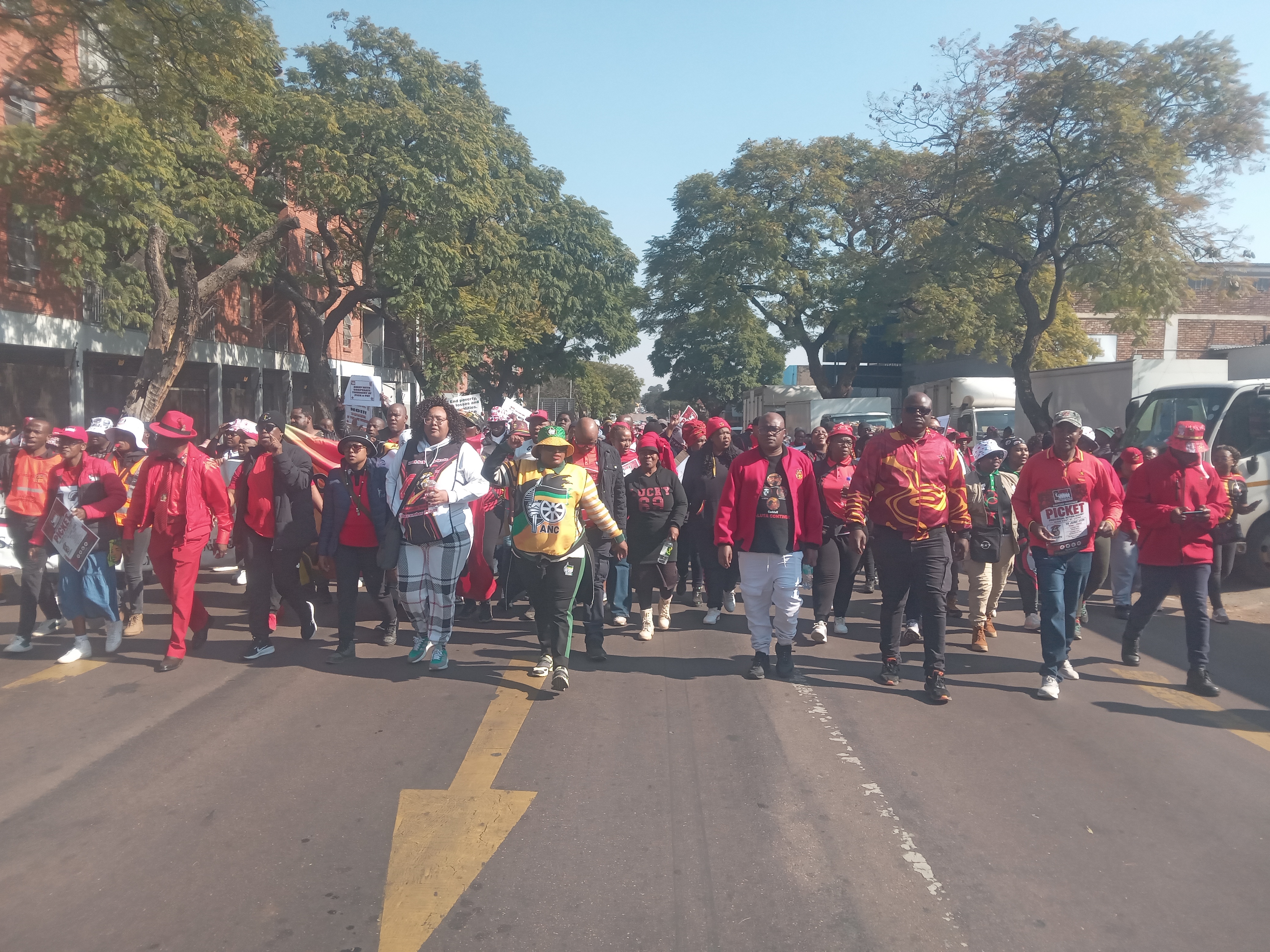
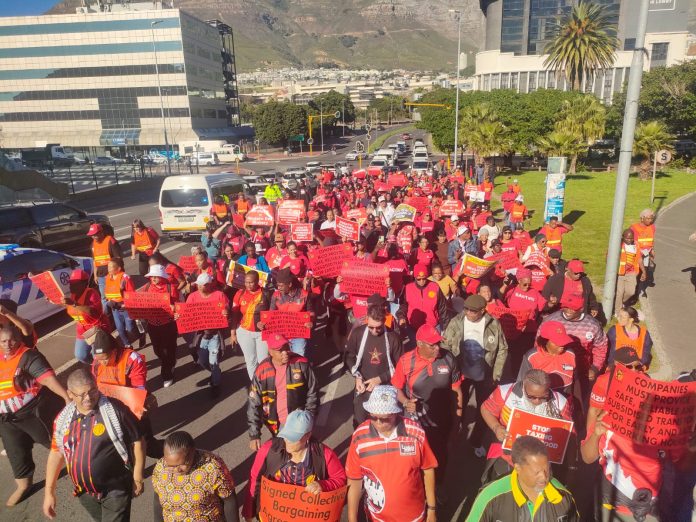
The union Saccawu has condemned the changes, blasting management for introducing a Section 189 process.
While it is not the role of this newsletter to advise union leaders, if I were them, I would tread a little carefully here.
Pick n Pay says it’s not planning to fire or retrench people. It wants to change the shift system to make sure there are more workers in their stores on weekends and outside office hours. The reason is obvious – that’s when you shop.
But this will mean workers will, for example, get paid less for working on a Sunday.
If I were one of those workers I would be angry at that too – my life is about to be fundamentally changed and I might end up poorer.
But if this process goes badly, if Summers and those with him fail in turning around Pick n Pay, they might just be out of work completely. Because then this programme will move from changing shift patterns to actual retrenchments.
And if you used to work at Pick n Pay, you will have no option but to hope you can work for Checkers, which already uses the kind of shift pattern that Pick n Pay wants to emulate.
It reminds us that just because you haven’t been into a store for a while doesn’t mean it’s not important.
Pick n Pay is in a tough spot, it needs to make us all want to go to its stores to shop more often. And to spend more money. And to get Smart Shopper cards.
And if it fails to do that, the knock-on effects will be ghastly to contemplate. DM
Pick n Pay CEO Sean Summers. Picture: Supplied (Supplied by Pick n Pay)
Retailer shifts to expansion after closing and converting underperforming outlets
Pick n Pay plans to open seven new stores in South Africa this year as it moves beyond a period of closures and conversions of underperforming outlets and continues its turnaround strategy.
The group currently operates 1,538 stores in South Africa across clothing, liquor and hyper/supermarkets. Of these, 950 are company-owned while 588 are franchised. In total it has 2,261 stores including 576 under subsidiary Boxer, and operations in Zimbabwe, Eswatini, Lesotho, Botswana and Zambia.
Over the past two years, Pick n Pay has been closing loss-making company-owned stores and converting some into its Boxer brand as part of efforts to restore profitability.
CEO Sean Summers said the store reset was largely concluded in the financial year to March 2026, with the focus now shifting to selective expansion. He added that the company continued to make progress with its turnaround objective of “driving improved like-for-like sales growth in profitable stores and those with reasonable prospects of achieving profitability, while closing or converting those with limited opportunity for recovery.”
Pick n Pay said it has delivered improvements in store standards, product availability and range, particularly in fresh categories. Progress has also been made on key priorities including improving support office efficiencies and optimising the supply chain, supported by a materially improved logistics contract and enhanced marketing initiatives.
We have a clear path to sustainability, driven by ongoing incremental gains, and remain confident that the initiatives we have put in place are starting to bear fruit as we rebuild a stronger, more competitive Pick n Pay for the long term.
— CEO Sean Summers
“Our store estate reset is effectively behind us, and we have achieved some of the key milestones we set ourselves. The positive customer feedback we are receiving is very encouraging,” Summers said.
For the 52 weeks to March 1 2026, Pick n Pay reported a 1% increase in turnover to R120.3bn, while its headline loss narrowed to R386m from R408m. Trading profit declined 4.2% to R1.68bn.
Summers said the turnaround strategy remained firmly on track, supported by improving top-line growth, renewed operational discipline and careful cash management.
“We continue to see encouraging progress across the business, but the challenges facing Pick n Pay developed over an extended period. Rebuilding the business into a leading supermarket retailer will take time, disciplined execution and difficult but necessary decisions,” he said.
He warned that market conditions could add pressure in the coming period, with higher diesel prices driving inflation and squeezing already strained consumers. “However, this is affecting the entire retail sector, not just us, and it is our job to control the controllables,” he said.
Encouragingly, in the nine weeks after the period-end, Pick n Pay’s South African supermarkets recorded slightly stronger like-for-like sales growth than in FY2026.
“We have a clear path to sustainability, driven by ongoing incremental gains, and remain confident that the initiatives we have put in place are starting to bear fruit as we rebuild a stronger, more competitive Pick n Pay for the long term,” Summers said.
JOHANNESBURG — Retail veteran Sean Summers is not sugarcoating the reality of the task before him. Two-and-a-half years into spearheading the turnaround of one of South Africa’s most iconic retail institutions, the Pick n Pay CEO is making the hard, structurally painful choices required to rescue a bleeding giant.
The group’s financial results for the 52 weeks ended 1 March 2026 (FY26) paint a picture of a business starkly divided: a highly successful, fast-growing discount engine keeping the lights on, while the core supermarket brand undergoes intensive care.
The Numbers: A Tale of Two Businesses
At a group level, Pick n Pay managed a modest 3.4% increase in turnover. However, peeling back the layers reveals two wildly divergent trajectories:
Boxer: The group’s low-cost champion continues to be its crown jewel, posting a stellar 12.3% turnover growth and increasing its trading profit by R330 million to reach R2.6 billion.
Pick n Pay Supermarkets: Conversely, turnover for the core Pick n Pay brand declined by 1.6%. This drop was heavily influenced by aggressive store closures under its “store reset” strategy. The segment’s trading loss widened by R404 million, culminating in a R1.0 billion trading loss for the year.
Despite the heavy losses in the core segment, there are clear vital signs of recovery. Thanks to aggressive cost management and structural interventions, the Group successfully trimmed its overall Headline loss by R45 million, bringing it down to R363 million. Gross profit margin also expanded by 0.5% to 18.8%, showing improvements across both brands. Furthermore, the group’s online business continues to be a massive bright spot, with turnover surging by 32.7%.
Fixing the Foundation: Three Down, Three to Go
In 2024, Pick n Pay mapped out six strategic priorities to steady the ship. Summers notes that three of these pillars are now largely complete: recapitalising the business, re-establishing leadership structures, and resetting the store estate.
The balance sheet received a monumental boost post-period-end on 18 May 2026 via a R4.7 billion Boxer share placement. This capital raise significantly enhanced financial flexibility while allowing Pick n Pay to retain a controlling stake in its star performer.
“We now have the balance sheet strength to support our return to profitability,” Summers stated, though he quickly added that achieving break-even depends entirely on tackling the remaining, more complex priorities.
The Battleground: Structurally High Store Labour Costs
The final frontier of Summers’ turnaround plan is a direct confrontation with the company’s cost structure. The group has entered a formal Section 189 consultation process, facilitated by the CCMA, to address what Summers calls “significantly distorted labour cost base relative to competitors”.
According to leadership, successive labour concessions over multiple years have heavily compromised the company’s cost base. Having already frozen management salaries and reduced support office headcounts, the company is now tackling store operations, where the bulk of labour costs are incurred.
Summers was quick to clarify that the initiative is not aimed at a mass reduction of workforce, but rather introducing a new, competitive labour model. “Without this recalibration, we cannot solve the Group’s cost base or return the business to profitability in a thin-margin industry,” he warned.
Operational Vital Signs and the Road Ahead
For all the red ink, operational disciplines are starting to yield results. Company-owned Pick n Pay supermarkets recorded like-for-like sales growth of 3.9%, up from 3.3% in FY25, accompanied by a 0.4% improvement in the segment’s gross profit margin. Customer growth has shown positive momentum over the last two years, driven by better product availability, improved store standards, and optimized supply chains.
Crucially, internal selling price inflation for Pick n Pay SA sat at just 1.9%—well below the national CPI food inflation of 4.4%—while Boxer actualized price deflation of -1.2%, passing immense value back to cash-strapped consumers.
The road ahead remains steep. As Pick n Pay approaches its 60th year, macroeconomic headwinds like rising diesel prices are expected to pressure the wider retail sector. Yet, early indicators for the new financial year provide a glimmer of hope: in the nine weeks following the period-end, Pick n Pay’s South African supermarket like-for-like sales growth trended slightly ahead of FY26 levels.
Rebuilding a retail empire takes time, and Pick n Pay is currently making the painful adjustments necessary to ensure it survives to see its next chapter.