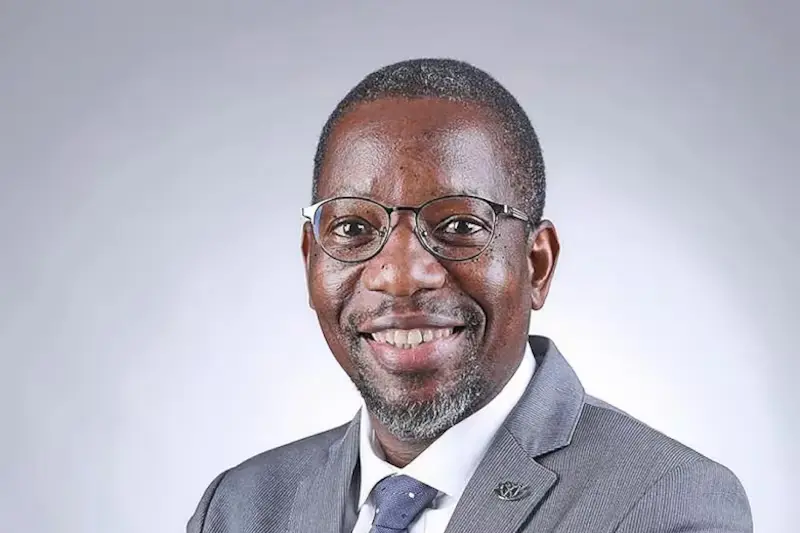
The company is urging the government and Eskom to reach an urgent agreement, warning that permanent closure could become inevitable if no solution is found before the end of the month.
Supplied
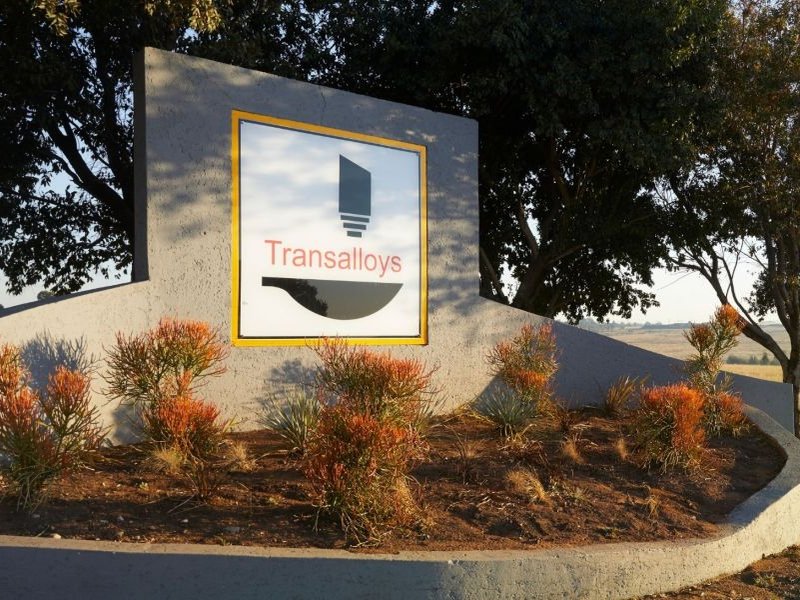
At least 600 jobs and another 7,000 livelihoods are at risk after South Africa’s last remaining manganese smelter stopped operations.
Operations suspended
Transalloys says it had no choice but to shut down its furnaces [in Mpumalanga] after years of financial losses and high electricity costs.
Chief Executive Konstantin Sadovnik has called on the government and Eskom to intervene before the current suspension becomes permanent.
He warned that unless a sustainable solution is agreed to and implemented by the end of the month, the company’s unlikely to survive winter.
“Transalloys has now reached the point where continuing to operate would simply accelerate our own collapse. We have exhausted every option available to us operationally while engaging Eskom, the government and the regulators, and there are still significant points of difference between them and us. We have now had to stop our production entirely.
“South Africa will lose its last manganese smelter, thousands of livelihoods and decades of industrial capability. Once those furnaces go cold permanently, which is a near-term reality, there is no turning back.”
Cosatu demands intervention
Meanwhile, trade union federation Cosatu says the government needs to find an urgent solution to prevent the closure.
Spokesperson Matthew Parks says the country can’t afford to lose so many jobs.
“It would mark a massive setback for South Africa’s efforts to re-industrialise the economy, expand local beneficiation, and nurture value chains. It is critical that Trans Alloys, Eskom, and the Departments of Electricity, Energy, Trade, Industry and Competition meet and pull out all stops to find solutions to this long-simmering crisis.
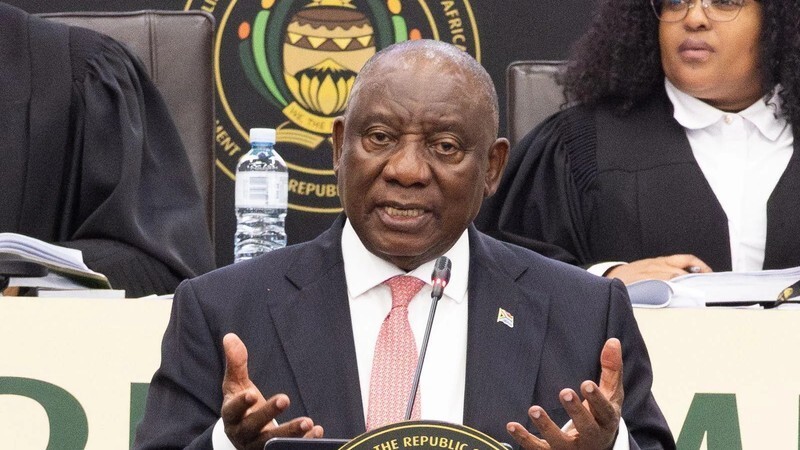
Nearly a year after President Cyril Ramaphosa unveiled the National Dialogue as South Africa’s blueprint for tackling the country’s deepest social and economic divisions, its role is being questioned after weeks of anti-illegal migrant protests unfolded with little visible intervention from the flagship initiative.
Launched in August last year, the National Dialogue was billed as a citizen-led process to help South Africans confront poverty, unemployment, inequality, and social divisions.
While critics argue the recent migration tensions presented exactly the kind of national conversation it was created to facilitate, the government said the initiative is a long-term democratic process rather than a crisis-response mechanism.
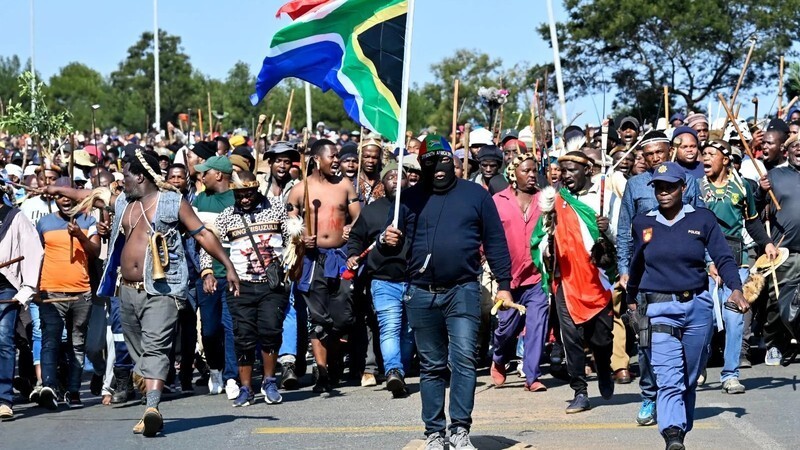
As protests targeting undocumented migrants spread across several communities in recent weeks, many expected the Dialogue to provide a platform for national engagement on an issue that has increasingly polarised public opinion.
For the Rural Women’s Assembly (RWA), that opportunity was missed.
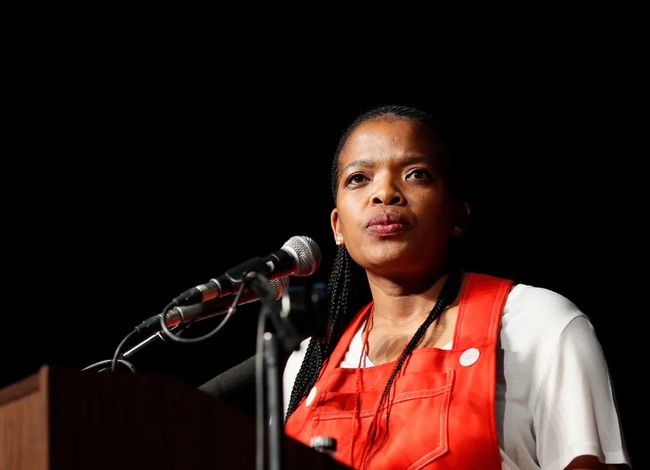
Denia Jansen, the organisation’s Western Cape representative, said very little had happened on the ground since the Dialogue was launched.
“Nothing much has been done. Things have not yet started concerning the dialogues, and different sectors are trying to reach out to members to pilot the National Dialogue,” Jansen said.
“Our sector – land, rural communities, and agriculture – has a draft plan to invite all the stakeholders to identify pilot areas for the National Dialogue, but at the moment nothing has been done.”
Jansen said that if the National Dialogue was genuinely intended to be a bottom-up process, it should have played a visible role as anti-illegal migrant tensions escalated.
“The National Dialogue should have prioritised the anti-illegal migrant protests. The absence of the National Dialogue proves it exists only on paper.“
She argued that the demonstrations reflected deeper structural failures that the government had failed to address.
“Poverty, unemployment, hunger, and violence are daily struggles for our communities. Women are at the centre of all these crises. The anti-illegal migrant issue is another burden on communities, especially women, whose responsibility is to put food on the table.
“Migrants were never our enemies. We live and work together and become friends and neighbours. Women and children will suffer the consequences of a collapsed local economy.”
Jansen also linked the current tensions to stalled land reform.
“The president has not adequately provided land for women to grow food to feed their families. As long as women cannot access land, hunger and unemployment will always be huge issues in South Africa while the government watches the poor fight each other for crumbs – like what is happening now with migrants.”
The government, however, maintains that the National Dialogue should not be viewed as an emergency response mechanism.
Deputy Minister in the Presidency for Women, Youth and Persons with Disabilities, Mmapaseka Steve Letsike, said the initiative was never intended to replace government institutions responsible for maintaining public order.
“We should be careful not to judge the National Dialogue as though it were a once-off event that could immediately resolve decades of social and economic challenges.”
Letsike said the purpose of the Dialogue was to strengthen democratic participation over time.
“The success of the National Dialogue should not be measured by whether difficult issues continue to arise. Rather, it should be measured by whether South Africans increasingly choose dialogue over division, participation over polarisation, and democratic engagement over violence.”
Letsike acknowledged that the recent protests exposed deep anxieties around unemployment, inequality, crime, service delivery, and belonging, but said those were exactly the kinds of issues the Dialogue was designed to confront.
“The National Dialogue provides an opportunity for citizens to engage honestly on complex issues such as migration, unemployment, inequality, social cohesion, and public trust.”
The minister said sustainable peace could not be secured through law enforcement alone and argued that South Africa needed democratic spaces where citizens could confront difficult issues before they escalated into conflict.
“The National Dialogue should become part of South Africa’s democratic infrastructure.”
Organised labour has also urged patience.
Matthew Parks, parliamentary coordinator for the Congress of South African Trade Unions (COSATU), said the process was still in its rollout phase.
“The dialogue is still in its rollout phase with sectoral engagements taking place and soon ward engagements to begin.”
Parks said that expecting the Dialogue to intervene directly during the recent protests was a misunderstanding of its purpose.
“The Dialogue would not have the capacity or mandate to do so. It’s intended to engage society on its issues and proposals, and to provide solutions for government and society on issues like migration, unemployment, and crime.”
However, he agreed that the initiative now needed to become more visible in communities.
“We need it to move to engaging people on the ground and coming with concrete proposals on what needs to be done,” he said.
The image sent to the rest of the world is of a violent nation that hates foreigners, particularly African. This of course is completely unrelated to reality.
It is critical that all of us listen to our people’s deep-seated frustrations and anger. Society is exhausted by an economy barely growing fast enough to keep pace with population growth, let alone able absorb hundreds of thousands of young people entering it annually. We have one of the world’s highest unemployment rates at 43.7% and subsequently entrenched levels of poverty and inequality.
Whilst our challenges are many, we remain the economic hub for the Southern African region and much of the continent. We cannot continue to remain a relative island of prosperity in an ocean of poverty.
The marches have come and gone, and largely peacefully. For this we must be thankful, in particular to our hardworking men and women in the police.
What we cannot afford to do is to ignore the genuine calls of the marchers and society, in particular the working class. The burning fires remain and need urgent action to resolve them.
First is the crisis of unemployment. No society can be proud or safe if four out of ten citizens cannot find work, let alone a decent, permanent job. 62% plus youth unemployment is a ticking time bomb.
Tackling unemployment must be our single most important focal point as government, business, labour and society. Once people have jobs, then many of our pressing socio-economic crises will begin to ease.
To create jobs, then we need to unlock the economy from the anemic 1% it’s been stagnating at for more than a decade to the 3% plus needed. This means assisting Eskom and municipalities to make electricity affordable for working class families, businesses and industries once again. It means expediting our investments in rail, ports, roads, water, airports and other essential economic infrastructure.
It requires making it easier for SMMEs and investors to establish businesses and to make finance accessible and affordable for SMMEs, particularly in townships and rural areas.
The private sector needs to come to the party by creating jobs, including engaging workers and unions on alternatives to retrenchments.
Employers need to pay workers a living wage. This is key to ensuring workers are able to buy the food, shelter and medicine needed to be healthy and productive but also to feel valued and motivated. It is equally critical for economic growth for workers to be paid a decent salary and become shareholders so they can afford to buy the goods that businesses need to sell.
Employers need to prioritise hiring young South Africans. All too often we have seen employers exploit the desperation of undocumented migrant labour, violate their labour rights and immigration laws. This will be the fuse that lights future fires if not dealt with.
Part of the anger of the marches is about the state of public and municipal services. When communities experience the decline of water and sanitation infrastructure with sewerage leaking onto roads in townships, why should we be shocked when they protest?
When workers spend days queuing at Home Affairs or in hospitals for the most elementary of services, why would they not be despondent?
Whilst there is much we must all be angry about, we must equally appreciate and welcome the real progress we have made as a society since 1994 under successive African National Congress administrations rolling out public services to working class communities to alleviate poverty and inequality and over the past few years to overcome the load shedding that devastated the economy, to rebuilding other state-owned enterprises, and to begin to dismantling the state capture networks that bleed the state of badly needed resources.
Equally we must be honest about our unacceptable levels of crime and what needs to be done to fix them.
As with fixing other parts of the state, we must ensure that our law enforcement institutions have competent leadership, that frontline vacancies are filled and critical skills recruited, and that the staff and institutions have the resources needed to win this war. The marches took place precisely because society is losing faith in the capacity of the state to enforce the rule of law. That is a very dangerous place to be in for any society.
We must unequivocally reject any form of xenophobia, racism or discrimination. We know what these demons mean better than any other nation. We lived under apartheid. That is not who we are nor must ever be.
We must equally demand that everyone in South Africa, citizen or non-citizen, must obey by all our laws at all times. Migration must be managed and cannot be a free for all. Neither can South Africa carry the burden of providing jobs for an entire region or continent. We owe our loyalty first to South Africans.
Migration is a part of history, including ours, with the mining sector built by generations of workers from Cofimvaba to Cabo Delgado. We have an historical obligation and need to help uplift the region that we owe so much to. We need the region and the continent to do well.
This requires other African governments to accept their responsibilities to their citizens, to address the reasons why they are forced to leave due to massive human rights violations, climate change or a complete absence of jobs and economic opportunities.
Our government must do more to ensure our borders are secure, that Home Affairs and the Border Management Authority as well as SAPS and the SANDF have the resources, they need to enforce the rule of law at all times.
Our challenges are many but must be tackled. Migration is in the DNA of humanity and must be managed in a humane and sustainable manner. The marches were a wake-up call that we dare not ignore.
Business Unity South Africa CEO Khulekani Mathe. Picture
Story audio is generated using AI
Business Unity South Africa says UIF reform efforts have failed
The decision by Business Unity South Africa (Busa) to withdraw its representatives from the Unemployment Insurance Fund (UIF) board and related National Economic Development and Labour Council (Nedlac) structures undermines the necessary social dialogue between government, business and labour, the UIF said.
Busa announced its withdrawal from the UIF board and Nedlac structures related to the UIF last week, saying it had tried unsuccessfully for years to get the state-owned entity on the right track.
The UIF responded to this decision saying: “Regrettably, withdrawal from these forums limits opportunities to influence governance outcomes through the mechanisms established for that purpose. This is contrary to the principles underpinning South Africa’s social dialogue framework, which places a premium on sustained engagement, even where significant differences of opinion exist.
“The UIF rejects any suggestion that meaningful governance reform can be achieved outside the established statutory structures or through disengagement from the institutions created to facilitate oversight and social dialogue.
“Robust debate, differing perspectives and critical scrutiny are integral components of good governance.”
Busa and labour federation Cosatu regard the UIF as deeply dysfunctional and have called for it to be placed under administration with the aim of stabilising operations, addressing governance failures and clearing the backlog in benefit claims which Cosatu says can take months if not years to be paid out.
The UIF is funded by contributions from employers and employees and is meant to provide income support during periods of unemployment, maternity, illness, adoption, parental leave, reduced working time, or other qualifying income loss.
The fund has repeatedly received qualified audit opinions from the auditor-general due to weaknesses in internal controls, an inability to substantiate documentation and major ICT challenges. Irregular, wasteful and fruitless expenditure without any meaningful consequence management has also occurred.
Busa CEO Khulekani Mathe said Busa’s decision to withdraw from UIF structures followed six years of sustained engagement, repeated warnings of maladministration, and ongoing efforts to support reform for the benefit of workers, employers, and the stability of South Africa’s labour market. “Regrettably, these efforts have not yielded the required results,” he said.
“Business remains committed to constructive engagement with government and labour to build a functional and credible social security system that protects vulnerable workers. However, such engagement must be grounded in accountability, urgency, and a genuine commitment to reform. Workers and employers cannot be expected to continue funding a system that fails them when they need it most,” Mathe said.
However, the UIF said that during engagements with its social partners it had consistently advanced proposals aimed at strengthening institutional governance and improving labour market outcomes. These included the need to improve employer compliance with the UIF law, strengthen the financial sustainability of the fund and enhance service delivery.
Further information was needed on Busa’s proposals, including the need to change benefit processes which the UIF said were not in line with the UIF’s process.
It recognised the need to improve the efficiency and timeliness of benefit payments “by addressing the root causes of delays, particularly employers’ failure to submit accurate and up-to-date employee declarations”.
The Council for Medical Schemes has rejected the Government Employees Medical Scheme’s request to reduce its 2026 member contributions increase from 9.5% to 7.5% . krisanapong detraphiphat/Getty Images
The Government Employees Medical Scheme says its request for a lower increase in contributions has been rejected.
It initially announced a 9.8% increase in member contributions from 1 January, then dropped this to 9.5% from February amid fierce pushback from labour, with a promise to settle on a 7.5% hike from 1 July.
But the Council for Medical Schemes is concerned about GEMS’ sustainability if its contributions drop too low.
The Council for Medical Schemes (CMS) has rejected a request from the Government Employees Medical Scheme (GEMS) for a 7.5% average increase in contributions, with workers now set to face a 9.5% increase instead.
GEMS, which has more than 2 million beneficiaries, initially slated a 9.8% weighted average increase for 2026, saying this was necessary to ensure its long-term financial sustainability. However, the Public Servants Association, which represents about 245 000 current and former government workers, slammed the move saying it drastically outpaced public service salary adjustments. The increase was reduced to 9.5% with effect from February, then, in May, GEMS said it would reduce the contribution further to 7.5% with effect from 1 July.
The scheme submitted a proposal to CMS to reduce the previously approved weighted average contribution adjustment from 9.5% to 7.5%, but said on Tuesday that the request had been rejected.
The regulator previously raised concerns about GEMS’ plan to lower contributions, citing risks to financial stability.
“While the outcome is a decline of the proposal submitted by GEMS, we have to respect the assessment of the regulator and address the concerns raised,” said GEMS principal officer Stan Moloabi.
“GEMS remains committed to working within the regulatory framework on future contribution adjustments that balance the quest for affordability with financial sustainability.”
GEMS is the largest restricted membership medical scheme in South Africa, with over 890 000 principal members and more than 2.4 million beneficiaries.
It was created specifically to provide healthcare coverage for public service employees.
In comparison, Discovery Health Medical Scheme implemented a weighted average contribution increase of 7.2% from 1 April. Bonitas raised its 2026 member contributions by an average of 8.8%, while Medshield and Bestmed increased theirs by 7.5% and 6.8%, respectively.
A 48-year-old farm owner and 15 undocumented foreign nationals were arrested during a police compliance operation at a farm in Trichardsdal, Limpopo. Image: File
A 48-year-old farm owner and 15 undocumented foreign nationals are expected to appear in the Lenyenye Magistrate’s Court on Tuesday after being arrested during a police compliance operation at a farm in Trichardsdal, Limpopo.
According to police, members of Maake SAPS conducted a compliance inspection at the farm on Monday, June 29, 2026, where they found several employees on duty.
During the operation, officers requested identity and immigration documents after discovering that some of the workers were not South African citizens.
Police said 12 employees were unable to produce the required documentation and were subsequently confirmed to be undocumented foreign nationals.
The workers were arrested at the scene along with the farm owner, who is facing charges of allegedly harbouring and employing illegal immigrants.
Police spokesperson Hlulani Mashaba said they later apprehended three additional undocumented foreign nationals who were also found working on the farm, bringing the total number of arrests to 16.
“The police were conducting compliance duties when they entered a local farm and found a number of employees on duty,” Mashaba said.
“Upon inspection, police requested identities and immigration documentation after it was discovered that some of the employees were not South African citizens.”
The group comprises six women aged between 32 and 43 and nine men aged between 23 and 49. All 15 workers are facing charges related to contravention of the Immigration Act.
Police confirmed that the farm owner “faces charges of harbouring and employing illegal immigrants”.
The arrests form part of ongoing compliance and immigration enforcement operations aimed at identifying undocumented foreign nationals and ensuring employers comply with South Africa’s immigration laws.
All 16 accused were scheduled to make their first court appearance in the Lenyenye Magistrate’s Court on Tuesday, June 30, 2026.