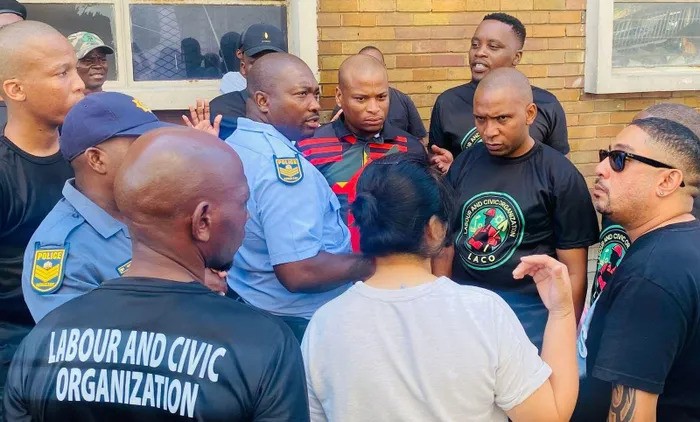
LACO has warned that rising unemployment and alleged labour abuses could fuel an explosion of xenophobia. Image: Supplied
The newly formed Labour and Civic Organisation (LACO) has warned of an explosive outburst of xenophobia if business owners fail to address concerns around joblessness.
In an exclusive interview with IOL, LACO spokesperson Mthobisi Shinga detailed how the organisation has exposed the rife exploitation of illegal foreign labour and the failure of businesses to employ South Africans — a recipe, he says, that’s a ticking time bomb.
“What employers fail to understand is the direct correlation between crime and unemployment,” explained Shinga.
“Fix unemployment, and you fix crime. That’s a link you can’t ignore. We want to lift South Africans out of poverty and into sustainable, fair employment. We cannot have a country which fought against injustice only for workers to continue to be exploited while nothing is done. That’s a time bomb. Xenophobia is brewing, and if employers fail to address it now, those frustrations will explode.”
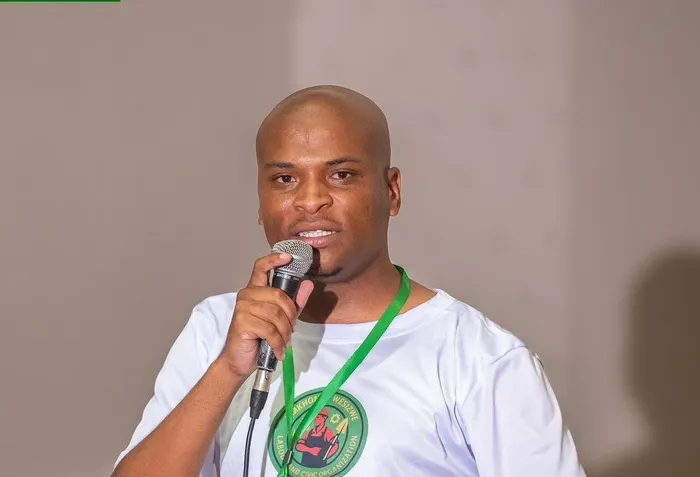
MK Aligned Labour and Civic Organisation (LACO) Spokesperson Mthobisi Shinga. Image: Supplied
The organisation is aligned with the uMkhonto weSizwe (MK) party and burst onto the scene last August. It has grabbed attention with its confrontations with businesses and warnings of shutting down premises if labour rules are not complied with — mostly relating to illegal workers.
Most recently, LACO issued a notice to China Mall in Springfield Park, warning of a complete shutdown unless local South Africans were hired.
Business owners have expressed outrage with the confrontations with LACO – accusing them of acting as labour representatives, which they were not. “They have no authority to just barge into a private business and start asking questions. They have absolutely no right to do so,” said one Durban business owner.
But, Shinga defended their actions, arguing they were acting in the interests of worker rights – but denied they approached owners in a confrontational way.
“What people need to know is we don’t go into businesses gung-ho like thugs, as some of the media make us out to be,” explains Shinga.
“We have a proper process. We receive complaints from workers or are made aware of labour non-compliance in a business. We then call the owner or send a formal email requesting a meeting. This is done to address the issue and resolve the concerns. It is only when our attempts to communicate are ignored that we mobilise our members and picket at the premises, which is legal. That is always the last option after we exhaust all attempts to sit with the owner and come to a solution.”
The organisation warned that it is eyeing major retailers, as many factories blame them for the low pay to workers.
“We’ve visited factories, especially in Newcastle, where there are sweatshops. Workers are not allowed to leave the premises. They work and live on site like prisoners. There’s even a cook who feeds them. Most of these workers are illegal foreigners earning R250 a week! When we question the factory owners, we are told that their customers — major retail stores — only pay R15 per T-shirt, the same amount they’ve been paying for the past five years. These are things we need to confront, because it then becomes a vicious cycle,” he added.
The 31-year-old is passionate about worker rights — but equally passionate about adopting a sit-down approach to employers.
“You know, most of the time, employers approach us with arrogance. We are only respected after we picket or they see our numbers; then they want to sit and talk. It can’t be. We email, we engage, we try to contact them and are just ignored in most cases. Employers must come to the party. We are not here to say foreigners out. Those are our brothers and sisters from Africa. But let’s prioritise South Africans so we can fix crime and grow our economy,” says Shinga, who was a key figure in the Fees Must Fall movement in 2015 — and also a former EFF member.
In the coming local elections, Shinga is convinced MK will make a clean sweep. “As a pro-worker civic body, we are working hard on the ground to mobilise communities and MK is going to lead most metros, including eThekwini,” said Shinga confidently.
Admitting the civic body is not a trade union, Shinga said it worked with several unions when taking issues to court.
“We’ve had enough success stories, as we are backed by a few trade unions. We are moving into a more formalised structure where membership will open at just R50 per month, but regardless of whether you can afford it or not, we will continue fighting for workers’ rights,” he added.
Get your news on the go. Download the latest IOL App for Android and IOS now.
Walmart Announces Plans to Open 21 New Stores Across Gauteng KwaZulu Natal and the Western Cape in South Africa
Walmart is making a bold move in South Africa, unveiling plans to open 21 additional stores after launching its third outlet in Boksburg this week.
The U.S. retail giant aims to cement its presence across three key provinces: Gauteng, KwaZulu-Natal, and the Western Cape, signaling a serious commitment to reaching more South African shoppers.
The company emphasizes its mission to offer “affordable, high-quality merchandise” to local consumers while reshaping its footprint in the country.
With this accelerated rollout, Walmart is clearly aiming to become a household name nationwide, not just in major cities.
Expansion Comes Amid Game Store Closures
Interestingly, Walmart’s push coincides with its South African subsidiary, Massmart, considering the closure of about 20 Game stores.
Reports suggest some of these outlets might be converted into Walmart locations, while others could be shuttered entirely.
In KwaZulu-Natal, stores in cities like Amanzimtoti, Ballito, Richards Bay, Pietermaritzburg, and The Pavilion may see changes.
Massmart, however, reassures that this is not the end for the Game brand—the affected stores represent only a small fraction of its 122 outlets nationwide.
The strategy seems aimed at modernizing and consolidating retail offerings rather than abandoning the brand entirely.
Boksburg Store Launch: A Family-Friendly Affair
The third South African Walmart will open at Eastpoint Shopping Centre in Boksburg on Saturday, 28 February 2026.
This store also replaces a Game location that closed in mid-2025, marking the continuation of Walmart’s strategy to take over former retail spaces.
Launch day promises more than just shopping—family-friendly activities and special promotions will greet early visitors, making it a community event rather than a typical store opening.
Walmart clearly wants to build excitement and loyalty from day one.
The Strategy Behind Rapid Growth
Since opening its first two South African stores at former Game sites in Clearwater Mall and Fourways Mall in November 2025, Walmart has shown no hesitation in aggressively expanding.
With 21 new stores planned, the retailer appears determined to create a strong national footprint quickly.
This strategy comes at a time when retail in South Africa is evolving rapidly, with online shopping trends growing and brick-and-mortar chains facing intense competition. Walmart’s approach of using existing commercial spaces and rebranding them allows a fast, cost-effective expansion that could position the company as a dominant player in local retail.
Economic Context and Opportunities
South Africa’s retail sector is competitive, but Walmart is entering at a time when consumers are actively seeking affordable goods without compromising quality.
By targeting key provinces with high population density and urban growth—Gauteng, KwaZulu-Natal, and the Western Cape—Walmart is positioning itself where demand is strong.
This move could also provide employment opportunities in the regions where stores open, which may be particularly important in areas like Richards Bay or Pietermaritzburg, where retail jobs can contribute significantly to local economies.
What’s Next?
Over the next few years, South Africans can expect to see Walmart’s footprint grow rapidly.
Massmart may continue converting Game outlets to Walmart stores, while some underperforming locations may close or rebrand.
Observers will also be watching how Walmart balances expansion with competition from established local retailers like Shoprite, Pick n Pay, and Spar.
Additionally, consumer response will be crucial—if Walmart can win over price-sensitive shoppers with strong promotions and reliable service, it may become a major player in South African retail faster than expected.
Summary
Walmart is clearly serious about South Africa, opening its third store in Boksburg and planning 21 more across Gauteng, KwaZulu-Natal, and the Western Cape.
The move comes alongside potential Game store closures and conversions, signaling a major reshaping of the local retail landscape.
For consumers, it promises more affordable products and convenient locations; for employees and communities, it could mean new jobs and opportunities.
The National Union of Mineworkers (NUM) has voiced its opposition to the proposed transfer of transmission assets to an independent Transmission System Operator. Image: File
The National Union of Mineworkers (NUM), currently at loggerheads with Eskom in a wage negotiation standoff, has voiced its opposition to the proposed transfer of transmission assets to an independent Transmission System Operator (TSO).
The union is calling for urgent labour consultation before any further steps are taken.
The union said it had noted the directive issued by President Cyril Ramaphosa in his State of the Nation Address (SONA), instructing that the assets of the National Transmission Company South Africa (NTCSA), a wholly owned subsidiary of Eskom Holdings, be transferred to a fully independent TSO outside of Eskom Holdings. NUM argues that the Energy Regulation Amendment Act does not provide an explicit empowering provision for such an end state of ownership.
Citing inadequate labour consultation, NUM said that when NTCSA was separated from Eskom in July 2024, organised labour was not meaningfully consulted. The union subsequently lodged formal disputes with Tokiso Dispute Settlement, which remain unresolved and are currently at the appeal stage.
“The announcement of a further and far more significant step — transferring strategic assets to an entity outside the Eskom group — raises the stakes considerably. NUM insists that structured and substantive engagement with organised labour must take place before the National Energy Crisis Committee (NECOM) finalises any proposals,” said NUM’s Energy Sector Coordinator, Khangela Baloyi.
Baloyi said labour is calling for written, binding guarantees that no employee will be worse off as a result of the restructuring. Employees currently within NTCSA were transferred on existing Eskom Holdings terms and conditions and remain members of the Eskom Pension and Provident Fund (EPPF).
“Moving assets to a fully independent TSO creates unresolved questions regarding the continuity of pension arrangements, medical aid, housing allowances and other conditions of service,” he said.
NUM also objected to financial risks being shifted onto workers. According to Eskom CEO Dan Marokane, transaction advisers have indicated that the proposed transfer could trigger cross-default provisions affecting approximately R400 billion in debt exposure.
The union noted that Eskom Holdings would require compensation for the transfer of transmission assets, estimated at approximately R100 billion — bringing the total potential exposure to about half a trillion rand in the quest to establish an independent TSO.
“These financial realities highlight the scale of risk and complexity involved. Any instability arising from a poorly managed transition — including debt restructuring, compensation funding or tariff impacts — will ultimately affect employment levels, operational capacity, energy security and affordability for the public,” Baloyi said.
Adam Brooke is set to take the helm as CEO of Netball South Africa in 2026, succeeding Modiegi Komane. With a rich background in sports administration, Brooke plans to transform the sport through commercialization, player development, and enhanced governance.
Adam Brooke is set to become the new CEO of NetballSouth Africa (NSA), bringing with him a wealth of experience in sports administration . Brooke’s appointment, commencing on March 1, 2026, marks a new chapter for the organization, succeeding Modiegi Komane. Komane’s tenure, which ran from October 2023 to October 2025, was marked by challenges, making Brooke’s task all the more significant.
Brooke’s background includes over two decades of experience, with expertise in various facets of sports management, including marketing, event management, sponsorship, operations, and governance. His impressive resume features involvement in high-profile global sporting events such as the Tour de France, Africa Cup of Nations, the FIFA World Cup, Olympic Games, the Absa Cape Epic, and the Rugby World Cup. He outlines a three-part plan to drive the sport forward which covers commercialization and professionalization to increase revenue, focusing on the performance of both men’s and women’s teams on the court, and developing netball at a grassroots level within South Africa. Brooke envisions South Africa competing for medals at the 2029 World Cup and aims to collaborate with the Ministry of Sport and other federations to foster talent discovery and development within the sport, providing opportunities for South African athletes to reach their full potential. \Brooke expressed his enthusiasm for taking on the role, citing his passion for South African sports. He saw the position as a “no brainer” because of the opportunity to work for a major federation, representing a sport with growing popularity. He notes the success of the South African netball team, particularly their recent victory against England, and acknowledges the steady growth of the men’s game. This represents a huge opportunity to further advance the sport. The incoming CEO highlights the importance of bringing unity and stability to the federation, especially given the challenges the organization faced last year, including the suspension of a former president and issues surrounding the working environment. Brooke plans to work closely with the new executive, including the president and vice president, while leveraging his experience to complement the existing knowledge within NSA. His strategy emphasizes stabilizing the federation, improving governance, and driving the organization toward a more successful future, emphasizing his commitment to collaboration and a team-based approach. The incoming CEO intends to focus on the performance of the men’s senior team and the establishment of a sponsored league, as well as the implementation of netball programs in schools, particularly for boys. This strategic focus is partly driven by the upcoming World Cup and the broader vision of World Netball (WN) to get the sport included in the Olympic Games. Brooke acknowledges the potential of the men’s team, its status as three-time African champions, and the necessity to build a professional men’s league and also introduce netball in schools to attract more male athletes from a young age. \Brooke’s vision extends beyond immediate successes, as he is strategically focused on the long-term sustainability and growth of netball in South Africa. This involves improving the governance structure within the federation, fostering a positive working environment, and developing talent from the grassroots level. A key element of his strategy is to promote netball in schools, including developing programs for boys and establishing a sponsored league to professionalize the men’s game. Brooke’s approach includes commercialization and professionalization of the sport, and aims to strengthen the performance of both men’s and women’s teams. These strategies are all geared towards not only increasing the appeal and profitability of the sport but also increasing its competitive edge on the international stage. His plan is comprehensive, covering all aspects of the sport, from the development of players to improving its overall financial and competitive standing. By taking this holistic approach, Brooke hopes to create a lasting legacy for himself and contribute significantly to the advancement of netball in South Africa.