by Dev_SACCAWU | Labour Market News
Shoprite shares weren’t spared Tuesday’s market sell-off, falling 4.4% despite producing real growth in volumes.
Adecade ago, it was standard fare at the Shoprite Holdings results presentation to get a quirky statistic about how only a handful of shops in Nigeria were selling more Moët & Chandon than all of the retailer’s bottle stores in South Africa.
Then the champagne turned to pain, and as part of a pivot to opportunities at home, CEO Pieter Engelbrecht put the cork into Shoprite’s geographical footprint. When he took charge in 2017, the retailer was in 15 countries; it’s now in seven. And all of them close to South Africa.
The latest set of results suggests that the strategy is working. After accounting for the discontinued operations in Ghana and Malawi, as well as the sale of its furniture chains in Angola and Mozambique, the group’s revenue increased by 7.1% to R138.9bn for the half-year ended December. Diluted headline earnings per share grew 7.9% to 708.c and the dividend is 307c a share.
South Africa first
“The real proof that the South Africa-first strategy is working sits in the Supermarkets RSA numbers,” says Merchant West analyst Bianca Lakha. “Holding a 6.2% trading margin while running internal selling price inflation at just 0.7%, [which is] well below Stats SA’s 4.7% food inflation, is a statement about the depth of price investment this business is willing to absorb.”
The promotional activities of Black Friday and Christmas are included in these numbers. “That the group still grew trading profit 7.1% despite effectively choosing to deflate prices through the festive season tells you the volume response is real,” she adds.
In fact, taken as a whole, the products on Shoprite’s shelves were actually cheaper than a year before thanks to lower commodities prices and a stronger rand.
“We over-index on many of the commodities, and the prices of products such as potatoes, rice, maize meal have in some cases come down by as much as 40%,” says Engelbrecht.
A win for suppliers
What the price deflation also tells you is that the company grew volumes. And higher volumes, says Engelbrecht, is good news for suppliers. Not to mention consumers, who benefit from those bulk discounts.
But the competition is fierce. “Because the economy is not growing, we are all now scratching around in each other’s business,” Engelbrecht says.
And not just in retail, either. Though Shoprite is pushing deeper into financial services, so are the telecoms players. The banks, in turn, are creeping into mobile telephony and data sales.
Yet – and maybe Mr Price, now in the throes of a deeply unpopular German acquisition, should take note – South Africa has fewer headaches for Shoprite than the days when it had to deal with foreign currency restrictions, market turbulence and hyperinflation.
“We are basically now done with the rationalisation,” Engelbrecht tells Currency.
Lakha reckons the exit from Ghana, Malawi and the furniture businesses in Angola and Mozambique was well-timed. These would have been a drag on profits. The portfolio is now cleaner and more manageable on paper, she says.
Reaping the data
It means that Shoprite’s management team have been able to free up capital previously tied to “subeconomic returns” and put to better use at home, says Coronation portfolio manager and analyst Tumisho Motlanthe.
“Some of the other markets on the continent turned out to be much more capital intensive than expected,” he adds.
Its lekker local ventures mean that Checkers is treading ever deeper into the well-to-do waters Woolworths used to patrol so fiercely, aided in part by the Xtra Savings loyalty programme. This now boasts 34-million users – that’s more than half the country’s population – generating a trove of valuable data. Not to mention the success of the country’s largest motorcycle gang, the Doorbell’s Angels (officially known as Sixty60).
Management at Checkers and lower-income division Shoprite each have a sharp focus on their respective markets. Other retailers have learnt the hard way that you shouldn’t approach affluent and thrifty consumers with the same playbook.
No wonder the company keeps tweaking its international supplier base to stretch their rands the furthest. As recently as five years ago, the group still imported goods from 84 countries. That is now down to 20, says Engelbrecht.
As an aside, Engelbrecht mentioned 162 containers destined for its stores are now stuck in the Suez Canal due to the conflict in the Middle East. Thankfully not fresh produce, but glassware and similar goods from places such as the Czech Republic and Türkiye.
Source: https://currencynews.co.za/how-shoprites-bet-on-south-africa-paid-off/
by Dev_SACCAWU | Labour Market News
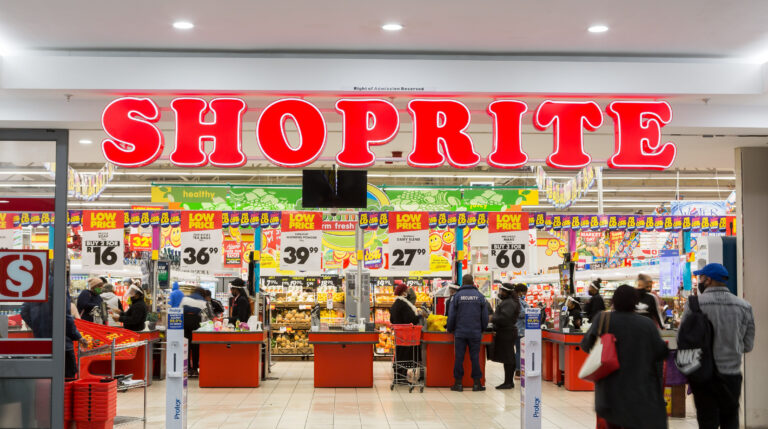
Shoprite remains one of South Africa’s most successful retailers, delivering strong results despite margin pressures stemming from low selling price inflation.
Shoprite is also the country’s largest retailer, now boasting over 3,600 stores across its network.
The retailer released its results for the 26 weeks ended 28 December 2025 on Tuesday, 3 March, revealing a strong start to its 2026 financial year.
Shoprite’s revenue increased by 7.1% to R138.85 billion, while its sales of merchandise grew by 7.2% to R136.8 billion.
This was slightly outpaced by the company’s cost of sales, which rose by 7.3% to R104.18 billion.
Shoprite CEO Pieter Engelbrecht explained that the retailer experienced very low internal selling price inflation over the 26-week period, with high promotional activity over the festive season leading to deflation.
This put some margin pressure on the retailer, with its profit for the period recording a slight decline of 0.4% to R3.69 billion.
The group’s total comprehensive income for the period decreased by 7.40% to R3.31 billion.
However, the company managed to increase its earnings from continuing operations by 4.5% to 697/1 cents, while earnings from discontinued operations remained flat.
The lion’s share of the group’s income came from its core Supermarkets RSA segment, which increased sales by 7.1% to R115.33 billion.
All of the brands in this segment performed well, with Shoprite and Usave increasing sales by 5.1%, while Checkers and Checkers Hyper saw 8.9% growth in sales.
Another standout performer was the group’s market-leading Sixty60 on-demand digital platform, which saw its sales increase by 34.6% to R11.9 billion over the 26-week period.
The group’s other local brands, including Petshop Science, Uniq Clothing by Checkers, Checkers Outdoor and Little Me, increased sales by 70.9%.
Overall, the Supermarkets RSA segment increased its trading profit by 7.1% to R7.19 billion.
However, the company took some pain outside South Africa. Shoprite’s Supermarkets Non-RSA delivered 12.1% sales growth to R11.54 billion, but suffered from a profitability perspective.
This segment’s trading profit fell by 17.4% to R303 million, which Engelbrecht attributed to adverse conditions in Mozambique over the period.
“We continue to maintain a disciplined approach to capital allocation as well as portfolio focus,” the CEO said.
“Following the recent classification of our operations in Ghana and Malawi as discontinued operations, our scope of operations on the continent now numbers seven countries, all situated relatively close to our South African home base.”
The group’s other operating segments, including OK Franchise, Transpharm, Medirite, and Computicket, increased their sales by 3.5% to R9.93 billion, while their trading profit decreased by 1.6% to R302 million.
Across its segments, Shoprite opened 209 stores in the interim period, expanding its continuing operations footprint to 3,655 stores.
On the back of these results, Shoprite declared an interim dividend of 307 cents per share, representing year-on-year growth of 7.7%.
Source: https://dailyinvestor.com/retail/122505/south-africas-biggest-retailer-feels-the-squeeze/
by Dev_SACCAWU | Labour Market News
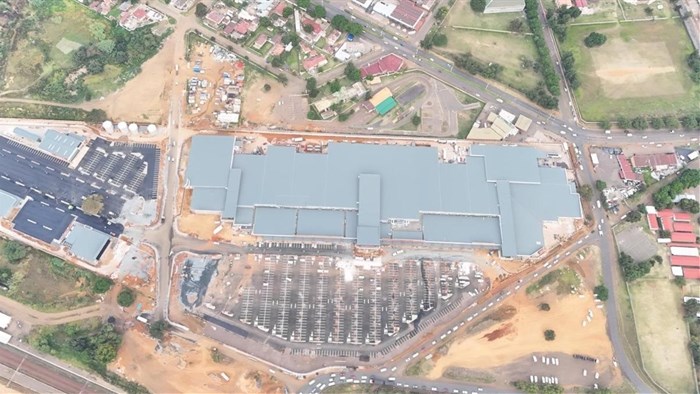
Aerial view of New Africa Developments’ (NAD) Jumbo Mall
With just a few weeks to go until opening day, Jumbo Mall is preparing to welcome its first shoppers on Thursday, 19 March 2026. Positioned at the corner of the R544 and Main Street in Emalahleni, the 37,000m² regional retail centre will elevate everyday shopping through a thoughtfully designed, high-quality retail environment.
The official launch will take place over four days, from 19 to 22 March, with the theme Indawo Yethu – Our Place. This message reflects the vision behind the development: a shopping centre designed not only as a retail destination, but as a space which is the cornerstone of the community it serves.
A four-day community celebration
Opening weekend will feature a four-day programme of entertainment, promotions and shopper engagement. Live outside broadcasts and media activations will take place on site, supported by MC-led competitions, prize moments and a daily ‘Tap, Spin and Cash In’ activation offering shoppers the chance to win exciting rewards.
Local schools and choirs will form part of the entertainment line-up, reinforcing the centre’s commitment to showcasing community talent. Anchor and line tenants will host in-store activations, while a number of local motor dealerships will participate in the celebrations, adding further energy to the launch.

Japie van Niekerk, CEO of New Africa Developments (NAD)
“We have always believed that a shopping centre should reflect the character and pride of the community around it,” says Japie van Niekerk, CEO of New Africa Developments (NAD). “Jumbo Mall is about creating a shared space where families gather, young people connect and local businesses thrive. Opening day is the culmination of years of planning, and we look forward to welcoming the community through the doors.”
A new retail anchor for Emalahleni
On opening day, more than 100 stores will begin trading, anchored by major national retailers including Shoprite, Boxer, Clicks and Dis-Chem. Fashion and lifestyle brands such as Foschini, Markham, Sportscene, Studio 88 and Total Sports will join a strong mix of apparel, cellular and speciality stores.
The centre will also house key financial institutions including FNB, Standard Bank, Capitec, Old Mutual and Sanlam, alongside a broad food offering featuring KFC, Chicken Licken, Romans Pizza, Hungry Lion and other sit-down and fast-casual options.
Jumbo Mall provides more than 1,500 free and secure parking bays easily accessed by means of three convenient entrances. Free uncapped WiFi will be available from day one, while the expansive food court includes a big-screen television for live screenings and a dedicated children’s jungle gym.
Custom-designed seating with integrated workspaces will broaden the functionality of the mall environment – offering students, entrepreneurs and remote workers a safe, connected and high-quality setting in which to meet, work or study.
A digitally connected, immersive experience
A notable feature of the development is its extensive digital infrastructure, including nearly 300m² of high-definition LED screens installed both inside and outside the centre. At its heart is a first-of-its-kind 3D immersive digital screen experience for Emalahleni, designed to entertain, inform and connect shoppers in real time.
The digital ecosystem will enable live broadcasts of in-mall activities, performances and prize moments during opening weekend, transforming the shopping environment into an interactive, shared experience. Beyond the launch, the screens will provide a contemporary platform for retailer promotions, community highlights and branded content, bringing a level of digital engagement not previously available in the area.

Interior of New Africa Developments’ Jumbo Mall taking shape as the project nears completion
Economic impact and long-term value
Alongside its retail and entertainment appeal, Jumbo Mall represents a significant economic milestone for the region. The development created approximately 2,500 construction jobs, with an estimated 800 permanent positions supported by the centre once fully operational.
Local contractors and suppliers were actively involved throughout construction, ensuring that economic benefits were retained within the surrounding communities.
The mall has also been designed to operate reliably and efficiently over the long term. It features an extensive solar photovoltaic installation, energy-efficient air-conditioning, LED lighting and water-saving toilets that reduce water usage by up to 70%. A state-of-the-art building management system monitors energy performance in real time, while 100% back-up power ensures uninterrupted trading during load-shedding.

Robin Houghton, managing director of New Africa Developments (NAD)
Robin Houghton, Managing Director of New Africa Developments, says: “Jumbo Mall reflects the company’s broader vision for inclusive, future-fit retail. Secondary cities such as Emalahleni are dynamic, growing markets with clear demand for quality retail infrastructure. Access to thoughtfully designed, contemporary shopping environments should not be limited by geography. Our aim is to create developments that become part of daily life – centres that stimulate trade, support employment and serve as long-term economic anchors.”
‘This one’s for you’
As 19 March approaches, the most important message is that Jumbo Mall has been built with the community in mind. “We are passionate about bringing dignity and opportunity to the communities we serve,” adds van Niekerk. “When shoppers walk into Jumbo Mall for the first time, we want them to feel proud of the quality, proud of the experience and able to call it their own. This one is for Emalahleni.”
Residents are invited to join the four-day opening celebrations from 19 to 22 March 2026 for a first-hand experience of the retail, entertainment and community-focused amenities that Jumbo Mall will bring to the city.
With the countdown officially under way, Jumbo Mall is poised to become a new focal point for shopping, connection and community life in Emalahleni.
Source: https://www.bizcommunity.com/article/19-march-marks-the-start-of-something-big-as-jumbo-mall-opens-in-emalahleni-955504a
by Dev_SACCAWU | Labour Market News
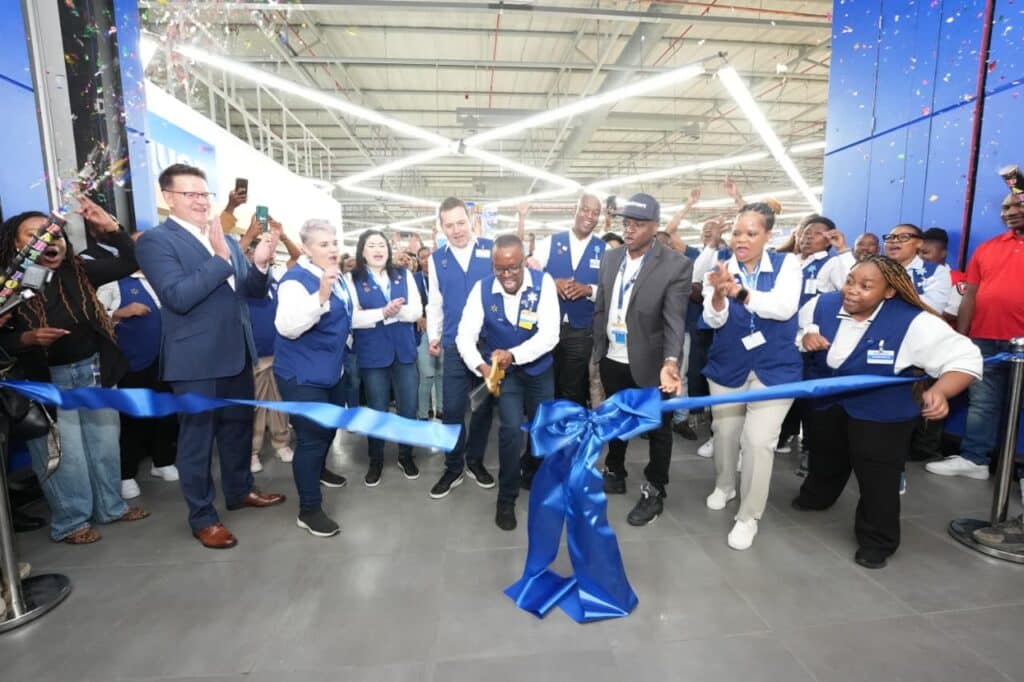
Walmart Boksburg is all about energy South Africans know and love
This past weekend, Hello Lifestyle swung by the opening of the brand-new Walmart store at East Point Shopping Centre – and let’s just say, Boksburg arrived ready. From early morning queues to families posing for photos under the blue and yellow archway, the launch had that unmistakable “new store excitement” energy South Africans know and love.
Inside, the aisles filled quickly as shoppers explored fresh produce, household essentials and all the wallet-friendly goodies Walmart is known for. The atmosphere had a fun mix of global brand polish and warm local personality – the kind that makes a quick shop turn into a Saturday outing.
Malmart’s Third Store for South Africa – With More on the Way
The new Boksburg location marks Walmart’s third SA store, following the successful openings in Clearwater and Fourways Malls. And judging by the foot traffic this weekend, the momentum isn’t slowing down.
The rollout is picking up speed, with 21 more stores proposed across Gauteng, KwaZulu-Natal and the Western Cape (check out our nationwide Travel Deals here). For local shoppers, that means easier access to reliable everyday value – no waiting for specials, no guessing games with fluctuating prices.
Why Shoppers Love Walmart’s “Every Day Low Prices”
According to Andre Steyn, Vice President of Format Acceleration at Massmart, the turnout felt like a true community moment
And honestly, Hello Lifestyle gets it. Consistent low pricing on essentials like bread, milk, eggs and basics means real savings for real households – something South Africans never take for granted.
Independent price comparison studies have already shown a clear cost advantage at the Clearwater store. Now, Boksburg shoppers are set to enjoy the same experience: straightforward pricing and peace of mind.
“We’re grateful to have seen so many families come out to join us. There’s just something about that exciting energy of a Walmart store opening.”