President Cyril Ramaphosa has promised to step in and help fix the Unemployment Insurance Fund (UIF), as millions of South African workers wait months — and sometimes years — for money they are owed.
The Presidency says Ramaphosa has met with organised labour to discuss the crisis at the UIF and the Compensation Fund, which covers workers injured or made ill on the job.
The UIF paid out R18 billion to 3.1 million people in the 2024/25 financial year. But the fund has been hit by a troubled switch to a new online claims system, a growing backlog of claims, and years of governance problems.
What went wrong
The UIF began moving away from its old uFiling system in April 2025, switching claimants over to a new platform called UIF Online. By April 2026, the new system had processed and paid out more than 4.5 million claims — up from around 3.5 million processed the year before under the old system. Even so, many workers say they are still waiting far too long for pay-outs, and the fund has faced a growing backlog of unresolved claims.
The fund’s former commissioner, Teboho Maruping, was dismissed at the end of February this year after earning close to R2.5 million while on suspension since September 2024. His suspension was linked to a R5 billion contract the UIF signed with Thuja Capital, which the Pretoria High Court later set aside for breaching the Public Finance Management Act.
The Auditor-General has repeatedly given the UIF a qualified audit opinion in recent years, pointing to weak internal controls and problems verifying claims — including payments made through the Covid-19 Temporary Employer/Employee Relief Scheme (TERS).
The UIF board itself has also come under fire. It has no real decision-making power of its own — it can only advise the Minister — and meetings have often been called or rescheduled at short notice, making it hard for members to prepare. This has repeatedly stopped the board from reaching a quorum.
Stakeholders run out of patience
In June, South Africa’s major labour federations — Cosatu, Saftu, Fedusa and Nactu — jointly called on Ramaphosa to step in over the UIF’s failures. Two weeks later, Busa announced it was withdrawing from UIF structures, saying the move was needed to protect its representatives’ reputations and to send a clear message that the situation could not continue.
Busa has called on Employment and Labour Minister Nomakhosazana Meth to place the UIF under administration, with an independent administrator brought in to stabilise operations, clear the claims backlog and fix governance problems. It has also called for a forensic investigation into the fund’s spending, saying it is concerned that money is being redirected to programmes that mainly benefit people who don’t contribute to the fund, while contributors face delays and exclusion.
With Maruping gone, the UIF has been operating under acting leadership while facing mounting operational pressure. In December 2025, the Special Investigating Unit — acting under a presidential proclamation issued in 2021 — carried out search-and-seizure operations in KwaZulu-Natal and Gauteng, targeting officials suspected of helping to process fraudulent claims and of diverting around R161 million from the TERS scheme.
Despite the turmoil, the fund remains financially sound. It reported a surplus of R23 billion for the 2024/25 financial year.
What happens next
While Ramaphosa’s involvement signals that government now recognises the scale of the crisis, the Department of Employment and Labour says no formal request to place the UIF under administration has yet reached the President’s desk. The UIF itself has urged stakeholders to keep engaging with it, arguing that withdrawing from governance structures won’t fix operational problems — such as employers submitting incorrect declarations.
But with millions of workers depending on UIF payouts for their basic survival, the pressure on government to act is only growing. The fund provides short-term relief to people who lose their jobs, or who cannot work because of illness, maternity, adoption or parental leave — making it a critical part of South Africa’s social safety net.
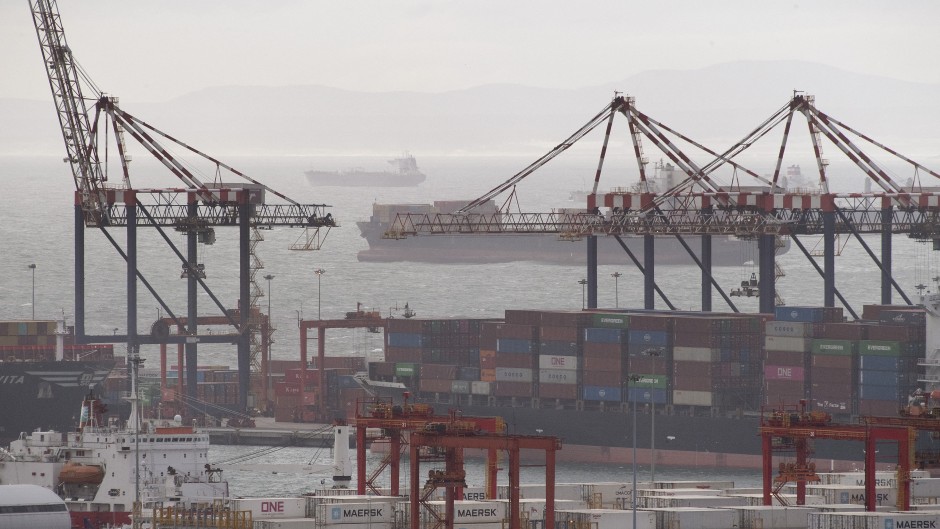
JOHANNESBURG – South Africa faces a fresh 12.5% US tariff over allegations it has failed to block imports made with forced labour.
However trade union federation Cosatu insists the country already has the laws to do so and blames poor enforcement, not missing legislation.
Cosatu says the country already has labour, anti-trafficking and customs legislation but admits enforcement has been lacking.
The trade union federation told US trade officials that authorities have the power to ban such goods although no companies appear to have been blocked under these measures.
The issue is being examined as part of US trade hearings this week.
Cosatu and Trade Union Solidarity have warned that any new tariff would unfairly hurt South African workers and exporters, particularly in the automotive, citrus and wine sectors.
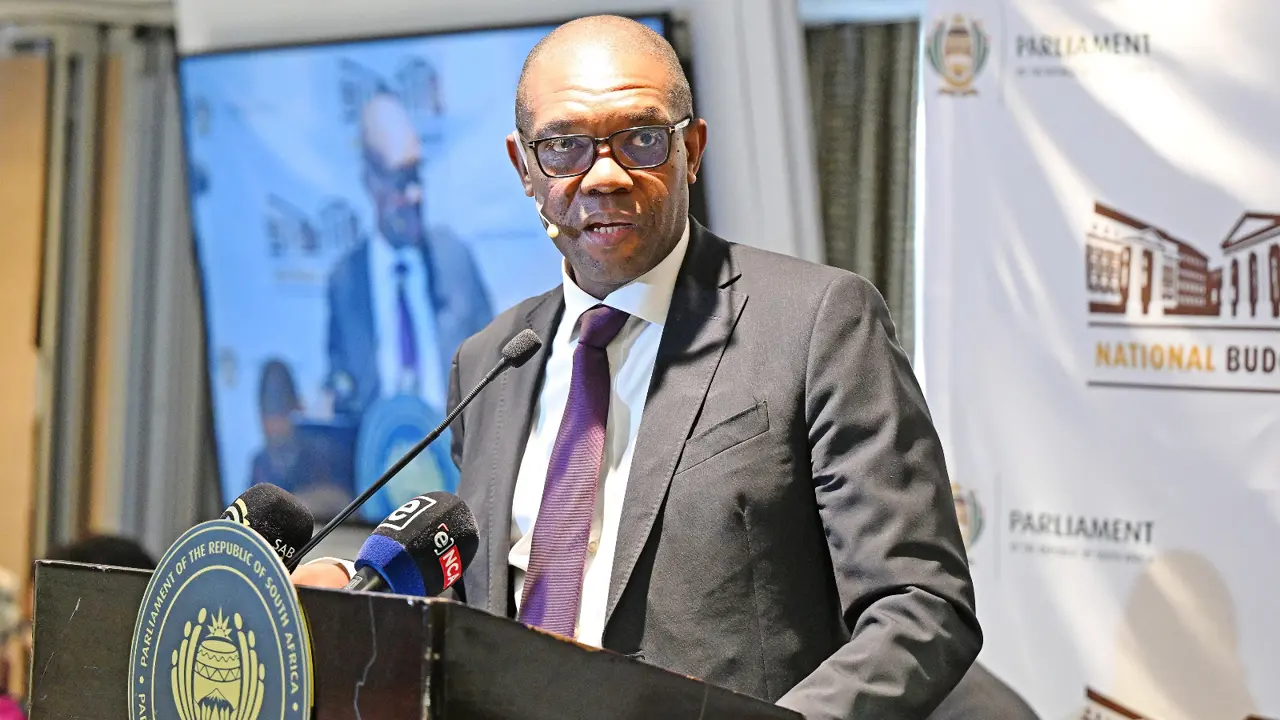
Chairperson of Parliament’s Standing Committee on Public Accounts (SCOPA), Songezo Zibi, at a parliamentary briefing on the national budget. Picture: Parliament/Phando Jikelo
The EFF said the decision by the National Treasury will not stabilise the economy or create jobs, but it will only deepen poverty, inequality and unemployment.
The National Treasury’s decision to suspend the transfer of equitable share funds to underperforming municipalities has received a mixed reaction from opposition parties, members of Parliament (MPs) and the labour sector.
The Economic Freedom Fighters (EFF) has warned that the National Treasury against pursuing what it calls “a path that seeks to collapse the State”, while handing over decisions on the fate of the country to the private sector and non-governmental organisations (NGOs).
However, the chairpersons of the Standing Committee on Public Accounts (SCOPA) and Cooperative Governance Committee have welcomed the move to temporarily withhold transfers to the 69 municipalities that are performing poorly.The EFF said the decision by the National Treasury will not stabilise the economy or create jobs, but it will only deepen poverty, inequality and unemployment.
The party said the solution is the creation of “a capable, well-resourced, corruption-free developmental state” that supports all of society.
The uMkhonto weSizwe (MK) Party has also rejected the move by the National Treasury, arguing that it shifts the cost of maladministration onto ordinary citizens instead of the decision-makers who caused it.
Rise Mzansi leader and SCOPA chairperson, Songezo Zibi, said the National Treasury was justified.“If anything, National Treasury has taken too long to act against these municipalities. They need to get their house in order.”
The Congress of South African Trade Unions (COSATU) has also raised concerns about the unintended consequences of withholding funds as a form of punishment.
The union federation says some municipalities are in such bad shape that some basic services would grind to a halt.
Never miss a major story. Get breaking news and the latest developments from South Africa and beyond as they happen.
The South African Municipal Workers’ Union (SAMWU) invites members of the media to cover its National Day of Action, which will take place on 9 July 2026 in Tshwane.
The march is expected to be attended by tens of thousands of municipal and water sector workers from across all nine provinces, as SAMWU takes to the streets in defence of workers, collective bargaining and public services.
SAMWU members and workers will gather at the Old Putco Depot in Marabastad, Tshwane, from where they will march to the National Treasury offices to deliver a Memorandum of Demands addressed to National Treasury, COGTA, SALGA and the Department of Water and Sanitation.
The march will raise critical issues affecting workers in municipalities and the water sector, including the underfunding of local government, National Treasury interference, the implementation of collective agreements, the City of Johannesburg PFA, the Wage Curve, Business Units, non-payment of salaries and benefits, outsourcing, consultants, load reduction, water boards and the victimisation of workers and shop stewards.
Details of the march are as follows:
Date: 9 July 2026 Gathering Point: Old Putco Depot, Marabastad, Tshwane Time: From 9am Destination: National Treasury offices Purpose: Delivery of Memorandum of Demands to National Treasury, COGTA, SALGA and the Department of Water and Sanitation
Members of the media are invited to attend and cover the march by confirming attendance with Cde Papikie Mohale on 076 795 8670 or via email on papikie@samwu.org.za.
Mangaung Correctional Centre in Bloemfontein. (Photo: Gallo Images / Volksblad / Mlungisi Louw)
Popcru escalates tensions at Mangaung Correctional Centre, accusing the Department of Correctional Services of bypassing court rulings and jeopardising the staff handover process.
The Police and Prison Civil Rights Union (Popcru) sent an urgent letter of demand on Monday, accusing the Department of Correctional Services of attempting to bypass a labour court ruling ordering the absorption of former G4S guards at the high-security Mangaung Correctional Centre.
The state-of-the-art maximum security centre outside Bloemfontein featured in national headlines in 2023 when escapee Thabo Bester was arrested a year after walking out of the correctional centre dressed as a prison guard.
The 25-year public/private concession was granted to Bloemfontein Correctional Contracts (BCC), which subcontracted to G4S in March 2000, but is due to revert to state control on Wednesday, 1 July.
The facility faced an immediate takeover by the Department of Correctional Services after Bester’s “embarrassing” escape, an action by National Commissioner of Correctional Services Makgothi Thobakgale, which has since been declared by the high court as unlawful.
No uniforms, no equipment
Mutsengi Attorneys, on behalf of Popcru, wrote to the department requesting the state to urgently provide uniforms and equipment and shift schedules for the incoming workforce by 1 July.
BCC has also warned that the department’s lack of cooperation stands to derail the handover.
BCC’s Itumeleng Mokoena wrote a “record of position” on Monday, copied to President Cyril Ramaphosa, Minister of Correctional Services Pieter Groenewald, Minister of Justice Mmamoloko Kubayi, Acting Minister of Police Firoz Cachalia and others, setting out the outstanding legal matter.
Minister of Correctional Services Pieter Groenewald. (Photo: Gallo Images / Jeffrey Abrahams)Minister of Justice and Constitutional Development Mmamoloko Kubayi. (Photo: OJ Koloti / Gallo Images)Acting Minister of Police Firoz Cachalia. (Photo: Gallo Images / Brenton Geach)
Mokoena wrote in his record that BCC “at no point opposed the conclusion of the concession agreement upon its expiry on 30 July 2026”, however, “for no fewer than six months, in a concerted and transparent manner, BCC has sought to make every stakeholder aware that time was of the essence and that a compliant and cooperative handover, a risk-managed transition and a sustainable improvement of the criminal justice system required timeous preparation and coordination”.
Mokoena noted that this was done through official correspondence, formal representations and public newspaper articles.
“Even in circumstances where those early warnings were not heeded, this remains BCC’s position today,” Mokoena said. Popcru on Monday asked the DSC to provide formal communication and allocation of shifts, beginning on 1 July 2026.
External recruitment
The Popcru legal demand also asks that the DSC stop its “aggressive recruitment process” and that, instead of absorbing G4S staff, this had been “a blatant attempt to circumvent and frustrate the court order”.
The DSC was asked to provide a written and unequivocal undertaking by noon on Monday, 29 June 2026. Daily Maverick approached the Minister of Correctional Services and had not received a reply at the time of writing.
Popcru warned that should demands not be met, it had instructed its attorneys to launch an urgent application for contempt of court against both the minister and the national commissioner and would seek “punitive sanctions and a punitive cost order” against the department.
On 30 April, the labour court declared that the termination of the concession contract constituted a transfer of business as a “going concern” under Section 197 of the Labour Relations Act.
This legally mandates that G4S employees automatically transfer to the Department of Correctional Services. Popcru alleges that the department is operating in “overdrive” with an aggressive recruitment process for roles at the MCC.
The department initially attempted to stay the execution of the court order and filed for an appeal, but these efforts failed as the appeal was filed “out of time”.
An application by the department to stay the execution of the transfer order was formally dismissed on 18 June 2026, but despite these legal defeats, Popcru claims the department has failed to make the necessary operational preparations.
Mokoena said that BCC “has acted throughout in good faith and as a responsible, ethical and professional corporate citizen and concessionaire”.
“This remains its position, and it is reflected in both the documentary and behavioural evidence trails. BCC stands ready, today and through the conclusion of the concession, to cooperate with every office addressed in this letter to secure the orderly handover, transition and sustainable improvement that the Republic and those in its care deserve”. DM



/file/attachments/orphans/pappie_mokoena_552316.jpg "BCC’S Itumeleng Mokoena. (Photo: eNCA / Wikipedia)")
/file/attachments/orphans/GettyImages-2247196998_710769.jpg "President Cyril Ramaphosa. (Photo: Leon Neal / Getty Images)")
/file/dailymaverick/wp-content/uploads/2025/07/ED_547351-1.jpg "Minister of Correctional Services Pieter Groenewald. (Photo: Gallo Images / Jeffrey Abrahams)")
/file/dailymaverick/wp-content/uploads/2025/09/ED_550105-1.jpg "Minister of Justice and Constitutional Development Mmamoloko Kubayi. (Photo: OJ Koloti / Gallo Images)")
/file/attachments/orphans/ED_595542_745335.jpg "Acting Minister of Police Firoz Cachalia. (Photo: Gallo Images / Brenton Geach)")