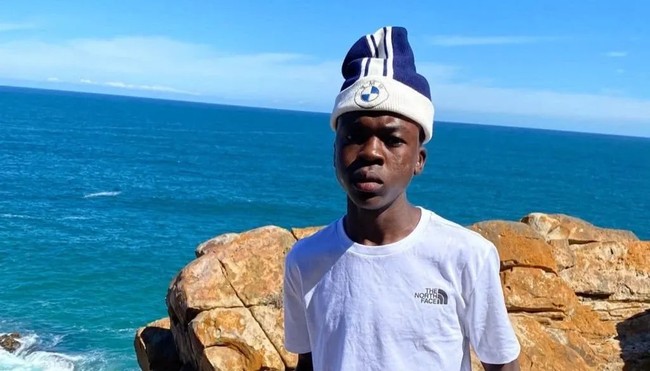
Thirty days after May Day, and a week after Africa Day, Nhlamulo Sambo, a 19-year-old South African citizen from Giyani, Limpopo, was killed for being in the wrong place. Or speaking in a different tongue… He was a victim of racial profiling where fellow inhabitants take it upon themselves to police others based on the colour of their skin, language, place of origin, nationality, or other made-up criterion.
The authorities are missing in action and permit this lawlessness to reign supreme.
The stabbing took place on May 31, 2026. On May 1, International Workers’ Day, we reiterated our call for workers of the world to unite, and on May 25, Africa Day, we celebrated African unity, our cultural diversity, and our journey towards an Africa that can hold its head up high as it carves its own way in this fractious world.
Sambo was killed in KwaNonqaba, Mossel Bay, which is in the Western Cape province – a significant segment that has demanded to secede from the country. According to his family, being a Xitsonga speaker in a predominantly isiXhosa-speaking community may have been one of the reasons he was unjustly killed. He was moved from where he lived and attacked during the recent afrophobic protests in Mossel Bay, Western Cape. He was wrongly “accused” of being a foreigner. His mother, Nkateko Sambo, called for assistance as she said: “They killed my son like a dog, saying that he is a foreigner, whereas my son is a Tsonga, a South African citizen.”
Nhlamulo Sambo, a 19-year-old South African citizen from Giyani, Limpopo, was killed for being in the wrong place.
This is the sad reality of this supposed war on illegal immigrants. It is a political attack on the vulnerable that profits from making ‘the other’ an enemy. Such killings murder more than innocents. They murder the dream of our forefathers and mothers who hoped for an African renaissance, where from the bottom of the continent we can play our role to lift our continent from poverty, marginalisation and hopelessness. The motives may vary – financial, extortion – but political power cannot be ruled out, as local government elections are around the corner. The trouble with this is that it is vigilante justice that starts with the search for illegal foreigners and ends up killing those who are not illegal or those South Africans who look foreign. This is the hate they make. This view is shared by researchers who track these crimes against humanity.
Xenowatch, a project at the African Centre for Migration & Society at the University of the Witwatersrand, defines xenophobic violence as acts explicitly targeting foreign nationals or “outsiders” because they are perceived as strangers. The website lists 696 people who have been killed since they started tracking the xenophobic violence.
One thing South Africans must bear in mind is that this form of violence has been with us since the dawn of our democracy. The violence of some humans against other humans peaked in May 2008, when xenophobic violence broke out in Alexandra, Johannesburg, and rapidly spread to seven of South Africa’s nine provinces. According to Human Rights Watch, the violence resulted in “62 deaths, including 21 South Africans, 11 Mozambicans, five Zimbabweans and three Somalis; thousands were injured.
Some 40,000 foreign nationals left the country and a further 50,000 remain internally displaced.” Just look at those figures – one of the largest numbers of those killed as a single group were South Africans from outside provinces. Outside the metropoles… those others.Then, as now, excessive melanin, once a source of pride on our continent, could mark one for brutality, which for me speaks volumes about our failure to heal from apartheid’s deadly poison.
We have been unable to build a nation based on the principles of anti-racism and anti-sexism we so proudly proclaim in our constitution. We have become our own enemies; where once we spoke of black unity and the unity of the oppressed, we are now eating up ourselves.
Between 1994 and November 2021, Xenowatch identified 873 incidents of victimisation, which included 612 deaths, 1,184 physical assaults, 122,298 people displaced, and 6,306 shops or properties looted or damaged. These are only the recorded incidents. But who are they? They use social media, and they form NGOs or now political parties.
Operation Dudula is a registered political party, working alongside others like the Patriotic Alliance and Action SA, whose leader Herman Mashaba has been a leading anti-foreigner campaigner since his days as Mayor of Johannesburg. Ncebakazi Makwetu reminds us that in November 2023, Patriotic Alliance (PA) leader Gayton McKenzie threatened that after being sworn into office, he would go to Rahima Moosa Hospital and “switch off the oxygen of illegal foreigners.”
The statement is characterised as hateful, as it legitimises the fear and horror tied to violent acts targeting both immigrants and South African citizens. Social media has become a field of mobilisation, which Nebakazi Makwetu observes thus: “In just four-and-a-half months, between March and July 2025, xenophobic posts on X reached 32 million people. Posts calling for ‘South Africa for South Africans’, defending Operation Dudula, demanding deportation and using slurs such as kwerekwere and abahambe (go away) were mentioned 5,656 times and viewed more than 1.2 million times.”
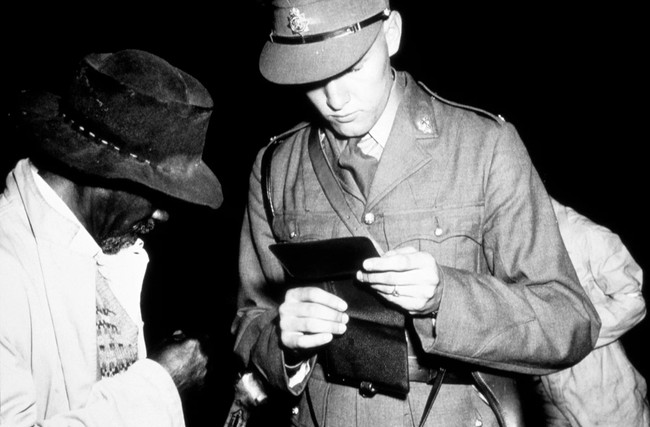
South Africa has a disturbing history of demanding documentation for just being in a specific area.
In 2008, political leaders denied that we have a problem, as some are doing now, but the evidence is out there. Getting the Department of Home Affairs to resolve its documentation crisis – which lies behind the afrophobic and xenophobic crisis – is necessary but not sufficient. Sometimes the lack of papers permits official and unofficial forms of corruption of a helpless person and is reminiscent of the old pass law controls of black people. The home affairs department dealing with this issue, is wholly inept and if we solve the documentation crisis for all people, it is the non nationals who are hardest hit facing bureaucratic bullying, legal uncertainty, detention, or deportation. So the problem is systemic, not just an “outsider” issue.
The SAPS must become African-centric to protect all Africans from those within who are trying to destroy our humane-centredness, which we now sloganise but do not believe in. Ubuntu is not the problem; our failure to live up to it is. We have failed to learn the lessons from 2008, but my plea is not only for the black South African child or adult but to value all lives. No human being is illegal. Yes, we do have problems and we have to find other ways of addressing the failures of obtaining workable and inclusive national development approaches. We need something better than this uncaring economy, that is fragmenting our neighbourhoods and tearing our society apart.
Instead of building a Solidarity Society we have austerity and greed. Austerity is no solution in a world where the right-wing politics of neoliberalism seems to be in the ascendancy. This movement has been emboldened in the Trump era by the politics of “beggar my neighbour” – make war on the weak and infirm.
Paedophilia and sexual violence are rife in the circles of elites, as the Epstein files reveal, setting in motion a class where power alone is the respected value. Those who hate other Africans and people from the so-called Third World are using the tactics of the Global Right: attacking human rights and regulatory bodies that protect human rights, the environment, and life itself.
The rampant corruption among government leaders is being exposed and must be remedied. We have all heard and seen in the Madlanga Commission that the corruption engulfing office bearers in the police, local authorities, and the private sector is a serious matter.
We are organising, but we must redouble our efforts. Civil society organisations like Kopanang Africa Against Xenophobia (KAAX) and union federations Cosatu, Fedusa, Nactu and Saftu must stand up and speak up. We have to defend the under-resourced but much maligned Chapter 9 bodies, in particular the South African Human Rights Commission.
The police and its specialised units must find these killers and bring them to book now. The Electoral Commission of South Africa (IEC) must be vigilant and regard these killings as integral to a sordid electoral campaign which hides under the radar of detection.
If Ubuntu was not a mere slogan, but lived, I believe the youthful Nhlamulo Sambo would not have met such an untimely end – 16 days before June 16 – now called Youth Day.
If Ubuntu was not a mere slogan, but lived, I believe the youthful Nhlamulo Sambo would not have met such an untimely end, writes Hassen Lorgat.
* Hassen Lorgat, is a social justice activist.
** The views expressed do not necessarily reflect the views of IOL.
We wake up every day to the same story: no jobs, no hope, no safety. In this climate, migration has become a flashpoint.
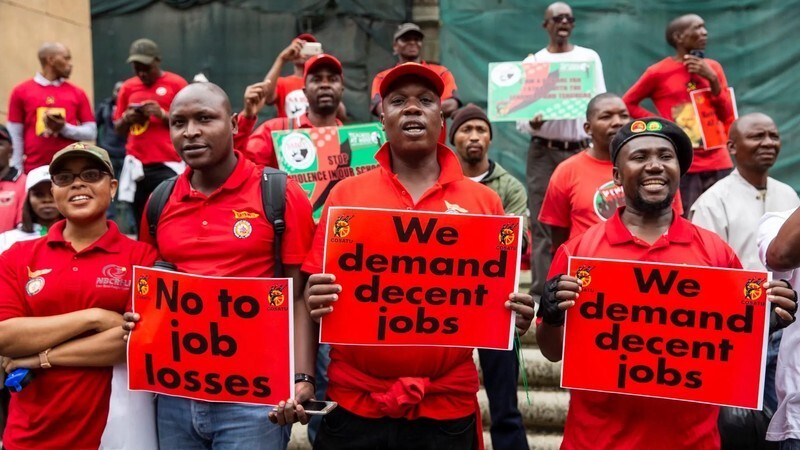
The Congress of South African Trade Unions (COSATU) believes we need two things at once: honest management of migration, and a total rejection of xenophobia. We cannot choose one and ignore the other. Both are about protecting the working class.
Let’s be blunt about where we stand. Unemployment is at 43.7%. For young people, it is over 60%. That means 12 million people are locked out of the economy. Two out of three young workers have never had a job.
Poverty scars our townships and rural areas. Inequality remains the highest in the world. A worker in Alexandra earns in a year what a CEO in Sandton earns before lunch.
Public resources are stretched to breaking point. Our hospitals have queues out the door. Our schools have broken toilets and 80 learners per class.
RDP housing lists are many years long. There is simply not enough to meet every need. When budgets are tight, we must spend every Rand to protect South Africans first. That is not hatred. It is responsibility.
At the same time, crime is out of control. Workers are hijacked going to work. Spaza shops are robbed daily. Our sisters and daughters are not safe walking home. Communities are angry, and that anger is real. But anger without a plan helps no one.
Migration is not new. It is as old as humanity. People have always moved to find food, safety and work. South Africa was built on migration.
For more than 100 years, men from Lesotho, Mozambique, Eswatini, Zimbabwe, Malawi and Zambia came to work in our mines. They lived in hostels. They died in rockfalls. Their wages built the mining industry. Their families back home survived on those remittances.
We must also remember that many of our borders are artificial. Colonial rulers drew lines on maps in Berlin in 1884. They split families, nations and trade routes. The Limpopo River is not a wall between enemies. It is a bridge between neighbours.
We appreciate the support we received from our neighbours during the liberation struggle. When apartheid jailed our leaders and banned our organisations, the Frontline States sheltered us. Mozambique paid for hosting the ANC with South African raids that killed civilians and destroyed the economy. Angola was invaded repeatedly. Botswana and Lesotho were raided. Their people bled for our freedom. South Africa honours that sacrifice. But hospitality cannot mean a free-for-all.
The past decade saw a massive rise in migration to South Africa. We understand why. People are fleeing failed states, economic collapse, and violence. When your government cannot provide jobs, electricity or human rights, you move. No one leaves home because it is easy. They leave because staying means starving.
But let us be honest: the scale is no longer sustainable. Our clinics in Musina are overwhelmed. Our township are overcrowded.
Our job market cannot absorb millions of new entrants when we cannot employ our own. South Africa has an obligation to prioritise its citizens, especially the youth, for scarce jobs and resources. That is what every government in the world does.
All countries are battling unmanaged migration, from the United States to Germany to Brazil. South Africa is not unique. But if we do not manage this crisis, it will explode. History has shown us that when people feel abandoned, xenophobic violence follows. We have seen it before. We condemn it without reservation. Attacking a fellow African creates no jobs. It does not build a single house.
Rule of law for all: Every person in South Africa, local or foreign, must obey our Constitution and our laws. That includes labour laws, tax laws, by-laws and migration laws. If you commit crime, you must face the courts. If you are here illegally, the law must apply. No exceptions, no favours.
Resource the state to enforce: We cannot speak of the rule of law while SAPS stations have no vans, Home Affairs offices have broken systems, and our borders have holes. Government must properly fund and capacitate SAPS, Home Affairs, the Border Management Authority and the SANDF. A state that cannot secure its territory or enforce its laws is failing its people.
Jail the real culprits – exploitative employers: The biggest problem is not the undocumented worker. It is the employer who hires him to pay R80 a day, with no UIF, no safety gear, no rights. These bosses use desperation to break unions and undercut South African workers. They are the ones who must be raided, fined, and jailed. Exploitation of vulnerability must become a serious crime.
Pass the Employment Services Amendment Bill: Parliament must urgently pass this Bill. It will place reasonable, sector-based limits on the number of migrant workers in a workplace. This is not a ban. It protects local jobs while still allowing critical skills we lack. It is rational labour market planning.
Build Africa together: The long-term answer is not in South Africa alone. We need SADC and the African Union to drive joint industrialisation. Let us build factories in Bulawayo and Maseru. Let us fix rail from Maputo to Durban. Let us share energy from Cahora Bassa and the Grand Inga. When there are jobs in Zimbabwe, Lesotho and Mozambique, people will not need to flee. South Africa’s destiny is linked to the region. We rise together or we fall together.
Cosatu is a federation of the working class. Our members are South African and migrant. Our enemy is unemployment. Our enemy are those who steal. Our enemy is the employer who replaces permanent jobs with undocumented labour.
We need managed migration. We need borders and laws that are enforced. And we need to reject xenophobia.
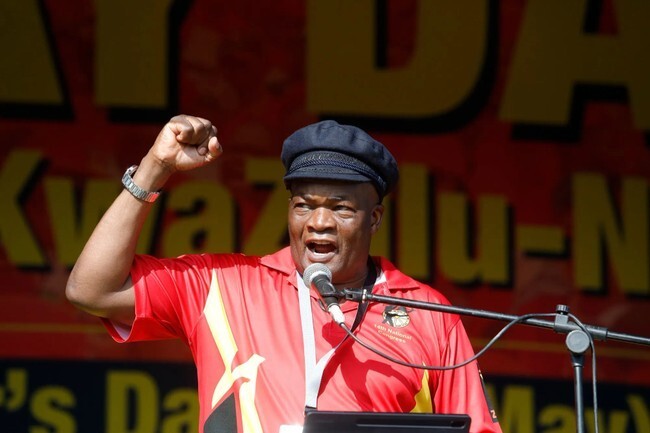
Let us unite workers, not divide them. South Africa will not be built on hatred. It will be built on jobs, justice and solidarity.
The SACP’s Conference of the Left has declared the rising cost of living as the main battleground in the conflict between social classes. Image: Simon Majadibodu/IOL
The working class is forced to bear the burden of an economic system that prioritises wealth extraction over human dignity.
The Conference of the Left, which held its inaugural gathering at the weekend, has declared the escalating cost of living a central terrain of class struggle.
The declaration comes as South Africa faces a structural crisis characterised by mass unemployment (hovering around 43.7% overall and over 71% for youth), deepening poverty, and severe inequality.
The three -day conference, was hosted by the South African Communist Party (SACP) at Birchwood Hotel in Boksburg, Ekurhuleni, from Friday to Sunday.
The conference was attended by a broad coalition of leftist and progressive organisations, including the Economic Freedom Fighters (EFF), the Umkhonto weSizwe (MK) Party, the Pan Africanist Congress (PAC), the Azanian People’s Organisation (AZAPO), and the Congress of South African Trade Unions (COSATU).
Several smaller parties, labour federations, Marxist and Pan-Africanist groups, and social movements also participated.
The ANC boycotted the conference as it viewed the gathering as a strategic attempt by rival factions to attack, weaken, and dismantle the ANC-led Tripartite Alliance.
The party also objected to the inclusion of rival parties such as the EFF and MK Party, arguing that these groups do not embody genuine leftist principles.
In a document shared on social media, the SACP said food prices, electricity tariffs, transport costs, fuel, water charges, and basic goods are influenced by monopoly control, profiteering, weak public regulation, financialisation, austerity, and private profit.
The conference has called for price regulation, action against fixing and profiteering.
The conference also called for stronger measures against monopoly control of essential goods and the defence of affordable basic services as a right.
“Food, energy, water, sanitation, healthcare, education, housing, and transport must be treated as public goods, not commodities,” read the document.
The conference also opposed privatisation, prepaid exclusion, water and electricity disconnections, and the transfer of the “capitalist crisis” onto working-class households.
The conference declared its support for a permanent Universal Basic Income Grant set at a level that sustains dignity, financed through redistributive taxation on wealth, concentrated capital, and financial speculation, as part of comprehensive social security.
“The current social relief of distress grant is inadequate and falls far below what is required for a dignified life. The conference notes that millions who require income support remain excluded through restrictive criteria, administrative barriers, and underfunding.
“The struggle for a Universal Basic Income Grant must therefore be linked to expanded social protection, redistribution of wealth, land justice, and the construction of economic alternatives that place human need before profit,” reads the document.
The conference added that the country’s critical minerals must be used strategically for industrialisation, not merely as exported as new materials for foreign corporations and “imperialist” supply chains.
The conference pronounced that minerals must support beneficiation, public and social ownership, local manufacturing, energy sovereignty, rail and infrastructure development, technological transfer, skills development, worker rights, and decent work.
“The conference rejects the false choice between corruption and privatisation. Corruption, maladministration, looting, and elite impunity must be confronted decisively. But handing over electricity, rail, ports, water systems, spectrum, public health, public transport, and other strategic network industries to private profiteers is not a solution. It is a continuation of the neoliberal offensive under another name.”
The MK Party said the conference has demonstrated that progressive forces in South Africa remain resilient, active, and capable of shaping a meaningful alternative for the future.
At the same time, it highlighted the ongoing challenge of fragmentation, ideological confusion, and organisational division that continues to weaken the working class and slow the pace of transformation.
In response, the party called for the establishment of a permanent Council of the Left, which will bring together political parties, trade unions, community organisations, youth and women’s formations, intellectuals, and all progressive forces committed to social and economic change.
The party added that this structure must serve as a platform for coordination, policy development, political education, and collective action in the interests of workers and the poor.
The conference has also called for the rebuilding of public health, the insourcing of health support workers, expansion of community healthcare, public pharmaceutical capacity, democratic accountability and international cooperation in health, including with Cuba.
The conference also stands for redistribution, restitution, security of tenure, and expropriation of land with compensation where appropriate and in public interest, guided by the need to restore dignity, advance equality and place land in the hands of those who work it and live on it.
“The conference supports anti-eviction legislation to protect vulnerable land occupiers, tenants, and farm dwellers, homeless communities and working-class households from unjust, unlawful, illegal and arbitrary evictions.”
As South African consumers face another challenging month, June brings significant fuel price hikes alongside an interest rate increase from the South African Reserve Bank. While petrol prices rise, diesel users will see price cuts. Trade unions are urging the government to provide further relief to mitigate the impact on workers and the economy. Image: File
Petrol prices will rise significantly while diesel users will benefit from substantial price cuts.
Motorists filling up with petrol will see prices increase by R1.43 per litre, Diesel users, however, will benefit from significant decreases, with diesel containing 0.05% sulphur falling by R3.25 per litre and diesel containing 0.005% sulphur decreasing by R2.62 per litre.
The Congress of South African Trade Unions (Cosatu) has urged government to provide further Fuel Levy relief to cushion embattled workers and the economy from the massive fuel price hikes that have wrecked havoc since the commencement of the war in the Persian Gulf.
Cosatu said, following the official fuel price adjustment announced on Monday, “Whilst we appreciate the modest initial decrease in diesel prices due to come into effect, a further rise in petrol prices will be yet another painful blow that millions of struggling workers and commuters, and an already stagnant economy stuck at anemic 1% growth, simply cannot afford.”
The trade union added that it fears workers, society, and the economy will not cope with the planned end in the fuel levy relief in July if international oil and fuel prices continue to remain abnormally high and even rise.
“Oil and fuel supplies and prices may also take some time to return to pre-war levels even once the war ends,” Cosatu added.
Diesel is critical for the public and private transport that workers depend upon as is paraffin for millions of working-class families.
“Workers who are already drowning in debt, supporting up to seven relatives each and spending an average of 40% of their meagre wages on transport; will not be able to continue to survive such steep petrol, diesel, gas and paraffin price prices. The most important source of relief for workers, society and the economy, is to maintain the fuel levy relief while oil and fuel prices remain high. This is the most impactful and cost-effective solution to this global crisis. Additional relief should be sought by making public transport more affordable to commuters,” Cosatu stated.
The union further said that it is critical that the Reserve Bank spare society further pain by not increasing the repurchase rate (repo rate) as this source of inflation is external and not domestic driven.
“Workers’ meagre wages must be protected from further bleeding. The private sector must end its investment strike and contribute towards an economic and social relief package to kickstart a stagnant economy and give hope to an under-siege working class. Government with the support of public and private financial institutions must put in place a bold stimulus package to kickstart an under-siege economy,” Cosatu said.
The union added that it will continue to engage government on a package of bold, progressive and decisive measures to cushion workers, the poor and the economy from this global crisis.
Abigail Moyo, spokesperson of the trade union UASA said that the fuel price adjustments brought mixed feelings for consumers, as some will feel the pinch while others experience slight relief from the events of the past two months.
“From Wednesday, petrol prices will rise, while diesel, LP Gas, and paraffin will see official price reductions. Although there was an over-recovery across all fuel categories, the National Treasury is also restoring part of the R3.00 per litre and R3.93 per litre cuts from the fuel levy made in June,” Moyo said.
With R1.50 per litre being added back to petrol prices instead of a reduction, petrol prices at the pump will increase.
“Meanwhile, R1.96 is being added back to the diesel price which, unfortunately, still results in a decrease at the pumps. Over the past four months, petrol prices have risen by R8 per litre. Although the fuel price outlook is disappointing for petrol drivers, we welcome the good news regarding diesel prices, as we hope this marks the beginning of a return to normal circumstances,” Moyo added.
She said that industries and companies that depend on diesel for their operations, such as logistics and farming, will directly benefit from a reduction in fuel prices.
“We are also pleased that consumers reliant on paraffin for household use and heating will benefit from the price adjustments. We hope fuel prices will continue to improve, and we strongly encourage petrol users to remain cautious and spend wisely until the situation stabilises,” Moyo said.
The fuel prices for June 2026 will be adjusted as follows:
Petrol 93 (ULP & LRP): Increase of R1.43 per litre
Petrol 95 (ULP &LRP): Increase of R1.43 per litre
Diesel (0.05% sulphur): Decrease of R3.25 per litre
Diesel (0.005% sulphur): Decrease of R2.62 per litre
Illuminating Paraffin (wholesale): Decrease of R5.96 per litre
SMNRP for IP: Decrease of R7.95 per litre
Maximum Retail Price of LPGas: Decrease of R0.17 per kilogram
LP Gas Western Cape: Decrease of R0.20 per kilogram
An explosives expert has warned that the two improvised explosive devices detonated at Woolworths stores in Pretoria and Bloemfontein were “possibly lethal”, despite no injuries being reported.
Willem Els, a former SAPS explosives investigator and now a consultant with the Institute for Security Studies’ transnational threats and organised crime programme, said the incidents appeared to bear the hallmarks of a possible extortion campaign aimed at pressuring the retailer.
“A bomb is a bomb. It will always be dangerous even if no one was hurt,” Els said.
The first explosion took place in the early hours of Thursday, May 28, at Woolworths Menlyn Park in Pretoria. The second happened less than 24 hours later, in the early hours of Friday, May 29, at the Woolworths Preller Square branch in Bloemfontein.
Woolworths has confirmed that both devices were detonated while the stores were closed, between 1am and 2am. The retailer said no one was harmed in either incident.
The Menlyn Park store has since reopened, while the Preller Square branch remains closed as the investigation continues.
Els said that while there was still limited information available and police investigations would have to determine the facts, an assessment of images from the scene suggested the devices could have caused serious injury or death.
“We don’t have much information and could only go on the assessment of the pictures that were supplied. We see that there was some shrapnel, and if that shrapnel that went through the shelves had hit a person or they were nearby, it could have killed them. It is possibly lethal,” he said.
Els said the timing of the blasts and the apparent size of the devices suggested that those responsible may not have intended to cause mass casualties, but rather to send a message.
“The bomb was also small in size, and the fact that they both detonated quite early in the morning in both instances tells us that the perpetrators did not want it to hurt people. It was a message,” he said.
“And based on our assessments, it looks very much like extortion, where they are threatening Woolworths outlets and if they don’t pay ransoms, then they will bomb them. That is the indication. The police investigations will reveal more information.”
Explosion at Woolworths in Menlyn Mall: Five packers escaped injury.
Els said South Africa had previously seen similar attacks in KwaZulu-Natal, where extortion rackets used explosive devices to threaten businesses.
“If you go back in history, in Durban there used to be attacks a few years ago by extortion rackets who also used bombs. The bombs used at Woolworths are very similar to those. The indications are that it might be extortion,” Els said.
He said in suspected extortion cases, perpetrators often used threats to damage public trust and pressure businesses into meeting their demands.
“It’s not just about bombing, it affects the public trust in the outlet and customer safety, and so it is damaging for the outlets. That is what the perpetrators are bargaining on, that the outlets will cave in and meet their demands to protect the outlets and the people,” Els said.
In a statement, Woolworths said it was the target of two separate incidents this week.
“While the Woolworths Menlyn Park store has reopened, Woolworths Preller Square remains closed while the investigation is under way,” the company said.
“Most importantly, Woolworths is relieved to share that no one was harmed in either incident. In both instances, the devices were set off between 01:00 and 02:00, when stores were closed.”
The company said SAPS was informed immediately on both occasions, a thorough sweep was done to ensure no further threats were present, and the Hawks were appointed to investigate.
“At this stage, no further information on the nature of the devices or the motive behind these attacks is available,” Woolworths said.
The retailer said vigilance across Woolworths stores nationwide had increased, and specialist forensic experts had been contracted to strengthen security and intelligence.
Incoming Woolworths Group CEO Sam Ngumeni said the company was doing everything in its power to protect workers and customers.
“Woolworths is a proudly South African brand that stands for integrity and the courage to do the right thing. We are taking every action and doing everything in our power to protect our people and customers, who remain our priority,” Ngumeni said.
The Hawks’ Serious Organised Crime Investigation unit in Bloemfontein said it was investigating an alleged explosion at a clothing store in Preller Square.
“According to reports, at around 3:00 on Friday, 29 May 2026, the store manager received a call from a security company informing him about an explosion inside the store,” the Hawks said.
“The local SAPS Explosives Unit and other relevant stakeholders are on the scene. Investigations into the cause of the explosion are continuing.”
The South African Commercial, Catering and Allied Workers Union, which represents a number of Woolworths workers, said it was shocked by the bombings and had not been informed by the employer or employees before being approached for comment.
SACCAWU’s Sithembile Tshwete said the union condemned the attacks.
“We don’t support such acts as a union, and we hope that our members were kept safe,” Tshwete said.
“The safety of our members and customers is paramount to us, and we urge SAPS to leave no stone unturned and ensure that those groups that have caused this are brought to book.”
Tshwete said the union was not aware of any labour dispute or grievance involving its members that could be linked to the bombings.
“We don’t have any disputes or grievances by members that would manifest onto something like this. We have a negotiating forum where we bargain and agree on issues with Woolworths. We have not had disputes with Woolworths in a very long time. Our relationship is cordial,” Tshwete said.