Cartrack, the vehicle tracking company founded by billionaire Zak Calisto that forms the core of his Nasdaq-listed Karooooo group, is facing significant reputational and regulatory pressure following the death of a 29-year-old employee at its Rosebank head office on June 6, 2026.
Gcina Dhladhla, a call centre employee, arrived at the Rosebank offices at approximately 08:00 on Saturday morning. At around 09:00, she told her manager she felt dizzy and nauseous. The manager accompanied her to the bathroom. She entered a cubicle and locked the door. When the manager returned and received no response, facilities staff were called to open the door. Trained first responders were simultaneously activated. Emergency medical services were called. Dhladhla died at the scene.
The circumstances of her death prompted immediate interventions from trade unions, the ANC Youth League and the Economic Freedom Fighters, all of whom alleged that Dhladhla had been pressured to attend work despite being unwell.
The Congress of South African Trade Unions issued a formal statement calling on the Department of Employment and Labour to urgently investigate the incident, including Cartrack’s sick leave policies, disciplinary practices, workplace health and safety procedures and emergency response mechanisms. “These allegations raise serious concerns regarding workplace health and safety, the treatment of sick employees, and the duty of care,” COSATU said.
The ANCYL’s regional spokesperson, Oscar Kanyane, accused Cartrack of being synonymous with the mistreatment of young Black employees. The organisation laid a formal criminal complaint against the company at the Rosebank Police Station, accusing Cartrack of exploiting young workers. The Economic Freedom Fighters’ labour desk also launched a fact-finding intervention at the Rosebank premises.
Former employees subsequently came forward to allege systemic workplace pressures within Cartrack’s call centre operations, adding to the intensity of public scrutiny directed at the company.
Cartrack issued a statement defending its conduct. The company said Dhladhla’s medical emergency was sudden and unexpected, that she had arrived at work with no indication she was unwell and that once the seriousness of the situation became apparent, trained on-site first responders with an Automated External Defibrillator responded immediately while emergency medical services were called.
On the sick leave allegations, the company was direct. “Sick leave has never been denied,” it stated. It confirmed that Dhladhla had taken sick leave on June 1, 2026, provided a sick note issued by a dentist upon her return, and that the note was accepted. The company also confirmed that during the week, she had raised sensitive, private and personal challenges affecting her outside of the workplace, and that her manager handled those matters with sensitivity and confidentiality. A case has been opened with the South African Police Service and the matter is under investigation.
The most significant development came on Thursday, June 11, when Cartrack and the Dhladhla family released a joint statement following a meeting between the family’s representatives and Cartrack management. The statement described the meeting as emotional and constructive, with questions asked, information shared and an agreement reached to support the ongoing independent investigations.
“We’d like to thank Cartrack management for their cooperation, allowing an organic first discussion that was open and transparent,” said family representative Thamsanqa Mbuli. “Our intended objective of clarifying the sequence of events leading up to our beloved daughter, sister and colleague passing was achieved.”
Gcina’s sister Lindiwe Dhladhla said: “What happened today has given me peace.”
Cartrack South Africa CEO Joshua Victor said: “We remain deeply committed to supporting the family, cooperating fully with law enforcement and the Department of Labour, and ensuring that every fact is uncovered and established through the appropriate processes.”
The family extended an invitation to Dhladhla’s managers and co-workers to attend her funeral. “We want Cartrack to feel welcome to attend the funeral and to show their support,” said her aunt Phumzile Dhladhla.
The joint statement explicitly cautioned against prejudging the outcome of investigations. “We have not established all material facts surrounding our loss and would like support from you in allowing the processes of investigation to unfold without preempting the outcome,” family representative Mbuli said.
Cartrack is the flagship operating subsidiary of Karooooo, which Calisto founded in 2001 starting with R100 and a partnership with Vodacom to deploy tracking devices without upfront infrastructure costs. The company listed on the JSE in 2014, rebranded and listed on the Nasdaq in 2021, and is now headquartered in Singapore with 2.3 million subscribers across 24 countries. For the half year ended August 31, 2025, Karooooo reported revenue of $139 million, up 20 percent, and profits of $27.6 million, up 17.2 percent. Calisto holds approximately 58 percent of Karooooo shares, a stake valued at more than $1 billion when the company was valued at $1.74 billion in October 2025, making him South Africa’s eighth confirmed dollar billionaire.
The investigation into Dhladhla’s death is ongoing. South Africa’s Department of Employment and Labour has been asked by COSATU to make it urgent.
Raphael Kaplinsky, Emeritus Professor, Institute of Development Studies at the University of Sussex)
Mike Morris (Emeritus Professor, PRISM – School of Economics, University of Cape Town
David spent most of his professional career as an economist, primarily basing himself at the University of Cape Town, with sabbaticals at the Institute of Development Studies in Sussex, the Centre for International Studies, University of Toronto. After graduating from the IDS, he spent two years as a teaching assistant in the Economics Department at the University of Massachusetts. After moving residence to Paris in 2015, he maintained his association with the Economics Department at UCT.
Throughout his professional career Dave maintained an abiding interest in innovation, in the roles played by states and markets in economic growth and in the distributional outcomes of growth. He addressed these issues through a multidisciplinary lens, combining insights from economic history, economic theory, political economy and innovation studies. But most of all, he was an “engaged academic”, making a significant contribution to the development and implementation of policy in relation to industrial development, international trade, labour markets, science and technology and innovation, primarily but not exclusively in South Africa.
Completing his BA/BCom degree at the University of Cape Town in 1970, Dave graduated with an MA from the University of Kent in 1972 and a D Phil at the Institute of Development Studies in Sussex in 1978. He was immensely proud of his role as a research assistant to Professors Hans Singer and Scarlett Epstein during his graduate studies at the IDS. He returned to South Africa in 1980 and was employed in the Faculty of Economic History at UCT, becoming the Head in 1989.
In 1990 he moved to the Economics Department with a joint professorial position in the Graduate School of Business. Dave remained an active member of the Economics department at UCT until his passing. He regarded this as his academic home. Dave was a devoted and rigorous teacher. His lectures were eagerly attended by students at UCT, and he was a dedicated and rigorous supervisor of many postgraduate dissertations. The role played by states and markets was a central thread during Dave’s professional career. His voluminous D Phil dissertation Class Conflict, Capital Accumulation and the State in 20th Century South Africa, focused primarily on the positive role played by the state in the development of South Africa’s considerable industrial development.
But as the Apartheid state became increasingly predatory and obstructionist to economic growth, Dave shifted to a more critical analysis of the state. His growing interest in innovation from the mid-1980s, evidenced in his book The Crossed Lines (which focused on South Africa’s telecoms sector) led him to argue that the key to productivity led growth lay in a dynamic private sector, working together with state, business services, educational and research institutions in an efficient National System of Innovation (NSI).
His many publications analysed the way in which the considerable strengths of South Africa’s NSI were disabled in the post-Transition era by a predatory and often incompetent state. His underlying hope was that, in time, the South African state would provide the framing environment for a productivity enhancing private sector.
Notwithstanding this focus on innovation and productivity, Dave recognised the crucial role which employment played in the distribution of the fruits of growth. Perhaps surprisingly given his secondment as the Chief Economist at the Department of Trade and Industry (2000 – 03), and later (2004 – 10) as part time Chief Economist to the Western Cape Department of Economic Development and Tourism (DEDAT), his independence of thought led him to argue that South Africa’s employment challenge could not be met only through industrial development. It also necessarily required substantial public-private sector collaboration.
Dave increasingly felt that his professional contribution to economic development lay less in producing academic publications and more in the design and execution of policy. He came to argue that top down state directed economic policy was at best ineffective and at worst damaging; the primary driver of growth was the private sector working in a collaborative partnership with government and institutions in the NSI; the role of the state and public policy was to provide the framing conditions which enabled growth; and this depended on having suitably capacitated, independent institutions comprised of private and public representatives to enable effective implementation.
This required efficient markets, appropriate human resources, independent institutions, and incentives to promote investment in productivity enhancing technological progress. This focus on the institutional determinants of growth arose from Dave’s extensive experience in working with stakeholders across society. He was a member of the Economic Trends group established in early 1987 to advise COSATU on development policy. In 1990, he co-founded the Development Policy Research Unit (DPRU) at UCT which addressed a range of economic policy agendas, particularly with regard to the labour market and policies to strengthen science and technology capabilities and to enhance innovation and productivity.
In the early 1990s, Dave co-directed the Industrial Strategy Project (the ISP). Working in concert with COSATU, this large multi-year programme produced a policy blueprint designed to deliver a more dynamic and inclusive post-Apartheid industrial sector (Improving Manufacturing Performance in South Africa). Perhaps more significantly, the ISP provided the training for a number of young academics and policy practitioners who subsequently came to play an important role in post-Transformation South Africa.
Soon after the ISP project was completed, Dave participated as a prominent member of the Presidential Labour Market Commission, established in 1995 with the objective of developing the human resources and policies required to promote a more employment intensive growth path. After his stint at the DTI, frustrated by policy failures at the national level, Dave then turned his attention to policy design and implementation at the regional level. In his role as Chief Economist within the Western Cape’s DEDAT he was tasked with developing industrial policy for the Western Cape government primarily through developing and implementing a provincial industrial strategy.
This resulted in the Western Cape Micro Economic Development Strategy (MEDS), which involved substantial engagement with a multiplicity of private sector actors, and the establishment of relatively effective independent public/private institutions across a variety of sectors.
In 2006 Dave assisted in founding the Policy Research in International Services and Manufacturing (PRISM) unit within the School of Economics which was committed to using academic research to engage with governments and industry on various policy frontiers across Africa. Dave remained an active member of PRISM until 2025. Dave had a long-term interest in science, technology and innovation, sparked by his book on telecoms which was published in 1990. During the mid-1990s he coordinated the Task Team producing the Green Paper on Science and Technology for the Department of Arts, Culture, Science and Technology. He was also a senior Advisor in the writing of the Green Paper on Telecommunications Policy. Over the past decade, he played an active and senior role in the National Council on Innovation (NACI) and was a founding Board Member of the Technology Innovation Agency (TIA) and devoted considerable energy in steering it through choppy waters.
In the immediate period before his death, Dave became increasingly involved in the development of policies facilitating the growth of venture capital backed innovative enterprises. Whilst in Paris he extended this focus on science and technology beyond South Africa, working as a consultant and advisor to the International Science Council. On the international stage he played an important role as a member of the Scientific Committee and a mentor in the global consortium of researchers (GLOBELICS), and particularly in its African sub-division (AFRICALICS).
The working class in South Africa is under siege from soaring living costs and rising unemployment, prompting Cosatu to organise a national protest on 19 June. This protest aims to urge the government and private sector to take immediate action to alleviate the burden on workers. Image: Ayanda Ndamane/ Independent Newspapers
The working class is under siege from the increasingly painful costs of living, rising unemployment and the subsequent crises of poverty, inequality, crime, corruption and overstretched public services.
The Congress of South African Trade Unions (Cosatu) will be holding a national protest against the rising costs of living on Friday 19 June to send a clear message to government and the private sector that workers can no longer cope and action must be taken before it is too late.
South Africa’s history of centuries of institutional discrimination and disempowerment under colonial and apartheid rule are well known and the scars of poverty and inequality they engineered remain painfully etched across the nation.
We appreciate that great strides have been made on many fronts since 1994 under government led by the African National Congress, from investing 60% of the Budget into uplifting working-class communities to opening up the economy to the 90% once denied access to their race, gender or disability.
We must, however, be alarmed by the plight facing millions of working-class and increasingly middle-class families with most drowning in debt and borrowing simply to pay for essentials or other debt. Workers support an average of 7 relatives.
With the doubling of fuel prices over the past few months and workers spending an average of 40% of their wages on transport, we fear we are approaching breaking point.
Just as we collectively rallied as a nation to successfully defeat Covid-19, so too must government and business work with labour and society, to tackle our rising costs of living and the dire socio-economic crises underpinning them.
Government has done well to provide some relief for the massive fuel price hikes that have hammered commuters and the economy.
Whilst appreciating the price tag of this relief, it should be extended until fuel prices return to pre-war levels.
Similarly, the long-awaited review committed to by government since 2018 on the fuel levy and taxes that consume a third of the fuel price is needed and engagements at Nedlac on how they can be reduced, resume.
This necessitates placing the Road Accident Fund under competent management and upon a path to financial sustainability; e.g., the pilferage of its overstretched resources by lawyers must end, and the necessary legislative amendments to ensure its resources are targeted at the poor must be expedited.
The substantial investments by government in Metro Rail and efforts to return it to full capacity need to be accelerated alongside greater investments in public transport from our trains to buses and taxis.
This will provide commuters cheaper and faster means of transport to get to work, boost workplace productivity, and reduce road congestion and wear and tear.
The Reserve Bank needs to reduce its over-enthusiasm for increasing the repo rate at the sight of the slightest inflationary pressures. Yes, we must keep inflation low to protect workers’ wages, but we must also avoid excessive rate hikes that bleed workers’ meagre wages and suffocate economic growth.
The private banks need to reduce their shamefully high lending rates they charge low-income workers.
Eskom has done well to defeat the crisis of loadshedding that once crippled the economy.
It now needs our collective support to end its dangerous dependency upon above inflation electricity tariff hikes.
This requires a decisive plan to tackle the R120 billion municipal debt owed to Eskom, increasing at an alarming rate of R20 billion annually.
All consumers, be it government, businesses or households, must be moved to prepaid electricity. That is the only way to ensure that all electricity consumed is paid for. Those involved in illegal connections must be prosecuted.
Eskom must be enabled to expand its renewable and nuclear energy generation capacity to reduce its operating costs.
Treasury and COGTA must ramp up efforts to capacitate local government to deliver basic services, particularly to working class communities and tackle their massive financial leakages and above inflation municipal tariff hikes.
Cosatu successfully led an effective campaign to reduce GEMS massive premium hike this year. Similar campaigns and premium cuts are needed for other medical aids who exploit members’ vulnerabilities.
Endless court challenges to the National Health Insurance’s rolling out must end and a plan to ensure universal access to healthcare put in place.
Strategic support should be provided for agriculture sector to shield food from inflationary pressures, from ensuring Transnet is returned to full capacity to reducing the price of diesel and providing greater support for emerging farmers.
If inflation continues to rise, then adjustments must be made for social grant recipients, and in particular the 8 million SRD Grants beneficiaries that have only once received an inflationary adjustment since it started in 2020.
Food parcels should be provided for Old Age Grant recipients and other indigent households.
The income threshold for NSFAS recipients has never been increased for inflation since its introduction 8 years ago. It too must be adjusted.
The Two Pot Pension Reforms have injected an invaluable R70 billion into the pockets of 4 million highly indebted workers whilst boosting long term savings for retirement. The next phase of these progressive reforms must be accelerated.
The South African Revenue Service must be allocated greater resources to raise the tax compliance rate from 68% to 75% by 2029. This will ensure the state has the resources needed to fund public services whilst reducing the increasingly suffocating tax burden upon working and middle-class families.
The private sector must play its part by paying a living wage, wage increases to protect workers from inflation and reducing its shameful wage gaps, in particular in the financial, mining, construction and retail sectors.
Government and the private sector must act to end retrenchments, plus revamp and expand public employment programmes to provide millions of unemployed a path to employment.
What we cannot afford to do is to normalise the abnormal. Workers are drowning. A bold and decisive Marshall Plan to rebuild public services, stimulate economic growth, create decent jobs and tackle the unaffordable costs of living is long overdue.
Solly Phetoe is the General Secretary of Cosatu.
Solly Phetoe is the general secretary of Cosatu. Image: Doctor Ngcobo / Independent Newspapers.
President Cyril Ramaphosa’s newly announced plan to tackle illegal immigration has intensified debate across South Africa, with labour unions welcoming the move, while opposition parties and civic groups argue it falls short of addressing growing public frustration over jobs and service delivery.
In an address to the nation on Sunday, Ramaphosa acknowledged mounting concerns from communities across the country over illegal immigration and outlined an intervention plan aimed at addressing migration challenges.
Among the key measures announced is the recruitment of 10,000 labour inspectors to crack down on employers who exploit undocumented workers.
The Congress of South African Trade Unions (COSATU) has backed the plan, pointing to economic growth, increased investments, infrastructure development and job creation as key solutions to the underlying issues.
COSATU spokesperson, Zanele Sabela, said employers who knowingly hire undocumented migrants to bypass labour laws must face serious consequences.
“Those employers who hire undocumented immigrants with the sole intention of exploiting their vulnerability, paying them a pittance while making them work extraordinarily long hours in unhealthy and unsafe conditions, will be harshly penalised and even imprisoned,” said Sabela.
The President’s announcement comes amid growing tensions over access to employment opportunities, healthcare services and housing, with many South Africans arguing that undocumented migrants place additional strain on already stretched public resources.
Ramaphosa said government would continue tightening immigration controls while strengthening cooperation with neighbouring countries.
“We will continue to crack down on the violation of our immigration, labour and other laws. We will continue to prevent people from entering the country irregularly and illegally. We are and will continue to stamp out corruption in our immigration system,” the President said.
However, the plan has already drawn criticism from some political and civic organisations.
ActionSA mayoral candidate, Herman Mashaba, accused government of responding to pressure from foreign governments instead of prioritising the concerns of South Africans.
Mashaba said government has failed to acknowledge what he described as the “social and economic burden” of illegal immigration, arguing that calls for reform are being unfairly dismissed.
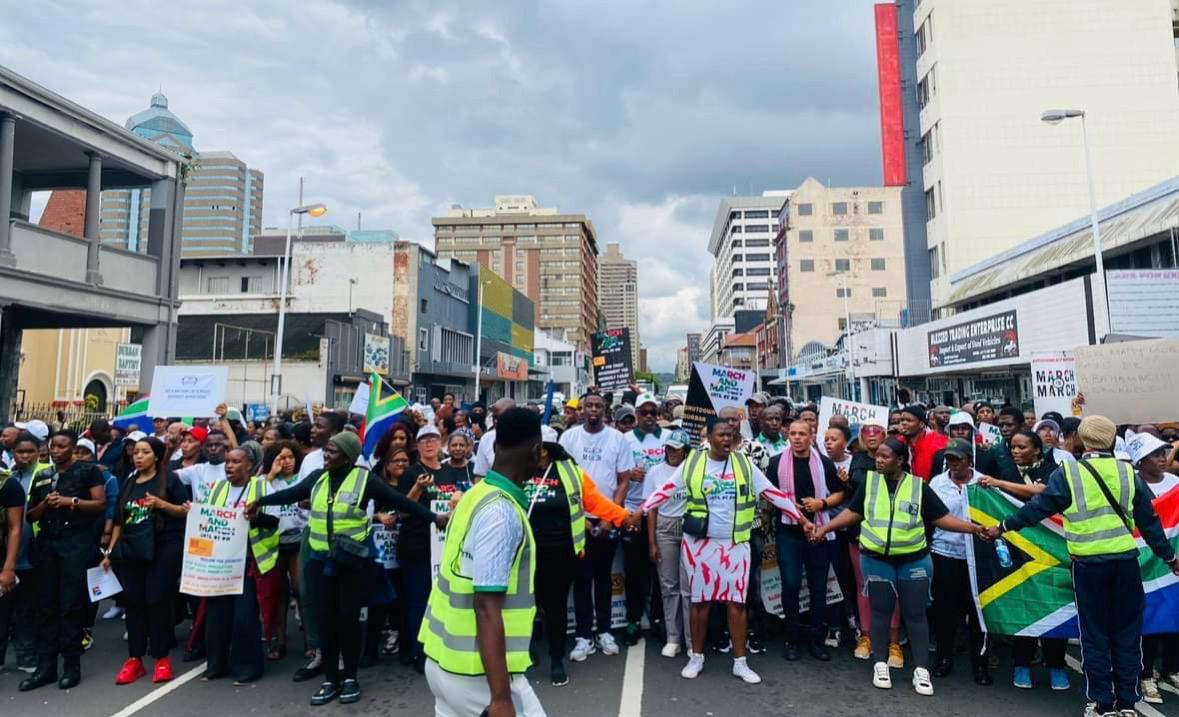
The civil society movement, March and March also criticised the President’s approach. Speaking to our sister channel, eNCA, founder Jacinta Ngobese-Zuma, said communities should play a greater role in addressing illegal immigration, arguing that government had failed to fully grasp the scale of the crisis.
The debate has also taken on a diplomatic dimension.
Minister of International Relations and Cooperation, Ronald Lamola, recently rejected allegations made by Ghana’s Foreign Minister, Samuel Ablakwa, that several foreign nationals, including five Mozambicans and two Nigerians, were killed during anti-illegal immigration operations in South Africa.
Lamola said police are investigating the deaths of two Mozambican nationals in the Western Cape but dismissed broader claims circulating on social media, warning against what he described as “frivolous or baseless” accusations against South Africa.
A deeply disappointing interview, replete with misinformation.
First, the claim that two Nigerians have been killed during the current wave of attacks remains entirely unsubstantiated by available information.
— Minister: International Relations and Cooperation (@RonaldLamola) June 6, 2026
Meanwhile, migration pressures continue to play out across the region. The first group of 150 Malawian nationals is expected to arrive in Malawi on Monday as part of a voluntary repatriation programme after being displaced by a fire in Mossel Bay during an anti-illegal immigration protest that turned violent.
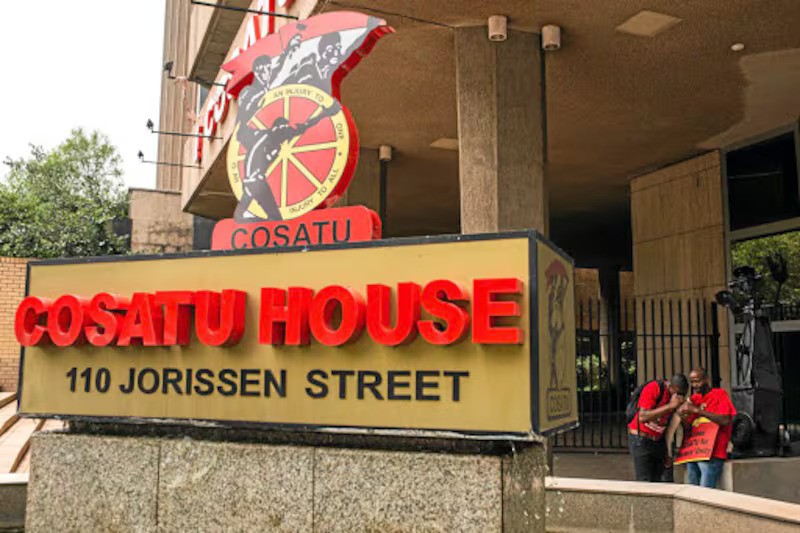
Cosatu House in Braamfontein, Johannesburg. Picture: (Sunday Times)
Sipho Sono faces contempt charges after refusing to vacate union post
Chartered accountant and senior business rescue practitioner Sipho Sono has approached the Constitutional Court to stop his removal by a lower court as administrator of the Chemical, Energy, Paper, Printing, Wood and Allied Workers’ Union (Ceppwawu).
Sono was summoned to appear before the labour court on Monday to explain why he should not be held in contempt of court, jailed or fined for refusing to step down as administrator of the Cosatu affiliate.
Sono’s office said approaching the apex court was a “normal appeal process”, and would not comment further. Judgment on the matter had been reserved until Friday, it said.
Earlier in 2026 the court ordered his removal and appointed Gerhard Vosloo, whose term started on March 1.
“But to Cosatu’s and Ceppwawu’s shock, Sono didn’t pack his stationery and walk off into the sunset; instead, he appealed the ruling and continued as administrator,” Cosatu national spokesperson Zanele Sabela said.
Ceppwawu has about 50,000 members. It was put under administration by the labour registrar in June 2020, after failing to manage its affairs since 2018. Sabela said the first administrator appointed by the labour registrar was axed after union members expressed dissatisfaction with poor performance.
Sono was brought in as an interim administrator for six months before he was eventually appointed.
“His marching orders couldn’t have been simpler — appoint an experienced facilitator to convene Ceppwawu’s regional and national congresses as per its constitution and ultimately elect a new leadership for the union. For his part, Sono would be required to compile audited financial statements from the year ending 2018 onwards,” Sabela said.
The congresses were to be convened and concluded by September 30 2023, after which the control, management and affairs of the union would be handed over to the new union leadership on expiry of Sono’s term on December 12 2023. “But Sono repeatedly failed to deliver on his mandate, prompting the [labour] registrar to petition the court to have him removed,” Sabela said.
She said the labour registrar was concerned about Sono’s “inability to compile and finalise the union’s audited financial statements. Consequently, audited financial statements for the years ending 2018 [to] 2025 are still outstanding”.
For his part, Sono would be required to compile audited financial statements from the year ending 2018 onwards
— Zanele Sabela, Cosatu national spokesperson
“Sono has always maintained there were no funds to compile and finalise the financial statements. However, the labour court found this to be untrue because Ceppwawu Investments had offered him a loan with conditions meant to keep him accountable and transparent,” Sabela said.
“The registrar was also aggrieved by Sono’s failure to manage the union’s funds. A case in point is his refusal to recover union funds his predecessor had helped herself to by accessing Ceppwawu’s bank account, claiming it was monies owed to her from her tenure as administrator. By refusing to recoup the funds, Sono failed to act in the union’s best interests and thereby breached his fiduciary duties.”
In March, the labour appeals court affirmed the January ruling and ordered Sono to vacate his post as Ceppwawu administrator.
“After failing to appoint a facilitator to convene the congresses, not safeguarding the union’s funds, and failing to finalise the audited financial statements, it boggles the mind why Sono was fighting to stay on as Ceppwawu administrator. The one factor he never failed at, however, was paying himself an elaborate fee.”
Sabela said, “Vosloo was appointed by the court in January to replace Sono as Ceppwawu administrator. His term started on March 1 and will expire on December 30 2026.
“As per court order, Vosloo will finalise all outstanding audited financials and convene a national congress to elect national leadership for Ceppwawu, after which he must hand over control of the union to the national leadership.”