South African National Civic Organisation (SANCO): SANCO Criticizes R600 Million Anti-Immigration March Funding, Calls For Border Security Investment. Image for illustration purposes only, generated with AI.
DURBAN, KwaZulu-Natal — The South African National Civic Organisation (SANCO) has strongly condemned the reported R600 million allocation designated for managing anti-immigration marches, arguing that the funds should be redirected toward border security and strict immigration enforcement.
Sizwe Cele, the KwaZulu-Natal Secretary of SANCO, stated that the government’s failure to act on previous warnings has allowed public frustration over undocumented migration to spiral out of control. Cele described the R600 million expenditure as an unethical use of taxpayer money, emphasizing that the financial resources would be better utilized to secure the country’s borders and enforce immigration laws.
According to Cele, the current crisis was entirely preventable. He noted that on December 12, 2024, SANCO organized a massive march to the Union Buildings, where they submitted a memorandum of complaints directly to President Cyril Ramaphosa. The memorandum highlighted critical issues, including porous borders and criminal activities allegedly perpetrated by undocumented immigrants roaming the country without proper documentation.
“We warned that this situation was a ticking time bomb,” Cele explained. “If the government had taken our complaints seriously at that time and responded effectively, we would not be finding ourselves in the situation where we are now.”
The civic organization has been highly critical of the state’s handling of the recent June 30 anti-immigration demonstrations. Cele drew parallels to the devastating unrest of July 2021, arguing that the government had ample time—months before the June 30 dates were announced—to address the root causes of the public anger. Instead of “street talking,” Cele asserted that the government should have initiated deportations, shut down illegal establishments, and arrested individuals producing counterfeit goods or selling expired products.
Furthermore, SANCO accused the government of failing to hold corrupt officials accountable within the Department of Home Affairs and the Department of Trade and Industry. Cele argued that this inaction has created a vacuum, leaving citizens to feel that millions of undocumented individuals are operating freely in townships and cities without facing the rule of law.
The political discourse surrounding the marches has been contentious. ANC Secretary General Fikile Mbalula, alongside labor federation Cosatu, has suggested that the June 30 activities are being mobilized by external forces to divide the working class and redirect anger away from the government’s actual failures.
However, Cele dismissed these claims, arguing that politicians are disconnected from the daily struggles of the masses. “They live in beautiful houses with high-rise fences and have bodyguards. They are not affected by what the people on the ground are experiencing,” he said, adding that leaders must remember they govern at the behest of the citizens and need to listen to their grievances rather than dictating to them. He even revealed that SANCO had considered pushing for a referendum to force the government to acknowledge the will of the people.
Addressing concerns that criticism of illegal migration often fuels xenophobia, Cele firmly rejected the label. He clarified that South Africans do not hate fellow Africans from neighboring countries, but rather detest the criminal deeds that impact their communities.
“This is not about xenophobia; this is about the livelihood of the people of South Africa, the safety of our children, and our economy,” Cele stated. He cited specific grievances, including the alleged introduction of drugs into schools, the sale of expired goods, and the flooding of markets with counterfeit products that outcompete local businesses.
Cele framed the issue as an economic struggle rather than racial or national hostility. He described South Africa as being in the “second transition of the struggle,” which is focused on achieving economic freedom. He argued that undocumented immigrants are hijacking this struggle and depriving South African citizens of vital economic opportunities.
Despite the tensions, Cele maintained that the core issue remains the government’s responsibility to enforce the law, protect local livelihoods, and ensure the safety of all residents by properly managing the country’s immigration system.
Cosatu expressed deep concern over the Auditor General’s report revealing a dire state of South Africa’s municipalities, urging the government to take immediate action to address the alarming issues highlighted. Image: Supplied
Only 39 out of 257 municipalities or 15% achieved clean audits with all 8 metros failing and 5 municipalities not even bothering to submit their reports timeously.
Securing a clean audit should not be considered an achievement but doing what municipalities are legally required to do, accounting for how public funds are utilised to serve the public.
This is despite R1.6 billion spent on consultants to help prepare these reports!
62 municipalities are in severe financial trouble compared to 35% said to be financially healthy. Debt owed to municipalities is rising and municipal debt to Eskom, Water Boards similarly increasing.
The list goes on.
There are however some green shoots, with Limpopo, Mpumalanga and KwaZulu-Natal having no disclaimers, the worst possible finding, and since 2020 the number of such municipalities falling from 29 to 8. R28 billion has been allocated in this year’s budget to capacitate metros to bill consumers correctly and to collect those municipal tariffs. Legislation is being reviewed to enable national and provincial governments to intervene timeously and faster when municipalities begin to stumble.
To be fair to local government, some of the challenges it is facing were inherited or imposed. During the apartheid era municipal services were not taken seriously for 90% of our communities; Black, Coloured and Indian.
They were underfunded and the bare minimum level of services were put in place.
Since 1994 under successive African National Congress led administrations, government did well to roll out basic services to all communities, ensuring that access to water, sanitation and electricity went from on average a third of society, to more than 90%.
During the decade of state capture, local government, did not emerge unscathed with some of the most ingrained forms of corruption and tenderpreneurship and even violence taking place. The consequences have been alarming.
Municipal workers have paid a heavy price with between one to three dozen municipalities at any time failing to pay our cleaners, refuse collectors and other municipal workers their salaries. More than a hundred municipal pension funds are in arrears. Amahlathi Municipality once resorted to paying its employees with Pick ‘n Pay vouchers. The South African Municipal Workers’ Union (SAMWU) has fought valiantly for workers to tackle this crisis.
The collapse of municipal services in towns like Lichtenburg and Frankfort led to the closure of Clover dairy plants there, resulting in massive job losses for already deeply impoverished communities. Rural towns will not attract the investment needed to reduce unemployment if businesses cannot be guaranteed basic services. We are now seeing this same crisis repeating in some of our metros.
The impact on local communities, in particular townships, is shameful with dumping of rubbish, potholes and water leaks allowed to become the norm as municipalities neglect infrastructure maintenance and basic services.
Despite this depressing picture, the state can and must be fixed. We have seen it can be done with the remarkable turnaround in a relatively period of Eskom, Transnet, Metro Rail, South African Airways and the South African Revenue Service. What these success stories all have in common are the need to appoint competent management, remove corrupt and criminal elements, fill frontline vacancies and recruit critical skills, and invest in staff, institutional capacity and infrastructure. This is exactly what must be done to fix local government.
This requires a review of the 257 municipalities. How many are financially sustainable and which should be integrated? Some are too small to survive on their own. The challenge this creates is that they are not able to pay the salaries needed to attract the specialised skills to maintain critical infrastructure.
The White Paper on Local Government speaks to a new municipal funding. This is urgent and must be implemented if we are to turn local government around. This must be accompanied by a review of municipal mandates as we have continuously added to their tasks since 1994, but the necessary additional funding has not kept pace.
The legislative amendments to strengthen oversight over local government must be expedited and tabled at Parliament before the end of 2026. It can no longer be an option upon whether municipal managers have the necessary skills and qualifications to do their work. The rot in local government starts at the top and they must be kept on a tight leach.
The same goes for the quality of Councillors that political parties deploy. We cannot be shocked when municipalities fail to submit clean audits when Councillors cannot read their own municipalities’ financial statements.
There must be real consequences when municipalities fail to secure clean audits and when corruption is uncovered. The Hawks, SIU, SAPS and NPA’s capacity to tackle local government corruption must be drastically ramped up if we are to win this war.
Municipal debt to Eskom and the Water Boards threatens their very ability to deliver these essential services. Eskom, the Water Boards and the Department of Water and Sanitation and SANRAL must be enlisted to restore basic services and recapacitate municipalities.
Tough love is needed to ensure all services consumed are paid for. We cannot expect municipalities to maintain drains or electric cables if we deny them the monies to do so. SAPS must accompany municipal workers when they cut illegal connections. Ensuring that everyone pays for services consumed will not only stabilise municipal finances but enable them to provide greater relief to indigent households and end above inflation tariff hikes that suffocate the economy.
Local government is in the ICU.
The time to stabilise and turn it around is now but it requires bold and decisive leadership. It can and must be done.
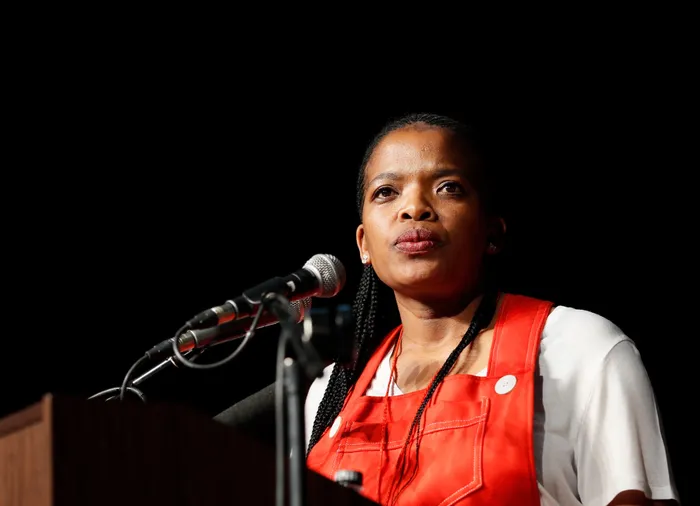
Zingiswa Losi is the president of Cosatu.
Zingiswa Losi is the president of Cosatu. Image: Independent Newspapers
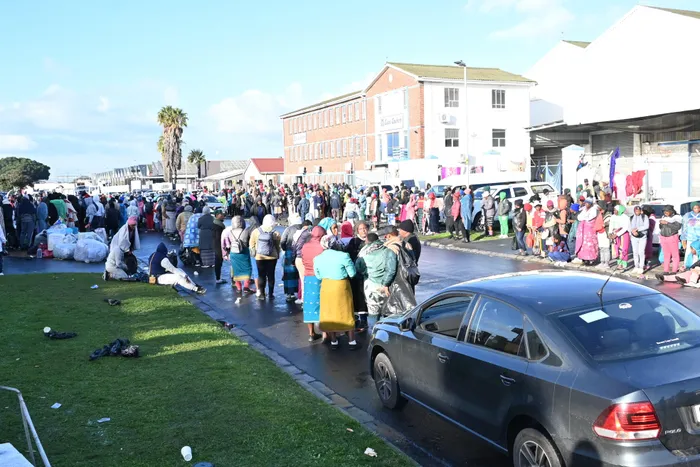
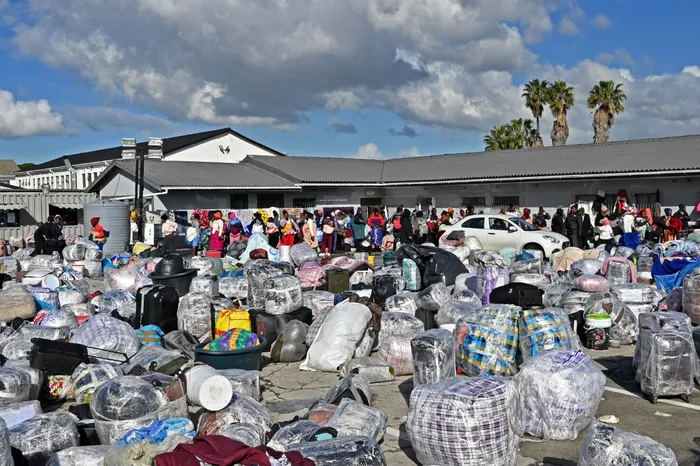
More than 2,000 Zimbabweans have been sheltering at a Cape Town processing centre as fears grew ahead of possible June 30 protests. Image: Bheki Radebe
Many businesses will likely keep their doors closed on June 30 due to the threat of public violence from anti-immigration protests, but business and labour organisations say foreigners are incorrectly being blamed for South Africa’s tottering economy.
A National Economic Development and Labour Council (NEDLAC) coalition, comprising Cosatu, Fedusa, Saftu and Nactu, said their message from organised labour was clear: migrants are not to blame for the country’s economic malaise.
In a statement in response to growing tensions around migration and illegal immigration, and recognising the legitimate frustrations of millions of South Africans grappling with high unemployment, poverty, inequality, and crumbling public services, the organisations said “The economic crisis in South Africa is rooted in issues like economic stagnation, corruption, de-industrialisation, mass unemployment and weak governance,” rather than immigrants.
This concern was echoed by Pietermaritzburg Chamber of Business chief executive Melanie Veness, who said foreigners in South Africa had become the scapegoats to anti-immigration protestors for the weak state of the economy.
“Removing foreign nationals from workplaces, communities, or public spaces will not reopen factories or create sustainable jobs,” the labour organisations asserted, calling for a more comprehensive approach that addresses the underlying economic problems.
They warned the rising tide of anti-migrant sentiment was often politically orchestrated to divide the working class and distract from genuine grievances relating to poverty and inequality.
“The enforcement of immigration and labour laws is the responsibility of the state, and no individual or organisation has the right to act outside the law,” the unions declared.
Both the Johannesburg Chamber of Commerce and Industry (JCCI) and the Pietermaritzburg Chamber of Business did not advise their business owner members to close on June 30, or to allow their members’ staff to take the day off, but instead advised against unnecessary travel, and particularly to potential hotspots in city centres and near informal settlement borders where large numbers of people were congregating.
The government has said June 30 is not a national shutdown day, and that normal business should continue. Police and private security have identified Gauteng, KwaZulu-Natal, the Western Cape and the Eastern Cape as potential hotspots.
A spokesperson for the JCCI said they were in constant contact with a range of different organisations in the Johannesburg area, including police and private security services, to monitor the situation. The spokesman said they did anticipate members would experience lower trade on the day.
Veness said the economic impact of the protests was vast. For instance, the chamber ran a programme to increase export sales into other African markets by black-owned companies, and these protests had the potential to be a “total disaster” for increased trade with other African countries.
She said also of concern, particularly for KwaZulu-Natal, was the potential loss of annual tourists from other African countries, which represent a significant proportion of the province’s annual overall tourism numbers.
Ruan Vermaak, communication manager at South African emergency‑assistance and communication service CrisisOnCall, said simple steps such as checking your route before travelling, avoiding protest hotspots where possible, keeping loved ones informed of your whereabouts, and ensuring you have access to emergency assistance can make a significant difference if circumstances changed unexpectedly.
Stay informed by monitoring credible news sources and traffic updates before travelling. Allow extra travelling time in case routes need to be changed. Keep your mobile phone fully charged and ensure important emergency contact numbers are readily available. Let a family member, friend or colleague know your expected route and estimated arrival time.
The government has said private individuals and groups have no authority to demand documentation from members of the public, block access to schools, clinics, hospitals or businesses, or determine who may live in particular communities.
“The enforcement of immigration and labour laws is the responsibility of the state, and no individual or organisation has the right to act outside the law,” the unions declared.
“A properly resourced and accountable state is essential for addressing these pressing issues, including stronger labour inspection and effective border management,” they added, reinforcing the need for adequate staffing and the digitisation of processes related to migration control.
Neil Roets, CEO of Debt Rescue, highlights that the current economic conditions pose significant strains on consumer behaviour and business operations alike.
“When consumers feel secure about their financial situation, they generally exhibit a greater willingness to spend, travel, shop, and support local businesses,” Roets noted. However, during periods of economic downturn, many households adopt a more conservative approach to discretionary spending, reflecting a cautious mindset amid uncertainty.
As South African households and enterprises navigate these tumultuous times, Roets emphasises the necessity for ongoing vigilance in financial planning. “In a challenging environment, the need for careful management of finances cannot be overstated,” he advised. With the focus firmly placed on addressing the existing pressures, the path toward a more stable economic future remains a shared responsibility for consumers and businesses alike.
Union federation demands tracking and tracing measures in pending tobacco control law
Cosatu is calling for the tobacco bill to include track and trace measures for cigarettes. Stock image: (123RF/DZIEWUL)
Trade union federation Cosatu has called on MPs to amend the Tobacco and Electronic Delivery Systems Control Bill to include tough new measures to counter South Africa’s soaring trade in illicit cigarettes.
Parliament’s health portfolio committee voted in support of the desirability of the bill last week, paving the way for MPs to begin line-by-line deliberation of the draft legislation. MPs from across the political spectrum expressed dissatisfaction with the bill, suggesting an array of amendments are set for discussion.
Cosatu said it was “beyond disappointing” that the health department had failed to include provisions in the bill to empower the state to tackle the illicit trade in cigarettes by requiring the tracking and tracing of tobacco and related products.
“Cosatu urges parliament to add bold provisions to ensure that the state is not only empowered but compelled to tackle these highly sophisticated and dangerous criminal syndicates,” it said.
Close to 60% of the cigarettes sold in South Africa are illicit, according to UCT’s research unit on the economics of excisable products, with excise duties partially or completely unpaid.
The illicit trade in cigarettes threatened to collapse the legal industry and its jobs, said Cosatu. Illicit cigarettes retail for, on average, 25% of the price of legally sold products and accounted for more than R30bn in lost tax revenue, it said.
The tobacco bill, submitted to parliament in 2022, proposes tough new controls on tobacco products and brings new generation devices such as e-cigarettes into the regulatory net for the first time. The committee conducted public hearings on the bill in all nine provinces and in parliament and received more than 40,000 written submissions.
Last week 10 MPs voted in support of the desirability of the bill, while one voted against it. During their meeting, it emerged that the committee had bowed to industry pressure and agreed to amend the bill to differentiate between products based on their public health risk. This means combustible products such as cigarettes will in some instances be subject to stricter controls than non-combustible products such as vapes.
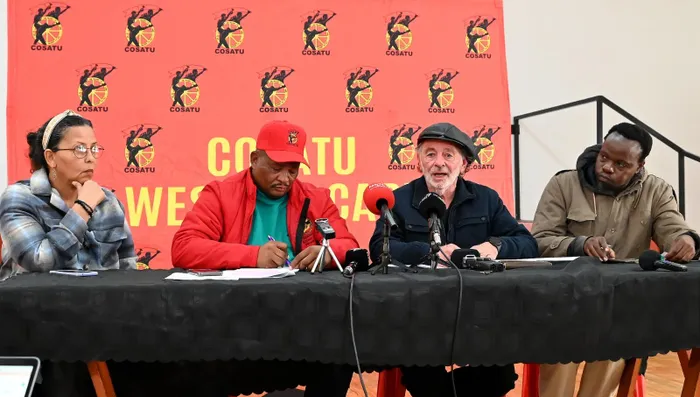
WCC AX Lorna Houston, Cosatu Western Cape’s Malvern De Bruyn, WCC AX Roger Etkind and Danmore Chuma at the media briefing on Monday. Image: BHEKI RADEBE /ANA Studios
It’s all hands on deck in Cape Town on Tuesday as law enforcement is mobilising all available resources to address the potential violence stemming from the anti-immigrant demonstrations planned.
Safety and Security mayco member, JP Smith, said law enforcement officers will not tolerate any violence or disruption and opportunistic criminals.
“I am aware the situation has caused tension and anxiety amongst Capetonians, but I want to ensure that City enforcement services are ready,” said Smith.
This comes as foreign nationals have flocked out of the country ahead of Tuesday’s June 30 deadline initiated by the March and March Movement.
Cosatu Western Cape and the Western Cape Coalition against Xenophobia (WCC-AX) said the Department of Home Affairs should be held accountable for its role in keeping migrants stateless, without papers, and in a state of limbo.
March and March have insisted the national protest on Tuesday will be peaceful, while its leader, Jacinta Ngobese-Zuma, said the movement will not take responsibility for any violence on the day, arguing that public safety is the job of the State.
In a briefing at their offices on Monday, Cosatu’s Malvern de Bruyn read out a joint statement on behalf of both organisations, in which they voiced their solidarity and opposition to March and March and affiliated xenophobic groups’ escalating assault on African migrants.
“We understand that this is a particularly brutal attempt to divide the working class and the poor. It is intended to distract attention from the abject failures of the government over more than 30 years, to build an economy that works for ordinary people. Instead, we have an elite who live a life of luxury, while millions go hungry and jobless.
“We reject with contempt the so-called 30 June ‘deadline’ which has already caused so much chaos, suffering, and violence. It risks being but one of many upsurges of mass repatriations, tribalism, threats, and bullying,” De Bruyn said.
“March and March spreads lies about people who move to and around South Africa, obscuring the colonial roots and history of mobility across our continent. We see the conflict in the DRC, stirred up by multinational companies with their never-ending appetite for profit. We see the devastating effects of climate change in Malawi and Mozambique, as whole regions become uninhabitable.
“We understand that Africa must unite and not fragment into its colonial compartments. We also remember that this country was built from migrant labour. We remember our battles against the dompas, and we now call for renewed resistance against apartheid logics of influx control that xenophobes have taken up,” De Bruyn said.
Hundreds of foreign nationals are waiting to be processed at the Epping Home Affairs refugee centre. Image: BHEKI RADEBE/ANA Studio
The office of Home Affairs Minister Leon Schreiber was contacted for comment.
WCC-AX’s Danmore Chuma, from Zimbabwe, said he feels “really disturbed and betrayed” because the working class and the poor are fighting against each other instead of uniting to fight unemployment, poverty, inequality, and austerity.
“Immigrants are not people who are irrelevant. Immigrants are not objects. Immigrants are people who have contributed, people who can contribute to the economic development of the country,” Chuma said.
President Cyril Ramaphosa said while the right to protest is enshrined in the Constitution, it “does not allow people to threaten or intimidate others, or to engage in acts of vandalism or violence”.
“What we should seek as citizens and as a society is to work together to address the legitimate concerns that many South Africans have raised. The government has a responsibility not only to listen to these concerns but to respond with effective action. Citizens have a responsibility to pursue change peacefully and within the framework of our Constitution.
“Government has accepted that our immigration system requires substantial reform. We are strengthening border management, increasing enforcement against undocumented immigration, improving the integrity of the asylum and visa systems, and taking action against corruption that has weakened immigration control,” Ramaphosa said.
“We also recognise that where our systems have failed, they must be corrected. Where corruption has enabled illegal immigration, those responsible must be held accountable. Where enforcement has been inadequate, it must improve.”
Premier Alan Winde said: “Anyone acting outside of the law must be arrested and prosecuted. We fully respect every resident’s constitutional right to protest. However, this right must always be exercised peacefully and within the bounds of the law. I call on all residents to reject violence in all its forms.”