
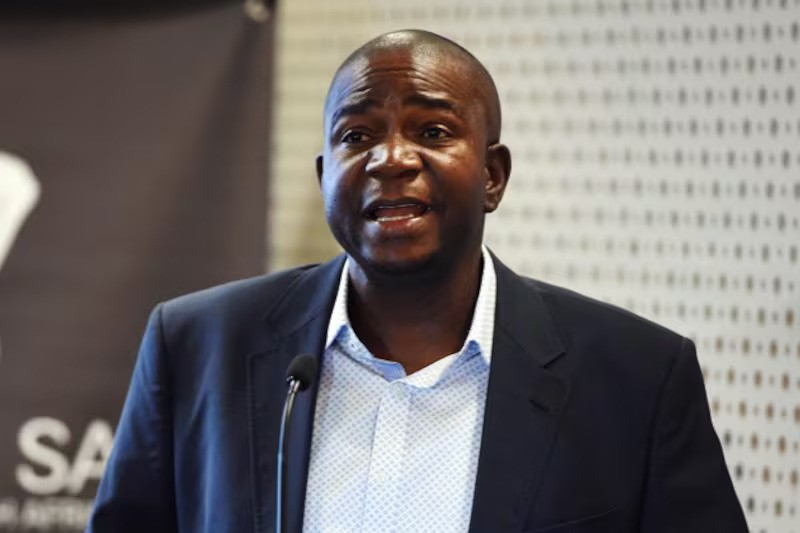
Statistician-general Risenga Maluleke. Picture: SIYABULELA DUDA
Story audio is generated using AI
Although more than 1.08-million households, or 5.3% of all households in South Africa, were victims of housebreaking in 2025/26, making it the most common household crime during the period, less than half reported the incidents to police because they believed they would not do anything about them.
Statistics South Africa’s latest annual governance, public safety and justice survey — published on Tuesday — is yet another indictment of the police service, which has been under the spotlight over the past year after witness testimony at the Madlanga commission and before an ad hoc parliamentary committee implicated several officers in corrupt and criminal activity.
The Stats SA report points to residents often opting not to open cases after falling prey to housebreaking, theft and street robbery, among other crimes in 2025/26, though reporting rates were significantly higher for serious crimes such as murder, sexual offences and car theft.
“The majority of households indicated the reason they did not report housebreaking incidents to the police was that the police would not do anything about it,” statistician-general Risenga Maluleke told a media briefing at the launch of the study.
“In the year under review, 24.4% indicated that the police would not do anything about it. About 21.8%, which is a decrease from the previous year of 25.1%, indicated that the police could not do anything, or there was a lack of proof.”
Stats SA also surveyed individuals on their experiences of crime, finding that while theft of personal property was the most common offence in 2025/2026, with 1.4-million incidents, only 37% of the victims reported some or all incidences to the police.
You cannot fight crime when police stations lack working vehicles, rape kits, body armour, regular training or secure cells, or when detectives are overwhelmed by the number of cases they are tasked to investigate.
— Cosatu parliamentary co-ordinator Matthew Parks
Reportings were, however, higher for hijacking at 77%, sexual offences at 67%, and other forms of assault at 55%.
“The other experiences of crime [reported] by individuals were below the 50% mark, those being street robbery, consumer fraud and theft of personal property,” Maluleke said.
The Stats SA report comes days after the latest quarterly police crime statistics on Friday showed that South Africa recorded 343 fewer murders in the first three months of the 2026/27 financial year, with the murder rate declining 5.9%.
Attempted murder cases, however, rose 8.7% to 6,958 during the quarter compared with the same period the previous year, while cases of assault with intent to inflict grievous bodily harm increased by 2.5% to 38,589, and common assault was up 2% to 42,491.
Carjacking declined by 18.2%, house robberies fell 17.6% and business robberies declined by 11.8% to 2,733.
On Tuesday, labour federation Cosatu said crime remains unacceptably high and called for additional support and resources for the SAPS, the National Prosecuting Authority, the judiciary and correctional services, in particular through hiring detectives, prosecutors, magistrates and other frontline personnel.
It also flagged the need for investment in skills and training, modern forensic laboratories and databases, state-of-the-art communications equipment, working vehicles and secure police stations, courts and prisons.
“You cannot fight crime when police stations lack working vehicles, rape kits, body armour, regular training or secure cells, or when detectives are overwhelmed by the number of cases they are tasked to investigate,” Cosatu parliamentary co-ordinator Matthew Parks said in a statement.