
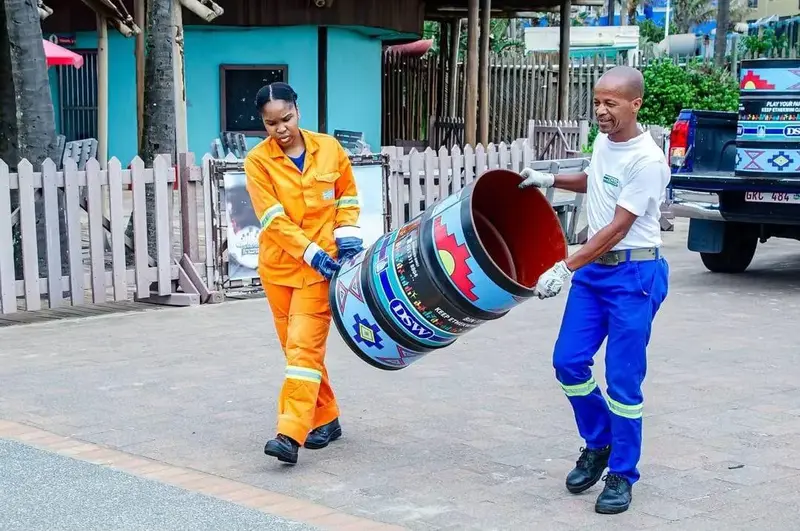
Cosatu says municipal workers must be central to rebuilding local government, as communities face unreliable water, electricity, refuse collection and roads. Picture: eThekwini Municipality
Workers carry the weight of failing local government. They must be included in its renewal.
Millions of working-class South Africans depend on a municipality they cannot see. It decides whether the tap runs, the lights stay on, the refuse is collected and the road to the clinic is passable.
When local government works, it is the most direct expression of the democratic promise of 1994 ushered in by the African National Congress led Alliance.
When it fails, it is workers and the poor who pay first and pay most.
That is why the rebuilding of local government is not a technical project for consultants. It is a class question, and organised labour has a central role in ensuing it happens and in a manner that uplifts the working-class.
The crisis is real, and workers feel it first
We do not need to be persuaded that local government is in trouble. Our members live in the townships, informal settlements and rural towns where the failures are most visible.
They endure water outages, sewage in the streets, unreliable electricity and collapsing roads.
They work inside the institutions that are failing, as municipal employees, as water and electricity workers, as cleaners, drivers and administrators.
They see the unfilled posts, the broken vehicles, the unpaid suppliers and the empty maintenance budgets.
It is municipal workers whose wages, pension, medical funds and taxes have been pickpocketed by corrupt and incompetent management.
It is workers at service providers who have been left unpaid when municipalities fail to pay what is due.
The Auditor-General has repeatedly reported weak financial management, irregular expenditure and poor consequence management across many municipalities.
Too many are trapped in a cycle of debt to Eskom and the water boards, falling revenue collection and deteriorating infrastructure.
Behind each audit finding is a community that has lost faith, and a workforce that is blamed for decisions it did not take.
Stop blaming workers for the failures of political management
A false narrative has taken hold that municipal workers are the problem: too many, too costly, too unproductive. Cosatu unequivocally rejects it.
The failures in local government have not come from the cleaner or the plumber.
They have come from tender corruption, the appointment of incompetent leadership and management, and unfunded budgets.
Where municipalities have been captured by patronage networks, it is workers who have blown the whistle and too often have been victimised for it, including assassinated.
Rebuilding must begin by protecting those who defend the public interest and holding accountable those who looted it.
Invest in municipal services
The first pillar of renewal is a stable and capable municipal administration. Senior appointments, especially municipal managers and chief financial officers, must be made on merit, with verified qualifications and competencies, and insulated from factional politics and state capture.
It means investing in municipal employees through training, apprenticeships and career paths for engineers, technicians, artisans and finance officials.
Outsourcing critical functions to expensive consultants, while skills drain from the municipality, is a false economy. Where skills are scarce, we should build them through partnerships with TVET colleges, universities and the state-owned enterprises.
Insource, invest and protect basic services
The second pillar is the delivery of basic services as a public good.
Cosatu opposes privatisation and the hollowing out of municipal capacity through cost-cutting and the casualisation of work.
Experience shows that outsourcing, labour broking and fragmented contracting weaken accountability and degrade jobs without improving services.
Where work is permanent, the jobs should be permanent, decently paid and covered by proper health and safety protection. Insourcing not outsourcing is fundamental.
Capital and maintenance budgets must be ring-fenced so that money meant for water, electricity and roads is not diverted to operating shortfalls.
Public employment programmes must be a pathway to finding permanent, decent jobs not a source of cheap labour.
Fix the money, fix the accountability
The third pillar is a financially sustainable system. Municipalities must collect what they are owed and be honest about what they can afford, but the answer is not to punish poor households with disconnections whilst large debtors go unchallenged.
National and provincial government must also settle what they owe municipalities. Smart meters must be rolled out to ensure municipalities are able to collect what is due. This must go hand in hand with restoring free basic services to indigent households.
A new funding model is needed to ensure that local government can fulfill its constitutional obligations, in particular those in poor communities.
Accountability needs teeth. Those found guilty of corruption must face prosecution and stolen funds recovered, not a quiet transfer to another post. Councillors should answer to the communities that elected them, through functioning ward committees and regular reporting.
Social dialogue is a resource, not an obstacle
The fourth pillar is partnership. The South African Local Government Bargaining Council and local labour forums exist so employers and unions can resolve problems together. Too often they are treated as formalities.
A renewed local government needs genuine consultation on restructuring, service delivery plans and budgets, and a recognition that unions bring operational knowledge no outside adviser can match.
We need stronger partnership with communities.
Organised labour is rooted in the same neighbourhoods as residents who protest about service failures. Workers and residents are not adversaries. A municipality that treats both as partners will earn the trust that no turnaround plan can manufacture.
Our commitment
Cosatu and its affiliates are prepared to do their part and defend workers’ rights. We will support those who expose wrongdoing.
We ask the same of local government: honour agreements, appoint competent leaders and management, fund maintenance, and stop treating municipal workers as a line item to be cut.
The election of new municipal leaders is a critical first test.
Local government belongs to the people, and its renewal will only succeed if the people who run it and depend upon it are at the table. Workers must be there.
Mike Madala Shingange is the president of Cosatu.
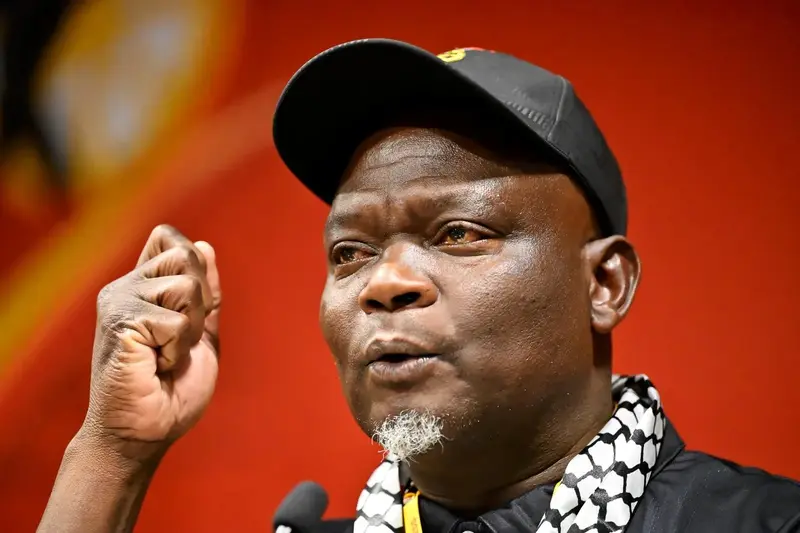
Mike Madala Shingange is the president of Cosatu. Picture: Itumeleng English / ANA Studio
**The views expressed do not necessarily reflect the views of the National Media Group.