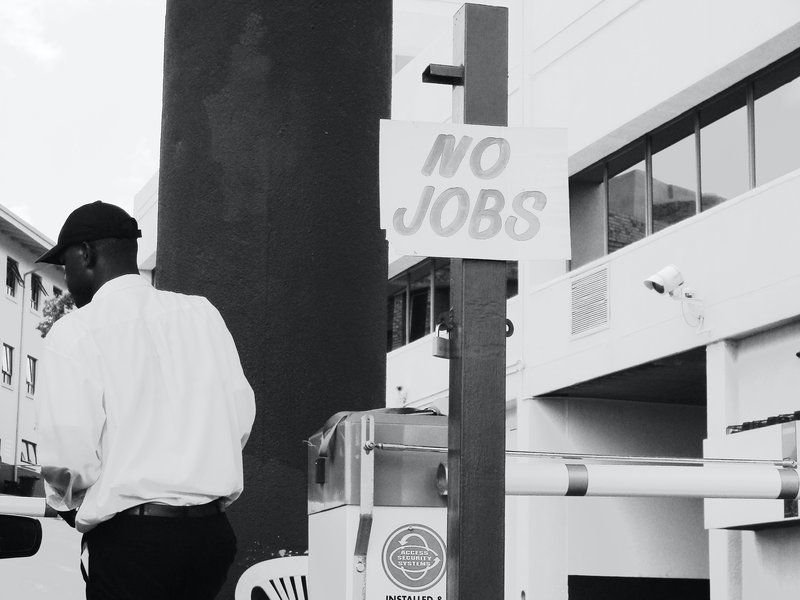
Statistics South Africa revealed on Tuesday that while employment levels grew modestly in the fourth quarter of 2025, millions of people in South Africa remain outside the labour market.
Unsplash/Hennie Stander
According to the latest Quarterly Labour Force Survey, employment rose by 44,000 to 17.1 million, while the number of individuals outside the labour force increased to 17.1 million, underscoring persistent barriers to participation in the labour force.
Statistician-General Risenga Maluleke said the labour market must be understood beyond traditional measures of employment and unemployment.
“The labour force has always been those who are employed and unemployed but actively looking for employment. Outside the labour force, we have what we call the not economically active — including discouraged work-seekers and others who are not participating.”
Maluleke explained that new reporting methods introduced in 2025 provide a broader view of labour market conditions by including additional categories of workers and job-seekers.
“We now include what we call time-related underemployment — people who are employed but say they are not working enough hours and would like to work more.”
He said the data also tracks individuals who are available for work but are not actively searching, as well as those seeking employment but are temporarily unavailable.
“When we come to those outside the labour force, we have what we call the potential labour force. This includes discouraged work-seekers, those who are not seeking but available, and those who are seeking but not available.”
The number of discouraged job-seekers rose to 3.7 million, bringing the potential labour force to 4.6 million. Combined with unemployment and underemployment, this group contributes to a broader measure of labour underutilisation.
“When we combine those that are unemployed, those in time-related underemployment, and those in the potential labour force, we get a composite measure of labour underutilisation,” Maluleke said.
Provincial disparities remain pronounced, with rural provinces continuing to record higher levels of labour market vulnerability compared to more urbanised regions.
Maluleke said recent trends suggest a gradual recovery in the labour market, though structural challenges remain.
“One thing that we are seeing as a nation is that we are making recoveries in the job market. We are seeing people getting into employment, while other indicators are beginning to show improvement.”
He added that long-term unemployment continues to dominate joblessness in the country, highlighting the depth of the employment challenge.
“Out of those who are unemployed, the majority are in long-term unemployment, meaning they have been without work for 12 months or longer. This shows the scale of the challenge that we continue to face.”
Statistics South Africa says the data reflect a labour market that is gradually stabilising but still characterised by deep structural inequalities, limited opportunities, and uneven participation across the population.
An unemployed youth fills in the Department of Unemployment and Labour work seeking registration form in Soweto. South Africa’s unemployment rate slightly decreased to 31.4% in Q4 of 2025. Image: AFP
South Africa’s official unemployment rate fell slightly to 31.4% in the fourth quarter of 2025, according to the latest Quarterly Labour Force Survey (QLFS) released by Statistics South Africa (Stats SA).
While the small decline offers cautious optimism, experts warn that structural challenges in the labour market remain, particularly for young people and those outside formal employment.
The QLFS shows that employment rose by 44,000 to 17.1 million, while the number of unemployed decreased by 172,000 to 7.8 million compared with the third quarter of 2025.
“This resulted in a decrease of 128,000, or 0.5%, in the labour force over the same period,” Stats SA reported.
“The official unemployment rate decreased by 0.5 of a percentage point, from 31.9% in Q3 2025 to 31.4% in Q4 2025,” the agency said.
The youth unemployment rate increased by 0,1 of a percentage point to 43,8% in the fourth quarter of 2025.
Labour underutilisation and discouraged workers
While headline unemployment improved slightly, the survey highlights that many South Africans remain outside the labour market. The number of discouraged job-seekers increased by 233,000 to 3.7 million, while other available job-seekers decreased by 110,000 to 855,000, and unavailable job-seekers decreased by 41,000 to 42,000.
This meant that the total potential labour force population, people who were available but not actively seeking work, or unavailable but seeking, increased by 82,000 to 4.6 million. “Others outside the labour force increased by 165,000 to 12.5 million, bringing the total outside the labour force to 17.1 million in Q4 of 2025,” Stats SA noted.
Expert perspective: cautious optimism
Dr Memuna Williams, founder and CEO of Empowering Sustainable Change, said the modest improvements in the official figures offer some encouragement but do not solve long-term challenges.
“The decrease in the official unemployment rate is a positive signal, but millions of South Africans remain disconnected from meaningful work or training,” Williams said. “To address this, targeted interventions in skills development, youth employment, and entrepreneurship are critical. Stabilising numbers are only the first step; inclusive economic participation is the real goal.”
The latest QLFS data also points to structural pressures in the labour market, with a large pool of discouraged and potential workers who could be absorbed into the economy if appropriate opportunities and skills support were in place, Williams added.
“Policy, business, and education need to focus not just on creating jobs, but on creating pathways for those who are currently on the margins of the labour market,” Williams added.
For more stories from The Mercury, click the link THE MERCURY
South Africa’s unemployment rate declined to its lowest level in more than five years in the fourth quarter, defying concerns that a 30 percent US tariff would trigger widespread job losses in Africa’s most industrialised economy.
The joblessness rate eased for a second consecutive quarter to 31.4 percent in Q4 2025, from 31.9 percent in the preceding quarter, according to data released Tuesday by Statistics South Africa (Stats SA). The agency attributed the improvement largely to job gains in the community and social services as well as construction sectors.
The drop offers rare relief in South Africa’s prolonged unemployment crisis, with the rate having remained above 30 percent since the COVID-19 shock in 2020. Stats SA reported that the number of unemployed people fell by 172,000 to 7.8 million, while employment rose by 44,000 to 17.1 million. Over the same period, the labour force declined by 128,000 to 24.9 million.
“The working-age population grew by 120,000 compared with the third quarter. During the same period, the number of employed individuals increased by 44,000 to reach 17.1 million, while the number of unemployed persons declined by 172,000 to 7.8 million. Consequently, the labour force decreased by 128,000 between Q3 and Q4,” Stats SA said in its labour report.
Formal, informal and household sectors employed 12.3 million, 3.7 million and 1.1 million people respectively. Between the third and fourth quarters last year, the number of individuals outside the labour force increased by 248,000, driven by a rise of 165,000 among those classified as other non-participants and an 82,000 increase in the potential labour force.
Available potential job-seekers rose by 123,000, while unavailable job-seekers declined by 41,000, resulting in a net increase of 82,000 in the potential labour force. Within the available group, discouraged job-seekers climbed by 233,000, offsetting a decline of 110,000 in other available job-seekers.
The labour market resilience comes despite heightened trade tensions following the imposition of the United States’ tariffs in August, South Africa’s 30 percent levy placed it among the highest-tariffed countries globally.
The US is South Africa’s third-largest trading partner, accounting for 7.5 percent of total exports, behind China (11 percent) and the European Union (17 percent). Analysts had expected the automotive and agricultural sectors to face the greatest exposure.
Before the tariffs took effect, the South African Reserve Bank and industry groups warned that it could threaten between 30,000 and 100,000 jobs if poorly managed.
“At this stage, approximately 30,000 jobs could be affected if the situation is mismanaged,” said Simphiwe Hamilton, director-general of the Department of Trade, Industry and Competition.
Labour unions also cautioned that prolonged tariff pressure could accelerate deindustrialisation and retrenchments across key sectors, including manufacturing, mining and agriculture.
Statistician-general Risenga Maluleke says the unemployment challenge in the country should not be watered down.
He said this after observing thousands of young people from across Limpopo’s Vhembe region queueing outside the Thohoyandou Stadium this week for the official opening of the SA National Defence Force’s 2027 Military Skills Development System.
Speaking at a media briefing on the fourth-quarter labour force survey, Maluleke said the footage of young people carrying documents and waiting in lines that curved around the stadium walls echoed what they have been doing at Stats SA.
“I’ve often wondered when I hear people saying we do not have a challenge of unemployment. Those young people that have been walking and queuing since Saturday and continue to stream towards Thohoyandou Stadium are just [the tip of] an iceberg of young people we have always reported about at Stats SA. To water down such developments makes us not appreciate the challenge of unemployment that our country is facing,” he said.
The country is making gradual recoveries in the job market, with employment increasing and unemployment declining
— Risenga Maluleke, statistician-general
“Looking at the time series, unemployment peaked at 33.2% in the second quarter of 2025. It declined to 31.9% in the third quarter and now sits at 31.4% in the fourth quarter. This shows that the country is making gradual recoveries in the job market, with employment increasing and unemployment declining.
“The combined rate of unemployment and the potential labour force, what was previously referred to as the expanded unemployment rate, is also declining, even after including those such as students who are seeking work but are not immediately available.”
Maluleke said in 2025 job losses occurred only in the first quarter, when 291,000 jobs were lost. Thereafter, gains resumed, with 44,000 jobs added in the current quarter.
Youth unemployment remains the highest concern, he said, with the labour force participation rate favouring older people more than younger people
“Young people aged 15 to 34 were vulnerable to labour markets, compared to the older age group … So since we know that unemployment affects young people the most, when we start seeing the difference between these two lines [ages 15-24 and 15-34] coming lower and lower, we should know we are turning the corner as regards issues of unemployment … So we have more young people not in employment, education or training.”
Across provinces, the Eastern Cape has the highest official unemployment rate at 42.5%, followed by the Free State (37.2%) and the North West (35.1%).
Provinces below the national average include Limpopo at 28.2%, Mpumalanga (27.1%), and the Western Cape (18.1%).
Statistics SA this morning released the Quarterly Labour Force Survey for Q4 of 2025, which has revealed the official unemployment rate for South Africa has dropped marginally from the previous quarter to 31.4%.
Job seekers stand outside a construction site ahead of the release of the unemployement numbers by Statistics South Africa, in Eikenhof, south of Johannesburg, South Africa, 23 June 2020. Reuters/Siphiwe Sibeko
According to the QLFS Q4: 2025 results, there was an increase of 44,000 in the number of employed persons to 17.1 million, while there was a decrease of 172,000 in the number of unemployed persons to 7.8 million compared with Q3: 2025 results. This resulted in a decrease of 128,000 (or 0.5%) in the labour force in the same period.
The above changes in employment and unemployment resulted in the official unemployment rate (LU1) decreasing by 0.5 of a percentage point from 31.9% in the third quarter of 2025 to 31.4% in the fourth quarter of 2025.
Job seeker stats
The survey showed that during the same period, discouraged job-seekers increased by 233,000 to 3.7 million, other available job-seekers decreased by 110,000 to 855,000, and unavailable job-seekers decreased by 41,000 to 42,000. This resulted in a total net increase of 82,000 to 4.6 million in the potential labour force population (ie. persons who were available but not seeking or unavailable but seeking).
Other outside the labour force increased by 165,000 to 12.5 million. Outside the labour force, which is the total of the potential labour force and other outside the labour force, increased by 248,000 to 17.1 million in Q4 of 2025.
Sector, industry and regional statistics
The number of persons employed in the formal sector increased by 320,000 in Q4: 2025, and informal sector employment decreased by 293,000 over the same period.
The largest increases in industry employment were recorded in community and social service (46,000), construction (35,000), and finance (32,000). Decreases in employment were recorded in trade (98,000), manufacturing (61,000), and mining (5,000).
The results also indicate that increases in employment were observed in Western Cape (93,000), Mpumalanga (37,000), North West (36,000) and Northern Cape (17,000). The largest employment decreases were recorded in Gauteng (54,000), KwaZulu-Natal (41,000), and Eastern Cape (32,000) during the same period.
Youth still at risk
The youth (15–34 years) remain vulnerable in the labour market. The results for the fourth quarter of 2025 show that the total number of unemployed youth decreased by 84,000 to 4.6 million compared with Q3: 2025, while employed youth recorded a decrease of 113,000 to 5.8 million.
As a result, the youth unemployment rate increased by 0.1 of a percentage point to 43.8% in the fourth quarter of 2025.
Labour underutilisation
Stats SA says that in addition to the unemployment rate (LU1), other measures of labour underutilisation (LU) were measured. The combined rate of unemployment and time-related underemployment (LU2) decreased by 0.6 of a percentage point to 34.3%; the combined rate of unemployment and potential labour force (LU3) decreased by 0.3 of a percentage point to 42.1% in the fourth quarter compared with the third quarter of 2025.
Lastly, the composite measure of labour underutilisation (LU4) (which combines time-related underemployment, unemployment and potential labour force as a proportion of extended labour force) was 44.5% in the fourth quarter of 2025. These labour underutilisation measures highlight people in different situations and with different degrees of attachment to the labour market.
The Congress of South African Trade Unions (COSATU) welcomes the positive drop in unemployment announced by Stats SA with the expanded definition of unemployment decreasing by 1.3% to 41.1% and the narrow definition falling by 0.5% to 31.4% for Quarter 4 of 2025. The increase in employment by a net 44 000 jobs bringing the total number of working South Africans to over 17.1 million is hopeful news.
It is critical that this momentum is maintained and accelerated for Quarter 1 of the new year where there is normally a decrease in employment as the festive season jobs bump comes to an end. South Africa is long overdue for some good news.
Whilst welcoming nearly a 1.3% decrease in unemployment over the past quarter, we dare not be complacent. A 41.1% unemployment rate remains a dangerous ticking time bomb that cannot be sustained. Much more needs to be done by the African National Congress led government, in particular to further capacitate the frontline public and municipal services that the working class and businesses depend upon, to inject additional stimulus needed to unlock economic growth including expediting the infrastructure investment programme, and to ramp up public employment programmes and relief for the poor and the unemployed.
Particular support must be provided by the state to struggling businesses and sectors due to the 30% tariff duty imposed on South African exports to the United States, increasingly unaffordable electricity and other economic challenges. Such support must come in the form of tax relief, industrial subsidies and fixing the mind-numbing delays at the Unemployment Insurance Fund’s Temporary Employment Relief Scheme.
It is critical that the 2026/27 Budget and Medium-Term Expenditure Framework due to be tabled at Parliament on 25 February respond to these challenges and provides a bold stimulus package to take the economy to the 3% growth rate needed to slash unemployment.
The private sector must be compelled to end the investment strike and invest in government bonds, critical economic infrastructure and the industrial, manufacturing and agricultural jobs rich economic sectors.
Unemployment is the single greatest threat to the nation. Tackling it must be our collective focus, and every possible resource and intervention mobilised to defeat it. South Africans do not expect overnight miracles, but we need to see consistent progress, in particular a 1% decrease in unemployment each quarter. This will provide the momentum the economy needs and give hope to the working class and society.Issued by COSATU