
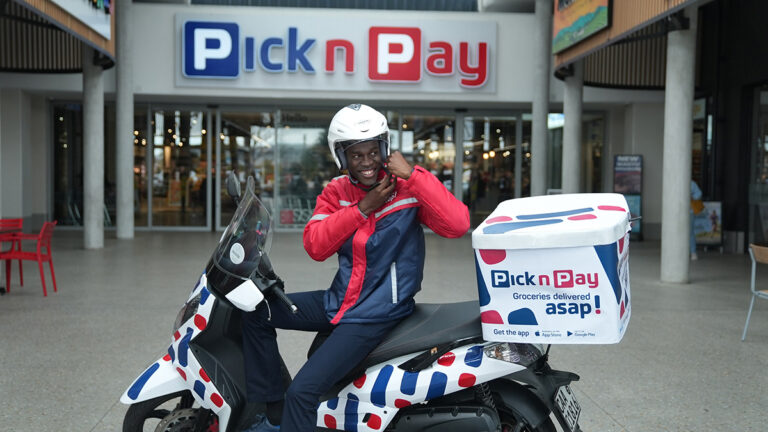
Analysts warned that although there is great potential upside with Pick n Pay, it carries significant risks based on a successful turnaround strategy.
They shared these comments after Pick n Pay released its audited annual financial statements for the 2026 financial year.
These statements contained many positives, including steady progress in its multi-year turnaround strategy and underlying operational improvements.
To fund this ongoing strategy, Pick n Pay disposed of a 12.5% stake in Boxer, raising R4.7 billion in gross proceeds.
Another positive was that the retailer’s overall level of debt decreased from R1.2 billion to just R200 million at the close of the 2026 financial year.
The remaining R200 million was repaid after the reporting date, leaving the Pick n Pay Group with no long-term debt.
Pick n Pay’s Online segment was another positive, with a 32.7% increase in turnover and successfully meeting its profitability targets.
There were also many concerning things in the numbers, including deepening trading losses in Pick n Pay’s core segment.
Group trading profit declined 4.2% to R1.7 billion, due to a R404 million increase in the core Pick n Pay segment’s trading loss to R1.0 billion.
Trading expenses as a percentage of turnover in the Pick n Pay segment rose to 21.7%, driven by above-inflation wage increases and higher advertising costs.
This showed that the turnaround still has a long way to go. It pushed out its break-even target for the Pick n Pay segment to the 2029 financial year, rather than 2028.
Turnover for the Pick n Pay segment declined 1.6%, largely due to the store estate reset program involving store closures and conversions.
It also continues to burn through cash. Its net cash reduced from R4.2 billion at the end of the 2025 financial year to R3.1 billion at the end of the 2026 financial year.
Pick n Pay has also initiated a Section 189A statutory consultation process to restructure its store labour model, which creates uncertainty.
Pick n Pay CEO Sean Summers’ feedback
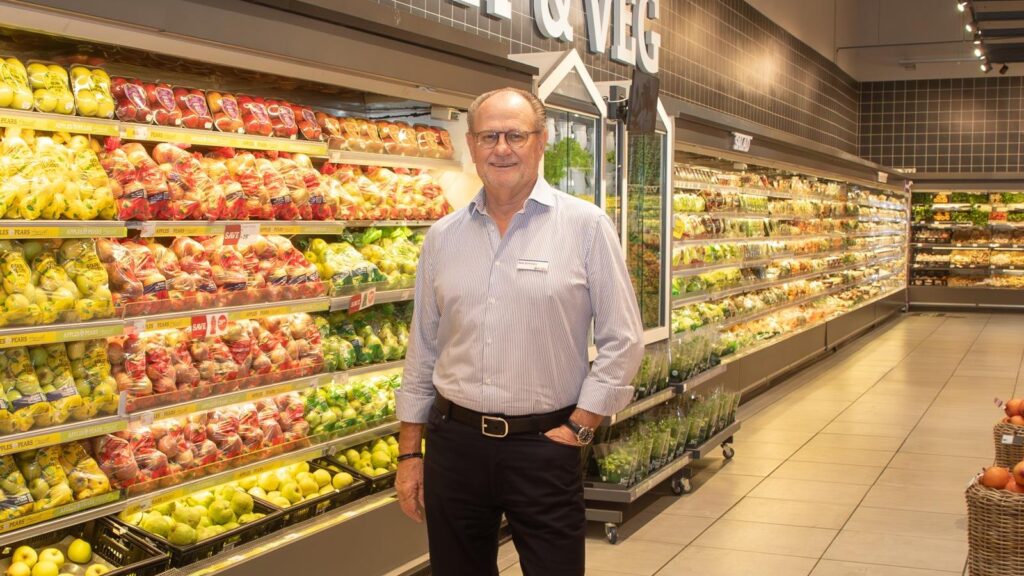
Pick n Pay CEO Sean Summers
Pick n Pay CEO Sean Summers remains upbeat about the retailer’s prospects, saying the turnaround strategy remains firmly on track.
“The turnaround is supported by improving topline growth, renewed operational disciplines, and careful cash management,” he said.
“While Pick n Pay’s trading loss increased, the business today is fundamentally stronger than it was two-and-a-half years ago.”
He cited the steady improvement in company-owned Pick n Pay supermarket like-for-like sales growth and a 0.4% increase in gross profit margin.
Summers added that the company now has the balance sheet strength to support its return to profitability. However, it still needs a lot of work.
“Achieving break-even in Pick n Pay requires the successful execution of all six strategic initiatives, including the recalibration of our total employment costs,” he said.
The retailer is addressing its structurally high store labour costs through a formal Section 189 consultation process.
“One of the first issues I raised on my return was that we needed to address Pick n Pay’s significantly distorted labour cost base relative to competitors,” he said.
“Our objective is clear: to align our cost structure with industry standards while safeguarding jobs wherever possible.”
The Pick n Pay CEO said the company’s store estate reset is effectively done, and it has achieved some of the key milestones needed to achieve growth.
“We continue to see encouraging progress across the business, but the reality is that the challenges facing Pick n Pay developed over an extended period,” he said.
“This means that rebuilding the business into a leading supermarket retailer again will take time, disciplined execution and difficult but necessary decisions.”
Analyst opinion about Pick n Pay
Jonathan Fisher, a wealth manager at PSG Wealth Sandton, described Pick n Pay’s latest results as a “shocker”.
He said that although Pick n Pay managed to decrease its headline loss per share, the overall financial results were not good.
“The market’s negative reaction, with the share price declining 5% on the day, shows investors aren’t buying the turnaround narrative yet,” he said.
He described Pick n Pay’s turnaround as “a huge oil tanker that’s really trying to turn around but is just not turning”. “It’s taking forever,” he said.
He said the entire consumer market is under massive pressure, and that there are better alternatives in the retail sector, such as Shoprite.
Simon Brown from JustOneLap was also negative about Pick n Pay, pointing to the turnaround timeline, which gets moved out again and again.
He also flagged the ongoing Section 189 staff retrenchment process as an operational risk, especially if it leads to strike action.
Brown said Pick n Pay’s core brand is moving in the wrong direction and losing ground to competitors like Woolworths and Checkers.
“Pick n Pay is pulling back, dropping leases, and closing stores while its competitors are aggressively opening new stores,” he said.
Brown and Fisher highlighted that there is massive potential upside if Pick n Pay’s turnaround is successful. However, it is not guaranteed.
This means Pick n Pay is currently a highly speculative investment that carries significant risks associated with the turnaround.
Source: https://dailyinvestor.com/retail/135950/analysts-warn-about-pick-n-pay/