
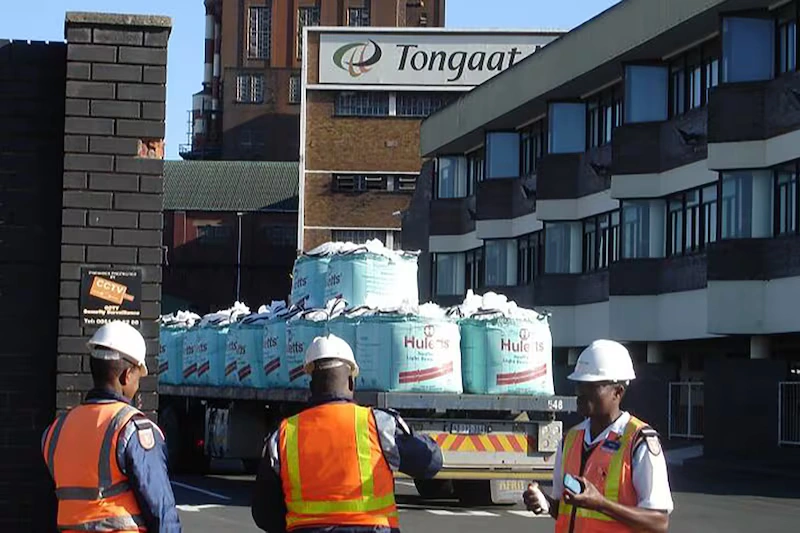
Workers downed tools around the country on Monday, demanding a 13% wage increase against the employers’ offer of 5.4%. Picture: (NCE MKHIZE)
Story audio is generated using AI
Disgruntled striking workers in South Africa’s beleaguered sugar industry say they are willing to return to the negotiating table provided employers table a meaningful offer of at least 7% with no conditions attached.
Workers downed tools around the country on Monday, demanding a 13% wage increase against the employers’ offer of 5.4%. The inflation rate is currently 5%. Workers are also demanding a R1,000 transport allowance and a R1,500 housing allowance.
The South African sugar industry, which generates about R24bn annually, employs 5,000 workers and contributes about 1% to GDP, is under severe strain due to cheap imports from Brazil, Thailand and India.
According to the SA Canegrowers organisation, 94,984 tonnes of sugar were imported between January and May compared with 55,213 tonnes over the same period in 2025. In 2022 only 1,491 tonnes of sugar were imported between January and May.
The sector, which supports about 1-million livelihoods in the country’s sugar-producing provinces, primarily KwaZulu-Natal and Mpumalanga, has blamed the introduction in 2018 of the health promotion levy, also known as the sugar tax, for worsening financial losses and job cuts in rural farming communities.
The Food and Allied Workers Union (Fawu), Association of Mineworkers and Construction Union and Uasa had been negotiating with employers since February before reaching a deadlock about a month ago.
Tongaat Hulett is the market leader and is currently under business rescue, so they can’t afford to be on strike. They are going to suffer more.
— Nkululeko Mthethwa, Fawu deputy president
Speaking on behalf of the unions, Nkululeko Mthethwa, deputy president of the largest union, Fawu, representing about 2,800 workers, said when the pay talks hit a snag, a commissioner from the Commission for Conciliation, Mediation and Arbitration tried to mediate.
“We then moved our position from 13% to 7% before settling at 6%. The employer moved from 5.4% to 6% but attached a condition that the sugar tariffs need to be reviewed. When we rejected the employers’ condition, as we felt that it fell under the International Trade Administration Commission (Itac), the employer reverted back to 5.4%. We followed suit and reverted back to 13%. We are willing to go back to the negotiating table and settle at 7%,” Mthethwa said.
The sector has long called for higher tariffs to protect local cane growers, who it says lose more than R7,500 per tonne of cheap imports. In January, Itac, which falls under the oversight of the department of trade, industry and competition, said it had launched a formal review to evaluate appropriate tariff protections after receiving two competing applications regarding the dollar-based reference price (DBRP) through which it manages the country’s variable sugar import tariff.
Itac said the South African Sugar Association (Sasa) had applied for an increase in the current DBRP to $905 (R14,674) per tonne from $680 (R11,024), citing the need to protect the local sugar industry and ensure its sustainability.
Subsequently the Beverage Association of South Africa applied for a reduction to $552 (R8,946)-$650 (R10,534), saying the current duty has an adverse impact on beverage producers, bottlers and consumers.
Mthethwa said 70% of the 5,000 workers in the industry were on strike at the 12 milling companies in Mpumalanga and KwaZulu-Natal, including:
“Tongaat Hulett is the market leader and is currently under business rescue, so they can’t afford to be on strike. They are going to suffer more,” he said.
Financially embattled sector giant Tongaat Hulett entered voluntary business rescue in October 2022 due to massive debt accumulation, severe liquidity shortages, and the fallout from major accounting scandals and alleged fraud by past management.
The industry found a measure of relief in June when Tongaat Hulett narrowly escaped liquidation after its business rescue practitioners, the Industrial Development Corporation and Vision Group reached an agreement to keep it afloat, potentially safeguarding more than 250,000 jobs in its operations and value chain.
Approached for comment, Sasa referred questions to the South African Sugar Millers’ Association (Sasma), an NPO trade organisation representing sugar milling and refining companies on issues pertaining to industry policy, sector guidelines, market strategies, and collective bargaining and disputes.
Comment from Sasma CEO Jenna Govender will be added once received.