
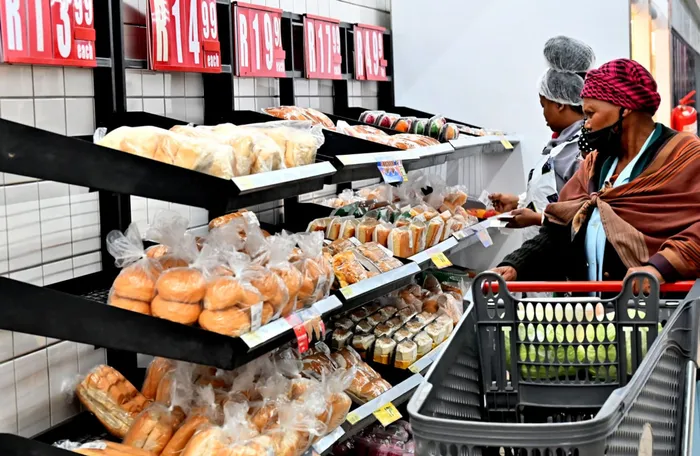
At the upcoming national congress, the Congress of South African Trade Unions (Cosatu) will unite workers from across the country to confront the pressing economic challenges facing the working class, including the soaring cost of living and rising unemployment.
Image: Ayanda Ndamane / IOL
The Congress of South African Trade Unions (Cosatu) will soon hold its national congress where workers from Mitchells Plain to Mussina, from farms to mines, hospitals and schools, will gather to assess the state of the economy and its impact upon the working class.
Most importantly, they will craft campaigns on what must be done to tackle the many socio-economic crises facing the working class, especially the rising cost of living.
2026 has since seen inflation jump to 5%, largely due to massive fuel hikes resulting from the Middle East war (25% for petrol and 50% for diesel) with a projected further R2 per litre of diesel hike expected.
Electricity has gone up by 9%. The South African Reserve Bank (SARB) raised the repo rate recently and with inflation rising, is likely to do so again soon.
These hikes take place against a backdrop of an economy stuck at 1% growth for more than a decade and a staggering 43.7% unemployment rate.
Those lucky to have jobs must stretch their wages to support unemployed relatives. This and the rising cost of living have left workers drowning in debt, borrowing to service loans and take care of their families.
Whilst the fundamental solutions to ease the crises of the rising cost of living facing workers, is to grow the economy and create decent jobs, much can and must be done in the short, medium and long term.
Many key interventions take time for their effects to be fully felt, something a country facing the triple challenges of unemployment, poverty and inequality; simply cannot wait for.
Government led by the African National Congress (ANC) did well to provide R18 billion relief to struggling commuters by suspending the fuel levy for several months when the war broke out. This act helped stave off inflation. Reintroducing such relief should be pursued as long as international oil and fuel prices remain so high.
Government needs to honour a commitment it first made in 2018, to review and ultimately reduce the third of the fuel prices that go towards taxes. This will free cash in workers’ pockets and release stimulus into the economy.
Metro Rail will soon be raising fares by amounts above inflation. Yet it remains far cheaper, faster and safer than other transportation. More support needs to be given to Metro Rail to modernise its lines, roll out signals enabling trains to travel faster, reopen the remaining closed lines and expand routes.
This will save commuters scarce money, ease road congestion, reduce maintenance costs and insulate much of the country from oil price hikes shocks.
Greater public investment and support are needed for busses and taxis who provide a critical transport service, especially in rural areas and townships.
Key to shielding food from inflation is to help restore Transnet to full capacity and lower the price of diesel and electricity.
Eskom plays a key role in our domestic inflationary pressures.
For the past two decades it has been dependent upon annual tariff hikes far above inflation, with some as high as 36%!
This has bled workers’ meagre wages, caused smelters to close and retrench thousands of workers, smelters and suffocated economic growth. Helping Eskom end its dependency upon above inflation tariff hikes is key to releasing workers’ wages, unlocking economic growth and reducing unemployment.
Whilst Eskom has done well to end loadshedding it now needs the help of government to tackle the R120 billion municipal debt owed to it. The most effective way to do this is to move all customers, including government institutions and companies, to prepaid electricity.
Similar billing collection interventions are needed in local government to ensure municipal tariffs are collected. If all consumers pay for water and electricity consumed than we can end the death spiral of above inflation tariff hikes and even increase the allocation of free basic services to indigent households.
An expansion of access to cheaper electricity can help wean poor households off otherwise expensive paraffin.
Government and industry need to revive domestic fuel refinery capacity to reduce our vulnerability to international supply shocks and reduce domestic fuel prices.
SARB whilst needing to manage inflation, should avoid unnecessary repo rate hikes as much as possible as most of our inflationary pressures are imported and not domestically driven.
Government, with the support of the Unemployment Insurance Fund and Developmental Finance Institutions, needs to urgently ramp up public employment programmes. These are key to helping millions of unemployed earn a wage, enter the labour market and ease pressures upon those working.
Discussions should take place on how SRD Grant recipients can be linked to skills training and public employment programmes to help them find work.
Employers must avoid retrenchments at all costs, reduce their often obscene wage gaps and pay their employees a living wage. The economy cannot grow if workers earn too little to buy the goods it produces.
GEMS’ 9% 2026 premium hike and similar ones by other medical aids point to the urgent need for interventions to limit often shameless medical tariff hikes imposed in pursuit of profits and to accelerate the rolling out universal healthcare through the National Health Insurance.
The National Student Financial Aid Scheme has helped millions access tertiary education, yet its income threshold has never been adjusted since its introduction a decade ago, thus shrinking the number of eligible poor students. This must be corrected and accompanied by a discussion on how we expand access to tertiary education and ensure its financial sustainability.
The Department of Trade, Industry and Competition needs to crack down on loan sharks who routinely violate the National Credit Act and exploit workers’ desperation for relief.
Engagements on the next phase of the Two Pot Pension Reforms must start. The first phase provided 4 million highly indebted workers with over R70 billion relief whilst massively boosting long-term savings.
What is needed now are robust engagements at Nedlac on bold interventions to provide relief to the working class, stimulate economic growth and create jobs.
Zingiswa Losi is the president of Cosatu.
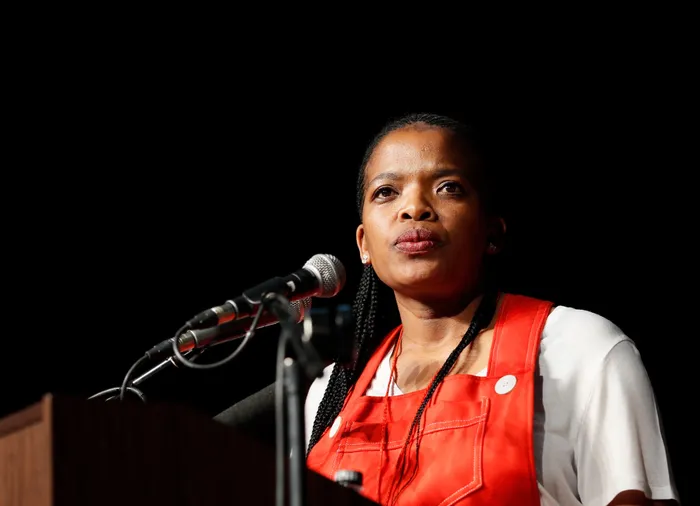
Zingiswa Losi is the president of Cosatu. Image: Independent Newspapers